

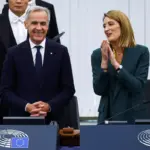
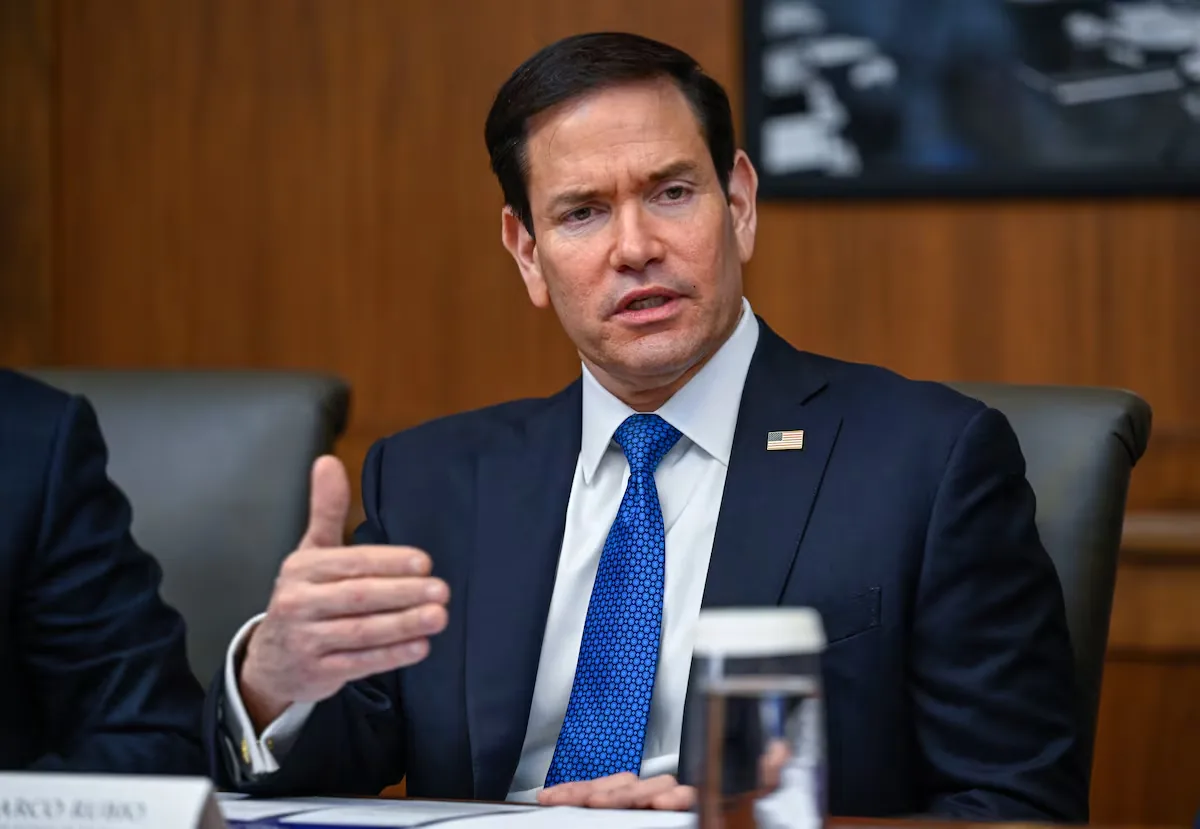
The United States Department of State published a 100-page report on July 20 about the threat Cuba poses to Washington. The title used is telling: “Cuba: The Capital of 21st Century Communism,” which positions Havana as the greatest threat to its national security. At the report’s launch, Secretary of State Marco Rubio, whose parents are Cuban, stated: “We have just 90 miles off our coasts a failed state that also serves as friendly territory for some of our adversaries.”
The report establishes a direct link between the 1959 Cuban Revolution and the emergence of what the White House considers the current political situation of the left in the United States. For the Department of State, communist ideology is a danger to its security, and it accuses the Cuban government of being responsible for a spy network within the high government. Furthermore, the report holds Cuba responsible for promoting U.S. political activism and supporting leftist terrorism in the United States.
No evidence is provided to support the established link. On one hand, it is said that since 1959, Cuba has supported revolutionary movements, but on the other, it claims that currently they carry out subversive actions that endanger U.S. security, all as if there were a common thread in this story constructed in the report.
The tone of this report shows signs of constructing a narrative that reminds us of the Cold War decades, the period between approximately 1947 and 1991, which was not an abstract confrontation, as might be inferred from its ideological and political emphases. Philosopher Enrique Dussel stated that, in reality, it was “a cold confrontation for the world powers, but bloody and real for the peoples of the Global South.” The Cold War managed to subject the periphery to the logic of capital accumulation and halt sovereignty agendas in the South.
The connection between the past and present established by the Department of State report is forced and weak in creating the argument of the danger Cuba represents, to assert that it remains a base for dangerous actions that threaten U.S. security. Although the importance the island has had for the left in Latin America and the Caribbean is known and documented, its current dynamics in the international arena place it on different levels that do not constitute it as a threat to the United States.
The decisions of U.S. policy to prevent other countries from joining Cuba’s emancipatory, sovereignty, and alternative economic and political development agenda are publicly known.
A summary of the punishment the United States has been imposing on Cuba since April 6, 1960, is offered by Lester D. Mallory in a memorandum on the strategy to fight the Cuban revolution, namely: deprive the country of material and financial resources to generate unrest and achieve surrender through hunger, suffering, and despair.
On January 3, 1961, diplomatic and commercial relations with Cuba were broken, and the blockade against Cuba was formalized in the tone of a declaration of war:
1. Foreign Assistance Act of 1961. Prohibition of all support to the Cuban government and to countries that help Cuba. Through this, U.S. sanctions took on an extraterritorial character.
2. Cuban Assets Control Regulations of 1963. Prohibition of direct and indirect exports of products, services, and technology, and of all direct and indirect exports of technology, products, and services from the United States to Cuba.
Read more This swimming band helps keep ears dry inside and outside the pool
3. Cuban Democracy Act, 1991 (Torricelli). Prohibition that foreign ships arriving in Cuba can dock at U.S. ports within the following six months. Confirmation of the sanctions’ status as a blockade and not an embargo.
4. Helms-Burton Act, 1966. Reinforces the extraterritorial nature of sanctions with the threat of legal actions against entities and individuals in third countries.
5. Trump in 2017 added 243 new coercive actions and measures against Cuba and again included Cuba on the list of state sponsors of terrorism.
To grasp the dimensions of the U.S. legislation’s intentions, it is useful to recall a key concept that appears as the basis of the White House’s legal argument. It is extraterritoriality. Extraterritoriality refers to the immunity that foreign states and international organizations have concerning the jurisdiction of the country where they are located. Considering acts committed outside its borders as crimes and treating them as if committed within them has been central to the strategy of social and economic crushing in Cuba.
The presented report refers several times to the danger posed by the coordination of leftist movements, such as, for example, the 1966 Tricontinental Conference, which gathered in Havana. The United States argues that since that time tricontinental relations were built that included radical left factions, among which are U.S. leaders, and emphasizes that currently Cuba is behind political activism in the United States.
Besides the history of sanctions and blockade that have been ongoing since the 1960s, the island currently faces collapse without fuel, and with the threat from the United States to impose tariffs on countries sending oil to Cuba, the worst energy crisis is being experienced. Blackouts affect health services, and the electrical system has reached its breaking point. The population, after so many decades of punishment due to the blockade, now suffers to face this situation that collectively suffocates it, as it severely limits life, health, food sovereignty, and morale. In practice, the blockade has become an act of permanent war.
On the other hand, Washington has announced that conditions are being prepared for a military operation, as done in other cases, using some judicial accusation, just as was executed concerning Venezuela.
The report’s arguments go against the reality faced by today’s Cuba under conditions of limitation and impoverishment. It is a country that does not represent a danger to the national security of the United States. The report is a “moral” justification for the announced military operation and is presented as an argument to legitimize the deaths that will follow.
Read more I have tested the best big and cheap TVs