“I found out I was going to be deported to Africa just a few hours before the flight. No one notified me; I discovered it myself by chance when I managed to see my name on the list of people who, unknowingly, would be transferred to Liberia, a country I had never heard of before. I had no time to defend myself legally or say goodbye to my family. I couldn’t do anything: everything was already decided.”
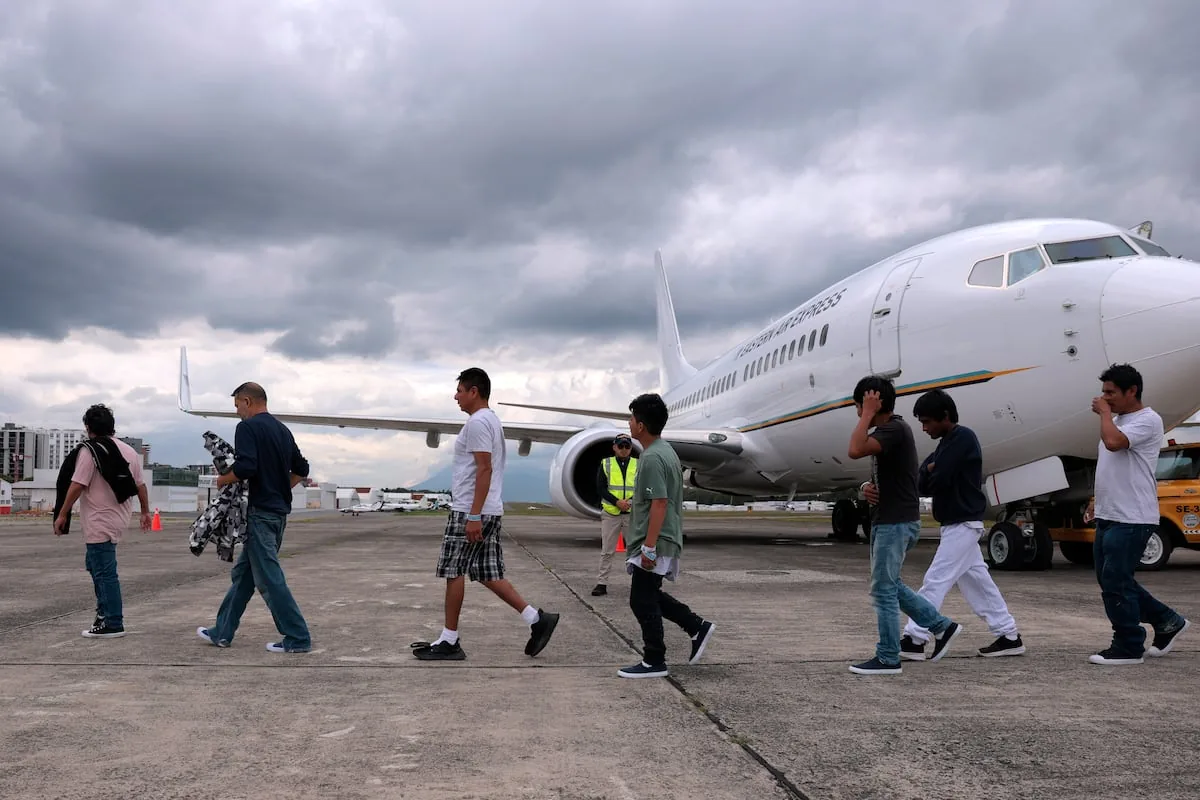
C. is a 36-year-old Venezuelan who had been living and working in the United States for five years. On August 19, agents from the U.S. Immigration and Customs Enforcement (ICE) boarded him on a charter flight that took off from Alexandria, Louisiana, deporting him to Liberia, in West Africa, along with other citizens from Latin America, the Caribbean, and sub-Saharan Africa. This is the first group of about 1,200 people in total that the Liberian government of Joseph N. Boakai agreed to receive within a year through one of the largest bilateral agreements signed by the Trump Administration as part of its anti-immigration policy.
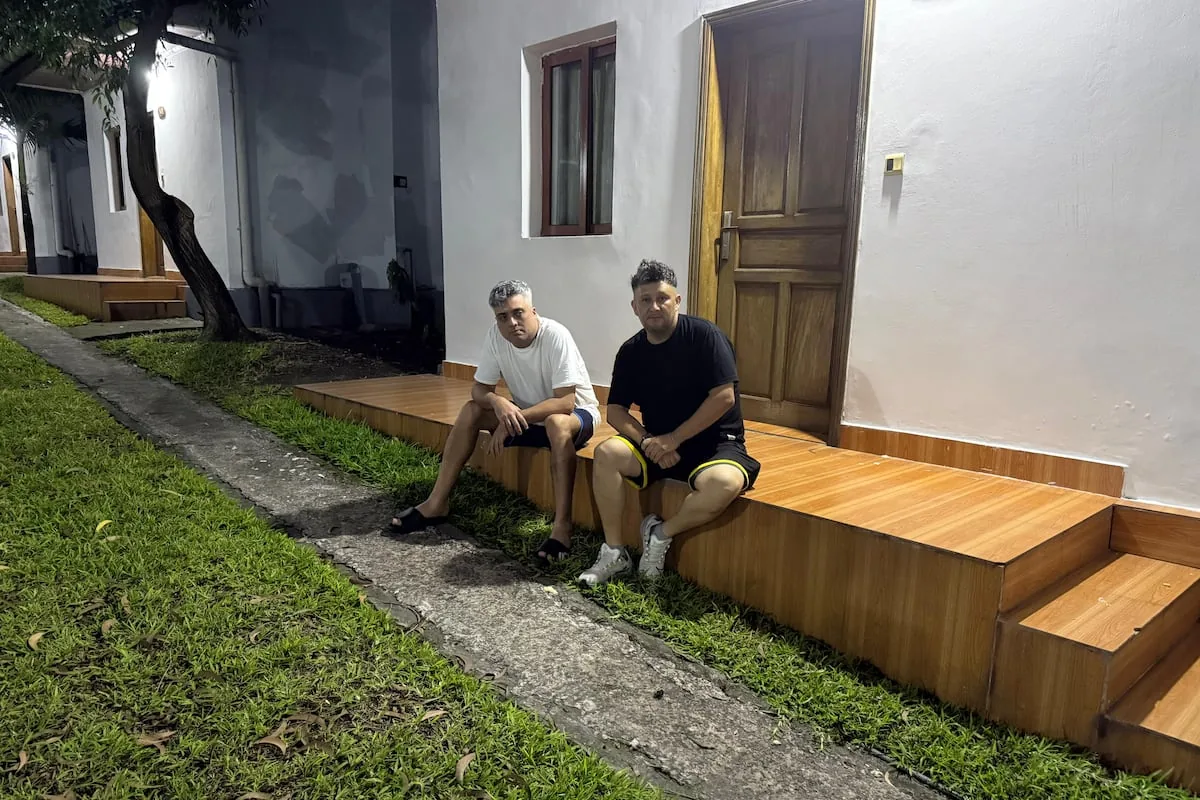
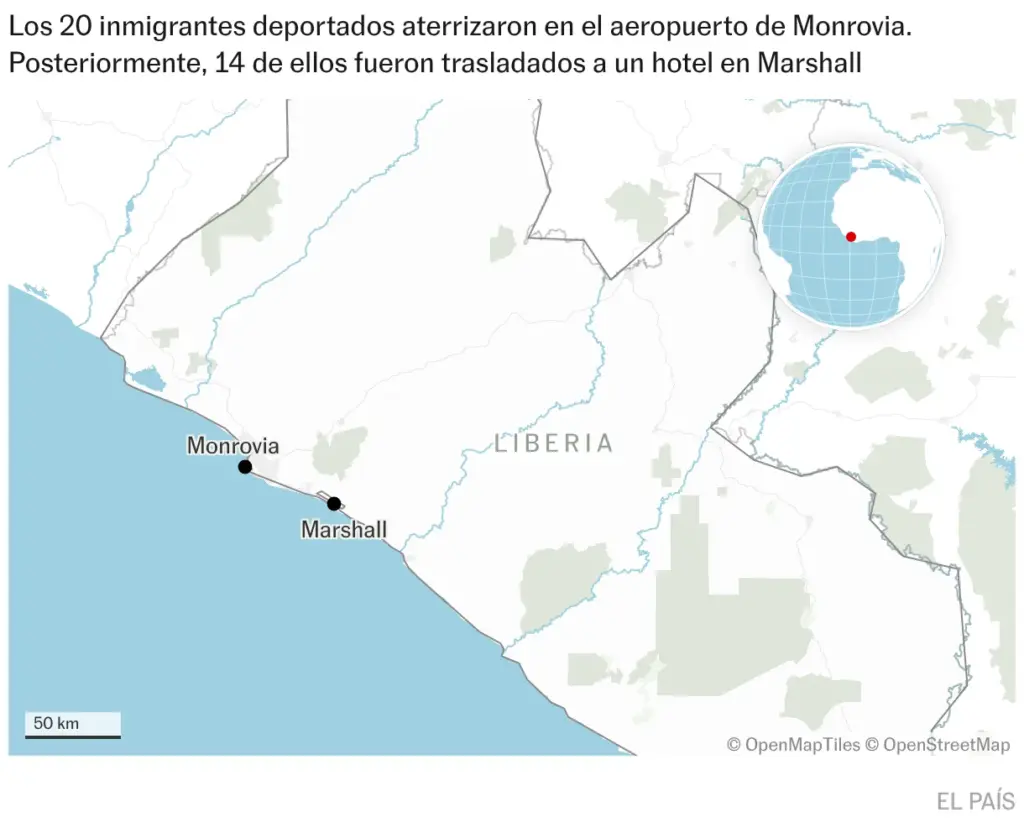
Upon arrival in the capital, Monrovia, of the 20 people destined for Liberia, six refused to get off the plane and were subsequently deported to Malabo, Equatorial Guinea. The people who stayed in Liberia, like C., have been spending their days for over a week in a hotel in Marshall — a coastal city about 50 kilometers from the capital — where they were transferred immediately after disembarking and from which no one knows when they will leave.
Between January 20, 2025, and August 15, 2026, the U.S. government has signed transfer agreements with more than 35 countries in Africa, Asia, and America. In that same period, it has deported more than 23,000 people to 26 nations, according to Human Rights First and Refugees International, two NGOs that monitor these forced transfers. More than 300 detainees have been taken to 14 African countries, including Liberia, the Central African Republic, the Democratic Republic of the Congo, Eswatini, and South Sudan. The most alarming, the organizations add, is that among those expelled are people with regularized immigration status and with a removal stay, a protection that prohibits forced repatriation to the country of origin when there is a real risk of persecution or torture, an obligation enshrined in the United Nations Convention on the Status of Refugees and the Convention against Torture.
C., who has this protection, never imagined ending up in one of the poorest countries in the world. He spent his entire life in the Venezuelan Andes region and left in 2021, cornered by the political and economic crisis. “As a political opponent, I risked a lot in my last year there. I fled Venezuela because I was about to be killed,” he recounts. Once in the U.S., he obtained a temporary residence permit with annual renewal that allowed him to work legally in the country.
“During the day I worked in vehicle sales and at night I delivered food. I led a normal life, respecting the law,” he says. “One day in December 2025, I showed up at the immigration offices for routine checks. After about half an hour, they told me they were going to detain me, that they had to conduct a special investigation on my case and that I would be held in custody for the next two weeks until a decision was made.” Those two weeks turned into eight long months of administrative detention that ended in a forced transfer to a country with which C. has no family or legal ties, and whose language he does not even know.
“In eight months I was transferred through nine different detention centers. These are places where no one would want to be: dirty, full of rats. They are centers where there are also people who have committed crimes, but I am innocent.” What moves him the most is not having been able to see his only child born. “When he was born, I was already detained. Now he is five months old and I can’t hug him; I can only see him by video call. These are things no one should have to go through.”
The little consolation he has left is that, unlike other deportees in Africa, he has not ended up in prison. The Liberian government assured that people deported to Liberia would be free to move around the country, apply for asylum there, or leave.
The U.S. Committee for Refugees and Immigrants (USCRI) has denounced that administrative detentions, managed by the Department of Homeland Security and ICE, are another increasingly used immigration control tool under the current Administration to unlawfully keep people detained without reasonable suspicion. Furthermore, as the American Immigration Council points out, the continuous transfers from one center to another “often separate people from their loved ones and other support networks, taking them to places where access to legal assistance is practically impossible.”
In March 2025, the Department of Homeland Security (DHS) published guidelines to expedite the deportation of foreigners to third countries. It establishes that before expelling a person, the U.S. verifies if that country offers guarantees that the detainee will not suffer expulsion or torture. If those guarantees exist and the State Department considers them credible, the person can be transferred without additional procedures and without being asked if they feel unsafe.
When we got in front of the plane I tried to resist, but the agent stopped me immediately: ‘Either you get on cooperating or we’ll force you on.’ As soon as we sat inside, we all started crying.A., Venezuelan migrant in the U.S. deported to Liberia
A., another 45-year-old Venezuelan deported to Liberia, says that before being expelled from the U.S. he was transferred through four different detention centers in a few months, without his lawyer ever being informed of the transfers or his deportation. “It all started when, at the beginning of this year, I went with my wife to the immigration office for a routine check. Both of us had protection against repatriation to Venezuela and had clean records [no criminal records]. However, she was allowed to go and I was detained and then expelled,” recounts the man, who worked in the wind energy sector.
During the months of detention, he says, he suffered severe anxiety and depression attacks. When they boarded him on the flight to Liberia, he feared they wanted to end his life. “I was in panic. ICE agents have that power: they terrorize you psychologically with their silences, vague answers, and mistreatment,” A. says. “When we got in front of the plane I tried to resist, but the agent stopped me immediately: ‘Either you get on cooperating or we’ll force you on.’ As soon as we sat inside, we all started crying. They had us chained by feet and hands throughout the trip [which lasted about 15 hours].”
Like most of the people deported to Liberia, A. also had this protection. When they initially told him he would be repatriated to Venezuela, he responded that it was not possible, that there he would be at risk of persecution for being a political opponent. “They answered me: ‘You’re not risking anything anymore. Venezuela is now free,’ but it is not free at all. My opposition friends who live there still fear for their safety.”
Read more The streets in Germany after AfD’s victory: «We all have to stand up»
“Since I was deported, my daughter is in therapy. She always asks me: ‘Dad, why are you there? You didn’t do anything,’” says A. and breaks down crying. “My eldest son says he wants to leave school to start working and help the family in my absence. I try to be present with my children by video call, but the reality is that we are a traumatized family. They are destroying entire families.” A. now fears that ICE will also detain his wife. “If they take her too, my children will be left helpless; they have no one there besides us,” he says. “I no longer want to live in the U.S. I prefer to seek asylum in Europe and take my whole family with me. They succeeded: they took away my desire to return. If before I didn’t believe in politics, now I don’t even have faith in human beings.”
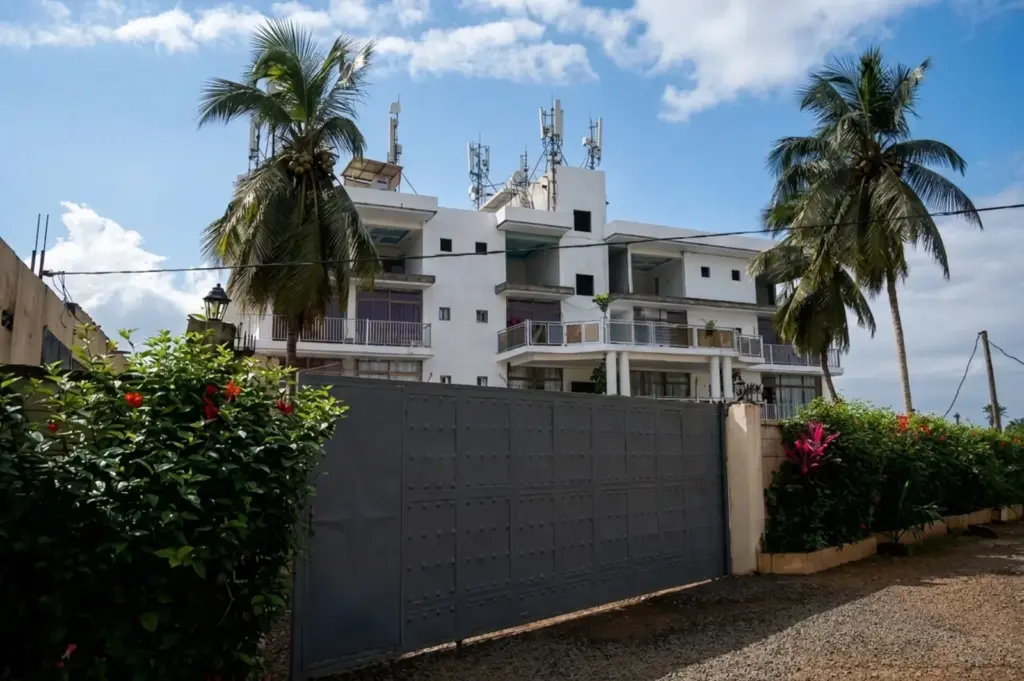
A. assures that they have received “a good welcome from the country from the beginning” and that “the hotel rooms are clean, each has their own space, and we can come and go as we please. I don’t want to stay here, but at least I am a free man.”
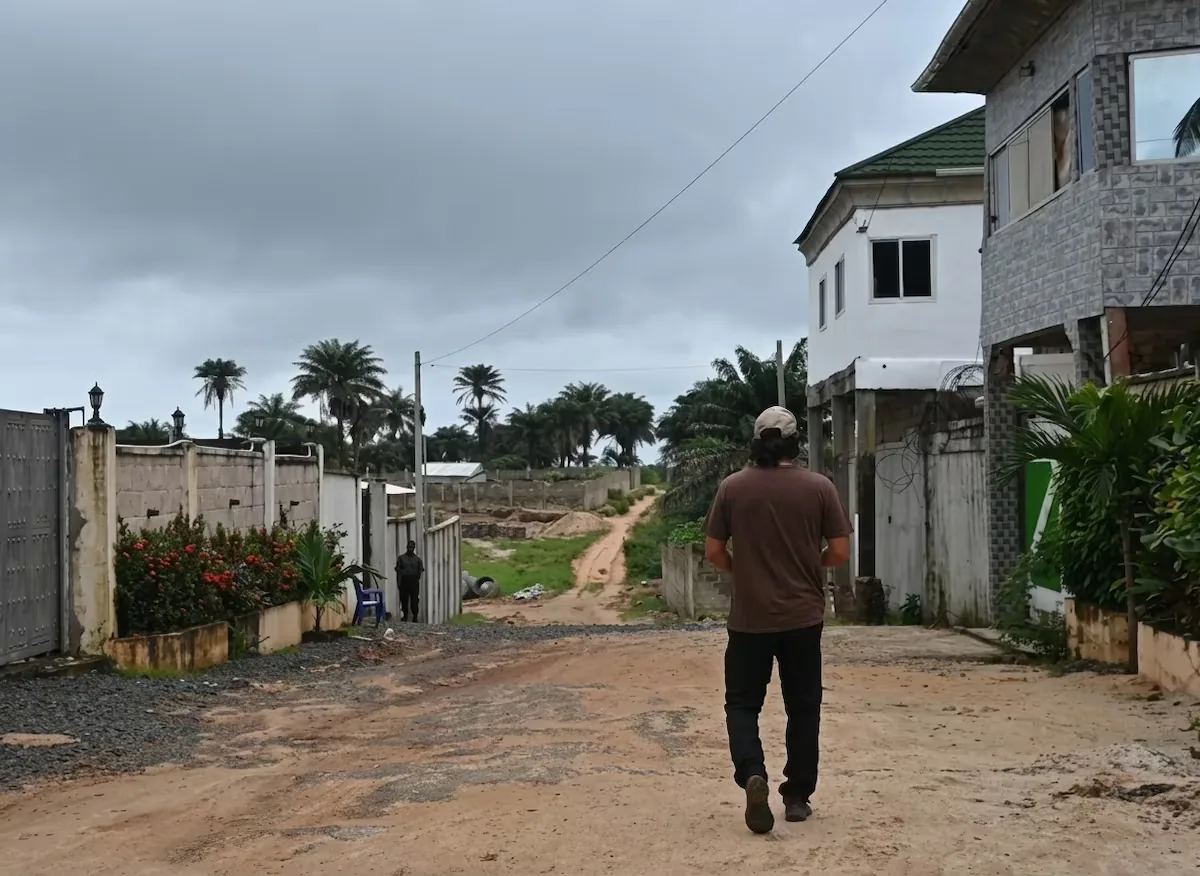
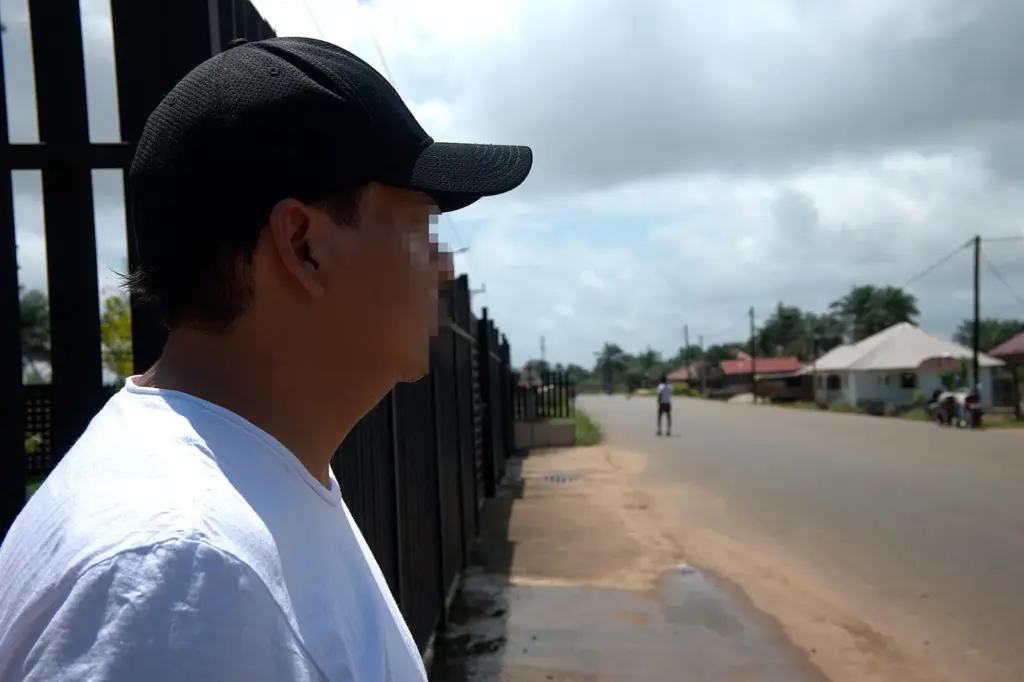
W., 40 years old and originally from Honduras, adds that IOM staff visit them daily and that he is receiving assistance for his diabetes. None of the interviewees want to stay in Liberia and, through a Liberian lawyer, they are in contact with law firms in the United States to work on each case. “The reality is very different when you leave the hotel. We all feel that we are not in a safe country,” says W., who out of fear of assaults or robberies never goes more than 10 meters from the gate of the compound.
I no longer want to live in the U.S. I prefer to seek asylum in Europe and take my whole family with me. They succeeded: they took away my desire to return. If before I didn’t believe in politics, now I don’t even have faith in human beingsA., Venezuelan migrant in the U.S. deported to Liberia
W. still holds hope of returning. “I have been deported twice under the Trump Administration: first to Honduras and then to Liberia,” he says. The Honduran was intercepted by police officers in July in New Orleans while driving to pick up his wife from work. He ended up at the Jackson Parish Correctional Center in Louisiana and from there was taken one day to the Alexandria airport. He recalls that in the boarding room some Cubans and Guatemalans panicked and started to rebel. “At that moment, ICE agents tied them up and held them like that,” he says, making the gesture of a body immobilized almost from head to toe. “Seeing that scene, I started to cry. I wondered what had happened to the U.S. I knew, the country where I felt free and safe to live and go out with my children.”
The people who refused to disembark from the plane in Liberia were deported to Equatorial Guinea, including a Cuban man in delicate health due to a large ventral hernia. The organizations that monitor deportations to third countries have denounced the serious human rights violations and abuses suffered by those deported to this country.
I wondered what had happened to the U.S. I knew, the country where I felt free and safe to live and go out with my childrenW., Honduran deported to Liberia
The details of the agreement
The first , of September 2025, between the U.S. and Liberia is now subject to challenge in the UT v. Bondi litigation regarding Asylum Cooperation Agreements (ACA), since U.S. legislation establishes that an asylum seeker can only be sent to a third country if it is truly “safe” and offers a comprehensive and fair asylum system. The second agreement, announced a few weeks ago, is in force.
However, Savi Arvey, director of Refugee and Immigrant Policies and Rights at Human Rights First, states that Liberia lacks the capacity to process asylum applications. “This raises serious concern that these refugees remain in indefinite limbo or are subjected to chain returns, ultimately being expelled again to the same countries and conditions from which they fled,” she comments.
The Trump Administration has spent more than 40 million dollars (about 36 million euros) of U.S. taxpayers’ money to sign these agreements, according to a report published in February by Senate Foreign Relations Committee Democrats. The pacts are generally opaque: the documents are not made public and details about what third countries gain by accepting detained people hardly ever emerge.
The agreements are signed amid diplomatic and economic pressures: on one hand, the threat of tariffs, sanctions, visa restrictions, and cutting funds to international organizations; on the other, the promise of aid and investments. Liberia has not been an exception.
This raises serious concern that these refugees remain in indefinite limbo or are subjected to chain returns, ultimately being expelled again to the same countries and conditions from which they fledSavi Arvey, director of Refugee and Immigrant Policies and Rights at Human Rights First
After the Boakai government announced in October last year that it would accept a Salvadoran citizen expelled from the U.S., Washington extended the validity of business and tourist visas for Liberian citizens from 12 to 36 months. In December, they signed an agreement in which the U.S. committed to allocate 124 million dollars to the Liberian health sector. That same month, the Ivanhoe Atlantic company — backed by the U.S. — agreed to pay 1.8 billion dollars for a five-year concession for iron ore transport along the Liberian railway corridor. In that same period, according to an investigation by the New York Times, the State Department agreed to provide the Liberian government with five million dollars for the management of third-country citizens transferred from the U.S., despite the Liberian government having previously declared that it had received no compensation and that it was an agreement “strictly for humanitarian purposes.”
Yael Schacher, director for the Americas and Europe at Refugees International and co-director of Third Country Deportation Watch, stated that the strategy promoted by the current U.S. Administration is an opaque and corrupt foreign policy where the allocated money has very little or no oversight, contrary to what is claimed or signed on paper.
Read more Alcaraz lets loose, the warm-up is behind: fun and heading to the US Open quarterfinals