Bautista Pesero was a very clever guy and a good cook, that is the little that can be read between the lines of the scarce breadcrumb trail that history has left about him. Back in February 1752, he was hired to cook at the camp set up on the beach of Chiclana de la Frontera to recover the remains of the tragic shipwreck of the Soberbio, a merchant ship. Pesero was imposed the maximum price for the menu he had to charge to feed the 200 men deployed to recover the gold, silver, and coins sunk under the sea. But they said nothing about him creating, alongside that wooden hut built with the remains of the same shipwreck, another one without price limits to feed the crowd of onlookers who gathered on the current beach of La Barrosa. And that is how this 18th-century resident of Cádiz became — for now — the first documented owner of a beach bar on the Spanish coast.
Read more The House of the Dragon and a fairytale palace: León also celebrates the Gaudí Year
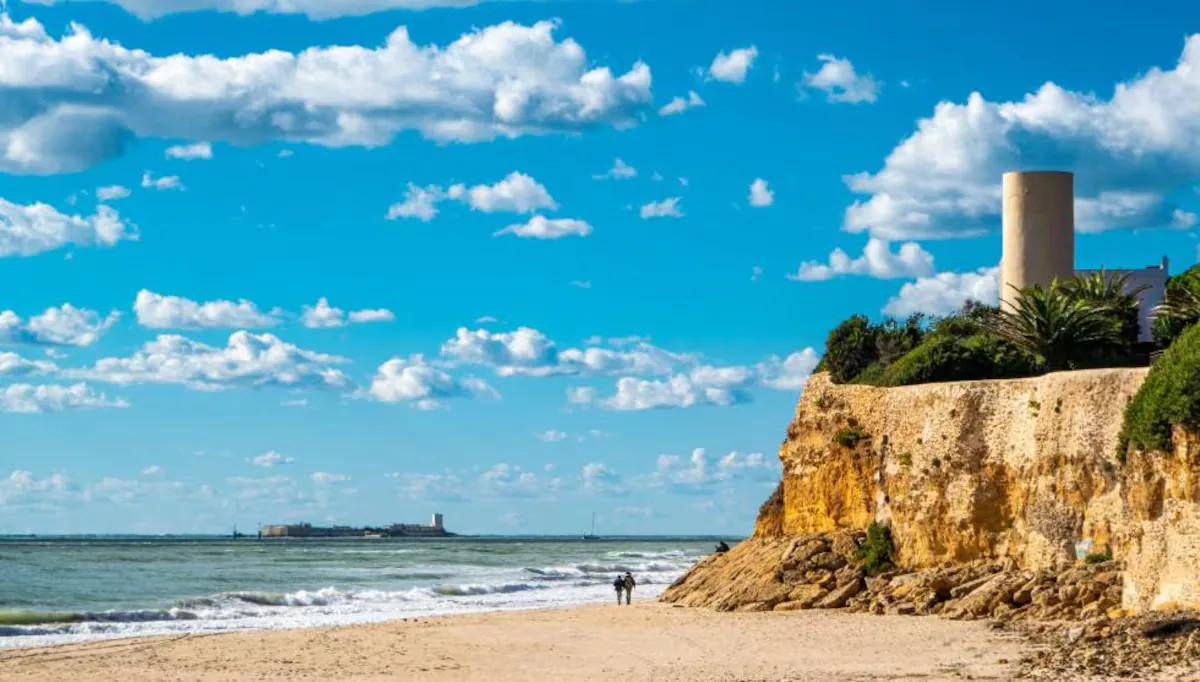
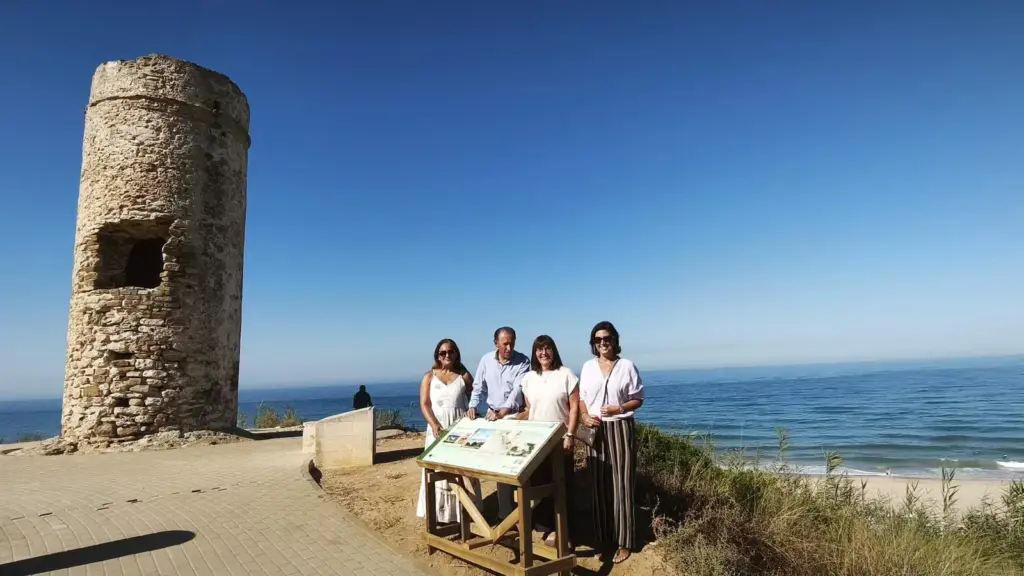
The story of Pesero has appeared in recent days as a brief reference on an explanatory plaque placed next to the historic Torre del Puerco on La Barrosa beach. The mention is part of the Vestigium project, where the Underwater Archaeology Center of the Andalusian Institute of Historical Heritage has investigated the existing heritage remains in five intertidal zones of the Cádiz coasts to musealize them in the form of informational panels. The investigations speak of historic shipwrecks, battles, roads, or constructions from Antiquity and the Chiclana beach bar, which they identify as “the first documented in Andalusia.” Although in reality, the discovery of this historical curiosity is just celebrating its tenth anniversary this year, after historians Genoveva Enríquez and Victoria Stapells discovered it and documented it in their academic article El Soberbio. Naufragio y rescate de un navío en el siglo XVIII.
All those meals, drinks, moments of leisure, and songs that must have been experienced in Pesero’s beach food house happened after a tragedy followed by a scene of human misery that forced the authorities of the time to intervene. The Soberbio — a merchant ship owned by the Irish merchant Guillermo Terry — left Havana on December 11, 1751, on a journey that went smoothly until February 1 of the following year when a strong storm caught them very close to the Cádiz coast. The strong wind threw them against the reefs between Chiclana and Conil, and then began “a 20-hour agony,” as the researchers define it, which ended with the ship sunk and the drowning of 166 people who, unable to swim and without help from the shore due to the rough sea, cried out desperately for rescue.
What the residents of both towns did do was go to La Barrosa beach to see if they could scavenge anything from the objects the waves returned. This included the bodies themselves, which the locals looted down to “the gold and silver buttons,” the research adds. So the head of that coastal area, Juan Ignacio Piñeiro, had to intervene as best he could to disperse an emboldened mob. The proximity to the coast led to the creation of a plan to recover the valuable objects from the ship, which in practice became a kind of Royal or camp, made up of delegates from the House of Trade, the Consulate, the Customs, soldiers, divers, and even the priest, in a task that lasted more than three years. During that entire period, hundreds of pages were written as a diary, turning the tragedy into “the most documented shipwreck in the world,” as Enríquez explains, who used all that research work for her later doctoral thesis.
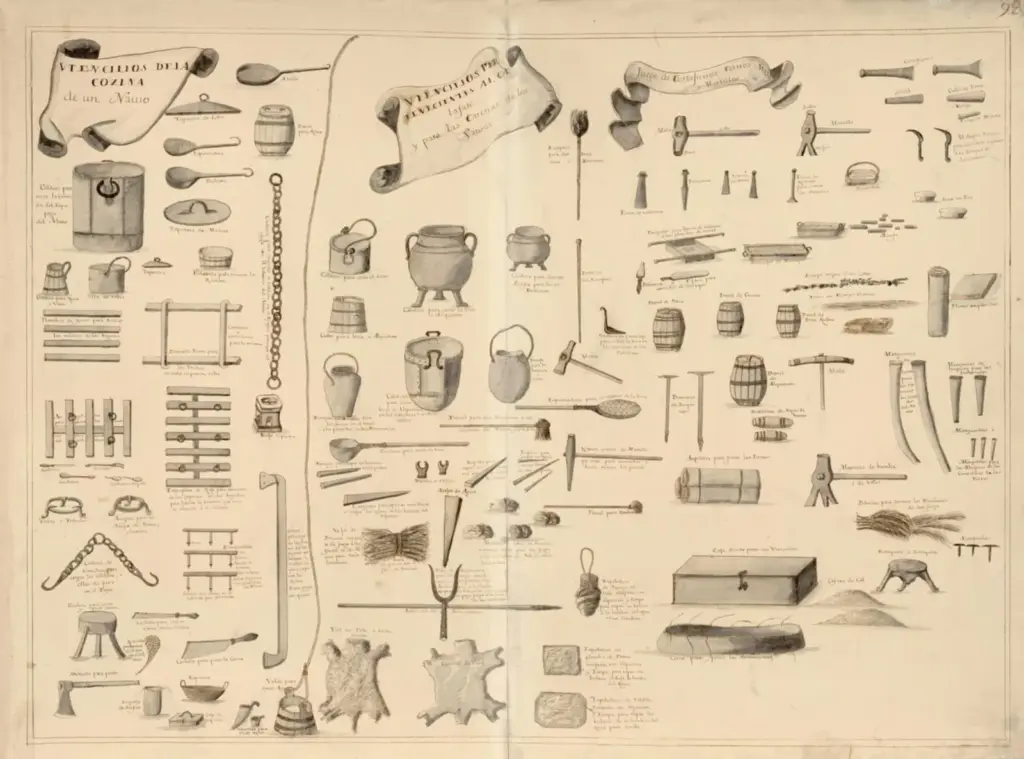
And it is thanks to all that documentary zeal that the historian learned that 10 wooden huts were built in that royal camp to house about 200 people, many with the same planks returned by the sea. One of them was Bautista Pesero’s. “He was hired as a cook and we found no complaints from the men, which is rare,” Enríquez explains in conversation with EL PAÍS. From this, it is inferred that the professional must have been skilled with the stove. What follows is that he was also a very clever guy. Pesero was imposed the price of the daily allowances for the two categories of inhabitants of the Royal camp: five reales to cover the lunch and dinner of the chiefs and important figures, three reales for the rest. But they said nothing about him taking advantage of the situation to earn extra money.
“He soon realized he could expand his business because there were many curious people who stayed to watch the work,” says Genoveva Enríquez. So Pesero, who earned a salary for his work, built out of his own pocket another hut right next door for the onlookers. The space, like the rest of the Royal camp, was located a few meters inland, not on the sand, which given the cliff morphology of La Barrosa makes it likely that it was on them, dominating the landscape. It had awnings, tables, as well as food and drink. “It was a meeting place to play, play instruments, sing songs or have collective readings, where attendees would converse,” the researcher points out. The key, as Enríquez adds, was to turn that entire camp far from the nearest cities by muddy roads into a kind of home where people, some of noble birth, could live temporarily: “Imagine gentlemen with their wigs, but bored and sad.”
The detailed daily records of those months also outline the type of food Pesero handled: “White and dark bread, salted pork, rams, chickens, turkeys, eggs, sausages, Flanders and pork lard, vegetables, garlic, peppers, chickpeas, cod, tuna, cheeses, vinegar, chocolate, wines from Jerez and Puerto Real, sugar…” Enríquez adds more raw materials: “The local fishermen sold boatloads of horse mackerel, cuttlefish, grouper, or mackerel, and shipments of pomegranates were sold in the camp store. You have to think about life there. In free time, you were either in a communal cabin or you went to Pesero’s beach bar,” the researcher details.
Although the ingredients give slight clues, Genoveva Enríquez is sure that Pesero managed a menu that was essentially oil and pot-based: “They are the same as our grandmothers’, but with fewer spices because they were very expensive.” The chemist, writer, and expert in old recipes from the province Manuel J. Ruiz gives more details in his book Historical Cuisine of Cádiz about what was eaten in the 18th century. He points to fried fish, like cod; a kind of prototype shrimp fritters, inherited from Genoese cakes; canned or marinated tuna roasted from the nearby almadrabas; fish cooked on tiles, which are still roasted similarly in the marshes, or menudo, a Cádiz stew similar to Madrid tripe that is still eaten in Cádiz kitchens today.
It is not known how long Pesero’s beach bar remained open, nor its exact location on the meters of La Barrosa beach. The only certainty is that the camp declined, especially after Capulino — the first contractor who maintained it — died in July 1753 and a new person took over. The reports then become less detailed and the decline in divers deployed in the area — who dived freehand to search for remains at four meters deep — becomes evident. Of the more than 20 experts who dived at the start, “it went down to 10,” explains Enríquez, who doubts whether Pesero kept his business open until April 1755 or closed it earlier. What is certain is that the effort seemed worthwhile. With the doubt of undeclared smuggling, 91% of the sunken coins were recovered.
Finding the story of Pesero’s beach bar was for Enríquez a kind of Russian doll, where one surprise follows another. The historian, doctor in American History and a lifetime linked to the Archive of the Indies, came across the Soberbio by pure chance: “When I didn’t have work as a documentalist, I started researching on my own.” One of those days, she came across a paper that spoke of a certain Juan Bautista Basallote, imprisoned for stealing from the Soberbio. “It caught my attention because until I was 14 I spent summers in Conil and the grandmother of a friend in the group had the surname Basallote,” the researcher points out. Now, Genoveva Enríquez only hopes that that mention on the Torre del Puerco plaque serves others to generate the same desire to know more: “I would love it to spark curiosity. The problem is that usually shipwrecks stir that imagination of a chest with gold coins, although in this case it is exactly that.”
Read more Macarena García: “I have spoken very badly to myself, but now I treat myself better”