




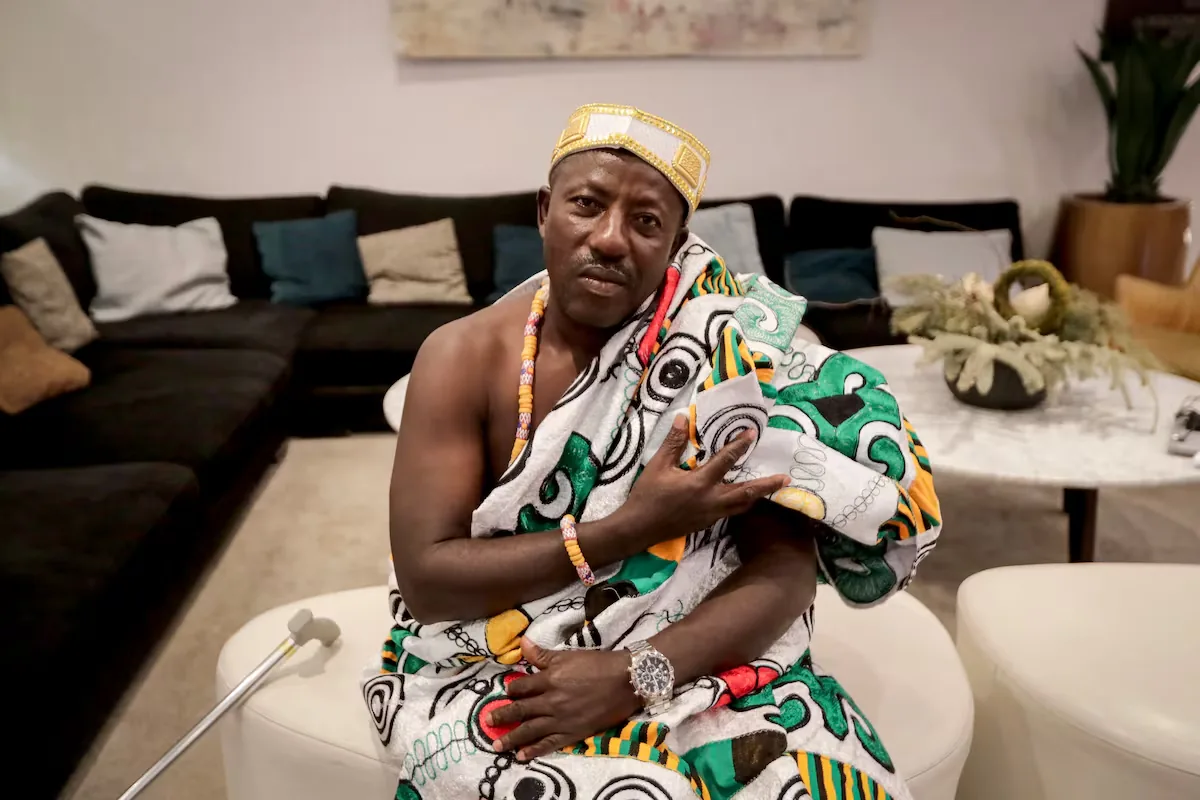
“Mental health is key in addressing neglected tropical diseases.” Emmanuel Kwafo Mintah (Ghana, 56 years old) emphasizes several times during the conversation with EL PAÍS the indivisible triad formed by stigma, mental health, and these diseases, known by the acronym NTDs, which group about 20 predominantly endemic ailments in impoverished rural areas of the world affecting more than 1 billion people.
Read more AI will consume as much water in 2030 as 1.3 billion people
He knows what he is talking about. He is the executive director of Ark Development Organization (ADO), a Ghanaian organization that has just received one of the awards granted by the Anesvad Foundation for its integration of mental health and the reduction of discrimination at the heart of its work against these ailments.
For him, transforming the behavior of patients strongly marked by the stigma generated by these diseases is one of the great challenges. “We are trying to dismantle prejudices and misconceptions. Because of this, patients find it very difficult to go to health centers,” he explains in an interview with this newspaper in Bilbao, where he traveled to receive the award. “Many times they first go to shrines or prayer meetings because they think someone has bewitched them,” he summarizes.
“When people understand their own health and realize that their ailment has medical treatment and is not due to witchcraft, we can mitigate many of the [associated] problems,” he continues. “We have a case under treatment of a person whose limb we had to amputate and now we are going to provide a prosthesis. We can avoid reaching that point. That is why education, prevention, and awareness are so important,” he adds.
When fighting an NTD, poverty and the structural factors that contribute to it must also be fought
Stigma and delay in being referred to the hospital are just some of the problems, but there are more: “The cost of transportation is also difficult to afford, so we have to involve volunteers to accompany patients to the health center and cover expenses. Also, when fighting an NTD, “you also have to battle poverty and the structural factors that contribute to it.”
The activist explains that “many times social stigma follows them to the hospital.” And sometimes it is the healthcare staff themselves who contribute to increasing it. “Thanks to the support of Anesvad, we have been able to train about 14 nurses on stigma and personal treatment so they can change their behavior towards people living with neglected skin diseases,” he emphasizes. “Things are gradually changing, but it is not easy,” he laments.
Kwafo believes that the media are key to combating stereotypes related to neglected diseases. “Last month we ran an awareness campaign on the radio and, the next day, people started calling.” “Many of those people do not have access to social networks or other digital media. In remote communities, we have small centers equipped with radios, and we use them to raise awareness among the population about the causes, symptoms, or how they can prevent these diseases,” he explains.
The director of ADO exemplifies the cost of misinformation with a recent case. “One of our patients went to a chapel where he had to buy various objects and ended up paying more than 10,000 cedis (approximately 700 euros). And that is a lot of money in Ghana. But even after paying all that, the disease kept worsening. In one of our community activities, we identified this man. We managed to talk to him, he understood our message, and agreed to be referred to the hospital. We paid all medical costs, provided materials for care, and everything necessary. Now he is recovered,” he recounts.
We cannot always depend on external aid; we have to build resilient communities that can face their own health problems
Kwafo also advocates the central role of women in addressing these diseases and does so with another example, that of one of ADO’s patients, a man with Buruli ulcer and elephantiasis who was rejected by his family. Despite everything, his fiancée was able to care for him because she had received training as a volunteer. “As soon as they arrived at the regional hospital, they told them they were going to amputate his leg. And this woman stood up and said: ‘We are not going to accept that.’ Because she was clear that, no matter what happened, she was going to marry him,” he recalls. With healthcare support and proper care at home, the man improved in six months and finally they were able to marry. “As the saying goes: if you educate a man, you educate an individual, but if you educate a woman, you educate an entire nation,” he states. “We have to put women at the center of any development.”
Lack of funds
In recent months, especially after cuts to cooperation from the United States and other European countries, Kwafo has felt the reduction of funds received by NGOs working with neglected tropical diseases. “Also, recent conflicts are contributing to worsening the situation. The war between Iran and the US is generating an additional burden for African countries,” he adds.
“One of the approaches we are using to maintain the progress made is to create community foundations. We try to raise awareness among community members so they understand they have to lead their own health. We cannot always depend on external aid; we have to build resilient communities that can face their own health problems,” he explains.
“Because, if we look at the government’s priorities, neglected tropical diseases, as their name indicates, have been neglected. They are considered, but they are not a real priority,” he adds. “We have to carry out intense policy advocacy to influence the government’s decision on its priority areas, so that it also integrates them and allocates a specific percentage for NTDs,” he concludes.
“We have attended conferences on these diseases and many countries signed treaties committing to act. But then, the real problem has been fulfilling the commitments made. That is where civil society has to engage in political advocacy and hold decision-makers accountable to fulfill their obligations. It is a great challenge,” he concludes.