



Key moments
- Who are the favorites to win according to the bookmakers?
The 70th edition of the Eurovision Festival kicked off this Saturday at 9 p.m. in Vienna. Spain, Ireland, Iceland, Slovenia, and the Netherlands have decided not to participate due to Israel’s presence in the contest. Israeli Noam Bettan was the third to perform without major incidents. Australian Delta Goodrem was the first favorite to take the stage, while the Finnish duo performed Liekinheitin in 17th place. As in the last two editions, eyes will be on the influence of the televote, which can tip the scales. This time it is Finland (with permission from Australian Delta Goodrem) competing for the popular vote, increasingly marked by political significance, with Israeli Noam Bettan.
Read more Real Madrid signs Turkish center Ömer Yurtseven amid injuries to Tavares and Len
PHOTO GALLERY. The best images of the festival.
EL PAÍS offers the latest Eurovision final news for free. If you want to support our journalism, subscribe.

22. Italy: Sal Da Vinci – ‘Per Sempre Sì’
Salvatore Michael Sorrentino, born in New York to a family with Neapolitan roots, is Italy’s representative at Eurovision after winning Sanremo 2026. He is one of the most recognized artists of contemporary Neapolitan music, especially popular in the 1990s, and has also worked as an actor in film and musicals. The song he brings to Eurovision is a lively classic and sentimental song about lasting love and lifelong commitment. While he sings, dancers in the background depict the moments leading up to a wedding until the bride appears, whose dress hides an Italian flag.
21. Cyprus: Antigoni – ‘JALLA’
A mix of pop, urban rhythms, and Mediterranean sounds compose the proposal presented by Antigoni Buxton, a singer born in London to a family with Cypriot roots. Her participation in the British version of Love Island boosted her popularity in the UK, and since then her music career has soared, especially in the Middle East and North Africa. The song she presents mixes electronic and urban bases with references to Mediterranean tradition, including Greek and Arabic expressions in the lyrics.
20. Sweden: Felicia – ‘My System’
The winner of Melodifestivalen 2026 was Felicia Eriksson, who in 2022 became the voice of the project Fröken Snusk, which embraced anonymity by keeping the singer’s identity hidden under a pink balaclava. When the vocalist changed, Felicia revealed she had been the original singer. The social anxiety she has dealt with since childhood has led her to keep her face partially covered in public appearances. The song she presents at Eurovision is an electro-pop proposal in English about the emotional conflict of a person trying to deceive themselves into thinking they have left behind a difficult relationship they haven’t fully overcome.
19. Lithuania: Lion Ceccah – ‘Sólo Quiero Más’
A prominent figure in the drag culture in his country, Lion Ceccah, real name Tomas Alencikas, had participated five times in the selection processes for Eurovision representation in his country until he succeeded on the fifth attempt. The experimental pop combined with drag elements marks a proposal with a striking stage presence where the artist appears fully made up and in a peculiar outfit, turning his performance into a full artistic performance.
The lyrics include parts in Lithuanian, Spanish, and English, with nods to German, French, and Italian to attract an international audience. According to the artist, the Spanish in the title, repeated several times in the lyrics, allows him to express a sensuality and energy that Lithuanian or English do not always capture.
18. Poland: ALICJA – ‘Pray’
Alicja Szemplińska has developed her career in genres such as soul, blues, and gospel, and a bit of all that is present in the song she represents Poland with at Eurovision 2026. She arrives at the festival after being selected for the 2020 edition, which was canceled due to the pandemic, leaving Alicja without participation. She performs a song entirely in English about internal struggle, ambition, and the search for freedom, needing guidance amid confusion.
17. Finland: Linda Lampenius x Pete Parkkonen – ‘Liekinheitin’
Time for the big favorites. The duo formed by classical violinist Linda Lampenius (stage name Linda Brava) and pop singer Pete Parkkonen has topped Eurovision betting odds with a powerful proposal for which they had to request special permission to play the violin live, as instruments are not played live at Eurovision. The song, whose title translates as “flamethrower,” mixes classical music, rock, and electronic music with a stage show full of fire honoring its title.
16. Moldova: Satoshi – ‘Viva, Moldova!’
Another country returning to the competition this year is Moldova, with a song celebrating the country’s cultural identity with an energetic anthem combining pop and contemporary rhythms and nods to Moldovan folklore, as well as cultural and linguistic references from other parts of Europe (the chorus, for example, rhymes “vida loca” with “Palma de Mallorca”). Satoshi, real name Vlad Sabajub, is a well-known singer and rapper in his country and even in Romania. The song combines languages such as Romanian, Spanish, English, French, and Italian in a chaotic and, above all, festive proposal.
15. France: Monroe – ‘Regarde!’
Born in Salt Lake City, USA, to a French mother (with Congolese origins) and an American father, this 18-year-old lyrical prodigy arrives in Vienna with a musical proposal of dramatic and emotional pop style, a ballad that allows the tonal range of her powerful voice. The song, which may remind some of Rosalía’s Berghain in some aspects, fuses opera, musical theater, and contemporary pop. It speaks of the most intense and passionate forms of love and how it can illuminate everything around it.
14. Great Britain: Look Mum No Computer – ‘Eins, Zwei, Drei’
Absurd humor dominates the synth-pop proposal of Sam Battle, the British representative, better known by his stage name Look Mum No Computer. Sam Battle became very popular on the internet after starting to publish videos on YouTube in 2016 showing the construction of impossible musical instruments and electronic devices made with toys, recycled parts, and obsolete technology.
Precisely that unique universe is what he brings to the Eurovision stage with a song about exhaustion caused by work routine, mixing English phrases with German numbers in the chorus. On stage, he is accompanied by several people wearing old computer monitors on their heads. Bookmakers place him at the bottom of the rankings.
13. Croatia: LELEK – ‘Andromeda’
The female group Lelek, which means lament in Croatian, was formed in 2024 with the idea of rescuing elements of Croatian folklore and giving them new life within current pop. Their Eurovision proposal has a marked ethnic character both in staging and sounds.
Inka Večerina Perušić, Judita Štorga, Korina Olivia Rogić, Lara Brtan, and Marina Ramljak are the five singers who play with vocal harmonies on stage with a song entirely in Croatian addressing collective pain, fear, and loss, denouncing injustice, mothers’ suffering, and the wounds of conflicts in an entire generation.
12. Bulgaria: Dara – ‘Bangaranga’
After three years of absence, Bulgaria returns to Eurovision with Dara, one of the most well-known pop singers in her country, who won the Natsionalna Selektsiya 2026. The chosen song moves in electronic pop with a strong and marked rhythm inspired by the Bulgarian kukeri tradition, folklore characters who perform a pagan ritual to ward off evil spirits and attract good health and good harvests. The staging includes a peculiar choreography to the rhythm of “bangaranga, bangaranga, bangaranga.”
11. Czech Republic: Daniel Zizka – ‘CROSSROADS’
The mirror play in his staging and the final falsetto are the highlights of singer-songwriter Daniel Zizka’s performance. His musical style combines alternative pop with electronic sounds and indie influences. The Czech Republic has participated in Eurovision since 2007 and has never passed sixth place. The song talks about personal uncertainty, an unknown voice leading him to explore and grow on his own even if it means the possibility of getting lost along the way.
10. Malta: Aidan – ‘Bella’
English, Maltese, and Italian are heard in the proposal of Malta’s representative, who brings the country’s language back to Eurovision after more than two decades (since 2000, Maltese songs for the festival were exclusively in English). Aidan Cassar had tried several times to attend the festival and finally fulfilled his dream this year. The song combines modern pop production with Mediterranean references and a melancholic tone focused on a relationship marked by nostalgia and waiting.
MUSIC PROGRAMS
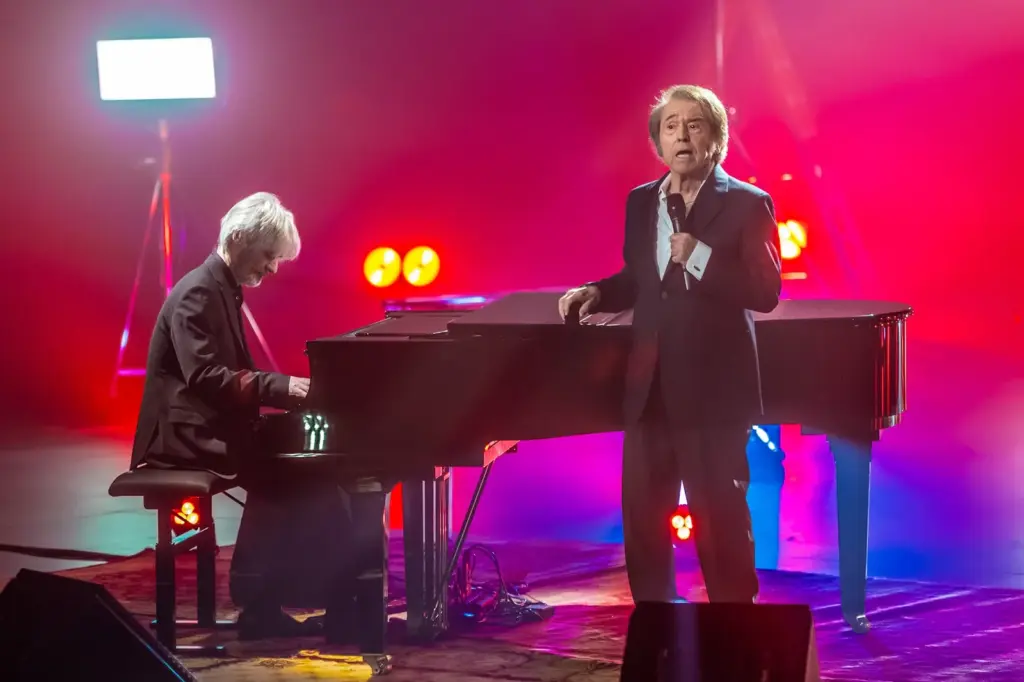
These are all the artists from ‘La casa de la música’ with which RTVE replaces Eurovision
At this time, the special La casa de la música begins on La 1, with which TVE has decided to replace Eurovision this year. 23 musical performances in two and a half hours of programming hosted by Jesús Vázquez. The special will include interviews, behind-the-scenes footage, and performances by veterans and emerging stars. Several performances are recorded in Studio 5 of Prado del Rey and others in locations of historic performances, as happened in the first New Year’s Eve special (which averaged 3,908,000 viewers and a 33.4% share with performances by La Oreja de Van Gogh, Amaia Romero, and Ana Torroja).
In this second La casa de la música, veteran Raphael (who participated in Eurovision in 1966 and 1967) will be present, whom TVE describes as “the artist who has performed the most times on Spanish Television,” as well as Abraham Mateo, Manuel Carrasco, Ana Belén, Mikel Erentxun, Mónica Naranjo, Pablo López, Vanesa Martín, José Mercé, Fangoria, and Camela. Emerging groups will include Metrika, Ultraligera, Natalia Lacunza, Juanjo Bona, Nil Moliner, Alba Morena, and the flamenco fusion duo La Plazuela. It will also feature Guitarricadelafuente, Siloé, and Samuray Jay ft. Naiara, as well as the Argentine group Miranda!, who participated in the last Benidorm Fest. The first and last winners of the Alicante contest, Chanel and Tony Grox & LUCYCALYS, will also be present.
9. Serbia: LAVINA – ‘Kraj Mene’
The metal band LAVINA is Serbia’s representative at Eurovision this year, chosen after winning their country’s preselection, Pesma za Evroviziju. Its six members are Luka Aranđelović (vocals), Pavle Aranđelović (keyboards), Pavle Samardžić (guitar), Andrija Cvetanović (guitar), Nikola Petrović (bass), and Bojan Ilić (drums). Their musical style revolves around progressive metal, fusing heavy metal with progressive rock and distorted, aggressive sounds. All this is present in their Eurovision proposal, wrapped in a gothic aesthetic and many visual effects.
Although the song was originally written in English, they decided to translate it into Serbian to better express their emotions. The lyrics address themes such as inner conflict and emotional struggle over unrequited love.
Eurovision Festival
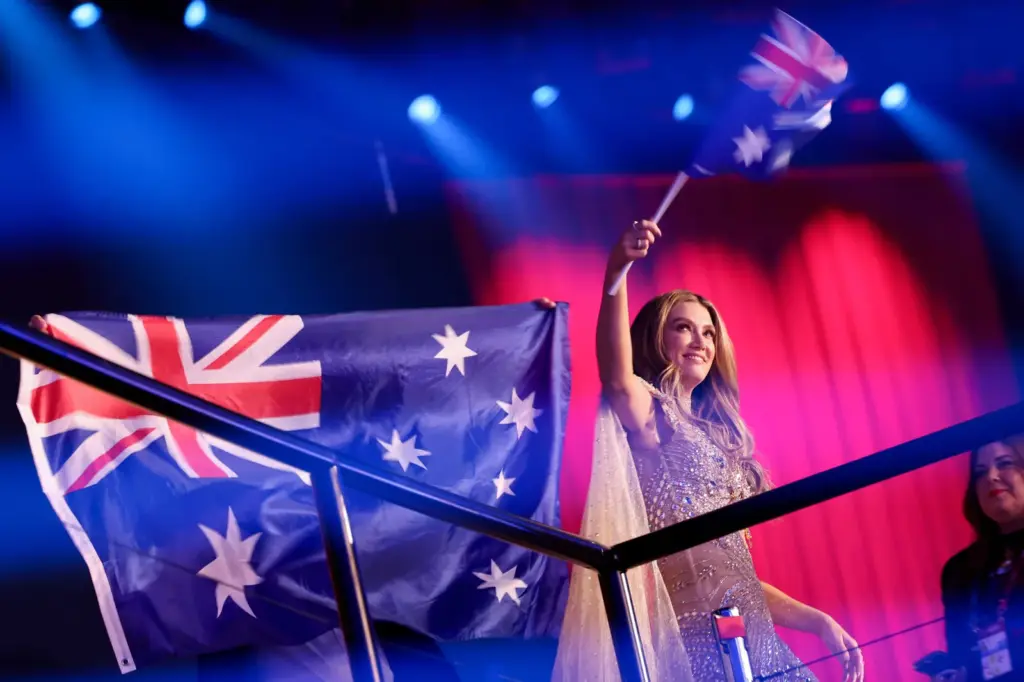
Delta Goodrem: the international star who could make history by winning Eurovision 2026 for Australia
International star and disciple of Olivia Newton-John and Céline Dion, her name has soared in official betting since she performed this Thursday at the Wiener Stadthalle in Vienna, the venue for this edition of the contest.
Australia competes in Eurovision. It has done so since 2015 as one of the countries that takes the festival most seriously, despite the time difference meaning it airs at 5 a.m. in Sydney. “Australia is a country epitomizing cultural fusion, and we have been watching the festival for 50 years. European migrants brought it with them, and the rest of the population embraced it,” Clint Drieberg, an Australian reporter from Vienna, told this newspaper.
Read the full profile.
8. Australia: Delta Goodrem – ‘Eclipse’
Since performing in the festival’s second semifinal on Thursday, Australia has climbed the bookmakers’ rankings to become one of the favorites to win. Delta Goodrem, born in Sydney, is an international star and author of one of Australia’s best-selling albums.
Her performance, a constant crescendo ending with the singer on a platform emerging from a grand piano, is designed to surprise and move the audience. Golden lighting effects and a costume adorned with thousands of Swarovski crystals make the singer shine like the pop diva she is. The song, in Goodrem’s own words, is about “the exact moment when two people end up aligning like an eclipse.”
If she wins, Australia could not host the next festival; it would have to be held in another country.
7. Ukraine: LELÉKA – ‘Ridnym’
Viktoria Leléka was born in Ukraine but has lived in Berlin for years, building a solid career in the European folk and jazz scene. In Germany, she has a group specializing in folk jazz and experimental music that fuses traditional Ukrainian sounds with contemporary and electronic arrangements, as in her Eurovision proposal.
In the ballad she performs, she mixes English and Ukrainian, with lyrics revolving around themes of constant change, loss, and renewal. Nature is used as a metaphor for life cycles and personal transformation, with a more introspective and emotional approach than other recent Ukrainian entries with a more political reading.
6. Greece: Akylas – ‘Ferto’
A radical change of pace with Greece’s eccentric proposal, which ranks high with bookmakers. Singer Akylas Mytilinaios has quickly gone from going viral on TikTok to becoming one of his country’s major emerging figures. His style mixes current pop with Mediterranean and electronic influences. He arrived at Eurovision after winning Sing for Greece 2026.
The song, with a catchy and festive rhythm, is about ambition and the desire to succeed, inspired by his family’s economic hardships. The striking staging includes an extravagant costume, video game-style visual effects, a scooter, and a woman knitting, among many other elements.
5. Albania: Alis – ‘Nân’
At Festivali i Këngës, Albanian singer-songwriter Alis Kallaçi was chosen, one of the country’s emerging talents with a distinctive style. He became popular in his country through Factor X and had previously tried to represent Albania at Eurovision.
The song is a powerful ballad in Albanian dedicated to “mothers who wait, children who leave, and eternal love beyond time and distance,” according to the singer-songwriter himself. The melody and staging also combine elements of folklore and the accompaniment of a large choir.
4. Belgium: ESSYLA – ‘Dancing on the Ice’
In Belgian public television, many voices called for withdrawal from Eurovision due to Israel’s participation, but they ultimately chose to participate. The representative is Alice Van Eesbeeck, known artistically as ESSYLA since she participated in The Voice Belgium, where she finished second.
She goes to Eurovision with an electropop song with an oriental touch that emerged from a songwriting workshop and seeks to convey a message of hope as a song about youth determination, with the idea that, even if you stumble, the important thing is to get up and keep going. Bookmakers place her at the bottom of the rankings.
3. Israel: Noam Bettan – ‘Michelle’
Time for Israel. During his performance in the first semifinal, live shouts of “stop the genocide” were heard, and several protesters were expelled from the venue. As in previous years, their representative rehearsed his song amid whistles and boos to be prepared for the expected live audience reaction. The Israeli delegation was warned by the EBU last week for a video in which the singer asked for audience votes, something prohibited by the festival’s new rules.
The song performed by Noam Bettan does not have a possible double political reading this year, as happened in previous editions. Son of French immigrants, he sings in French, English, and Hebrew accompanied by five dancers.
2. Germany: Sarah Engels – ‘Fire’
This year, Germany changed the broadcaster responsible for its Eurovision proposal. After 30 years under NDR (Northern German Broadcasting), SWR (Southwest Broadcasting) took over this year. The representative is the experienced Sarah Engels, who won the German preselection with a pop song featuring many Eurovision clichés: fire on stage (matching the song title), dress reveal, and dance break.
1. Denmark: Søren Torpegaard Lund – ‘Før Vi Går Hjem’
The Eurovision final performances begin. The first to take the stage is Søren Torpegaard Lund, winner of Dansk Melodi Grand Prix, the Danish national preselection. Born in the Danish town of Gudme, the Danish representative developed a strong relationship with musical theater from a young age. He discovered his vocation as a child and, at 17, became the youngest person admitted to the Danish National School of Performing Arts. Since then, he has worked professionally as a singer, actor, and even dancer in some of the country’s most prominent musical productions.
His proposal is an electropop song that showcases his voice and talks about intense and nocturnal relationships marked by emotional dependence and the difficulty of saying goodbye. Bookmakers place him in the upper part of the table.
Eurovision
The message on RTVE on the night it does not broadcast Eurovision: “There is no room for indifference”
In statements to EL PAÍS, Martín Green, Eurovision director, responded from Vienna to the message RTVE decided to broadcast in Spain at the start of the contest: “It is a matter for the broadcaster and its editorial line,” he said. He also assures that the festival misses this year the Spanish artists and fans “who, no matter what happens, have an indelible connection with Eurovision.” “We fully respect RTVE’s decisions and will do whatever it takes to bring Spain back. Even when absent, its historical influence on this contest is felt,” Green said, recalling that Spanish viewers can watch on YouTube tonight and also support their favorite artists through the “rest of the world” group, which will distribute points in the televote. RTVE director José Pablo López shared the corporation’s message on his X account with an additional phrase: “At this time, as in the last 64 years, the music should have started. But today our tune is different.”
The Eurovision 2026 final begins
The Eurovision gala started at 21:00. Victoria Swarovski and Michael Ostrowski are the hosts, with Emily Busvine in the green room, the area for the participating delegations’ representatives. Victoria Swarovski belongs to the family of the Swarovski jewelry and crystal brand. She is a singer, model, presenter, and businesswoman, well known in her country. Since 2024, she has hosted the program 2 in Tirol – Heimat neu entdecken on Austrian public television ORF. Michael Ostrowski is an actor, screenwriter, director, and TV presenter, one of the most sought-after actors in his country. He combines his acting work with hosting galas and ceremonies.
The night starts with a performance by last year’s winner, JJ, followed by the traditional parade of participants’ flags.
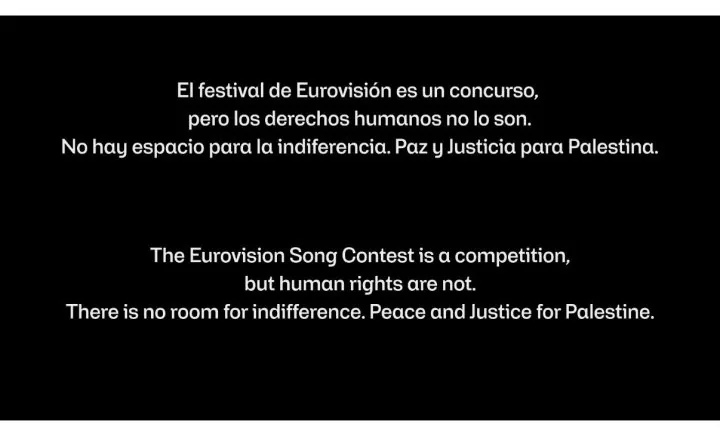
RTVE broadcasts a message of support for Palestine
“The Eurovision Song Contest is a competition, but human rights are not. There is no room for indifference. Peace and justice for Palestine.” This was the message RTVE showed this Saturday, just before the 21:00 news. The public broadcaster is not participating in the contest for the first time since 1961. Israel’s presence has led Spain to decide to withdraw this edition.
The text with which RTVE mentioned its Eurovision absence was also broadcast in English: “The Eurovision Song Contest is a competition, but human rights are not. There is no room for indiference. Peace and Justice for Palestine.”
What will happen to Spain next year? Can it participate again?
Spain can return next year without problem if it wishes, and there should be no issue with rejoining the Big Five (Italy was out for several years and then returned). However, Spain’s return will only be possible if the appropriate conditions are met, meaning Israel would not participate. The deadline to decide participation is December, when registration closes.
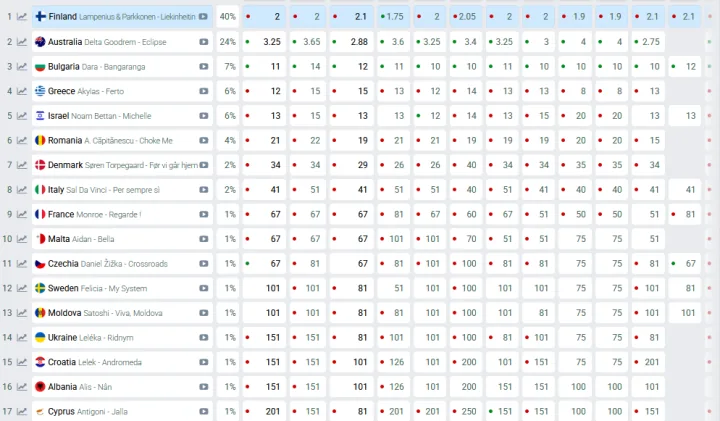
Who are the favorites to win according to the bookmakers?
Finland has led the bookmakers’ odds for days. However, Australia climbed positions and has solidly held second place since performing in the semifinal on Thursday. Bulgaria has entered as the third option in recent hours, pushing Greece (which was second until a few days ago) to fourth place. Israel completes the top 5 for bookmakers. Among those with the least chance of winning are Austria, Belgium, and Germany.
Changes in voting rules
After complaints from several countries (including Spain) about the televote in Eurovision, the European Broadcasting Union has introduced some new rules to try to control possible manipulation of the popular vote, which has favored Israel in recent years. On one hand, clearer promotion rules have been established to avoid massive vote mobilization campaigns in foreign countries. Now, “disproportionate promotion campaigns are discouraged […] especially when carried out or supported by third parties, including governments or government agencies.” Also, artists themselves cannot participate in any third-party promotional campaigns to influence the final result.
On the other hand, the maximum number of votes per payment method (online, SMS, or phone calls) has been reduced from 20 to 10, making it harder for such campaigns to influence the televote result. Additionally, in the semifinals, the professional jury regained 50% weight in the final result (the other 50% is decided by the televote). Although RTVE requested an external audit of the televote, the EBU assured no irregularities occurred and did not commission any audit to prove it nor made televote data public.
EUROVISION FESTIVAL
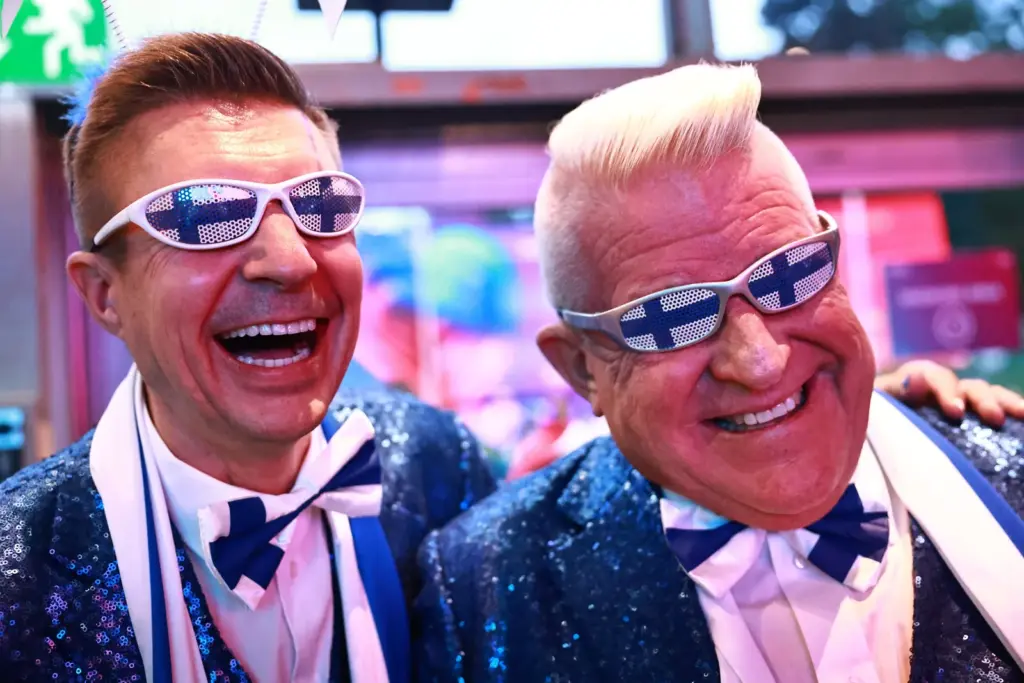
How to vote from Spain in Eurovision and televote changes
From Spain, voting will also be possible, just as it has been for some years from the United States, Latin America, or anywhere in the world even if not participating in the festival. Voting can be done through the official Eurovision website (with payment). Votes received from all these non-participating countries, including Spain, are counted as Rest of the World and added as if it were another country. This time, the number of votes per device will be limited to 10, instead of 20 in previous years.
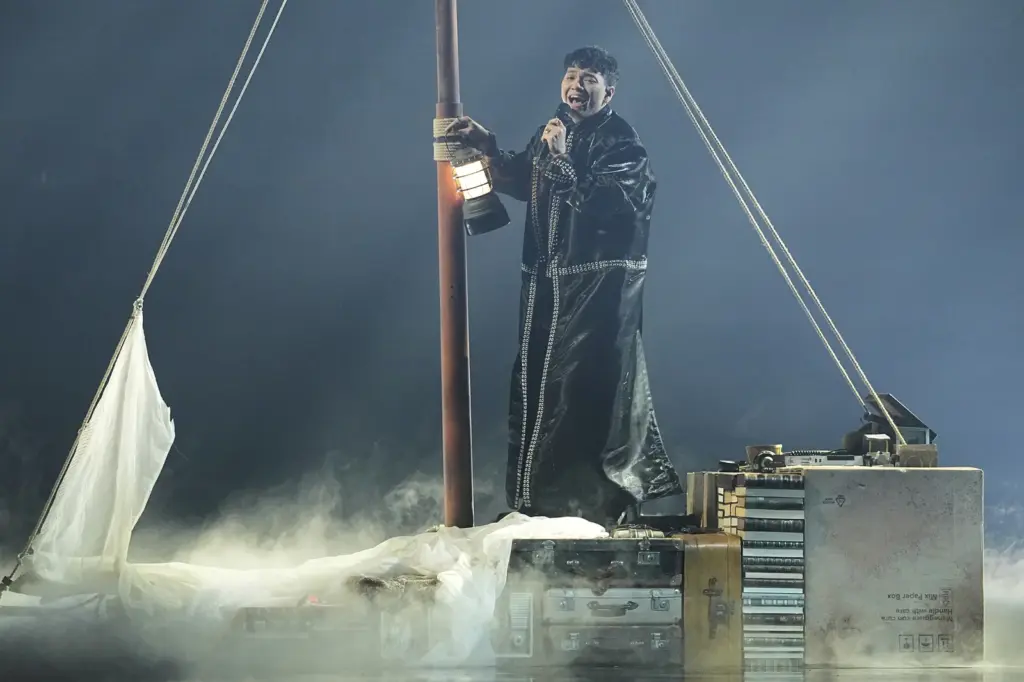
JJ, last year’s performance. / Martin Meissner / AP
JJ, last year’s winner, returns to the stage, now at home
JJ, last year’s winner, will perform the song that gave him victory in 2025, Wasted Love, at the start of the night. He will do so with a much more grandiose (and therefore more untimely) staging than the tragic minimalism designed for him by Spanish artistic director Sergio Jaén in the previous edition. Another Austrian Eurovision milestone, Rise like a Phoenix, will also be played during the night, but in an instrumental version without Conchita Wurst, who declined to perform in this final for personal reasons she assures are unrelated to politics.
Eurovision
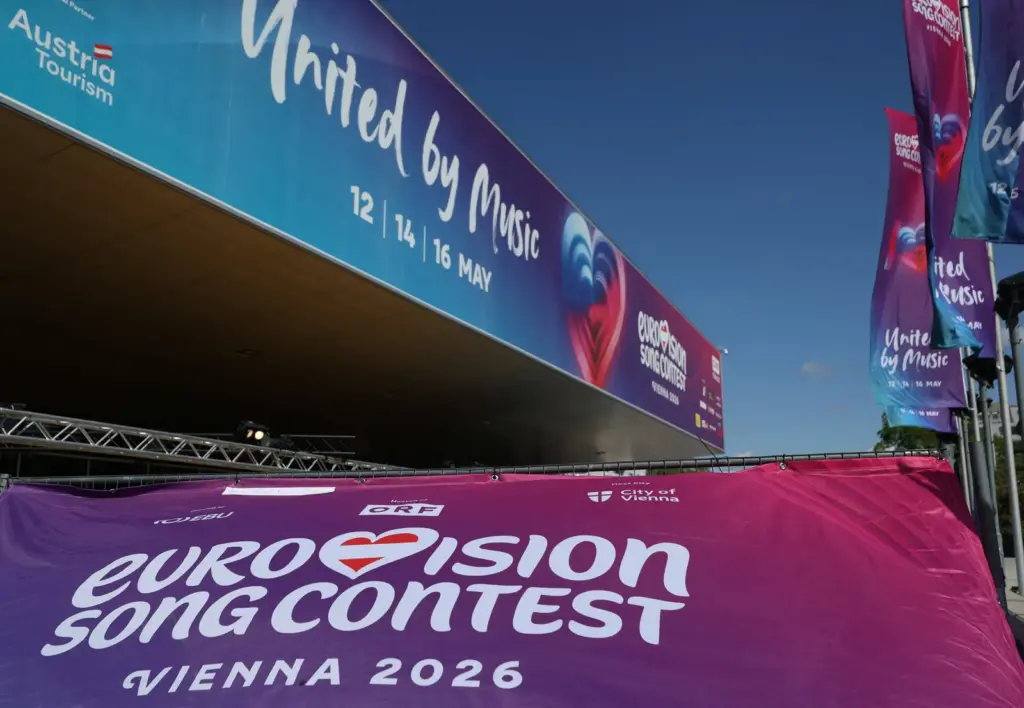
Spaniards attending Eurovision 2026 despite Israel: “Eurofans are required to make a commitment that no football fans are asked for”
Data clearly shows that Eurovision has lost one of its most committed fan bases. Spain, which is annually among the top 10 countries buying tickets for live events according to the European Broadcasting Union (EBU), is absent this time. The reason is not the lack of a representative to support after RTVE’s withdrawal (the United States ranks fifth in 2026), but many fans have decided to follow the public broadcaster’s example and not support Israel’s presence in the contest. We spoke with some Spanish citizens who have decided to attend the final in Vienna this Saturday, May 16.
Luis Sumariva became a fan of the festival at 9 years old when he saw Dana International, the first openly transgender person to win the contest, win with Diva. He is part of AEV (Association of Eurovision Fans of Spain). He does not support Israel inside or outside the musical contest context but has decided to attend the event this year despite Spain’s decision not to participate. He considers himself addicted, “like others are to tobacco even knowing it is harmful in many ways,” he says.
Read the full story.
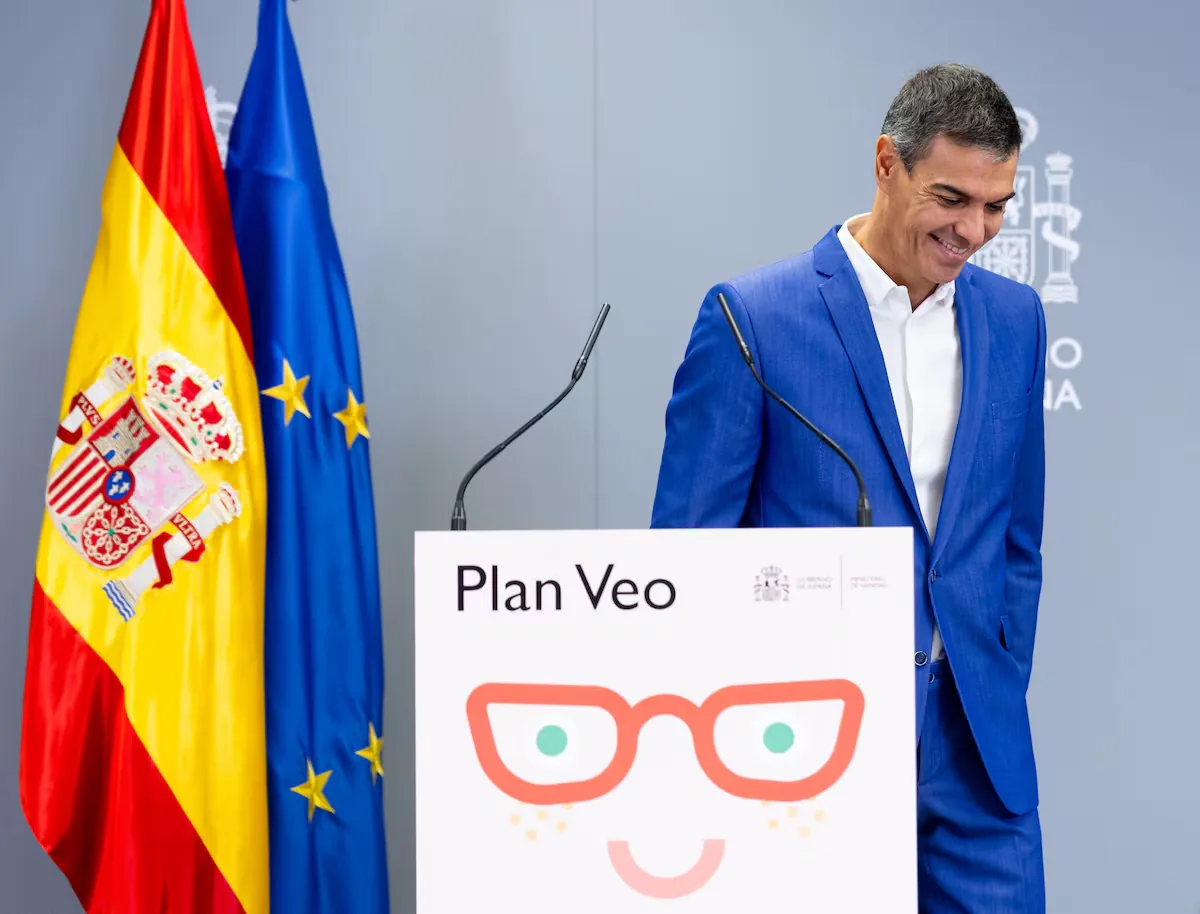
Pedro Sánchez: “We will not be in Vienna, but we will do so with the conviction of being on the right side of history”
On Friday, the Prime Minister, Pedro Sánchez, showed support for the Spanish public television’s decision not to participate in the contest. He did so in a video shared on his social networks: “Spain does not participate in the Eurovision Festival because our commitment to Human Rights, to international law, is also expressed through culture.” “This year will be different, yes, we will not be in Vienna, but we will do so with the conviction of being on the right side of history,” he added.
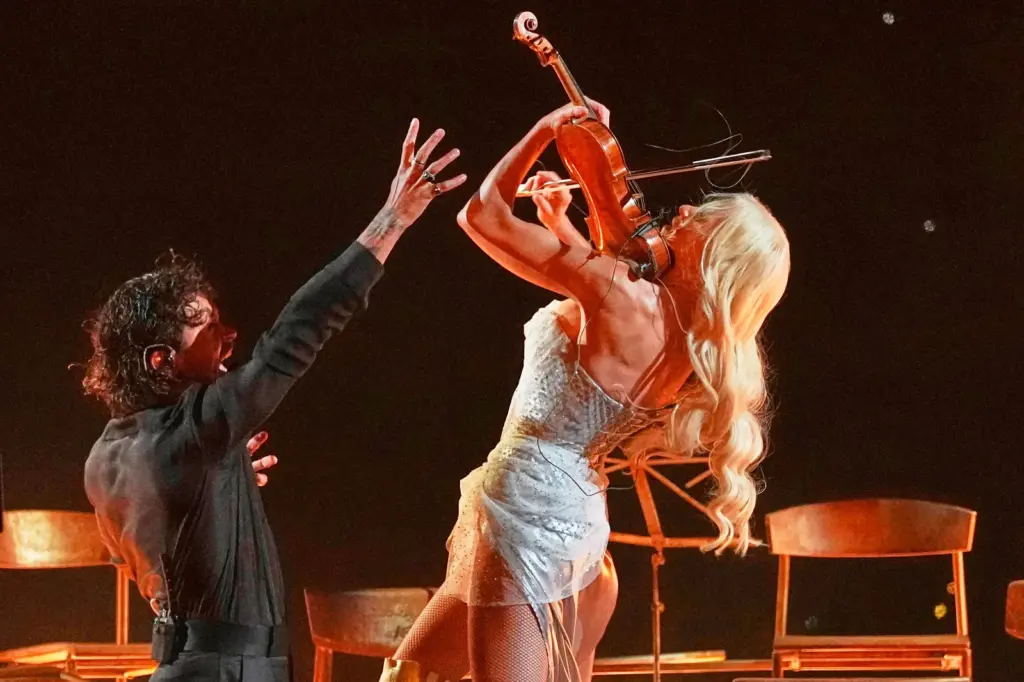
Eurovision Festival
Finland, the candidate to win Eurovision who could make Israel leave the festival
A powerful voice, that of Pete Parkkonen, and an equally intense violinist, Linda Lampenius, form the duo that has become the favorite in the betting to win Eurovision 2026. They represent Finland with the song Liekinheitin, which means “flamethrower” in Spanish. If they win, not only would they once again prevent Israel’s victory, feared by eurofans, but their triumph would also open the door to a previously unlikely scenario: Israel voluntarily deciding not to participate in the next edition of the contest.
Read the full story.
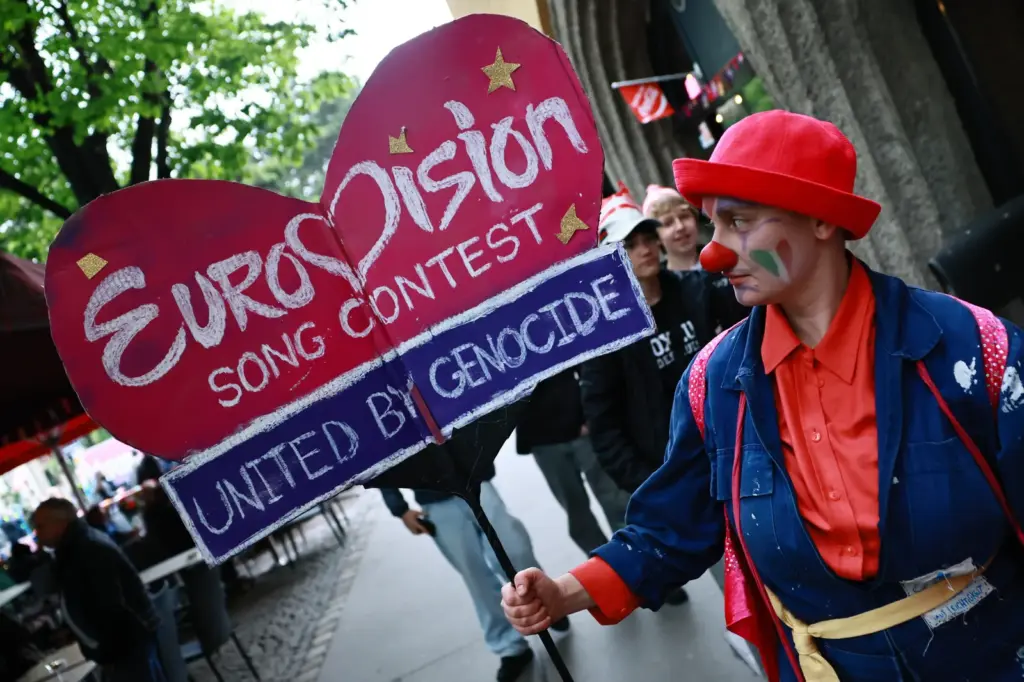
Protests in Vienna against Israel’s presence in Eurovision / HANNIBAL HANSCHKE / EFE
Protests in Vienna against Israel’s presence in Eurovision
Hundreds of pro-Palestinian protesters demonstrated this Saturday in Vienna against Israel’s participation in the Eurovision festival just hours before the final. More than 70,000 people have died in Gaza due to Israeli army bombings since 2023.
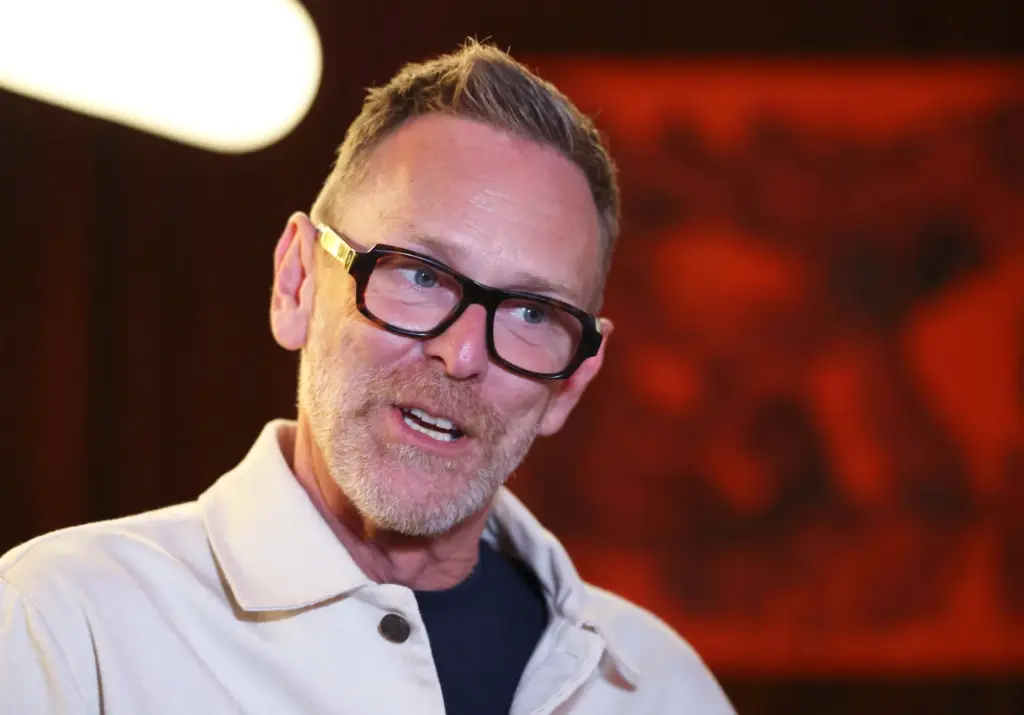
Martin Green, Eurovision director, last May 8 in Vienna. / Leonhard Foeger / REUTERS
Eurovision denies plans for Russia’s return to the Festival after RTVE’s criticism
After Eurovision director Martin Green stated in an interview that Russia could “theoretically” return even if the war in Ukraine continued, he had to clarify the situation again this Saturday to deny any plans or negotiations.
Green denied a possible return of Russia to the festival from which it was excluded due to its invasion of Ukraine, and refuted reports attributing those words to him, which also provoked a strong reaction from RTVE president José Pablo López: “Let me be very clear: There are no ongoing talks about the Russian broadcaster’s return to Eurovision. There are no plans for that to happen,” Green told EFE at a press conference hours before the grand final. He insisted he never proposed that option and called that information “garbage.” In the video, he only said it was a “theoretical” version to explain that “the invasion of another country is not grounds for exclusion” from the festival.
RTVE president had previously called the possibility of Russia’s return a “blatant insult to European values.” Eurovision director responded directly: “I’m afraid my good friend has been reading some somewhat misinterpreted things.” In a message on social network X, López said Green only intended to “justify his double standard with Israel,” referring to the fact that Israel has not been expelled for its military campaign in Gaza. “Let’s hope the European Broadcasting Union (EBU) formally rejects these statements, which damage the contest’s image and hinder Spain’s return. It’s time for a new era,” concluded RTVE president.
The EBU, organizer of the Eurovision festival, decided to exclude Russia from the 2022 competition after the invasion of Ukraine.
EFE
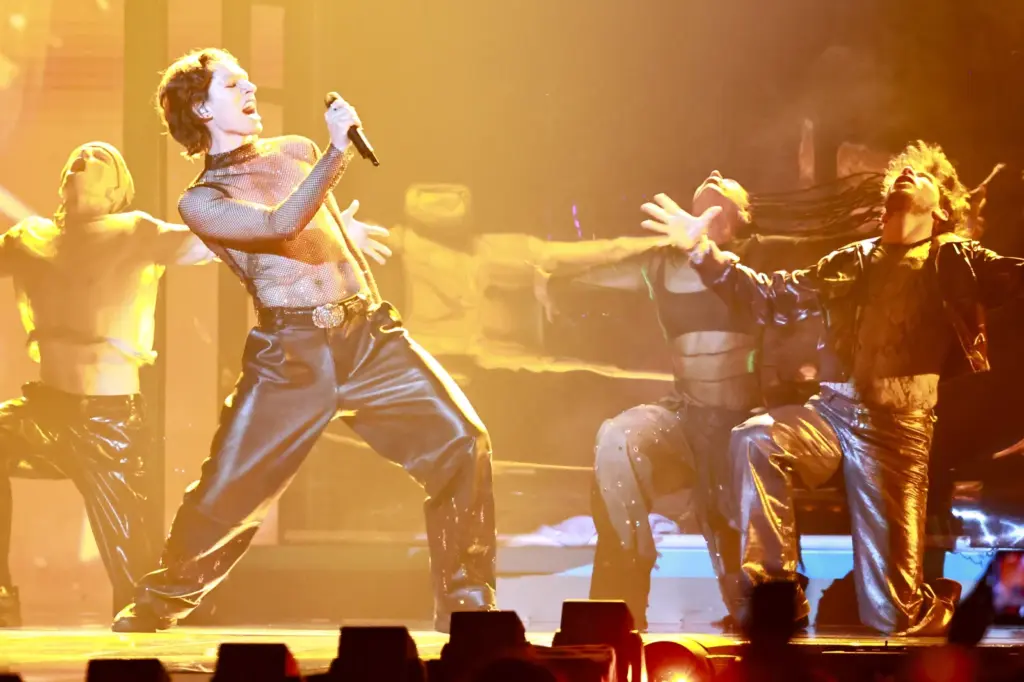
Søren Torpegaard Lund, Denmark’s representative at Eurovision 2026 / HANNIBAL HANSCHKE / EFE
Running order of the 25 finalists
The 20 semifinal qualifiers are joined by the five countries that go directly to the final: the Big Four (Germany, France, Italy, and the United Kingdom) and the host and last year’s winner, Austria. These songs will compete today in this order:
Denmark: Søren Torpegaard Lund – Før Vi Går Hjem
Germany: Sarah Engels – Fire
Israel: Noam Bettan – Michelle
Belgium: ESSYLA – Dancing on the Ice
Albania: Alis – Nân
Greece: Akylas – Ferto
Ukraine: LELÉKA – Ridnym
Australia: Delta Goodrem – Eclipse
Serbia: LAVINA – Kraj Mene
Malta: AIDAN – Bella
Czech Republic: Daniel Zizka – CROSSROADS
Bulgaria: DARA – Bangaranga
Croatia: LELEK – Andromeda
Great Britain: LOOK MUM NO COMPUTER – Eins, Zwei, Drei
France: Monroe – Regarde!
Moldova: Satoshi – Viva, Moldova!
Finland: Linda Lampenius x Pete Parkkonen – Liekinheitin
Poland: ALICJA – Pray
Lithuania: Lion Ceccah – Sólo Quiero Más
Sweden: FELICIA – My System
Cyprus: Antigoni – JALLA
Italy: Sal Da Vinci – Per Sempre Sì
Norway: JONAS LOVV – YA YA YA
Romania: Alexandra Căpitănescu – Choke Me
Austria: COSMÓ – Tanzschein
The edition with the fewest participants in 20 years
This has been the Eurovision edition with the fewest participants since 2004. A total of 35 countries have participated: Moldova, Sweden, Croatia, Greece, Portugal, Georgia, Finland, Montenegro, Estonia, Israel, Belgium, Lithuania, San Marino, Poland, Serbia, Bulgaria, Azerbaijan, Romania, Luxembourg, Czech Republic, Armenia, Switzerland, Cyprus, Latvia, Denmark, Australia, Ukraine, Albania, Malta, Norway, France, Germany, Italy, United Kingdom, and Switzerland. Of these, only 25 reached tonight’s final after the two semifinals.
Last year, 37 countries participated. Despite five absences, the difference with this year is not so large because three territories, Bulgaria, Romania, and Moldova, have returned to the festival after some years of absence due to economic or other difficulties.
Live narration of Eurovision 2026 begins
Welcome to the live broadcast of the 70th edition of the Eurovision Festival final, held tonight in Austria’s capital, Vienna. This is the first time Spain does not participate since joining the festival in 1961. RTVE’s decision to dissociate from the musical contest this year is due to Israel’s presence and its army’s attacks on Gaza, which have already claimed over 70,000 victims. The same decision not to participate was made by public broadcasters of Ireland (RTÉ), Slovenia (RTVSLO), Iceland (RÚV), and the Netherlands (AVROTROS). Therefore, RTVE does not broadcast Eurovision this year, although it can be watched in Spain through the festival’s official YouTube channel from 21:00. Here you can follow all the information live.
Read more France will investigate the 2018 murder of Saudi journalist Jamal Khashoggi