






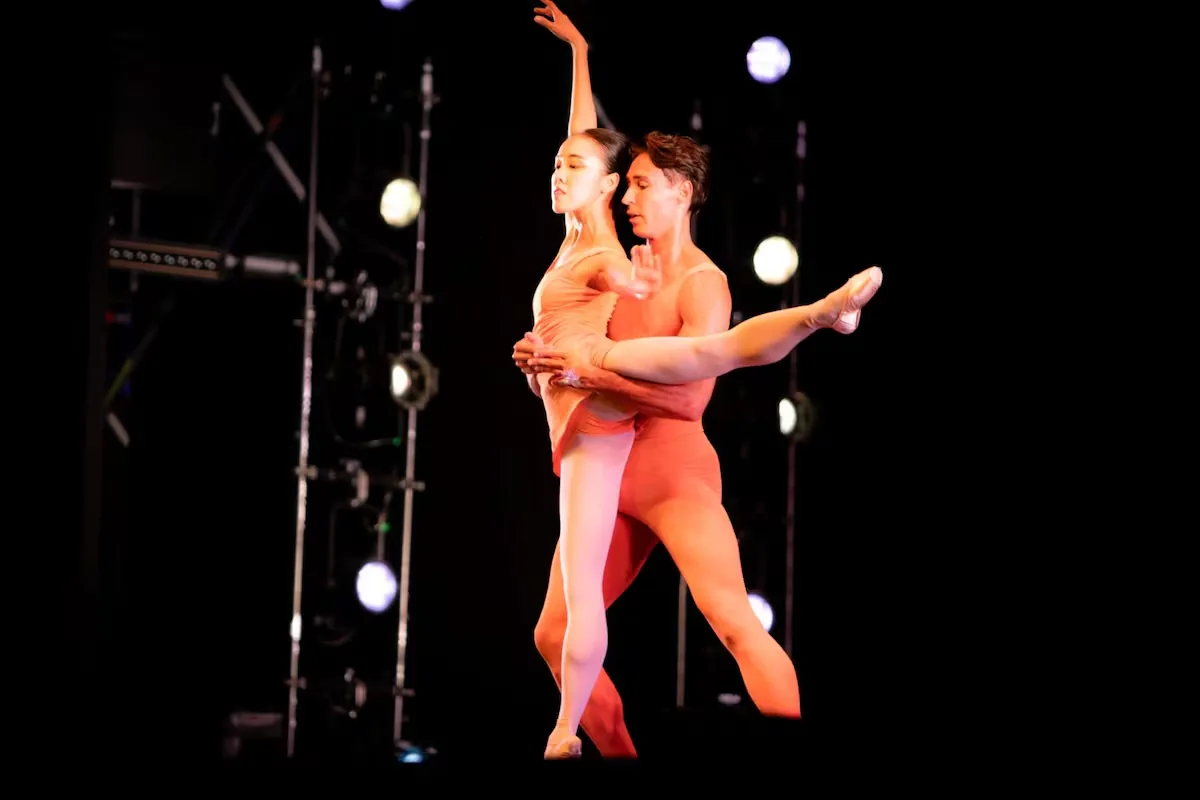
It promised to be one of the best ballet nights of the season and of what has been seen in these parts lately, but the theater gods are masters of the unexpected, and it turned out to be an eventful night saved for the audience filling the patio of Conde Duque by the good work and daring of the dancers. Technical interruptions (apparently due to a fatal coincidence of light and sound failures), changes in the program, and the constant wandering of some erratic audience members almost ruined the evening.
As always in art, it is not a question of quantity, but of meaning, sensitivity, and quality. It was a restless performance, but one that at times allowed the enjoyment of good ballet, the kind that entertains while leading the spectator to the realm of thought. The cast came out to gain ground, and the demanding dance readings allowed the troupe to be calibrated.
The London City Ballet [LCB], with its current rebirth, curiously becomes exemplary beyond the islands. It is a model of a company that works, and its module adapts to circuits where smaller British theaters, which in certain respects resemble Spanish coliseums: meager or poorly proportioned stages, basic technology and features, medium capacities, modest budgets, have the possibility of programming good ballet. Then a well-thought-out project arrives, with the recruitment of a group of good dancers, a judicious selection of works, and it succeeds. The LCB, directed since 2023 by former dancer, teacher, and choreographer Christopher Marney, has found its path of progression by combining new creation with the recovery of a unique repertoire. The seriousness of the endeavor becomes attractive enough for mature and young artists looking for their place. LCB has a full agenda and long-term plans.
Of all the praise and accolades Marney constantly receives from the British press, the most interesting is undoubtedly that this former dancer and choreographer is very sensitive to the concept of repertoire, to the recovery of forgotten works (or those at risk of being lost from the stage) and, consequently, to the preservation of the very distinct styles of the plethora of choreographic creators of our time, especially of the English School, one of the modern ones alongside the American, Cuban, or Korean, to cite three clear examples with their own aesthetic definitions. The British current, with immense resources, is the one that has produced the most works and creators throughout its first century, sometimes following the dynamism of the American and relating to it.
Probably, this attitude and express dedication of Marney is the only resource and the only real possibility for choreographic art to survive the Silicon Age and Generative Artificial Intelligence, a battle that is already underway. The Madrid program was supposed to include the title Quiet City, and that was one of its greatest attractions. Marney is committed to objective and not virtual reconstructions, which leads him to take several investigative steps, for example, looking for people who were in the New York rehearsal studio in 1986 when Jerome Robbins created that Quiet City (to the music of Aaron Copland). An injury to Cuban dancer Alejandro Virelles (the most anticipated figure along with Romanian dancer Alina Cojocaru, who did dance and was splendid) prevented the performance of Jerome Robbins’ work, which was replaced by Soon, by Londoner Tasha Chu, and which was part of the LCB’s Rebirth show, premiered in November 2025 at the Linbury Theatre, a venue associated with the Royal Opera House in London. Soon wants to narrate, and Tasha Chu builds her somber story on music by Sam Robinson, but highlighting the tense and inspired lament by Gavin Bryars: “Jesus’ Blood Never Failed Me Yet,” composed in 1971 and used by several famous choreographers, including William Forsythe, which contributes, and greatly, to one of the most successful moments of the piece, not entirely resolved in its aspirations and dramaturgy.
Mephisto Walz, which opened the recital, is a recent creation from this very year 2026 commissioned by Marney for the LCB on Franz Liszt’s mythical score to Ashley Page (Rochester, 1956). With the best known of these waltzes (recreations for piano and orchestra that were not born for the stage but for the symphonic concert setting), Ashley makes dynamics a facet of style, which is not gratuitously festive but very elaborate in formal combinations, relying on crescendo and cumulative dynamics in the phrasing, incessant and demanding. Obviously, this becomes a vehicle for artists to showcase themselves, and serves as their calling card.
Read more Those affected by the fires are entitled to four days of paid leave from work
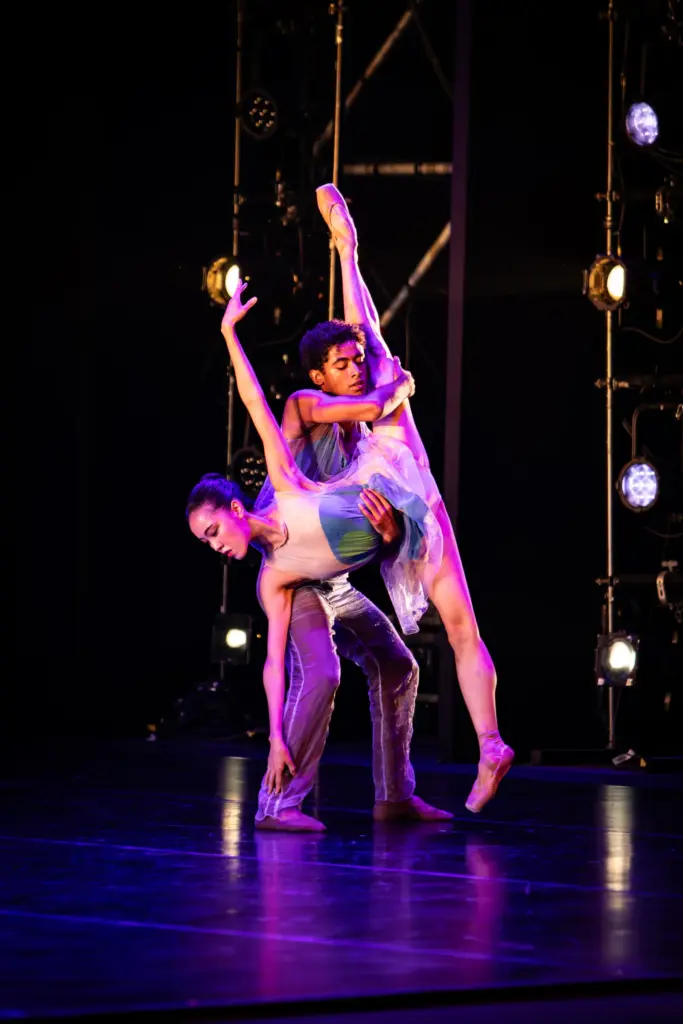
Concerto (Shostakovich, 1966) was created by MacMillan at the Deutsche Oper Ballet in West Berlin (FRG) when he arrived to direct the new German company, and this was the first ballet he also conceived as a credential for his artistic direction. Concerto, just one year after Berlin, premiered in New York by the American Ballet Theatre and in London by the company that is today the Birmingham Ballet (formerly The Royal Ballet Touring Company); and finally the Royal Ballet took it on in 1970, where it has never left the repertoire. Several generations of dancers have shone in this work which, while recognized as abstract, is full of subtle acting and psychological nuances. Its pas de deux, with its interpretation placed on the adagio of Shostakovich’s second piano concerto (opus 102), is a filigree of control; breathing, the superior accent, and the drawing of the couple dominate all expressive destiny. Artists Jimin Kim and Joseph Taylor were delicate and attentive, but with some evident misalignments.
MacMillan was a man of few words, and among the few autograph phrases reliably attributed to him is the one that more or less says: “Every ballet I make is a contract with the audience: I make it and that audience must pay all possible attention and enter into this experience,” as his widow and principal custodian of the repertoire, Australian painter Deborah Williams, recounted several times. This pas de deux is a decalogue of his most characteristic manners, his personal style. Let us remember that he created it for his principal muse, Lynn Seymour, and that MacMillan asked designer Jünger Rose for “something clean and sunny, without distracting elements,” and he literally complied, something that is scrupulously respected to this day.
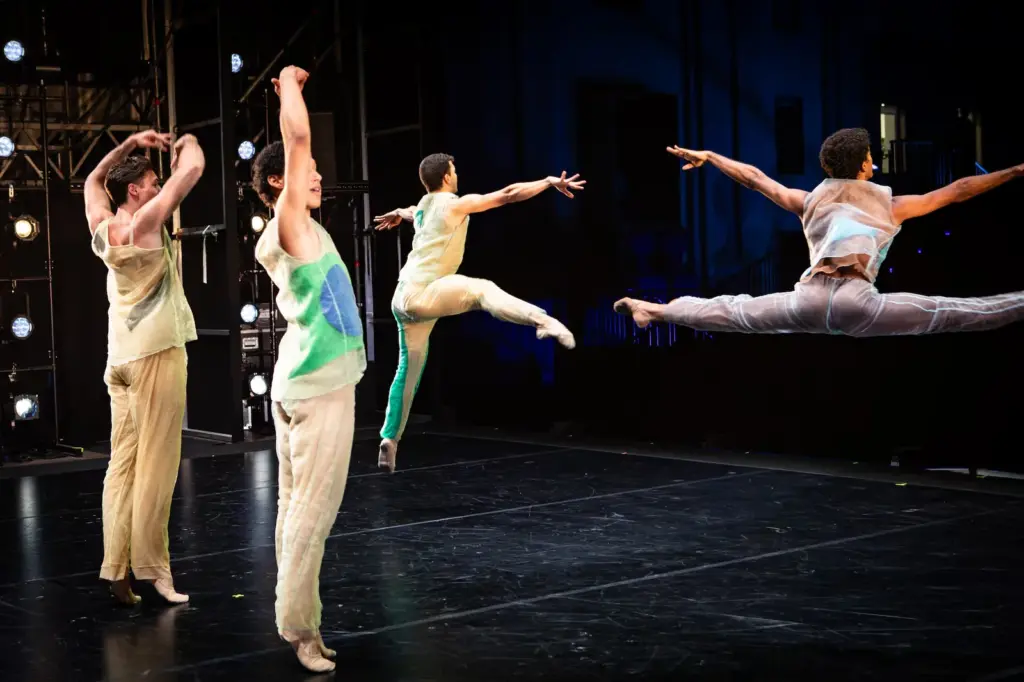
Pictures at an Exhibition was created in 2014 by Alexei Ratmansky for the New York City Ballet using Modest Mussorgsky’s original piano score and intentionally avoiding Ravel’s famous and overused orchestration. It can now be said without offending anyone: Ratmansky is much happier and more productive in his own modern creations than when he ventures into the garden of repertoire, with evidently better results. The dozen pieces and motifs (some with a frank and intentional ritornello) of Mussorgsky’s Pictures express very differentiated moods in changing rhythms, and Ratmansky takes advantage of this with pleasure to give each dancer in solos and duets their opportunity to shine through inventive moments that are brilliant and highly skilled. The presence of star Alina Cojocaru (Bucharest, 1981) gave a masterful touch to the ensemble, a brilliance of tradition justifying the effect of a prima ballerina in a group; she is technically intact and always demonstrates that refined and musical taste that characterizes her. Is the Romanian on her way to becoming a “ballerina-Petrof” in her excellence, like so many others in the British tradition? It seems so.
LONDON CITY BALLET
Mephisto Waltz: Ashley Page / Franz Liszt; Concerto (Pas de deux): Kenneth MacMillan / Dimitri Shostakovich; Soon: Tasha Chu / Sam Robinson and Gavin Bryars; Pictures at an Exhibition: Alexei Ratmansky / Modest Mussorgsky. London City Ballet. Artistic Director: Christopher Marney. Los Veranos de La Villa. Conde Duque. July 24 and 25.
Read more The return of fire