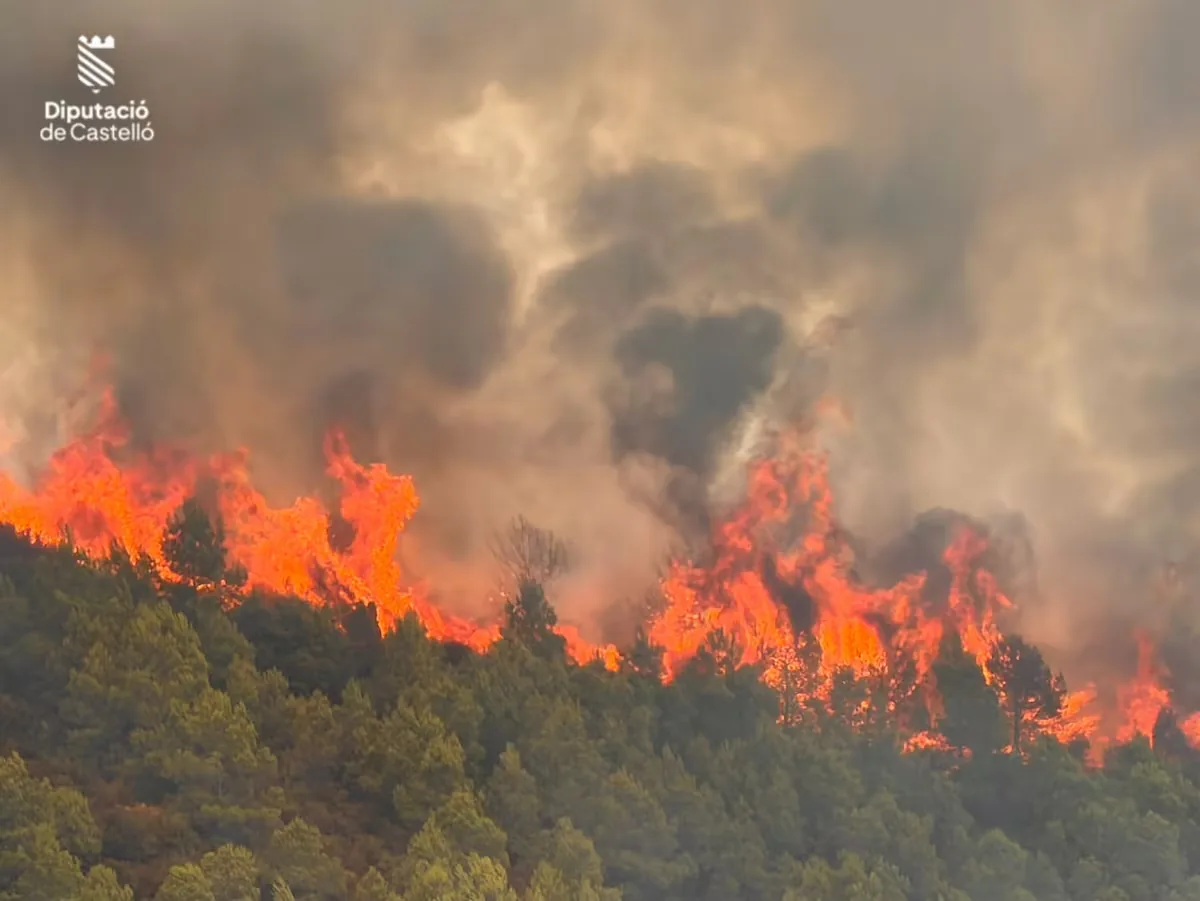
The fight against the forest fire in Segorbe (Castellón, 9,805 inhabitants), which started Thursday night due to a lightning strike, focused Friday night on combating the flames with heavy machinery to take advantage of improved wind and humidity conditions compared to the previous afternoon. The toll, according to the Generalitat’s Emergency Minister, Juan Carlos Valderrama, is a thousand evacuees from the municipality of Gátova (Valencia), 633 hectares burned, and a fire with a 15-kilometer perimeter. The efforts of the firefighting personnel in recent hours have focused on protecting this population, already evacuated as it is the most threatened by the fire, and preventing the flames from crossing the CV-25 road, the main access to this town in the province of Valencia. The fire remains active, and the central hours of the day will be decisive.
Read more How ‘rich’ are you? Check your position by salary, income, and wealth
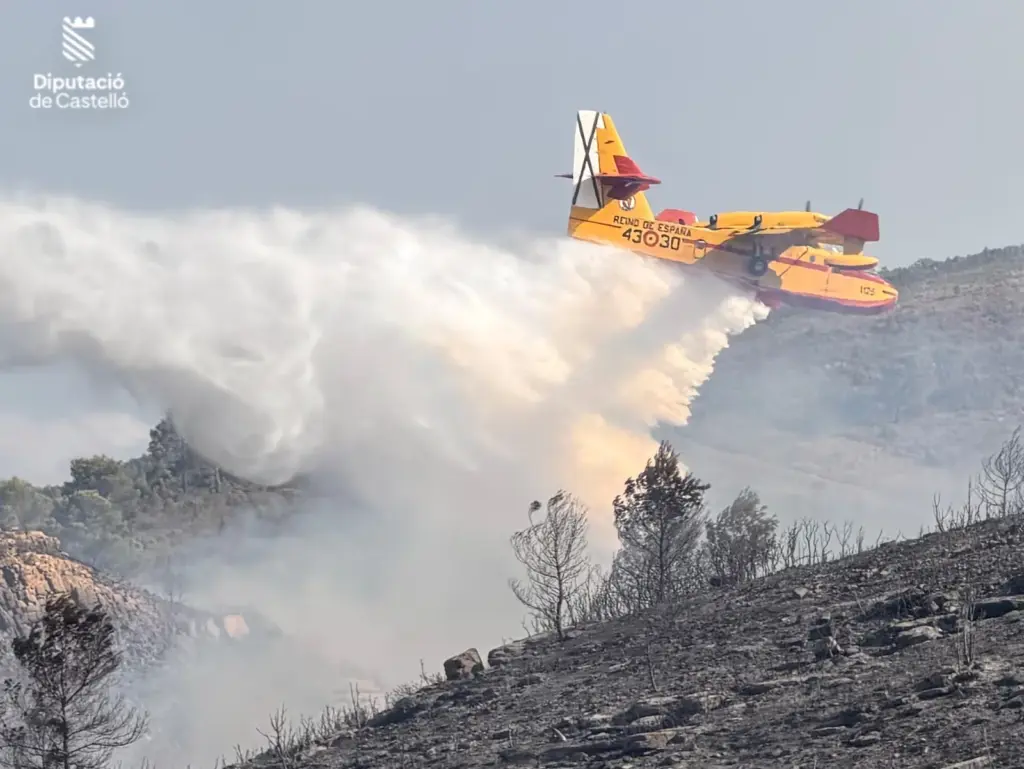
Valderrama, after the last Cecopi meeting, which began at nine in the morning this Saturday, explained that currently 25 aerial units (14 of them from the regional government) and about 350 personnel are working in the area, including the Military Emergency Unit (UME), forest and provincial firefighters, security forces, and the Red Cross, among others.
“We can never say we are optimistic or pessimistic in a forest fire; we have to see how it evolves because yesterday morning the conditions were very favorable, but then there were critical hours when the wind direction changed. We have to wait and see what happens throughout the day,” the minister stated after the Cecopi meeting.
#IFSegorbe
— UME (@UMEgob) August 22, 2026
🚒During the night, the #UME units continued missions to protect #Gátova and prevent the flame front from crossing the CV-25 road.
🚜Engineer machinery also carried out direct attacks and opened defense lines. pic.twitter.com/KJPApjc7QJ
The night has been “meteorologically calm” in the area, according to the Spanish Meteorological Agency (Aemet), with light variable winds with gusts of about 10 kilometers per hour, humidity above 70%, and a minimum of 17 degrees during the early morning.
Raúl Gil, director of the Advanced Command Post of the Provincial Fire Consortium of Castellón, highlighted the vulnerability of the forest, especially during the central hours of the day, and how aggressive the flames can become at that time. “Yesterday the fire gave us many problems, which were resolved by the end of the day, at dusk, when the aerial units had withdrawn, and we saved a complex situation,” he pointed out. According to him, this Saturday started “well.” “It was a calm night in which good work could be done; there was a lot of humidity, to the point that the flame disappeared,” he described.
Nevertheless, Gil recommended caution. “We have to wait and see how it evolves, especially during the central hours of the day, so that the work we are doing with all the resources, which are very extensive and especially many aerial units, consolidates the work we have been doing,” he added.
Pilar Bernabé, Government delegate in the Valencian Community, warned that winds and adverse weather conditions are expected on Saturday afternoon. “Therefore, it is essential that citizens comply with the prevention measures that have been implemented. That is why the roads are closed to access the area, and we ask all residents to comply with these rules,” she said.
“We hope the positive evolution continues and that the units keep working. We have more than 100 personnel working on the ground from UME and the Civil Guard at this moment. We have 30 UME ground units working and eleven aerial units from the Spanish Government collaborating and contributing to the firefighting efforts,” she added.
Read more Ayuso’s slip-ups fuel the opposition months before the 2027 elections: «She should resign»
🕹️🔥The timely information from the @Umegob drones about the advance of the flame front and hot spots is essential for the firefighting tasks of their personnel in #IFSegorbe (Castellón). pic.twitter.com/Q1F0Bl4ypB
— Ministerio Defensa (@Defensagob) August 22, 2026
Two alert messages in two hours
The uncontrolled advance of the flames led the Generalitat Valenciana on Friday to send two Es-Alert messages within two hours to the Valencian population of Gátova, the closest urban center threatened by the fire: the first for residents to shelter in their homes due to smoke presence; and the second, after five in the afternoon, to evacuate the population of about 500 people, although in summer it reaches a thousand. In fact, around 1,000 people have been evacuated. “The evacuation will be maintained,” the minister communicated.
A total of 37 residents of Gátova (20 men and 17 women, plus 10 pets) have been accommodated in the Bétera municipal sports center, where the Red Cross has deployed personnel and shelter resources. Another nine people, five dependents and four companions, have been transferred to a residence in Carlet (Valencia).
Aemet forecasts that on Saturday afternoon wind gusts of more than 30 kilometers per hour from the east and southeast may blow in the Segorbe fire area. Scattered low clouds are also observed in the area, but so far no rain probability is reported.
Dialogue and listening to professionals, proposes Morant
The Minister of Science and Secretary General of the Valencian Socialists, Diana Morant, who has attended the latest Cecopi meetings on the Segorbe forest fire, demanded this Saturday that after summer a process of dialogue and listening with emergency professionals be opened to understand their needs and strengthen the services that attend to citizens amid increasingly extreme weather phenomena.
“It is the best way to recognize, not only with words, the work they do every day to save our lives,” Morant emphasized, referring to the repeated complaints from Generalitat Emergency professionals about the lack of personnel and resources, which the Council chaired by Juan Francisco Pérez Llorca does not address.
The minister defended that the response must rely on two pillars: fighting climate change and strengthening emergency services because “we are a land very vulnerable to climate change.”