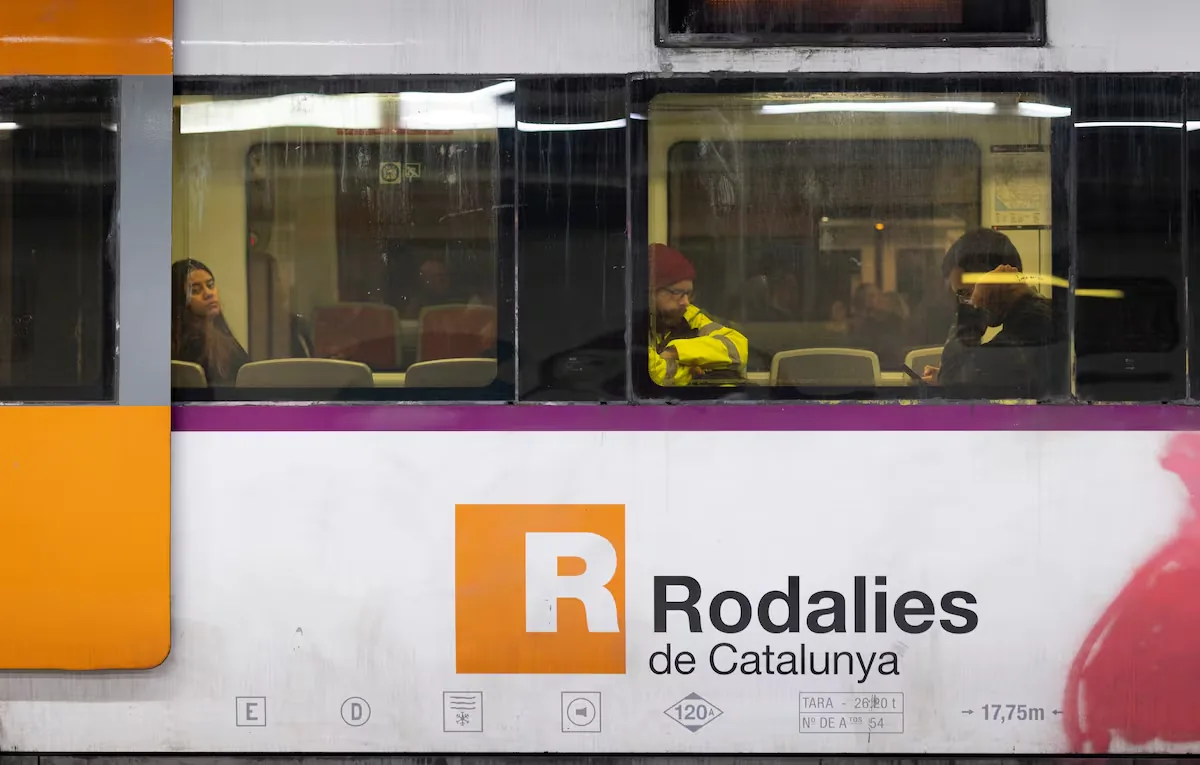








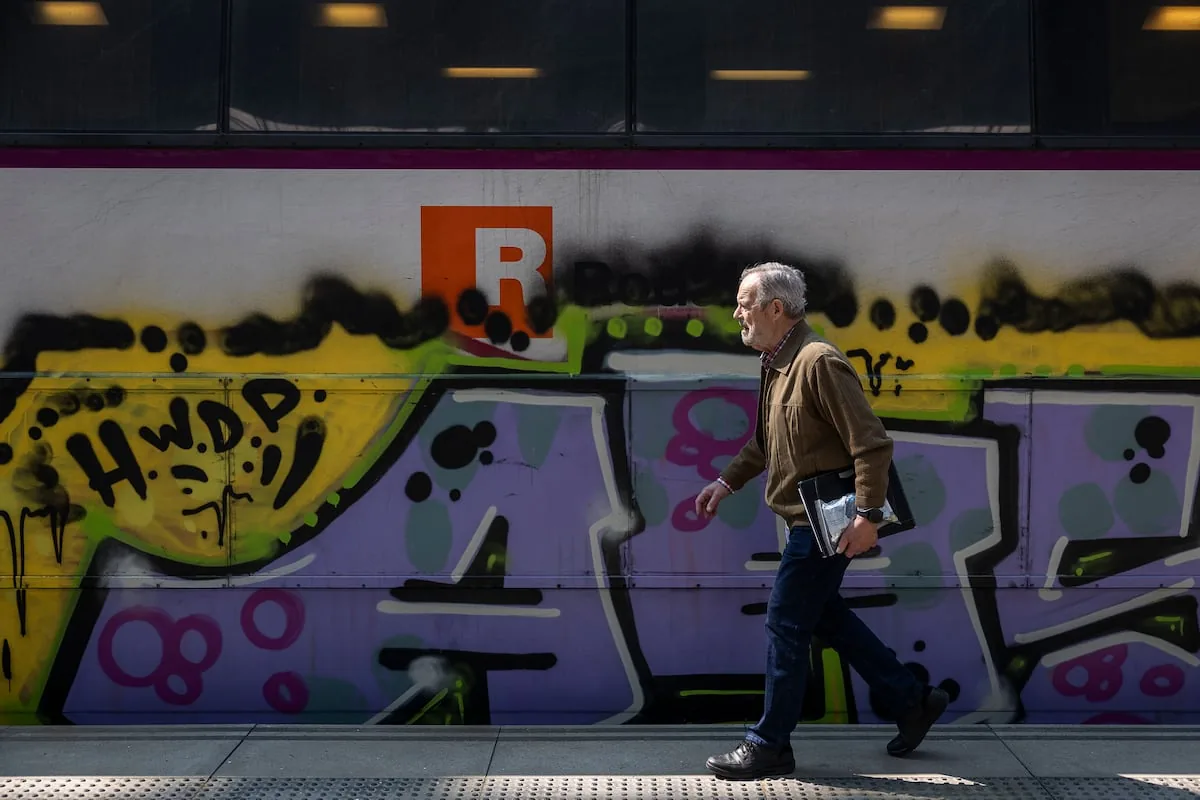
The Government of the Generalitat is making a move to put an end to graffiti on trains, which severely disrupts rail mobility in Catalonia. The Parliament debated this Wednesday a bill presented by the PSC that aims to increase penalties for graffiti artists with fines of up to one million euros. These sanctions triple the current amounts (until now the maximum penalty was 300,000) but it remains to be seen if this will curb the proliferation of railway vandalism, which is mainly concentrated in Catalonia. The Chamber has approved processing the bill by a single reading with the votes in favor of all parliamentary groups except the CUP, which voted against, and Comuns, who abstained.
Read more EL PAÍS strengthens its leadership among general press in the midst of global informational upheaval
In 2024, when Rodalies was not functioning well (although several quarters remained before the great railway chaos), 3% of the trains available in Catalonia (there are 272 in total) were not operational because graffiti had left them without visibility. Trains that were supposed to depart had to cancel their routes—or ran late—because they needed to be cleaned. In fact, Renfe has calculated that it spends more than 11 million euros annually (32,000 euros daily) removing graffiti from trains running in Catalonia. This is half the expenditure the company incurs on cleaning graffiti across all of Spain. Each year, 2,300 intrusions by graffiti artists (more than six per day) are detected in the railway company’s facilities, and 7,500 hours of work are needed to remove graffiti covering more than 70,000 square meters of surface on Catalan trains.
Renfe has increased security. They have more guards, dogs, and drones, but very few arrests of these graffiti artists who often act in groups and against the clock. In fact, there are very few arrests, and on many occasions, the guards are overwhelmed by the number of vandals acting simultaneously.
In response to this situation, this Wednesday, the Government brought to the plenary a proposal to modify the sanctioning regime of railway law 4/2006 and try to have it come into force before summer to help curb this scourge through fines.
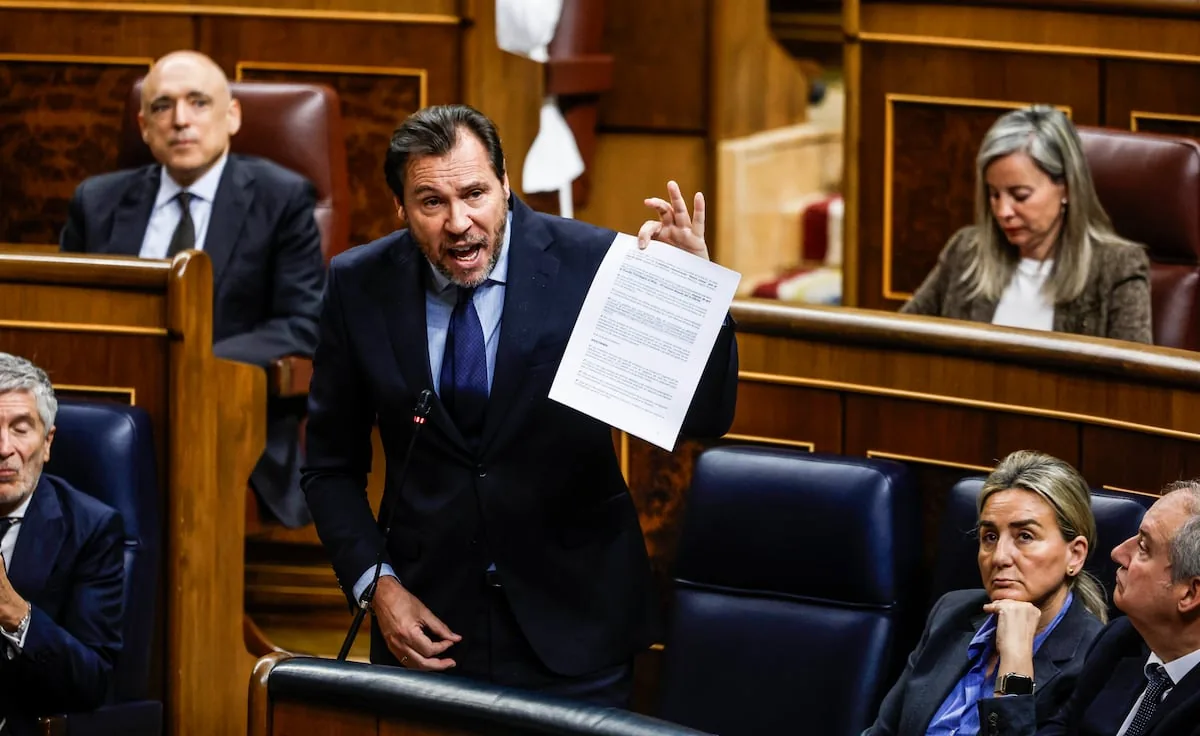
“This is not just a graffiti law, but one about services that are being wasted,” summarized Ivana Martínez, PSC deputy. “Vandalism is not an artistic expression and we have to react. Those who do it must be responsible for their actions. This law is not an ideological proposal, but a proposal to defend the right to mobility under dignified conditions,” insisted the socialist. According to her calculations, vandalism on trains costs 6.2 million euros annually and has direct consequences for the population. “It means citizens arrive late and is a real public service problem. The current legal framework is insufficient and does not adequately classify certain behaviors.”
Read more Sindárov achieves the highest score in the recent history of the Candidates
The regulation submitted for voting divides infractions into three levels (tripling the amount of current sanctions): minor fines will be up to 18,000 euros, serious ones will be sanctioned with between 18,001 and 90,000 euros, and very serious ones with amounts between 90,001 and 900,000 euros.
The proposal highlights that a serious infraction is “destroying, damaging, or altering any work or installation of the railway track, its functional elements, or, in general, any element of the service, including all rolling stock, if these behaviors do not constitute a very serious infraction.” Additionally, it adds that it is also serious “to make graffiti on railway infrastructure or rolling stock that causes its defacement and requires total or partial stoppage so that the normal operation of the railway infrastructure is altered.” It is precisely at this point where the infraction can be considered very serious and greatly increase the financial amounts.
The Generalitat government assures that this will end impunity, but there are no statistics on graffiti artists arrested nor, much less, whether those arrested end up paying the fines imposed or declare themselves insolvent outright.
Read more The U.S. Treasury eases its sanctions so that Mexico can settle with CIBanco