





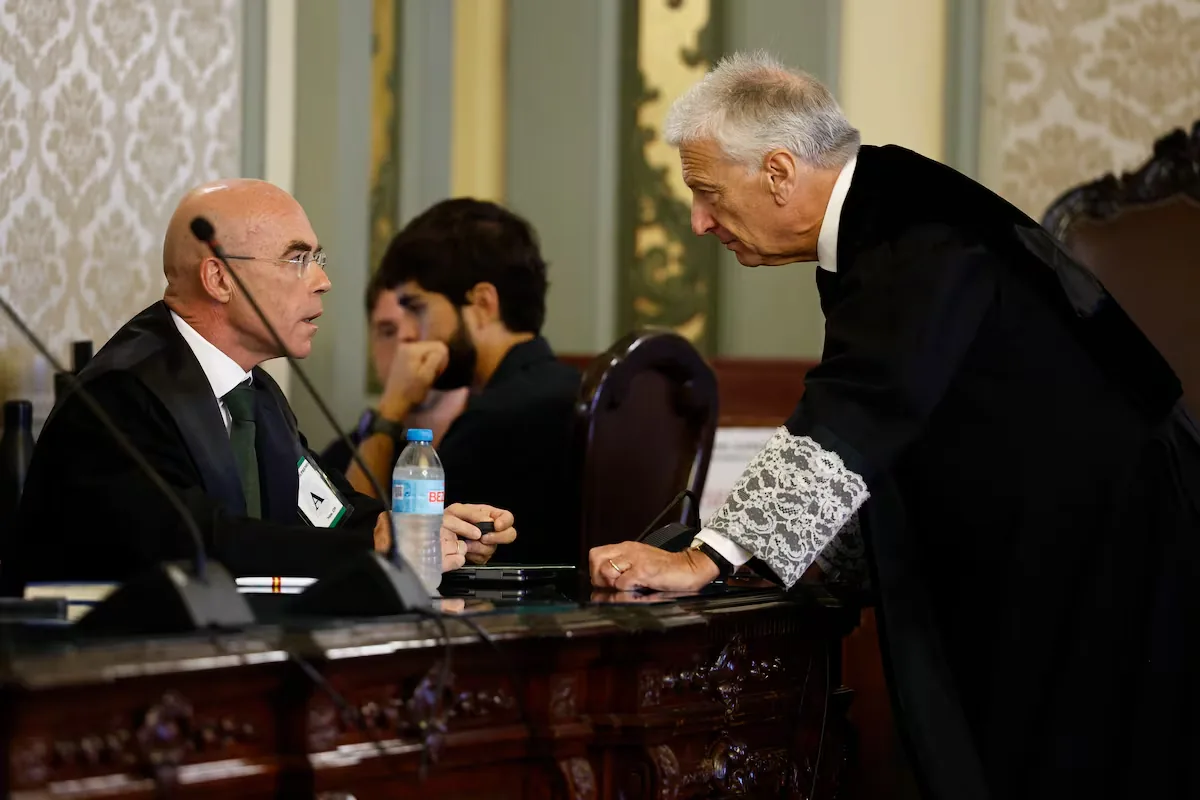
Thursday, September 10 was marked as a holiday in red on the Supreme Court calendar. At the opening ceremony of the judicial year, the ceremony presided over by the King with which the court year is inaugurated, the Supreme Court gathers the judicial leadership in a procession of robes to display all its pomp. The Palacio de las Salesas, the seat of the court, seems to have stopped in time. But this Thursday, when judges, prosecutors, authorities, and the rest of the guests were fulfilling the last act on the agenda, the cocktail in the Hall of Lost Steps, a legal bomb sent the Supreme Court back to 2026. The Third Chamber (Administrative Litigation) had just notified the orders in which it justified the precautionary suspension of the right to vote of thousands of naturalized Spaniards due to a “well-founded” danger of electoral fraud.
Read more The methods AI can use to kill us
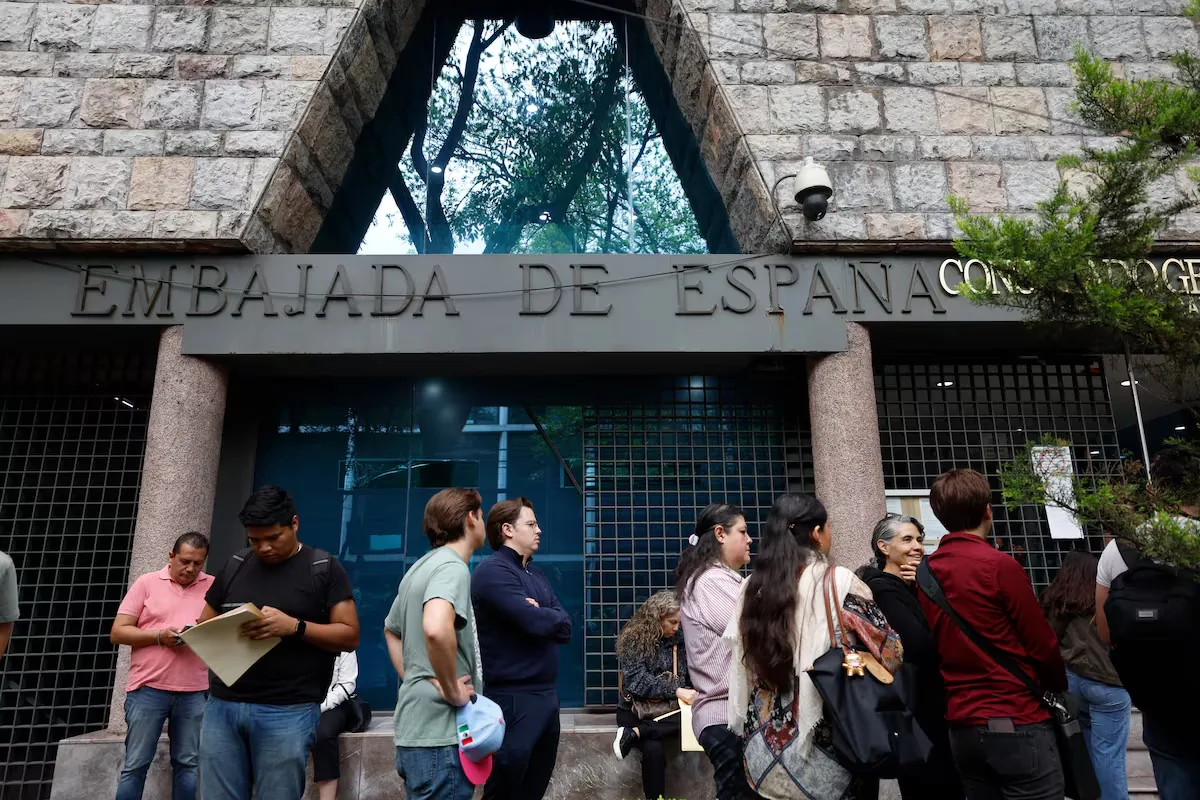
The massive withdrawal of a fundamental right is an unprecedented measure with which the Supreme Court assumes the thesis, aired without any proof in recent months by the right and far-right, that the Government is fabricating a huge fraud for the upcoming elections by inflating the Electoral Census of Absent Residents (CERA) with new Spaniards naturalized irregularly. The Supreme Court’s decision responds to the appeal filed by Vox and Iustitia Europa against an agreement of the Central Electoral Board (JEC) that declared itself incompetent to oversee the electoral effects of the 2022 Democratic Memory Law, which granted the right to obtain nationality to the children and grandchildren of Spaniards who lost or renounced it after exiling for political, ideological, or sexual orientation reasons during the first two decades of Francoism. Neither the far-right parties nor the Supreme Court question the law, but they do question the instruction published by the Ministry of Justice a few days later, which presumes the condition of exile for all Spaniards who left the country between July 18, 1936, and December 31, 1955.
The Supreme Court’s decision began to take shape on Monday, immediately after the two public hearings in which, first the lawyer for Iustitia Europa and then that of Vox, defended the precautionary measure they had requested from the court, while the State Attorney’s Office and the Prosecutor’s Office argued against that request. They were two quick and technical hearings after which the six judges forming the court retired to deliberate in private. It was the first time the six judges met to debate the request of the two far-right parties.
The fourth section of the Third Chamber is made up of eight judges, although in practice the cases are deliberated by seven because one of them (currently, Francisco José Sospedra) always rotates in the first section, which studies which appeals are admitted. But on this occasion, the seventh member of the chamber, Judge Pilar Teso, was removed from the case because she is the vice president of the Central Electoral Board and had participated in and signed the agreement challenged by Iustitia and Vox. Teso, besides being one of the most senior members of the chamber, is one of the most recognized progressive judges of the high court, whose name has been successively vetoed by conservatives to preside over the Supreme Court and the Administrative Litigation Chamber.
Of the six judges who finally made up the court, three — Luis Díez-Picazo, Rafael Requero, and Antonio Fonseca-Herrero — are noted members of the conservative sector, especially the first two. Díez-Picazo presided over the Third Chamber backed by then Supreme Court president Carlos Lesmes, in a term marked by the chaos generated by a jurisprudence reversal, in just three weeks, that exempted banks from paying the mortgage tax. Requero, for his part, is considered an ultra-conservative judge close to Opus Dei. Before joining the Supreme Court in 2014, he was a member of the General Council of the Judiciary (CGPJ), where he opposed same-sex marriage arguing that approving it was like regulating weddings between “an animal and a man.”
The other three judges of the section have joined the Supreme Court in the last two years, in the rounds of appointments made after the late renewal of the CGPJ in July 2024. One of them is Antonio Narváez, the rapporteur of the orders known this week and of the future ruling that will resolve the core of the dispute over the electoral impact of the grandchildren law. Narváez, a career prosecutor and former Constitutional Court judge proposed by Mariano Rajoy’s government, participated in a dinner with the PP leader, Alberto Núñez Feijóo, held on April 18, 2023, at the Claridge hotel in Madrid with about fifty prosecutors linked to the majority association, of conservative tendency. At that meeting, according to various sources consulted then by EL PAÍS, he expressed his personal wish for Feijóo to become Prime Minister and cast doubt on the electoral processes in which the company Indra is involved. Also recently incorporated into the section are Judge Manuel Delgado-Iribarren, legal counsel to the General Courts, who has been head of the Secretariat of the Central Electoral Board and is considered one of Spain’s top experts in electoral law; and Alicia Millán, specialized in Administrative Litigation and linked to the progressive Judges for Democracy (JJpD).
Five votes to one
When the six judges met for the first time on Monday to deliberate, they already knew the proposal prepared by Narváez, who advocated agreeing to the precautionary suspension of the electoral effects of the naturalizations granted under the Justice instruction. According to various sources consulted, Díez Picazo, Fonseca-Herrero, Requero, and Delgado-Iribarren supported his proposal from the start. None settled into that space of doubt that opens in many deliberations. All emphasized Narváez’s arguments and some added others. They consider that the “extraordinary” increase in the foreign census generates a “well-founded, real, and serious” danger that could affect the transparency of the electoral process.
Only Judge Millán presented reasons against and argued that it was not possible to sustain that there is a certain risk of fraudulent alteration of the census and that suspending the right to vote was a disproportionate measure. Millán also argued that they were not competent to rule on the legality of the Justice instruction because no one had challenged it and because, even if they had, since it is a rule issued by a general directorate (that of Legal Security and Public Faith), the competence corresponds to the High Court of Justice.
The president ended the meeting after about four hours of debate. The sources consulted agree that by then the deliberation was already de facto finished, but Díez-Picazo summoned them to finalize some arguments the next day and the six met again early Tuesday. Judge Millán, who joined the Supreme Court in February 2025 and has kept a low profile until now, confirmed that she would not sign the orders and would present separate dissenting opinions. According to the sources consulted, none of her colleagues tried to dissuade her, although they urged her to submit her writings within 48 hours.
Read more How is a map made? The problem of flattening the Earth and why the UN abandons Mercator
Since the orders cannot be notified without the separate opinions, the chamber chose to publish only the text with the adopted agreement on Tuesday, a usual formula when dealing with matters of special relevance. The court notified the attorneys to inform them of its decision and, once all parties were informed, at 13:45, the Supreme Court press office made the agreement public. Within minutes, the withdrawal of the right to vote from the beneficiaries of the grandchildren law shook the political, legal, and media landscape.
The text of the agreement sowed confusion not only in the Government, which soon publicly showed its displeasure, but also in the judiciary. Some members of the Supreme Court showed their surprise in the following hours and admitted they were waiting to read the orders to understand how their colleagues justified such an exceptional measure. The wait ended on Thursday and some of those judges, consulted before and after, acknowledge they have many doubts about the solidity of the chamber’s decision and others directly state that the court has overstepped. There are also those who defend the adopted measure and emphasize that it is precautionary and does not prevent anyone from voting because no elections have been called.
The Supreme Court against the Supreme Court
The chamber’s intention is to have the final ruling ready in December. Although the orders known these weeks do not delve into the substance of the matter, some excerpts suggest that the judges share the essential arguments of Vox and Iustitia. The first key debate is whether the Electoral Law (LOREG) empowers the Electoral Board to oversee the CERA. The judges already indicate that the agreement by which the JEC rejects that competence “might not correspond to the functional control and direction and supervision competencies,” an opinion that, if consolidated in the ruling, would imply annulling that resolution of the Board.
This possibility turns this case into a clash of the Supreme Court against itself. Because eight of the 12 members of the JEC are judges of the high court, including the vice president (Teso) and the president, Eduardo Calvo, one of the best-positioned candidates to take over the presidency of the Third Chamber, vacant after Pablo Lucas’s retirement. Besides Calvo and Teso, the JEC agreement now questioned by the Supreme Court was signed by four other judges: Concepción Ureste, Carmen Lamela, Javier Hernández, and Fernando Cerdá. Only two, Vicente Magro (who joined the high court after being a senator with the PP) and Fernando Marín Castán (judge of the Military Chamber) opposed and signed a dissenting opinion along with two vocal members from the professors’ quota.
Apart from the JEC’s competence over the CERA, the second major legal debate is whether, from this appeal, a Justice instruction that has not been challenged in the high court can be questioned. The chamber, for now, warns that the “progressive increase” of the census of Spaniards abroad resulting from the interpretation that the instruction made of the law, “does not seem to conform either to the content of the legal norm it interprets.”
Some judges consulted share the opinion of Millán’s dissenting vote in the sense that the Supreme Court is not competent to revoke the instruction, but predict that it is very likely that the court will nullify it. The orders point to this and emphasize “the link” between the JEC agreement and the Justice instruction, an interpretation that the judge rebuts. Millán invokes Constitutional Court jurisprudence that establishes that the electoral procedure “cannot become a channel to oversee actions belonging to a different administrative sphere when the legal system has assigned their knowledge to different bodies and has established specific channels for review and challenge.”
The effects of the hypothetical revocation of that instruction would go far beyond the suspension of the right to vote. It would leave in limbo more than half a million nationalities already granted under the grandchildren law, which would imply reviewing a final administrative act such as the granting of nationality. “A final act is almost sacred because legal certainty is at stake,” warns a high court judge.
Read more Zohran Mamdani: “Democracy is useless if people cannot meet their needs”