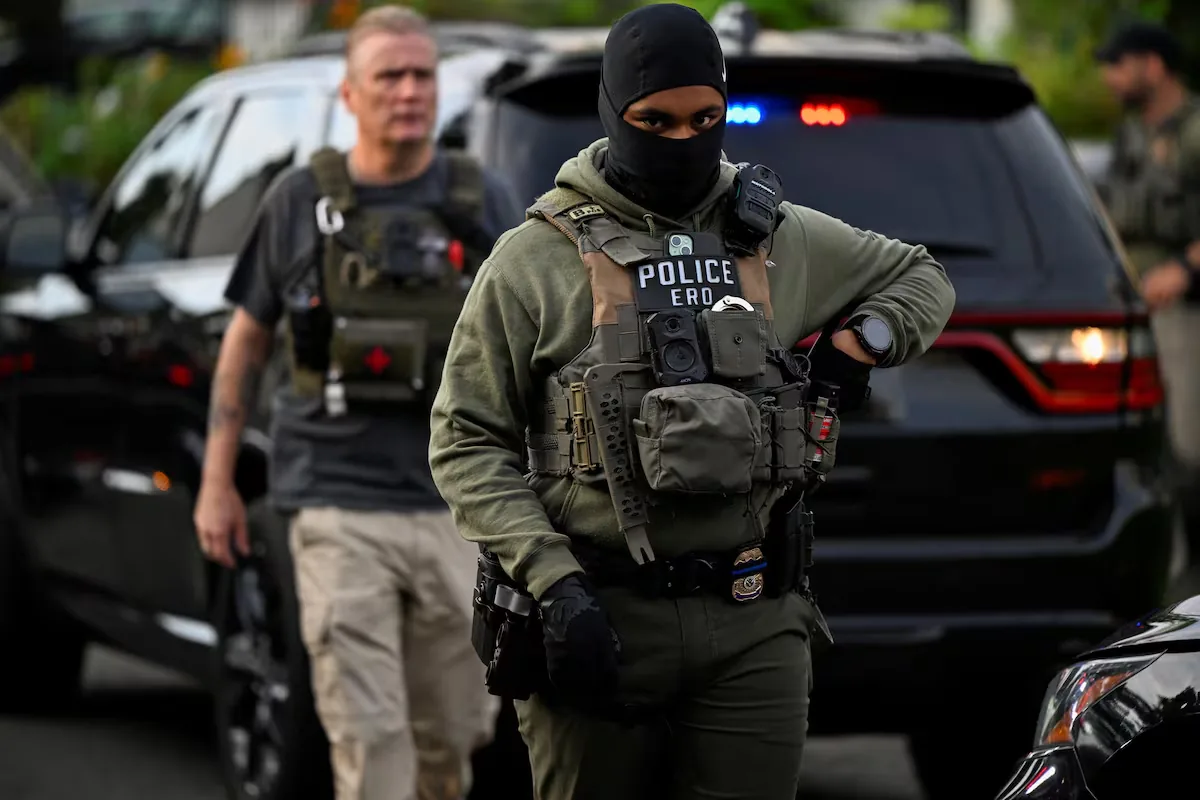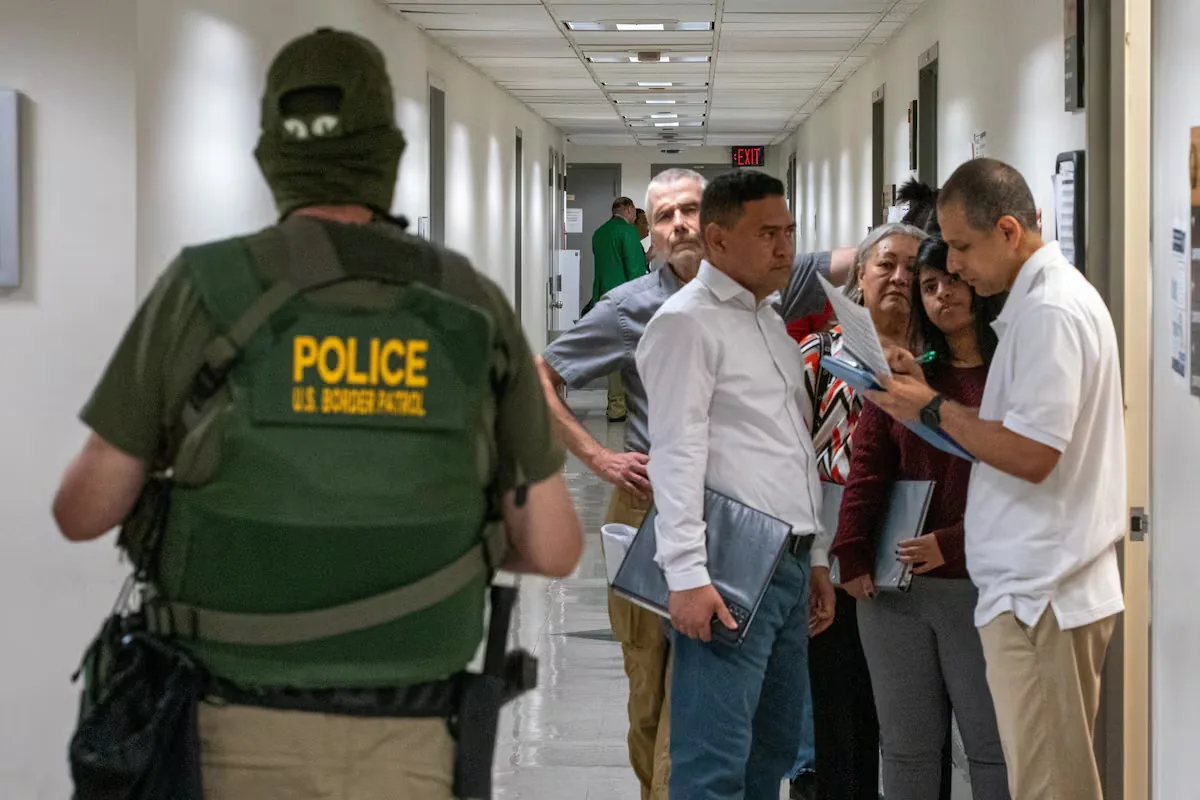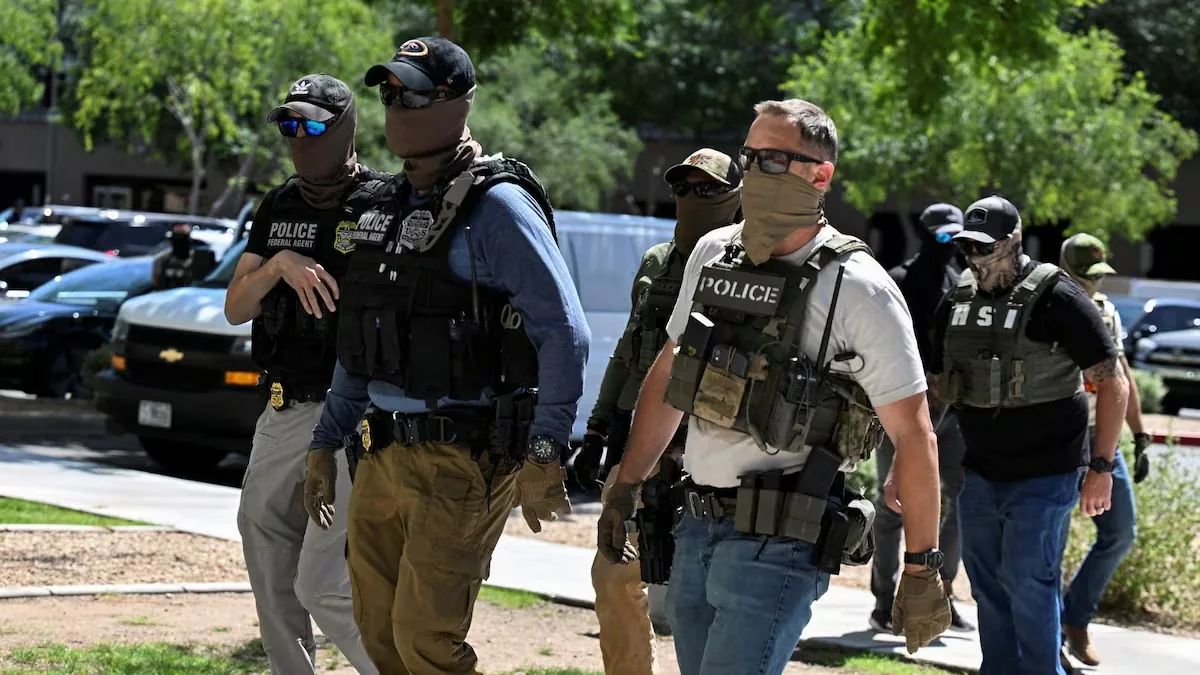
The shift in priorities was evident: stopping the pursuit of drug traffickers to focus on undocumented immigrants. The consequence was a drastic reduction, in 2025, of fentanyl seizures by the Department of Homeland Security (DHS) investigative unit, increasing the risk that this dangerous drug would have a greater presence on the streets and, with it, raise overdose deaths. This is warned by a recent report that questions the decisions of the Donald Trump Administration to fulfill its mass deportation campaign.
Read more The Government raises requirements for data center investors to avoid a bubble
The DHS Office of the Inspector General has revealed that the Trump Government cannot simultaneously address two of its obsessions, migration and fentanyl. To prepare its most recent report, the agency interviewed about a hundred Homeland Security Investigations (HSI) agents, one of the units responsible for investigating powerful cartels such as Sinaloa, particularly the faction of Joaquín El Chapo Guzmán’s sons. The officers revealed that they were removed from those and other anti-drug tasks to join operations aimed at detaining migrants in irregular situations. According to various reports, most of these migrants have no criminal records when detained in Immigration and Customs Enforcement (ICE) detention centers.
The figures speak for themselves: HSI agents went from dedicating 206,000 hours to investigations related to migration issues in 2024, during the last year of Democrat Joe Biden’s administration, to spending more than 1.9 million hours on those tasks the following year, already under Trump’s second term. The increase was 822%.
The participation of HSI agents in Trump’s migration offensive has been key to placing around 400,000 people in custody from January 2025 through last April, according to an analysis by the Brookings Institution.
This shift in focus is also reflected in drug seizures: the amount of fentanyl seized by these investigators plummeted 51% in three years, dropping from 42,000 pounds in 2023 to about 20,000 in 2025, according to the audit.
The evidence that this reduction is not related to a decrease in opioid shipments by the cartels is found in the seizures by the Drug Enforcement Administration (DEA), which has continued to break records in confiscating this synthetic drug. In 2025, the anti-narcotics agency confiscated more than 47 million counterfeit fentanyl pills and nearly 10,000 pounds of the powder substance. And by mid-August of this year, it had already seized 21 million pills and 9,970 pounds of powdered fentanyl.
“Given HSI’s critical role in disrupting fentanyl supply to the United States, failing to correct these deficiencies could increase the availability of this illicit drug on the streets and, with it, cause more overdose deaths,” warns the DHS Office of the Inspector General’s audit. The agency recommends reviewing personnel distribution to avoid neglecting the fight against fentanyl, a task that, it emphasizes, should remain among the agency’s top priorities.
For now, fentanyl overdose deaths in the United States have decreased for the third consecutive year. Deaths associated with this drug dropped from about 76,000 in 2023 to 38,000 in 2025, a 50% reduction, according to statistics from the Centers for Disease Control and Prevention (CDC).
Read more US sanctions to isolate Iran’s economy exclude key entities
A gap between rhetoric and action
Fentanyl trafficking across the southern border has occupied much of Trump’s rhetoric. His administration points to Mexico’s two main cartels, Sinaloa and Jalisco New Generation (CJNG), which it has designated as terrorist organizations. Shortly after returning to the White House, Trump declared a “national emergency” at the border and threatened Mexico and China with tariffs if they did not agree to strengthen their efforts to combat the illegal trafficking of this drug. Both countries are identified as key points in the large-scale production and distribution of the opioid.
At the end of 2025, the president went even further and signed an executive order classifying fentanyl as a “weapon of mass destruction” and ordering DHS to use “the full range of appropriate tools” to combat the networks distributing it. “(…) the possibility that fentanyl could be used as a weapon to carry out concentrated and large-scale terrorist attacks by organized adversaries constitutes a serious threat to the United States,” reads Trump’s order.
But the recent audit by the DHS Office of the Inspector General reveals a gap between rhetoric and action. Some agents interviewed by the agency said that, in two offices, virtually all their efforts were devoted to migration issues, leaving “almost no capacity for fentanyl investigations.” Others reported that an anti-narcotics team went from having seven agents to barely “two or three,” after the rest were assigned to ICE operations.
The federal agency detected other deficiencies. The Border Patrol did not always notify HSI about fentanyl seizures so that its agents could investigate the people and organizations involved. Also, HSI investigators did not always have the necessary funds to support their investigations. The audit even found that DHS had spent more than $150 million developing an analysis platform to investigate fentanyl trafficking, but agents hardly used it because, they said, “it did not help in their work.”
In a written statement sent to EL PAÍS, DHS assured that it is already working on the Inspector General’s recommendations, including improving coordination among its agencies and the exchange of information and data. “The Homeland Security Investigations (HSI) unit has continued executing its action plan against fentanyl, despite irregular program funding resulting from multiple government shutdowns caused by the Democrats,” it stated.
The agency also sent this outlet a list of criminal prosecutions against fentanyl distributors, including Ovidio Guzmán López, considered one of the main figures responsible for trafficking this synthetic drug within the Sinaloa Cartel faction known as Los Chapitos. The capo, nicknamed El Ratón, was arrested in Mexico in January 2023 and extradited to the United States months later. El Chapo Guzmán’s youngest son pleaded guilty to drug trafficking charges in a federal court in Chicago in July 2025. He is now awaiting sentencing.
Read more Dolly Parton, the country music legend, dies at 80 years old