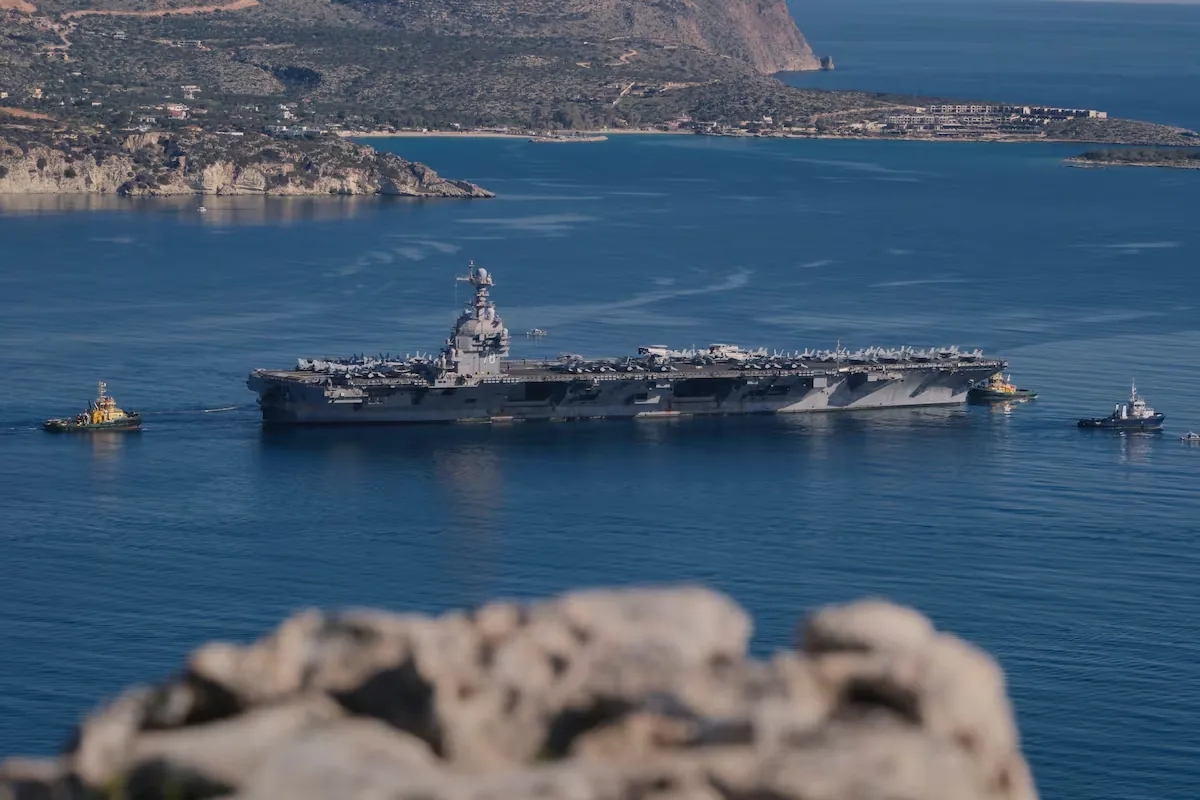
Greece has transferred a Patriot anti-aircraft missile battery to the island of Crete this weekend, to reinforce air defense around the important military base of Souda, jointly used by the Greek Army and NATO allies, mainly the US. The transfer of the battery from the nearby island of Karpathos, where it had been deployed in March, is due, according to sources cited by the newspaper Kathimerini, to threats made by senior Iranian officials about possible attacks on US bases in European territory.
Read more A Galician boatmen clan falls after unloading 1,410 kilos of cocaine for the Balkan cartel
Iran retains a significant number of ballistic missiles with a range exceeding 2,000 kilometers, which could reach targets in southeastern Europe. Greece, according to that newspaper, maintains contacts with the US and Israel about possible threats against Greek and Cypriot facilities and is considering providing assistance to Bulgaria, also a NATO member, if Sofia requests support for its air defense.
The Ministry of National Defense and the General Staff of the Greek Armed Forces have been on alert since the beginning of last week, assessing the threat level and the measures that can be taken to protect critical targets and infrastructure within Greek territory. Thus, the decision was made to transfer the battery, equipment, and personnel from Karpathos to Crete.
The decision to return to Crete was decisively influenced by the assessment of the capabilities of the Iranian arsenal, which, according to information that the allies transmit to Athens, still has a considerable number of ballistic missiles with a nominal range exceeding 2,000 kilometers. These missiles could attack bases and infrastructure in southeastern Europe. The Patriots had been moved to Karpathos in March, as part of the defense arrangement decided by the General Staff, in order to cover all sectors against possible ballistic missile attacks.
According to sources gathered by the newspaper, Athens maintains constant contact with the US and Israel to assess the situation, both regarding the possibility of attacks on facilities in Greece and Cyprus and, specifically, the Akrotiri base. This facility was targeted by drone attacks by Hezbollah, the Lebanese Shia party-militia, last March, during the first weeks of the war against Iran. For this reason, Greek F-16s remain in Cyprus, as well as the frigate Nikiforos Fokas, which is equipped with the Centaurus drone neutralization system.
Read more Renaissance polyphony has its home in Antwerp
Additionally, Athens is studying the possibility of collaborating in Bulgaria’s air defense, which hosts US aerial refueling aircraft, provided the Bulgarian government officially requests it. Competent sources, however, explain that at least five lines of defense formed by air defense systems and radar networks deployed by the US and Israel in the Middle East stand between possible targets in Europe and Iran. Any attempt made in recent months to attack long-distance targets, such as Turkey, was neutralized in time.
Collaboration with Saudi Arabia
The future of the Greek Force in Saudi Arabia and the possible return of the Patriot missile battery located in the Yanbu area will be decided at the next meeting of the Greek Supreme National Security Council.
Last January, as revealed by Kathimerini, Greece and Saudi Arabia were in the final stages of talks for the modernization of the six batteries of the Greek Air Force’s long-range mobile Patriot air defense system, to be handled by Riyadh at an approximate cost of 350 million dollars. However, the outbreak of war almost a month later, on February 28, put the negotiations on hold, as the demand for systems and, above all, ammunition soared, while alarm was raised even over US reserves, necessary to support operations against Iran.