









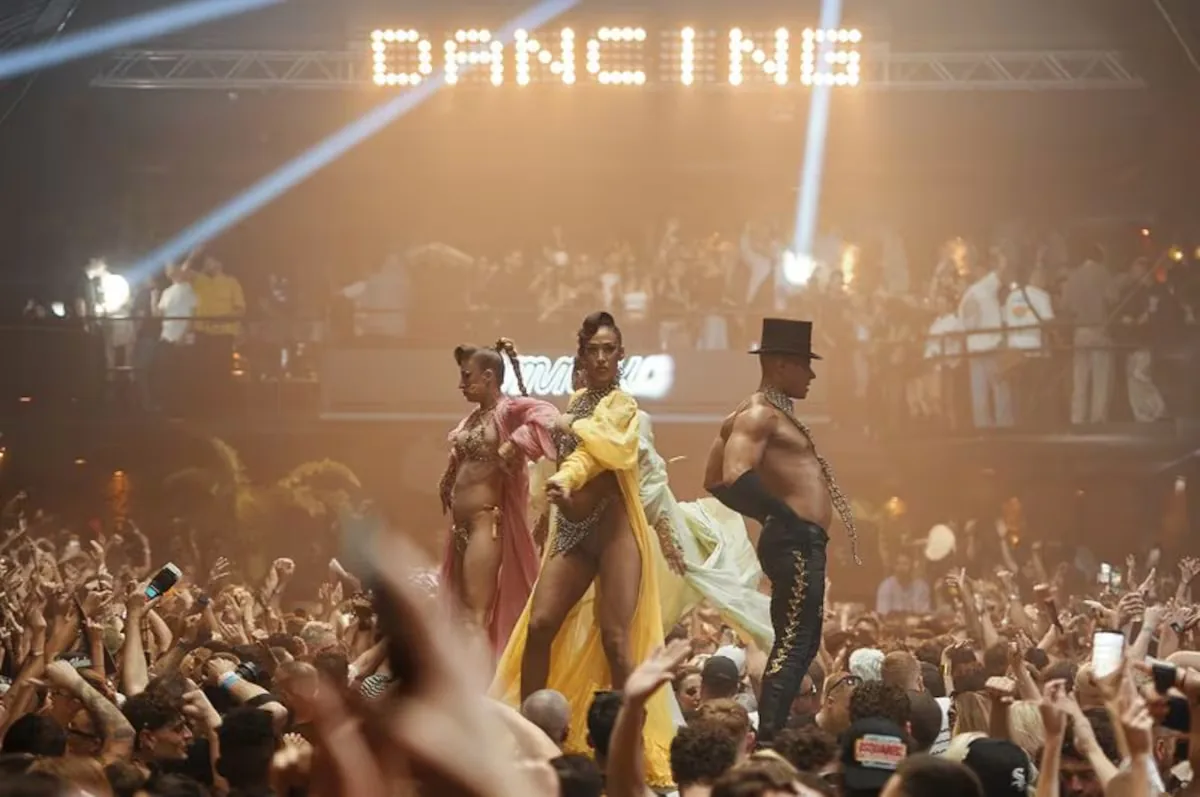
Remembering half a century is not easy, but it’s harder to forget it, especially if it’s full of epic nights in a place as unusual as Ibiza, where every day, for half a year, the best DJs on the planet play. This is the case of the Amnesia nightclub, which turns 50 in 2026 and is celebrating in style, bringing to light part of its incredible history, inevitably linked to the hedonistic legend of the Pitiusas. This particular island is like the Spanish Woodstock, a kind of dream charged with nostalgia, a world-famous piece of land that legends like Freddie Mercury chose to celebrate parties that are still remembered today. “Anyone who has been on the island for many years will tell you that any past time was better, but from an economic and international impact point of view, it hasn’t stopped growing since the pandemic. Clubs are making more money than ever, DJs are more famous than ever, and the island is immersed in growth that could become excessive,” explains a public relations professional who has worked extensively on the ground.
Read more Too much protein? The dubious benefits of the trendy nutrient
White on the outside and with its iconic typography forming the sign, Amnesia’s skeleton hides an old 18th-century farmhouse converted into a nightclub in the eighties. A venue that began its journey in the midst of the Spanish Transition and was the idea of a philosopher who died in 2021, Antonio Escohotado. The Madrid-born thinker wanted to build a place where people could forget about their lives for a moment and let themselves go. Hence the name of this iconic place, which emerged as an alternative to its creator’s rather unappealing initial proposal: Workshop of Oblivion.
The ideologue is the author of Historia general de las drogas (General History of Drugs), a work he wrote, for the most part, in a Cuenca prison, where he was imprisoned for two years for drug trafficking. He went to Ibiza to experiment, to see what that hippy movement, so much talked about since the sixties, was all about. It was 1976 and the author stumbled upon a traditional island house, located on the road connecting Sant Rafael and Sant Antoni, a place that ended up being, in this century and after several stages, the best club in the world. Dancing continues today in that same spot, among Ibizan stone walls and a renovated structure with two key rooms: the main room and the terrace. Although the latter is now practically covered, it has been and continues to be the great treasure of this place, where so many afters and daytime parties have been held around an old well converted into a swimming pool.
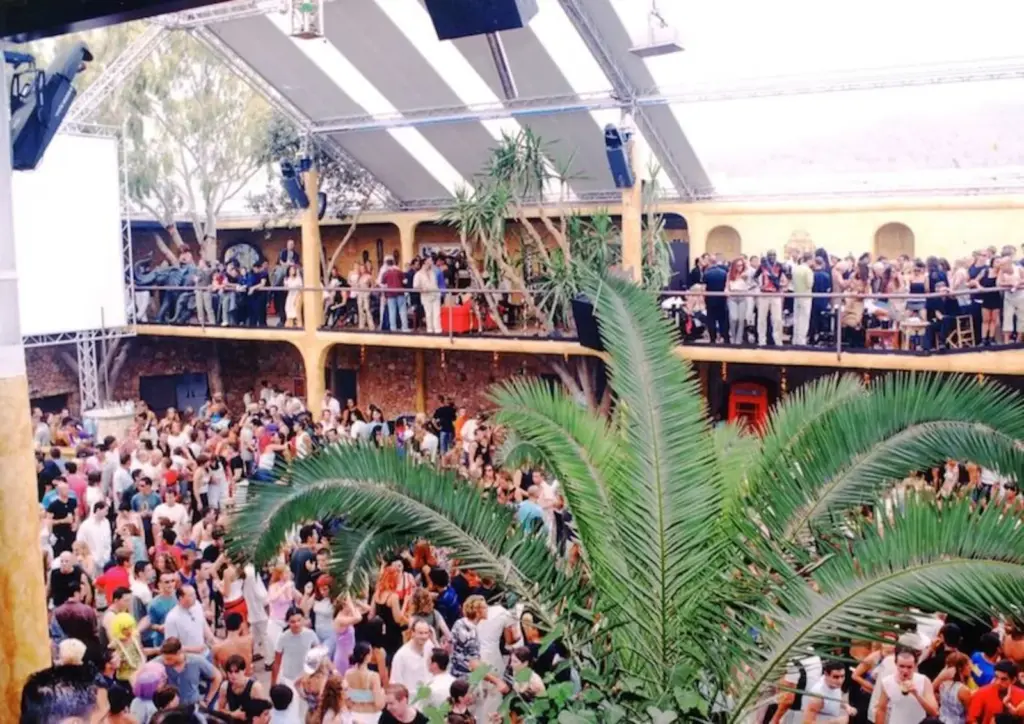
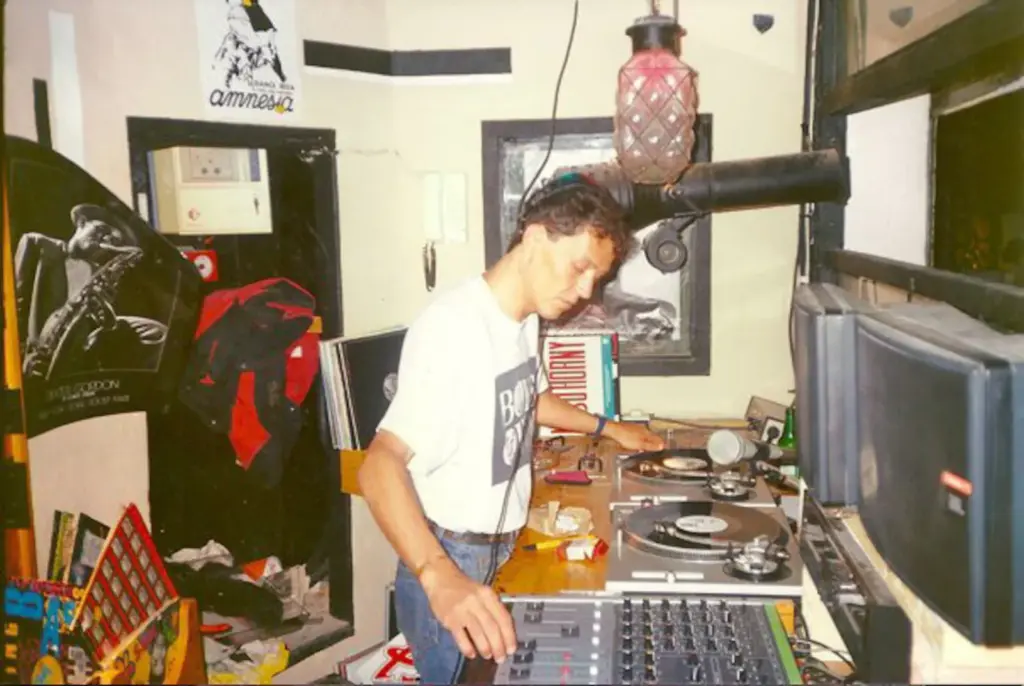
It is, along with Pacha, created three years earlier, the other great festive and historical landmark of the island. Thus, on the same dance floor where live concerts and musical styles such as jazz or rock were initially enjoyed, the evolution of electronic music in capital letters has been experienced. In this corner of the Mediterranean, Balearic Beat emerged, the eighties sound that would revolutionize England and which arose from the figure of the club’s most emblematic resident DJ, the Argentine Alfredo Fiorito, as well as the Britons Danny Rampling, Paul Oakenfold, Nicky Holloway, and Johnny Walker.
Fiorito, now deceased, began his history with Amnesia in 1983, the year he was hired for a private event, and would eventually become a regular. Many English people began arriving on the island in the second half of the eighties thanks to him and his mix of rock, disco, funk, pop, and the first references of house. This inspired them to promote the acid house movement in the United Kingdom in 1987 and the Second Summer of Love, which marked the birth of rave culture and connected Ibiza with the global electronic music culture.
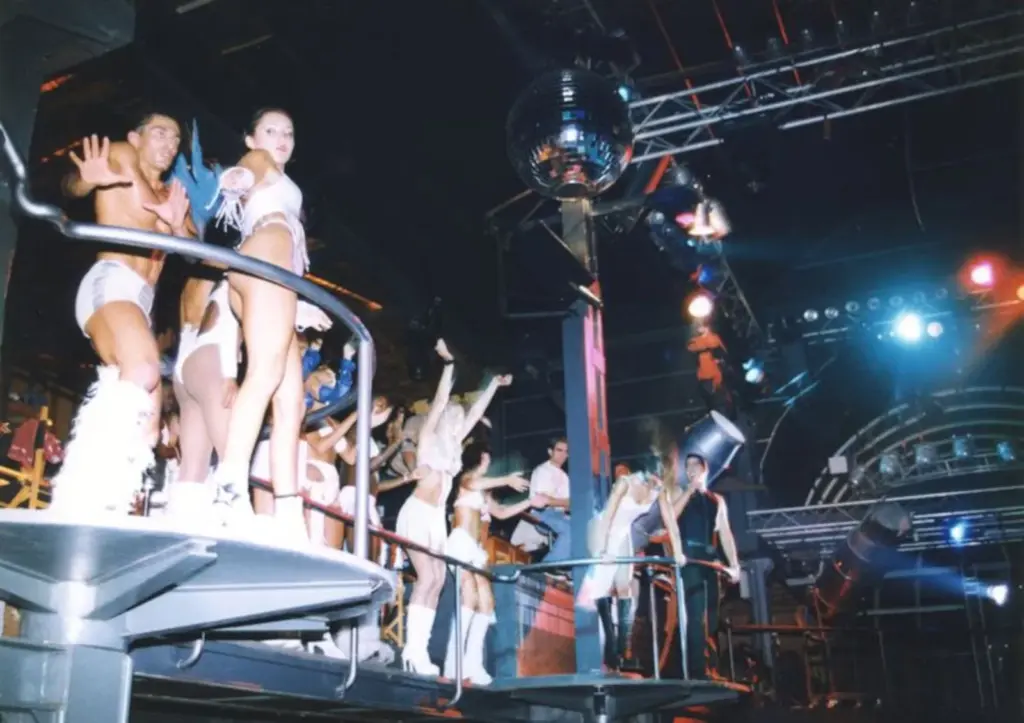
“Ibiza reinvents itself, it always manages to be interesting, and Amnesia tries to live up to that, but we prefer to stop because we believe that if we change more, it’s no longer Amnesia,” says its manager, who knows he has had to adapt to the times, but holds much nostalgia for the successful early 2000s. It was with the arrival of the Cream session in 1996 that the nightclub made the definitive leap into club culture. Iconic parties have emerged within its walls, such as the foam party; sessions like Cocoon, which introduced techno to Ibiza by German DJ Sven Väth; or tremendously fun and disruptive events like La Troya, the work of Brazilian Brasilio de Oliveira.
“There have to be proposals for all tastes. We have to open many sessions so that the club can maintain the level the island demands and so that not every day is the same,” explains the owner about the current landscape in which they try to bring together different audiences through the styles that dominate the current market, such as hard-techno. Adapt or die, but also resist, are two of the keys to a club that has a very varied audience, where young faces also mix with many nostalgics. “It was the most underground club, for more hardcore people, its terrace and its sunrises were very characteristic. It has been changing, looking for alternatives with different parties, it is the one most at risk of dying from success because the rest are clear about what they are playing at,” explains a former resident and regular attendee of the island’s various clubs.
View this post on Instagram
Whether you go on vacation or reside there, it’s not easy to live in Ibiza. The inhabitants of this 572-square-kilometer island make it clear that finding housing is almost impossible, that there are “millions of islands within the island” and that, although it may not seem like it, not all are directly related to partying. A reflection that shows two clearly differentiated realities: that of those who go to enjoy themselves and that of those who go to work. “When I arrived on this island, I lived for a while on the terrace of a house for 400 euros a month,” says a resident who now works as a taxi driver and is fed up with the excesses of the night. The housing drama is a reality that especially affects workers in the hospitality, construction, and cleaning sectors, in a completely strained real estate market. “In the early 2000s it was accessible, now accommodation and service prices have increased and the island has shifted towards a type of tourist with higher purchasing power,” insists a public relations professional.
At Amnesia, with a maximum capacity of 5,000 people and an average entrance price of 50 euros —lower than that of its main competitors—, they explain that from the beginning they have been a reference for the people of the island: “You have to know how to combine both things. We have always had parties with their own name and also for local people. For example, People from Ibiza was only for workers.” In fact, they have a platform called ADN, which stands for Amnesia Dance Network, made up of island workers and offering special discounts to attend the club.
Amnesia makes it clear that they remain a family business and do not want to bow to the reign of two of the best clubs in the world, UNVRS—formerly Privilege—, and Hï Ibiza—formerly Space—, both from the same group. And they affirm that they do not compete because they are not the same and they like to reflect this under a motto they have used in their sessions: ‘Ibiza, don’t lose your soul’. “What Ibiza really is, that essence of connecting with oneself, is being diluted a lot. In the end, most clubs are bought by funds and what this island means is greatly distorted. A large corporation buys you that doesn’t know what this is, which is being with people and being in a community. What they are doing is bringing what everyone likes, standardizing the industry and music. We are the most rebellious and go against the current; we are still a family business,” they conclude.
The truth is that Amnesia is part of the island’s collective imagination. At first, it was a cultural laboratory. Until 1986, when the English put it on everyone’s lips. Tourism arrived and the dance floor was distorted. Despite the changes, the structure is the same since its beginnings; things have been built, but the original house is still there. Celebrities like Madonna and Kate Moss have passed through this club, and at its last opening, it received Valentino Rossi, but, they say, its appeal is the history of the club itself, beyond the names: “People have to want to come to the club, not to a party; they should choose Amnesia, not David Guetta. We want people to choose Amnesia because they know that the party they are going to have will be brutal, no matter which one it is.”
Now Amnesia coexists with three of the four best clubs in the world, one located right opposite, and after a difficult year, it celebrates itself. On this island, electronic music is another trait of its personality; incredible DJs play every day, their faces greet newcomers at the airport, and the leisure offer continues to grow. In this context, the club currently holds the 16th position in the list of the specialized magazine DJMag, and its history, the company assures, is the key to its success. “We simply do what we know how to do and adapt, but everything has a limit and tastes change. The day people are no longer interested in our way of doing things or we are tired, we will sell the business to one of those funds. Amnesia as it is known will exist as long as people support us,” concludes Ferrer, son of the businessman who once transformed this business.
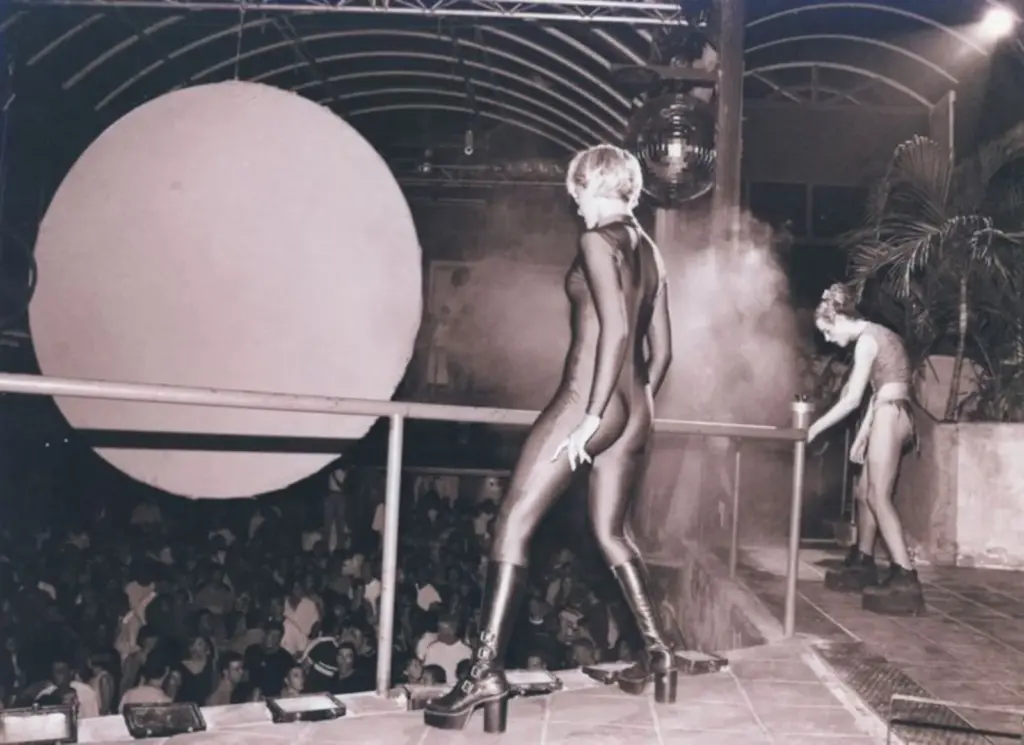
“We have 140 consecutive events, day after day, we open every day of the week from Monday to Sunday, there’s no rest. It’s a festival every day and a very different situation from the rest of the world. Here, at six in the morning, one party ends, they clean and set up the next, and each day is a different production,” assures the head of communication and marketing, Beatriz Murillo. They know that their brand is their strongest asset and that this is only achieved over time, a value they fortunately possess. “Recently, an English woman called me wanting to celebrate her 50th anniversary with her husband by inviting him to Amnesia to relive a trip they took a long time ago. She still had the VIP ticket and asked if she could use it again, and I told her that, obviously, they were more than welcome,” Murillo explained.
Amnesia has such significance that it appears in the Atresplayer series La Ruta and in an iconic film for Britons like Kevin & Perry Go Large! And it will also have a book and a documentary on Netflix. Yes, 50 years of partying in Ibiza provide plenty of material, which is why they have also told their story through their own exhibition at the Hyde Hotel in Cala Llonga, an exhibition that will also tour other European cities and where one can see everything from the club’s first poster to a ticket to see Daft Punk for 100 pesetas. A comforting journey through the walls and the people who have been part of the club, which continues to give personality and perspective to the history of an island marked by partying.
Read more The summer when going topless made headlines again: “The gaze doesn’t stay on the beach”
View this post on Instagram