







Among so many faces, Roberto Mosquera retained one in particular the day he arrived in Eswatini, a small country hidden in southern Africa. He then kept seeing that face during the following 14 months, which passed slowly and unbearably in the world compressed between the white and gray walls of the maximum security prison cell in Matsapha. The man is serious, tall, dark-skinned, with round glasses. His name is Jabulani Kunene and he is the officer in charge of the prison. For more than a year, Mosquera has asked him the same question every time he sees him passing by: “How long are you going to keep me imprisoned here?” Kunene has always had the same answer for him: “I don’t know, Roberto, I don’t know.”
Mosquera no longer calls his cell a cell, but calls it “the little house.” He got a coffee maker with the money sent by his family from Miami; he bought a stove to fry eggs or reheat soup; there is no shortage of a bottle of liquid bleach to clean the bathroom, nor razors or shampoo bottles, because you can be imprisoned, he thinks, but not abandoned. “I like to dress well, go to Miami restaurants with my daughters, I am a city man,” he says through a video call where he sports a flawless beard, gold-plated teeth, a high-carat chain, a blue cap, and a gray pullover, and not the inmate uniform they dressed him in the day he arrived handcuffed at feet and hands, they put a tag with a number in front of him and asked him to look at the camera to take his prisoner portrait.
If Mosquera today does not wear the inmate uniform, it is because of all he has struggled for in these months, since the United States Immigration and Customs Enforcement (ICE) detained him at one of his immigration appointments, locked him up at the Krome center, transferred him to a Texas airport, and deported him without his consent to southern Africa. Since then, dozens of people have arrived on that continent following the signing of multimillion-dollar agreements between the United States and nearly 14 African countries. The flights operated by ICE mostly depart from Alexandria Airport in Louisiana or from Texas, and land more than twenty hours later. The mechanism so far has been the same: no migrant knows where they are being deported until they set foot on unknown land.
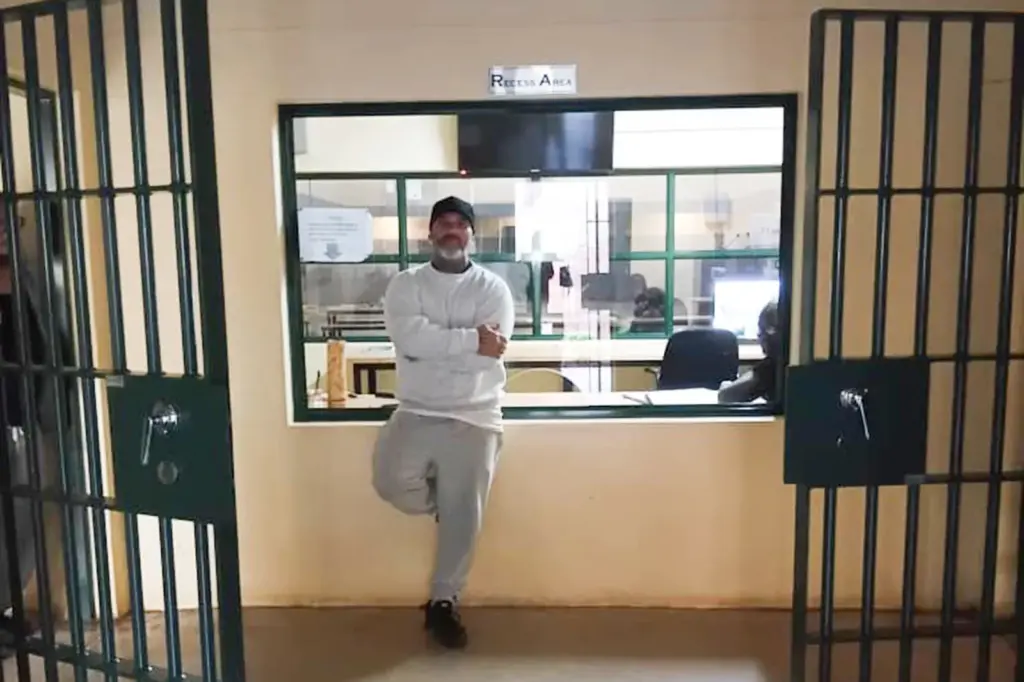
By means of a 30-day hunger strike and several discussions with the officers, Mosquera has been obtaining small freedoms amid his great confinement: being allowed to wear his usual clothes, being allowed to open the cell door to an inner prison yard, being taken – under guard – to buy food at a nearby store, or being allowed to have cell phones for himself and the others to talk to family. It seems like a lot for a prisoner, but it is nothing for him, at 59 years old, father of four daughters, whom the Donald Trump Administration called a “depraved monster” and expelled from the country, despite having served his sentence long ago.
From Texas, he was transferred on a flight that, due to the number of hours, could not go either to Cuba, the country where he was born and which has refused to receive him for almost three decades; nor to Mexico, the place where so many migrants have recently landed. Another detainee, by signs, asked him during the journey where the hell he thought they were taking them. Mosquera drew a circle with his hands in the air. He wanted to say that they would surely end up on the other side of the world.
Transfers to third countries
The indirect routes of ICE deportation flights to Africa
Between July 2025 and August 2026, at least 31 confirmed transfer flights took deported people to twelve African countries, rarely by direct routes. Almost all made a refueling stop in Senegal. Choose a country to see all its flights; the red segments mark confirmed deliveries.
Source: Human Rights First, confirmed transfer flights to third countries (data as of August 1, 2026; includes flights until August 31, 2026). Coordinates are approximate: nearest airport or city, or country centroid when only the country was recorded. Senegal (Diass/Dakar) appears as a refueling stop, not as a destination. Several 2026 flights delivered people to more than one country on the same route. The arcs are illustrative of routing, not exact flight paths.
Read more The 10 dog products that succeed on Amazon: bestsellers recommended by owners
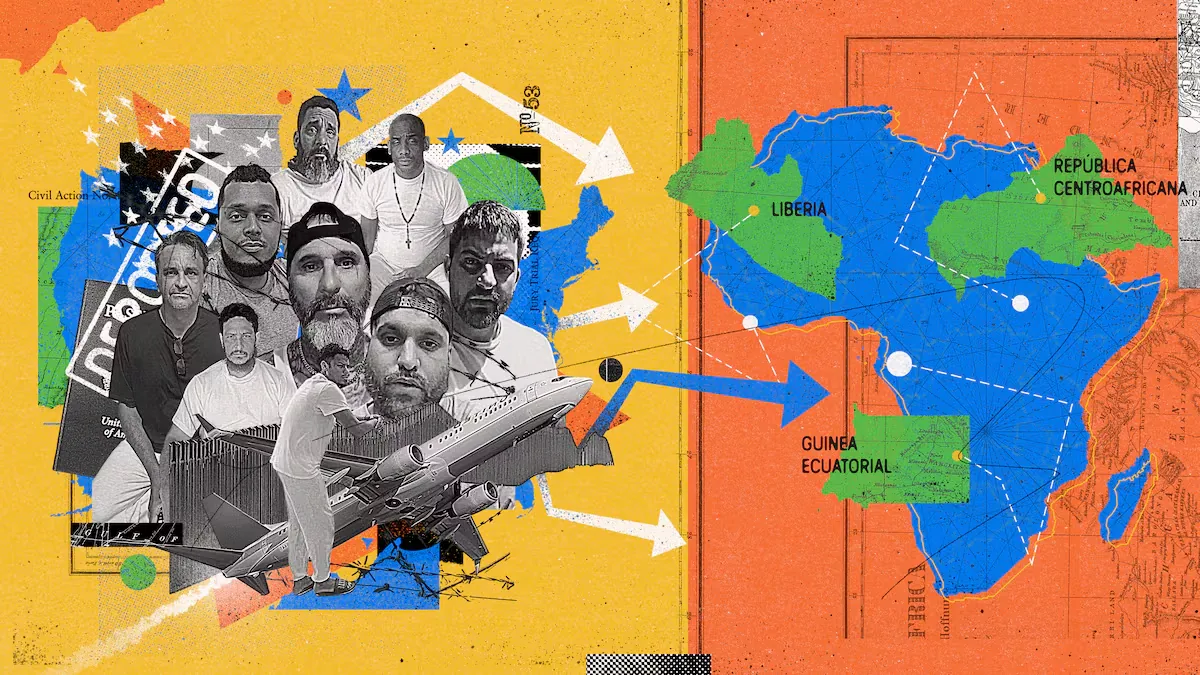
Over several weeks, EL PAÍS spoke via video calls with a dozen migrants from Cuba, Honduras, Brazil, or Colombia, who have been deported to countries such as Liberia, Central African Republic, Eswatini, or Equatorial Guinea, and who remain to this day in an indecipherable legal limbo.
No one, not even lawyers, knows how to untangle the migratory tangle they find themselves in. “These people run the risk of being legally trapped between three states: the United States claims its responsibility ended with the expulsion; the African receiving state may not provide them with any lasting migratory or protection status; and their countries of origin may be places where international law prohibits returning them,” explained Michael Gyan Nyarko, executive director of the Institute for Human Rights and Development in Africa (IHRDA). The concern now, according to Gyan Nyarko, lies in how the White House is using deportations to third countries to indirectly achieve what is against the law in the United States.
All the deported migrants this newspaper spoke to were first in US detention centers; none were notified that they were going to be transferred to Africa, nor did they ever sign consent. Some were defending political asylum cases, others had been granted protection under the Convention Against Torture (CAT) by US immigration judges.
Colombian Arín García Yepes, who arrived in Liberia on a flight operated by ICE from Louisiana on August 20, still remembers the moment when they were about to board the plane, and they asked each other: “Do you have Withholding of removal?”, “Are you protected in this country?”. Like him, almost all answered yes. They were going to be deported despite having a “withholding of removal,” a migratory protection in the United States.

They are now detained in maximum security prisons or remain in hotels under the surveillance of African authorities. So far, none of the people interviewed had documentation or identification allowing them to stay or move legally and safely in those countries, some with totalitarian governments, others with internal civil wars. When African night falls and they lay their heads on the pillow, all these people question themselves over and over: Is the treatment we are receiving legal? What will happen to us going forward?
Savi Arvey, policy director for refugee and immigrant rights at Human Rights First, an organization tracking these deportations, said that such transfers to third countries, which she calls “illegal deportations,” are part of the broader effort of the Trump Administration “to undermine the global protection system and make countries around the world complicit in its mass deportation campaign.”
The Department of Homeland Security (DHS) is sending migrants who not only did not identify those African countries as possible destinations during their immigration procedures, but many were protected against removal orders. The Donald Trump administration is also using these deportation agreements to dismiss pending asylum cases in its courts.
“Most of these Latin Americans sent to African countries had been considered by US immigration judges as people who would face persecution or torture if returned to their countries of origin, and had been granted protection,” Arvey says. “Now the United States is evading its international legal obligations by sending these refugees to third countries, where they have been arbitrarily imprisoned, left in indefinite legal limbo, or sent back to the same dangers they had fled.”
A State Department spokesperson, when questioned about the guarantees and protections these migrants deported to African countries have, assured that the US government “will use all legal means at its disposal to expel those who do not have the right to remain in our country.” “As Secretary (Marco) Rubio has stated, our commitment to ending illegal and mass immigration and strengthening US border security is unwavering,” the spokesperson said.
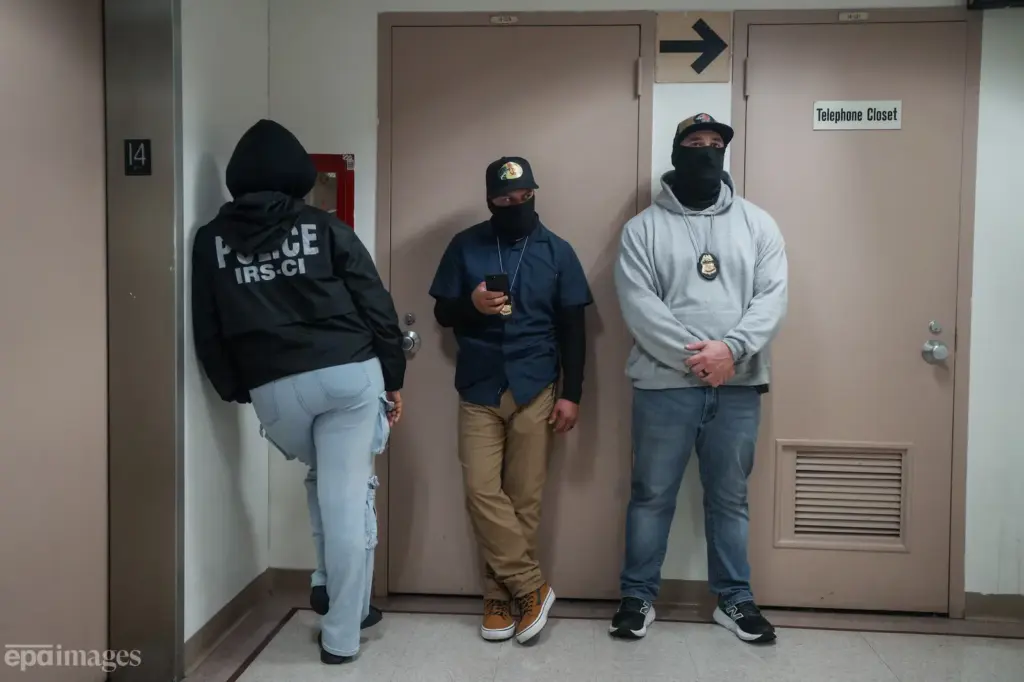
The migratory and legal limbo
Arístides Fernández García, 37, answers the call from his room at Maison Confort, an apartment lodging in Bangui, the capital of the Central African Republic, where several migrants stay. He had never committed any crime, nor done anything that, in anyone’s eyes, made him a criminal. Until now, he remained in the United States with an I-220A status, the same that has prevented the legalization of more than 500,000 Cubans like him, and was detained the day he appeared before the judge in the Miami immigration court. The first time Fernández spoke with EL PAÍS, a few days had passed since his arrival in Africa on July 31, handcuffed at feet and hands on a several-hour flight carrying about 80 people detained by ICE.
More than 40 days have passed and García speaks again with this newspaper. To date, no authority has approached to explain what kind of plan they have with them. “An animal has more rights than us, this is called human trafficking, they have us kidnapped in this country, we have no papers, we are at the mercy of whatever may happen,” García says.
Other migrants interviewed also said they were in the same situation. They live on the food given to them in the centers, have no passports, no one guides them, some claim to have suffered episodes of malaria or stomach illnesses, others have been taken to the hospital in emergencies, and they find it difficult to communicate in English or French. Organizations working on the ground have documented that several have been beaten or threatened at gunpoint.
To leave Maison Confort, whether to visit the barbershop, the market, or minimally walk around Bangui, Yasmani Noel Moreno de Armas, a 31-year-old Cuban who was detained in May 2025 during a beach outing in Florida, pays two or three dollars to the hotel security guards. Even so, when they are seen on the street, the local police always stop them. “They told us we could no longer walk the streets,” he says. Apparently, they are not detained like the migrants sent to Eswatini, but remain under the control and disposition of Liberian authorities.
Recently, Moreno contacted a representative of the Cuban embassy in Congo to inquire about what solution they had for them. “They told me I could not return to Cuba, that Cuba does not want me, they say because I was a rafters, that I should keep trying in the future.” The diplomat promised to help them, that she would get back in touch, and so far has not responded to any other message. The hotel houses Afghan, Vietnamese, or Russian migrants, and some have been there for a year. The big question García or de Armas ask themselves is whether time will stretch the same way for them.
From Liberia, Honduran William Ortiz Hernández is no less anguished. When he was deported on a flight that left Alexandria on August 20 along with about twenty people, a few years earlier a US judge had given him CAT protection, so the government could not send him to his country, but ended up deporting him to a completely foreign one. When he learned he was in a place called Liberia, he grabbed a phone provided by the authorities and typed into Google: L I B E R I A. The search, and the little he has seen since, tells him he is “in a very poor country. Women with their children, very needy, have approached me, and I wish I had money to help these people.” At the Creed Lodge, the hotel in Monrovia where they have been housed, he has received his diabetes treatment, says food has not been lacking, they provided him with some clothes. Also, over the days, they gave them an ID that only serves to withdraw money sent by their family via Western Union. But it is not enough.
“I was not hiding from immigration in the United States. Why are they taking me out now and not informing me to which country I am going?” he wonders. “Here I am without an ID, I don’t go outside, I am afraid. We met with the government and they warned us how dangerous this is here. We have felt stressed, very confused because we are in a country where we don’t know the language or anything. I feel like they have thrown me in a dumpster.”
The day Hernández got off the ICE flight they transferred them on, five migrants refused with all their might to get down the plane stairs. “We told them we didn’t feel safe, but they forced us to get down. Four of them carried me, they beat me while I was handcuffed,” Cuban Carlos Rodríguez told EL PAÍS a few days after being deported. Along with him were three more Cubans and a Brazilian, to whom the authorities promised that if they stayed calm, they would return them to the United States. Even so, when the ICE plane landed again, they were actually in Equatorial Guinea. “How can a government, in a few hours, send us to another country and that country accept us?” Rodríguez wonders. “This is human trafficking, they trafficked us on a plane.”
EL PAÍS tried to contact again the migrants sent to Equatorial Guinea, some of whom had serious medical conditions, but relatives confirmed that the authorities had taken their phones so they could not make complaints to the press. “I haven’t heard from him for a week, they have them incommunicado,” said Caridad, the mother of Leonardo Sánchez, a Cuban deported to that country with a large ventral hernia and a pending operation, from Miami. “What they are doing to them is criminal, the treatment they are giving them is not fair,” the mother complains.
At the Hotel Bamy in Malabo, the capital of Equatorial Guinea, the deportees are housed. Lawyer F. ―who has asked not to be identified because the government of that country is retaliating against lawyers like him who want to represent the deportees― brought there pads for women, toothbrushes for everyone, and some medicines that the authorities have not provided.
“There are people with diabetes, hypertension, or cardiovascular diseases with very poor medical care, because the nurse cannot give them any medication,” he says. “We are surprised that there are several people with very dangerous medical conditions, and we are concerned that in the United States they are including them on deportation lists.”
Those who have ended up in Equatorial Guinea find themselves, like those sent to other countries, without any type of identification document, visa, travel document, or safe-conduct, according to Guinean lawyer Tutu Alicante, executive director of EG JUSTICE, which works with deportees to that country. “In practice, they are undocumented: they have no legal status, no way to regularize their presence, and there is no formal deadline for their release or expulsion.” That is, according to Alicante, the core of this legal limbo they are in: “They are outside both the asylum/immigration framework and any criminal process, and remain detained at the discretion of the Government of Equatorial Guinea, an authoritarian government that does not respect the rule of law.”
The opacity of the agreements
On March 15, 2025, with images of dozens of Venezuelans descending from a plane to the mega-prison CECOT in El Salvador, a new chapter began in the history of mass deportations of the Trump era, after the government invoked the Foreign Enemies Act. The following month, a judge ordered the suspension of these deportations until the US Supreme Court issued a ruling to resume the expulsion of migrants to third countries. Since then, the group Third Country Deportation Watch has recorded more than 23,000 people sent to about 35 countries, operations in which the US government has invested more than 49 million dollars in funding.
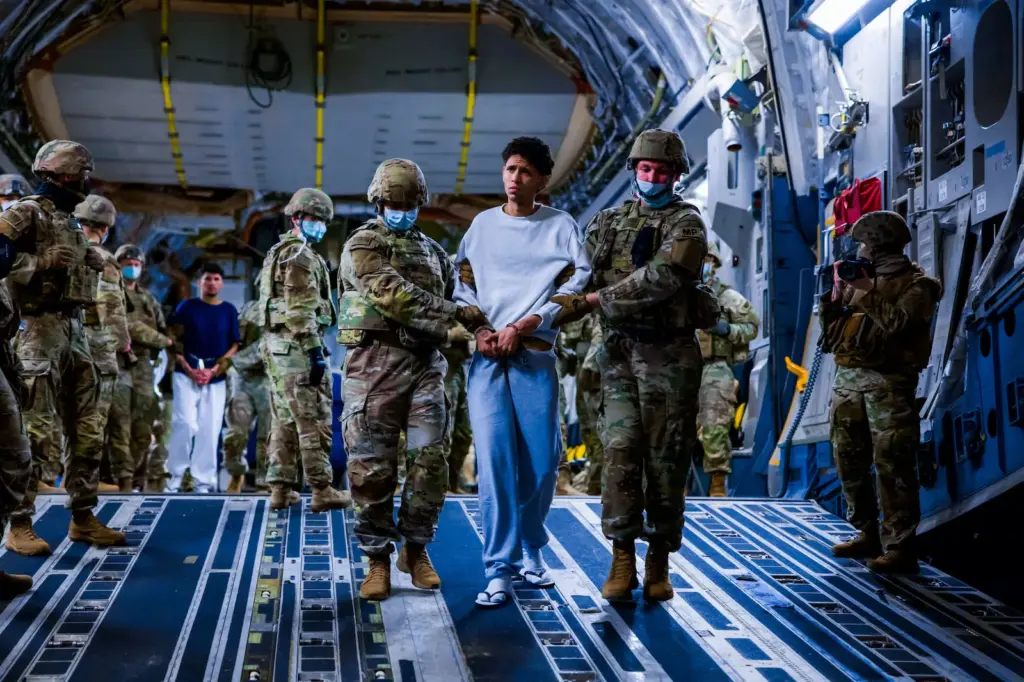
In Africa, there are at least 14 countries open to receiving migrants: Burundi, Cameroon, Cape Verde, Central African Republic, Democratic Republic of Congo, Equatorial Guinea, Eswatini, Ghana, Liberia, Libya, Rwanda, Sierra Leone, South Sudan, and Uganda. All have signed bilateral agreements or what they call “verbal notes,” which so far are too opaque. In diplomatic exchanges, African governments commit to receiving migrants sent from the United States, but without specifying the benefits they receive in this regard. EL PAÍS accessed the exchange of repatriation agreements with the Central African Republic (which received 85 million dollars in US government funds), Equatorial Guinea (which received 7.5 million dollars), and Liberia (which obtained 5 million to manage the reception of migrants).
The agreements establish that the US government has at least seven days before the deportation flight to notify the receiving country’s government of the list of people to be transferred, and that each country has the freedom to accept or reject the deported people. Some reserve the right to deport these migrants to other countries again. The documents also include diplomatic guarantees on compliance with obligations arising from the United Nations Convention on the Status of Refugees and the Convention Against Torture, according to which they commit not to persecute or torture any citizen of a third country sent by the United States and not to send such citizens to any other country where they may be persecuted or tortured. However, some warn of non-compliance with these commitments.
“We know that, in practice, these guarantees are not being fulfilled,” says Yael Schacher, director for the Americas and Europe of Refugees International. “Many countries that have signed agreements including such diplomatic guarantees — among them Ghana and Equatorial Guinea — are detaining and mistreating people they receive from the United States and have no selection mechanism to ensure they do not repatriate third-country nationals to places where they will be persecuted.”
According to Schacher, US legislation, as well as compliance with the Refugee Convention and the Convention Against Torture, require an individualized assessment to determine whether a person is likely to suffer harm or be tortured if deported to certain places. Still, neither the United States nor African countries are carrying out that personalized assessment.
The last resort left to lawyers and organizations has been to sue some African governments. After six people in Equatorial Guinea were forcibly sent to their countries of origin, a group of organizations filed a complaint before the African Commission on Human and Peoples’ Rights, on behalf of 14 expelled people who had been granted international protection by the United States. The concern of many lies in what they call “chain refoulement,” which occurs when the United States transfers a migrant to a third African country, and this in turn is returned to the same country from which they had been protected.
“The deportees have confidentially informed us that law enforcement officials have told them that all will be forced to return to their countries of origin,” says Gyan Nyarko, of IHRDA, which represents some cases. “Therefore, it does not seem that the Government of Equatorial Guinea intends to comply with the agreement it signed with the US Government, including the commitment to grant legal status to the deportees. The United States also shares responsibility in this situation, as the relevant authorities have been informed of the Government of Equatorial Guinea’s conduct towards the deportees and yet no action is being taken.”
Time runs slower and denser for everyone than ever. Every now and then, the guards at Matsapha prison approach Roberto Mosquera and talk about what they know about the places they come from. Sometimes the guards laugh. “I tell them: ‘I had no idea what Africa was, I only saw it in movies, I saw tigers, lions, giraffes.’” The guards find it funny, but the story actually hides a truth: that Mosquera should never have disembarked, the way he did, in a place called Eswatini. “My mistakes are made, I can’t change them, but I was able to change my life,” he says. “I don’t want to stay in this country, I’m not African, this is not my culture, I want to go to the United States to have due process.”
From another cell, Jamaican pastor Junior Alves, a 64-year-old man also sent to Eswatini, has said: “I am not only deported, but also imprisoned. For what reason?” About 3,700 km away, in Bangui, Arístides Fernández García still can’t believe this: “What am I doing in a country like Africa? Why did I, wanting to have the American dream, have to pay for this?” And in another place in Liberia, William Ortiz Hernández lives with the fear that one day they will send him to Honduras. There a group of men killed a cousin, then an uncle. Nothing suggests that the next won’t be him.