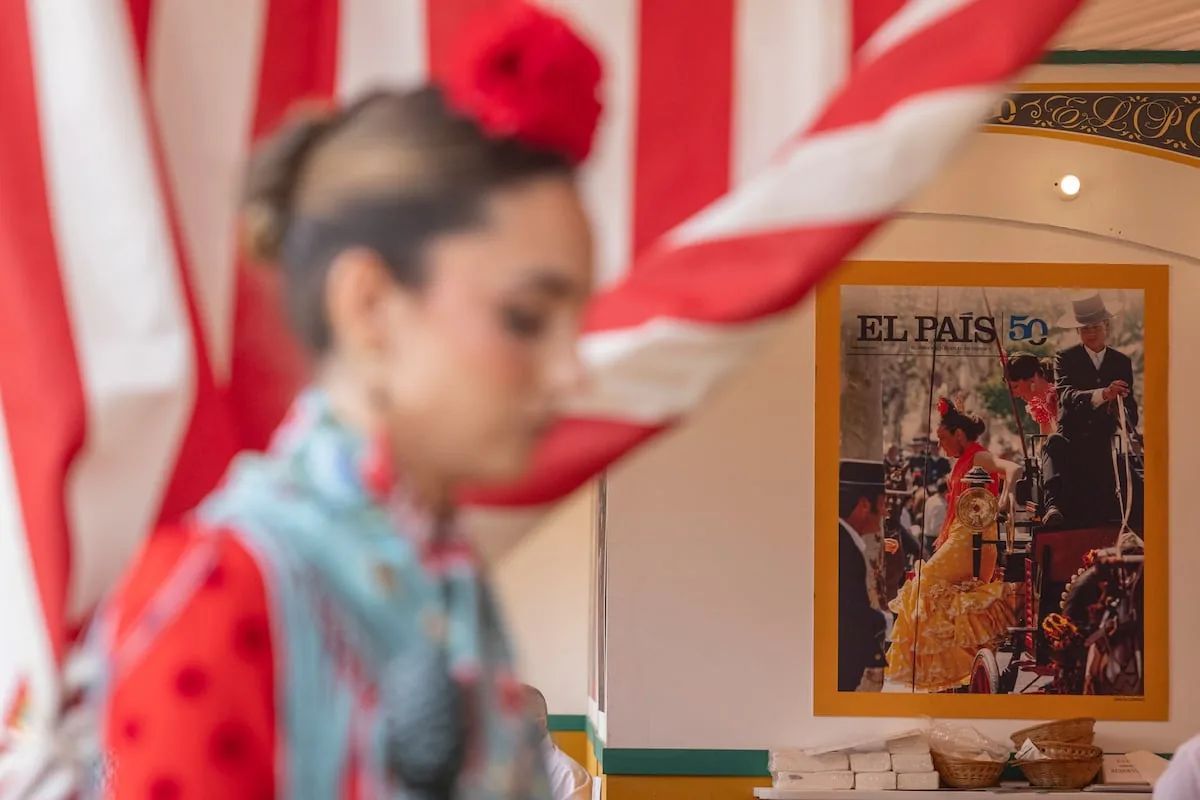






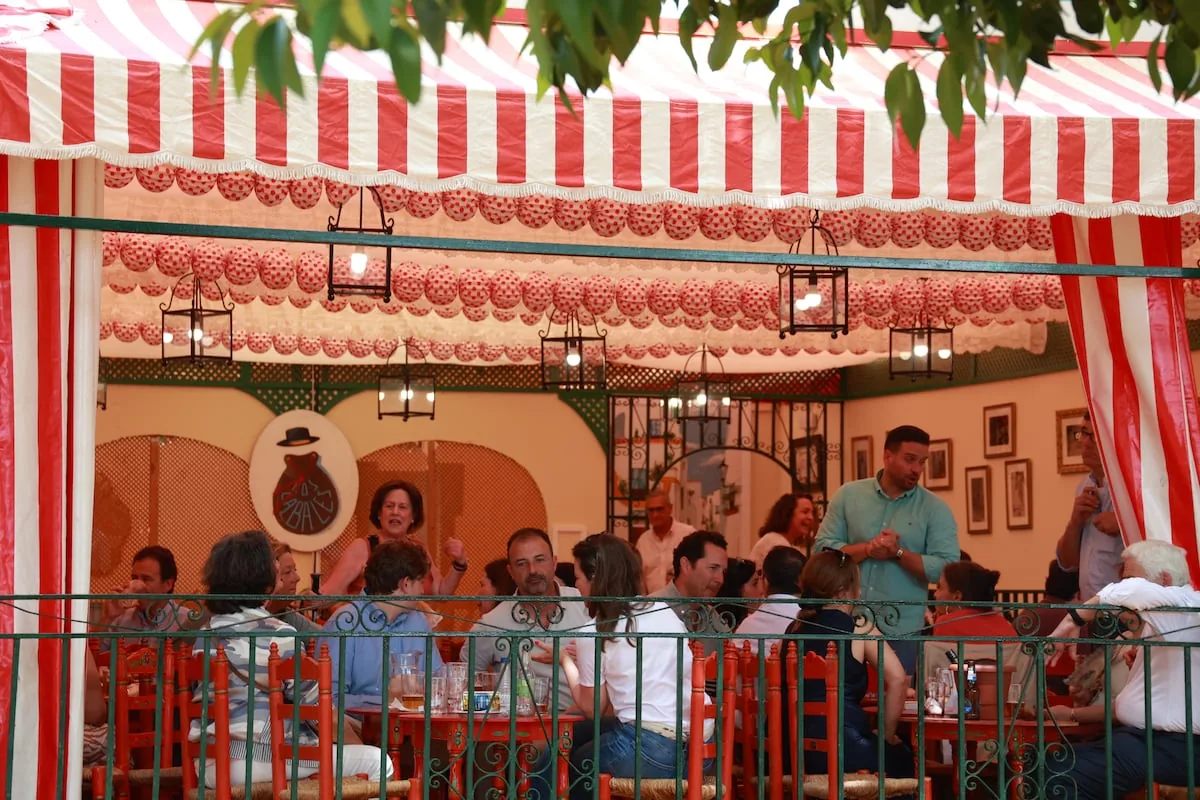
“I have 900 euros: 300 that I received as gift vouchers [vouchers for consumption at the family booth] and 600 that I will put in myself. When I spend them, the Fair is over.” This is what Santiago González, a 22-year-old Sevillian computer developer who earns 1,200 euros a month and whose family has already spent more than a thousand euros on the annual membership fee for one of the 1,040 booths, says, even admitting that he will probably break his own commitment. Sevillians and visitors approach the April Fair with a similar attitude, which opens this Monday with the well-known pescaíto dinner and the alumbrao, the lighting of more than a quarter of a million light bulbs (28,000 in the almost 4,000 square meters of the main entrance). It will be the most expensive edition in history: the City Council has spent a record 4.5 million euros, and the prices of food and drinks, according to Cristóbal Tripero, president of the Association of Booth Holders (Atica), will be between 8% and 10% higher than last year.
Read more The new Gaza flotilla attempts to block a ship with alleged military supplies for Israel
The Andalusian Association of Fair Hospitality Entrepreneurs confirms the increase and believes that young Santiago González’s attitude will be common. Thus, the entity predicts a reduction in sales and consumption due to prices, affected by rising product costs, staff shortages, and wage increases, as well as by rising distribution costs.
Thus, the average costs of food and drinks in private booths range between 22 or 25 euros for a plate of ham, 26 euros for a serving of prawns or clams, 11 euros for croquettes, and up to 15 euros for a fish dish. Montaditos, one of the most common individual options, have risen to 4.5 euros.
Drinking also reflects unprecedented prices. A glass of beer (local brand Cruzcampo expects to sell more than a million liters) exceeds two euros in private booths, while a pitcher of chamomile and soda mix, known as “rebujito,” ranges between 12 and 17 euros.
Prices, regulated by the City Council, are considerably more affordable: beer costs 1.40 euros; a pitcher of rebujito, 7.50 euros; and a full menu is offered for 14 euros, with a children’s option for eight euros. However, they are still high for spending more than 10 hours at the fairgrounds, which is usually common.
Fair Costs 2026
“Costs have skyrocketed, and we cannot absorb them; we have to pass them on,” explains Manuel Chavela, one of the hospitality entrepreneurs who sets up the bar in one of the family booths and who points out that going from almost 10 days of festivities until 2024 to only seven means trying to amortize investments in less time.
Read more The promotion of Sant Andreu reopens the conflict over the turf of the Narcís Sala stadium
Accommodations also make a killing in April, as, according to the Association of Hotels of Seville and Province (AHS), occupancy exceeds 90%. The price increase per person per night ranges from 120 euros in rooms further away from the fairgrounds to 800 euros in the immediate vicinity.
The attractions, located on the street known as Calle del Infierno (Hell Street), cost between 3.50 and four euros this year for the youngest, while the larger facilities and those aimed at adults range between five and seven euros.
The municipal cost of preparing the entire Fair infrastructure has amounted to 4.5 million this year, invested mainly in the electrical network (3.2 million together with Endesa) and landscaping (1.8 million). However, the impact of this expenditure on the city is 1.4 billion, according to the City Council. In municipal employees alone, the affected municipal workforce exceeds 3,000 workers, a thousand of whom are from the Local Police. “All our devices are prepared and activated so that we can enjoy and have a good Fair,” said the mayor, José Luis Sanz.
Everything will end next Sunday, when the fireworks, a closing show called Entre claveles and awarded for 24,805 euros, will bring the most expensive Fair to a close.