







“Thirty years ago, there was more crime than now. I was ashamed of the way carbonara pasta was being ruined.” The speaker, of course, is an Italian, born in Sardinia: Angelo Loi, owner of the La Tavernetta restaurant in Madrid. Enrico Bosco, founder and head of the Pulcinella group, which brings together nine restaurants —including the legendary Pulcinella, founded by his father 32 years ago— in Madrid, holds a similar opinion. “I’ve seen real atrocities committed, even putting onion in it.”
The president of the Accademia Italiana della Cucina, Paolo Petroni, states in an article published by the aforementioned institution that it is a recipe “loved, discussed, vilified, and sublimated; it is the recipe that has undergone the greatest changes over time.” A dish that reflects much more than a culinary tradition: it is part of a country’s pride. It has its own international celebration day —April 6—, conceived by the International Pasta Organisation (IPO) and Unione Italiana Food to promote Italian pasta as a product of excellence of Roman tradition and Italian cuisine worldwide.
Carbonara has generated numerous debates surrounding its origin and the meaning of its name. According to Petroni, speaking to EL PAÍS, the dish originated in Rome at the end of World War II, “probably inspired by American soldiers, between the 1940s and 1945.” He also maintains that the first recipe was published in 1954 in the magazine La Cucina Italiana —whose ingredients were spaghetti, pancetta, Gruyère, eggs, pepper, and salt—, although an earlier version also existed, from 1952, served on the menu of Armando’s restaurant in Chicago (United States), managed by two Italians from Lucca. That carbonara was made with tagliarini, mezzina —the name given in Tuscany to a type of cured pork belly—, Parmesan, and eggs. This recipe was also prepared in Rome and the Lazio region at least since 1944, hence the link between carbonara and this area. The president of the Accademia Italiana della Cucina sets aside theories about the dish’s invention to focus on its evolution.
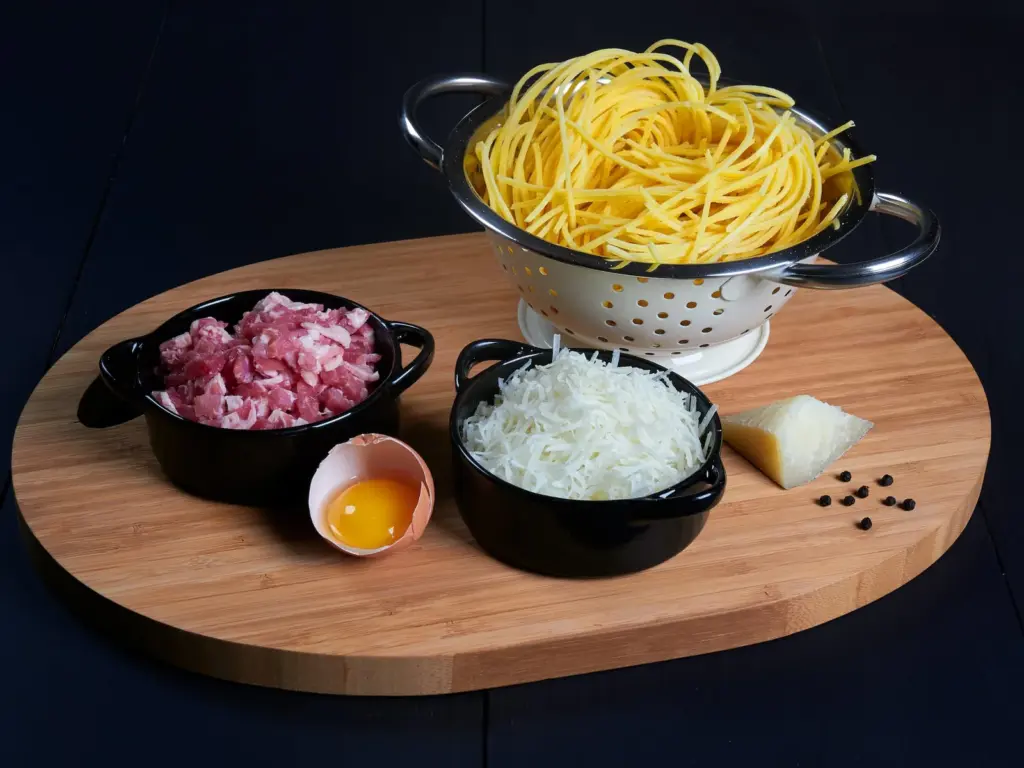
In the 1960s, whole eggs —the whites were discarded— were used in Rome along with pancetta, as guanciale, a cured meat made from pork jowl, would arrive later. As for the cheese, a mixture of pecorino and Parmesan was used. “The result often resembled scrambled eggs; a visual horror, according to some experts, although, and memory can be selective, how delicious that carbonara was,” notes Petroni.
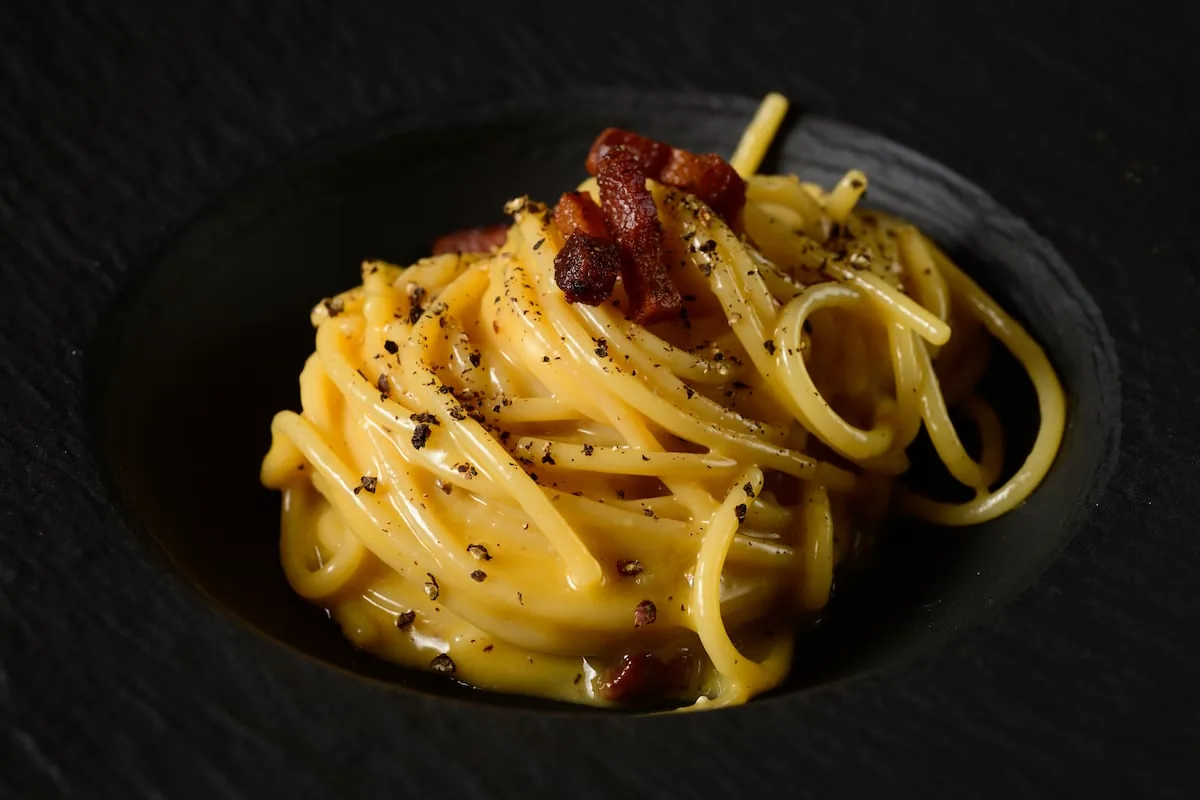
Today, after numerous adjustments, ingredients such as garlic, Parmesan cheese, cream, and cooked eggs have been removed from the recipe; Roman pecorino and guanciale have been adopted, “although pancetta is also allowed,” admits Petroni, and, along with spaghetti, mezze maniche (a type of short, cylindrical pasta) are used, according to the regulations of the Chambers of Commerce that govern traditional recipes to protect them and prevent the loss of their value. Probably —adds Petroni— other recipes have undergone many alterations, “but carbonara is a unique phenomenon in the world.” And, as such, it does not tolerate falsifications or distractions: it must preserve the taste of classic Roman trattorias. guanciale (but pancetta is also allowed), eggs, Roman pecorino, black pepper.
Angelo Loi warns of this on La Tavernetta’s menu, where he offers linguine —a flat, elongated pasta similar to spaghetti— carbonara, made with guanciale and without cream. “Never in its life has cream or bacon been added. It’s an aberration. It takes one egg per serving —or, if preferred, one whole egg and one yolk—. I also add a pinch of nutmeg and always advise eating it quickly, before it gets cold,” he states.
Read more Morante: pluck up courage
One of the most frequent errors, warns Enrico Bosco, begins with the pasta cooking water. “You can’t add oil, because then the sauce won’t bind well; but you do have to add salt before bringing the water to a boil, so that it penetrates the pasta as it hydrates. It’s a very simple dish where respecting the steps is fundamental.” The correct proportion —he explains— is about ten grams of salt per liter of water; however, in the case of carbonara, since guanciale and pecorino already provide saltiness and flavor, it is advisable to reduce it to seven or eight grams.
Bosco believes that the use of cream responds to the visual confusion that can be generated by the emulsion obtained when mixing pecorino with the pasta cooking water —about 80 or 90 grams per serving— and the egg yolk. “What is sometimes added to achieve a creamier texture is a whole egg, not just the yolk.”
Guanciale should always be cooked in its own fat, never with oil, and over medium heat, so that it releases its juices with which the pasta will later be mixed. “It’s important to bind it well for one minute, once boiled, with that fat,” says Bosco. While the water with the pasta is boiling, he recommends cooking the guanciale in a pan; at the same time, beat the yolk and mix it with the pecorino and black pepper, adding cooking water —never boiling, to prevent the egg from curdling— until the appropriate emulsion for mantecatura is obtained.
Finally, the cream is mixed with the pasta and the guanciale is added. “It’s the best-selling dish, despite being the only one I never promote, in each of the group’s nine restaurants,” he concludes.
Read more Madrid will change already approved urban plans to multiply housing construction