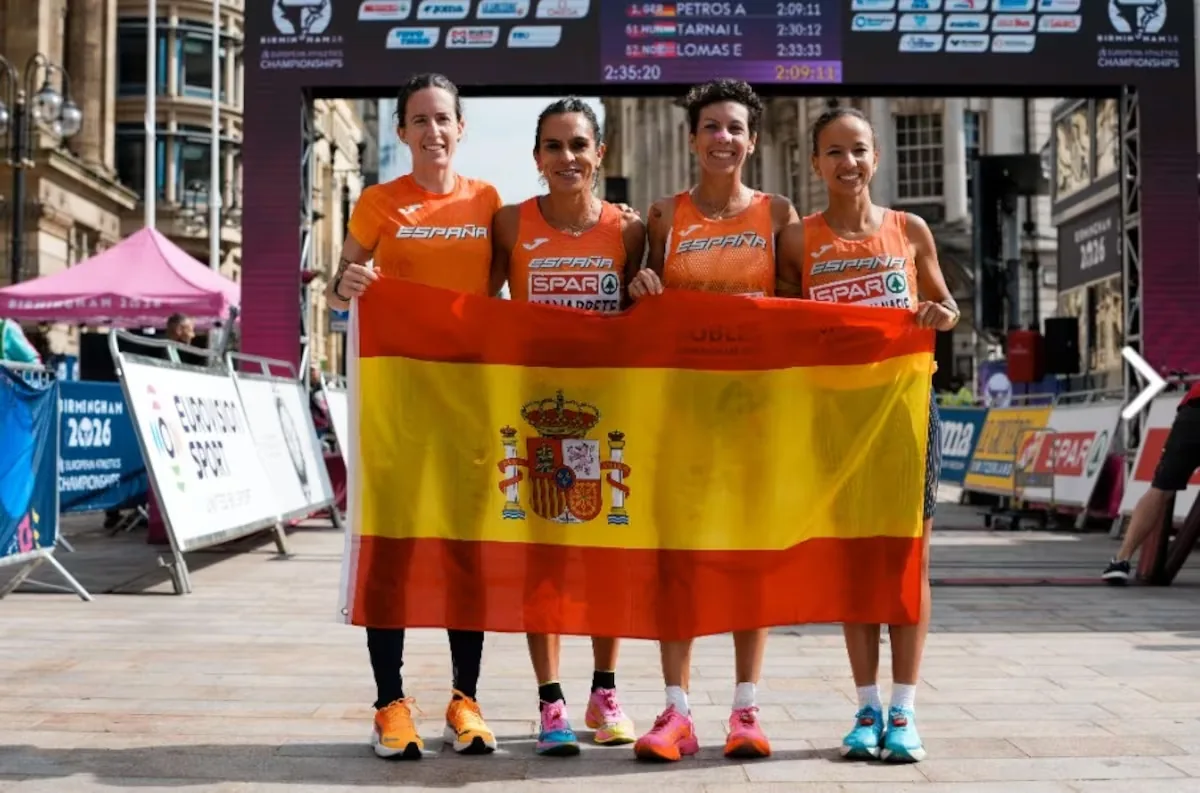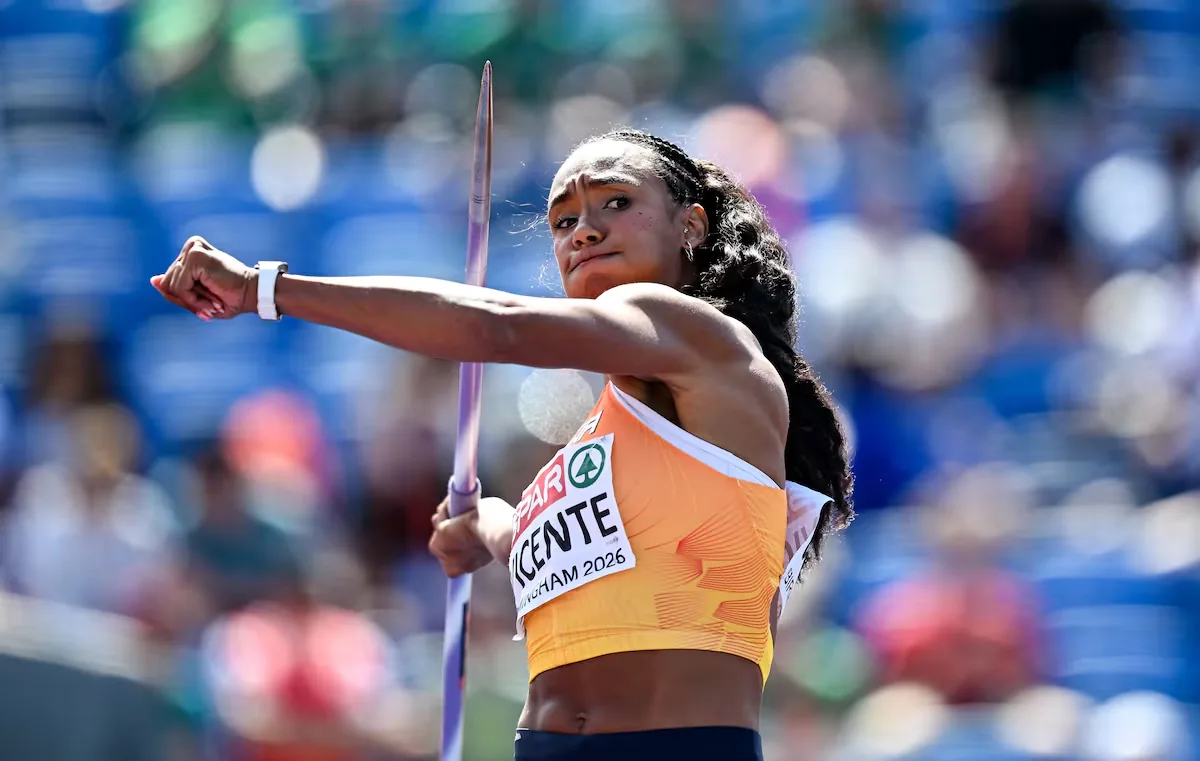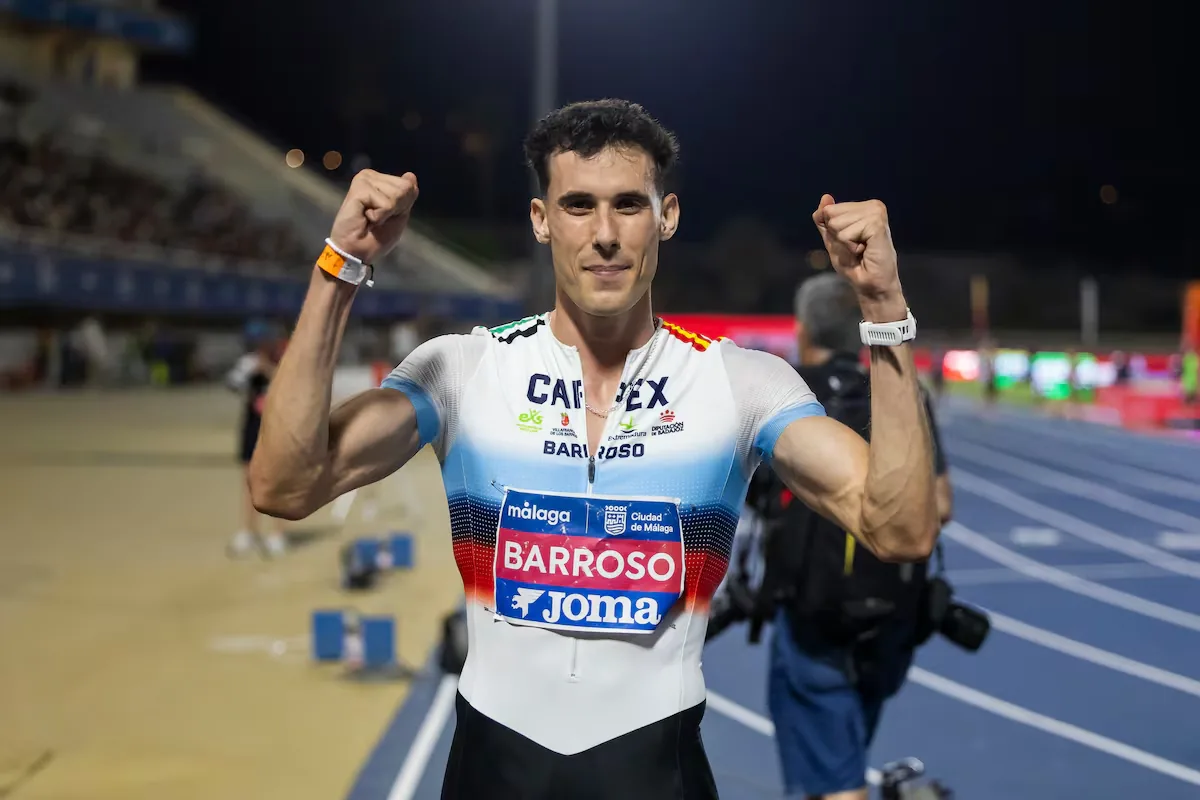








A few minutes after María Vicente’s happy heptathlon 800m, and the sun has completely left the blue track, just as hope abandons the woman from La Solana, Paula Sevilla competes in the 400m final, her first major final. Doomed to lane two, a desert ahead of her coming out of the curve, alone, away from everything, tired after a week of great intensity and retching, she finishes eighth (52.03s) in a race won by the great favorite, the Norwegian Henriette Jaeger (49.04s). She leaves happy for her great semifinal (50.21s, her best mark) and already thinks about the last challenge she has left in Birmingham, running the 400 meters for the fourth time in seven days, this time with a well-held aluminum baton, a witness that the Spanish relay is still in the race. She talks about it, about the hope for a medal that will make people forget the sorrows of the other Spanish relays – baton drop in the 100m, men eliminated in the 400m, no medal in the mixed relay — and then empties her athlete’s soul. “I run the 400m but I don’t like this event at all, I always say it,” confesses a 29-year-old athlete, the best Spaniard in the 200m, who doubled the distance a year and a half ago because she found she was much better at it, but suffers from anxiety, doesn’t like the toughness of the training, but resigns herself to leaving her comfort zone. “I was so comfortable in the 200m, my progression was magnificent, my 4×100 relays… But if my body has chosen the 400m, what can I do. It would be worse if I wasn’t good at anything.”
Read more Marchand can’t handle Marchand
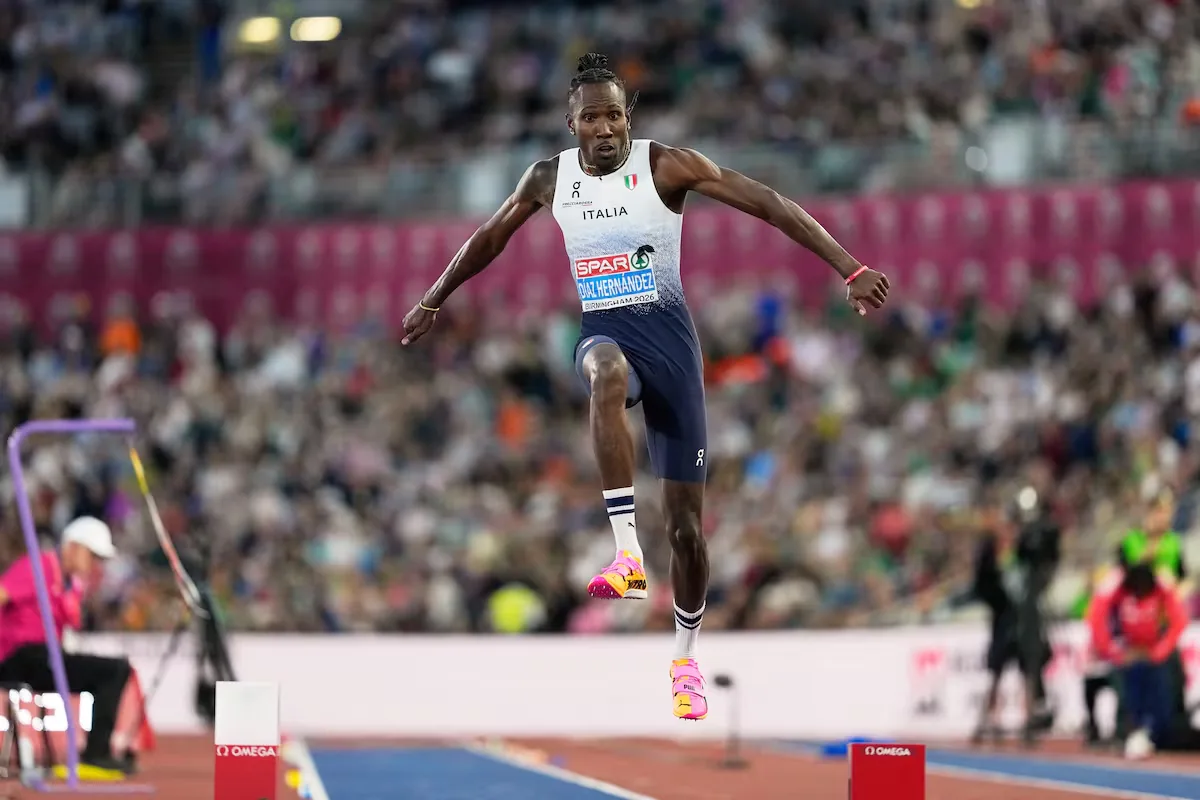
Jordan Díaz doesn’t like athletics at all, say those who know him, and those who follow him on Strava and other networks see that it must be true, because all his physical activity is reduced to evening and night walks through the streets of Guadalajara, he doesn’t train and doesn’t even watch the European Athletics Championships on TV, but only watches football matches and video games on the screen. He does triple jump because his body seems made for it, his tendons, joints, muscles, and he does it so well that he is Olympic champion and European champion. He is not world champion because in Tokyo a panic attack and exhaustion made him abandon the competition after the first jump. In two years, since the gold in Paris, he only made one jump, and a very long one, and he is determined to go train in the United States, his relationship with Iván Pedroso already broken. And surely he neither noticed, nor will care much, that another Cuban athlete named Díaz, but called Andy, five years older and wearing the Italian azzurra jersey, jumped 18.15m (+1.7 wind) in Birmingham, the fourth best in history, just three centimeters short of the 18.18m that gave him gold at the European Championships in Rome and made fans and experts think that in his legs, those of indifferent Jordan, was the end of the untouchable world record held for 31 years by Jonathan Edwards (18.29m).
The lightning of the Italian’s jump lit up the cool night at Alexander Stadium for a few moments, like other fleeting wonders, a javelin throw of 90.40m that gave gold in javelin to the German Julian Weber, or the last 100m of the 1500m, the 12.6 seconds that allowed the Dutch prodigy of the last meters, 23-year-old Stefan Nillesen, to defeat the British armada and everyone in the final. Nillesen, with a personal best of 3m 29.23s, achieves with his 3m 35.70s his first major absolute title at the distance after having been twice under-23 champion, and silver in the 3000m steeplechase.
Read more Alavés seals a great start against Getafe
Even faster was the 10.10s leg, the first straight of the British relay, with which the wonderful Amy Hunt, already queen of the Europeans, contributed decisively to the victory of the British women shortly after the winner of the men’s 100m, Romell Glave, anchored the triumph of his men. It is the third gold for the intellectual Hunt, who always proclaims that you can be an athlete and a lover of literature and the Renaissance, and as fast on the track as she is daily solving the Times Wordle.
Longer, sustained and surprising was the feat of the Swede Andreas Almgren, who doubled the entire 10,000m pack, including the Spaniard Abdessamad Oukhelfen (seventh, 28m 21.89s) except for three. And everyone stuck to his heels when he passed them, so happy. And he confessed he felt a little stupid, but it was worth it, at 31 years old, his first major title for the European record holder in the 5000m.
Read more The great María Vicente is back