









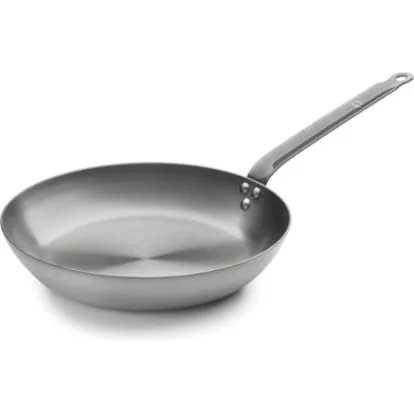
Lacor Ferrum
De Buyer Mineral B
Mahlzeit Enamelled Cast Iron Frying Pan Sunny Orange
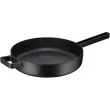
WMF Flavour
The best iron pan
Iron pans have made a strong comeback in home kitchens thanks to their durability, versatility, and ability to provide uniform heat. Unlike stainless steel pans or those made from materials like aluminum, iron pans retain heat exceptionally well, making them perfect allies for searing meats, sautéing vegetables, or preparing dishes that require constant and controlled cooking.
Read more In Mercadona supermarkets, you can now return cans and bottles for money, but in Portugal
Within this category, we mainly find three types: traditional cast iron, generally heavier and with greater heat retention; enamelled cast iron, which combine the material’s resistance with a coating that facilitates cleaning and avoids the need for seasoning (the process necessary to prevent sticking); and mineral iron, which are lighter. Each offers distinct advantages, so choosing the right one depends on both the type of cooking performed and the desired ease of use.
How we chose and tested the products
Over the past few months, I have tested iron pans from four different brands. When I was making the selection for the products participating in the comparison, I found that there is a great difference between models due to the type of iron, so I finally decided to test several to see which uses and users they are best for.
Each pan has undergone cooking tests with meats, eggs, and vegetables, evaluating heat distribution, food adhesion, ease of cleaning, and durability after several use cycles. Additionally, I have measured the time required to heat each pan and its response to temperature changes, data that allows for an objective and practical assessment. I have always followed each manufacturer’s recommendations, heating to the right point, adding a little oil, washing by hand and drying immediately afterwards to prevent rust, and, of course, re-oiling before storing in the case of unseasoned pans. And I have also avoided cooking recipes that require a long cooking time with acidic foods, because the iron from the pan would transfer to the food due to its high pH.
There are several key aspects I have considered.
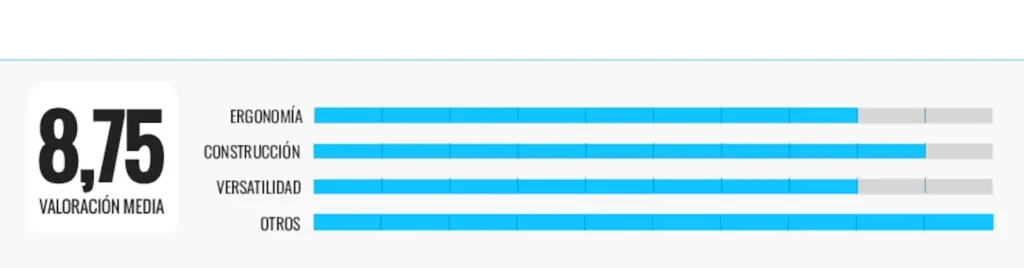
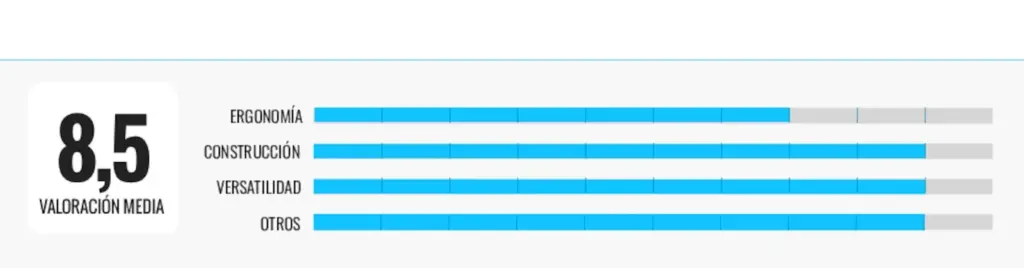
- Ergonomics and weight: generally, iron pans are heavier than those made of other materials, but one that is too heavy can be uncomfortable for daily use, while a light one might lose heat retention capacity.
- Surface: whether natural or enamelled, it determines both cleaning and maintenance: un-enamelled iron requires periodic seasoning, while enamelled ones are easier to maintain but may be less resistant to knocks.
- Size and shape: depending on the type of recipes cooked most frequently, as well as compatibility with different types of cooktops, especially induction.
- Others: the handle, its shape and if it gets very hot, the time it takes to reach the necessary cooking temperature; the variety of sizes available…
Why you should trust me?
I am a journalist with almost 20 years of experience in the technology sector and, during this time, I have produced reports, articles and all kinds of content related to the most varied aspects of technology. In addition, in recent years I have specialized in product analysis and have had the opportunity to analyze hundreds for different media, including El País: from the most economical smartphones to the most advanced models on the market, computers, sound systems, televisions… Also devices related to personal care or the home. My commitment to the reader is simple: independence, rigor and utility. Independence, because my opinions are not conditioned by brands or commercial interests. Rigor, because each product is tested under real conditions, for the time necessary to detect both its virtues and its limitations. And utility, because the ultimate goal is not to impress with specifications, but to help make informed decisions.
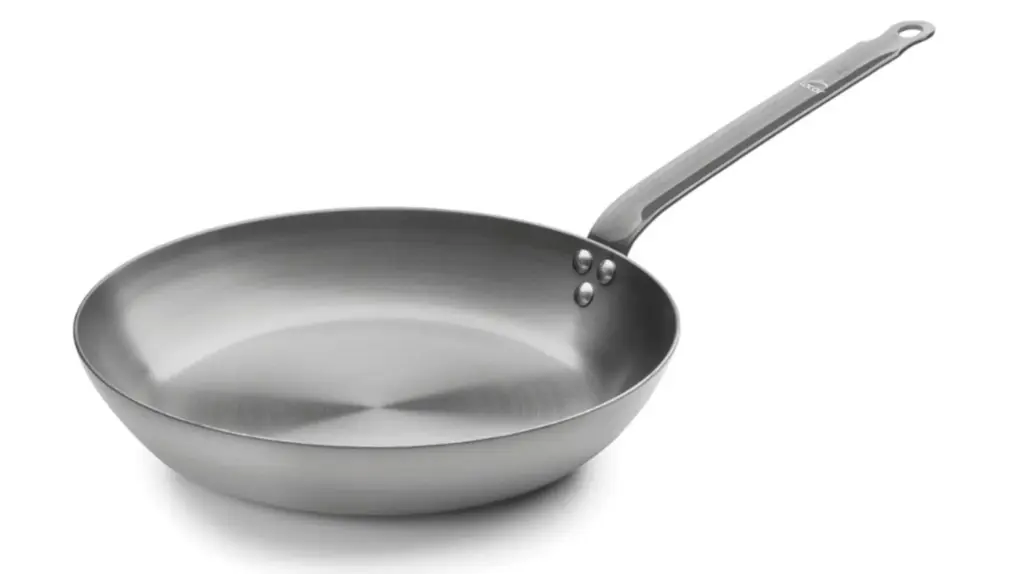
Quality-price: Lacor Ferrum
Who it’s for: users committed to its maintenance who want to prepare meat recipes.
Why we recommend it: the first day I used them I prepared some steaks and the result was magnificent: a well-marked exterior crust and a juicy interior. Normally it’s quite difficult for me to get the meat just right (I have to use a kitchen thermometer) and here it was much easier to achieve an evidently better result. Like the De Buyer model, these pans (I tested the 24 and 28 cm models) are made of mineral iron, without coatings, and come protected with a layer of beeswax that must be removed before first use. I missed instructions explaining how to season them along with the pan itself (surely many forgetful people don’t know they have to follow this step), but they are very well explained on their website. In addition, I noticed that it started to take on color earlier than the De Buyer model, which means it seasoned faster. I had to do it for a long time before using them, because the process takes time.
I especially liked these pans for meats (I’ve made chicken, beef, and burgers) and I didn’t have to be careful with the utensils I used to flip them, for example. In normal pans I always use plastic accessories to avoid scratching, but here I could use a fork directly without risks. When finished, I always washed it with a mild detergent, dried it completely, and applied a little oil with a paper towel. Also, to store it, I put a paper in it, as it is one of the recommendations to keep it in better condition.
Its weak points: the handle gets very hot, and it has happened to me more than once to touch it while cooking meat and burn myself.
Lightweight: De Buyer Mineral B
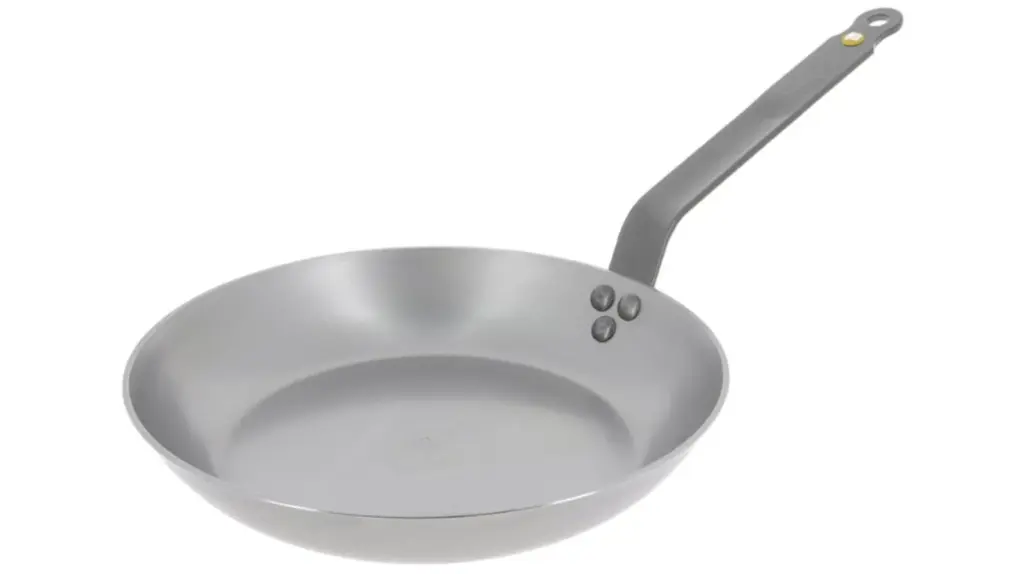
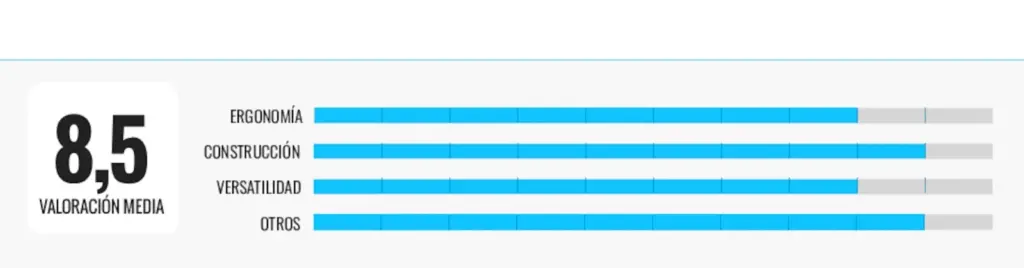
Who it’s for: those looking for iron pans lighter than cast iron ones and committed to their maintenance: it is essential to season them, dry them after use…
Why we recommend it: its French manufacturer is one of only two that make mineral iron pans —in this case with French raw material—, and they were the first ones I tried. Expectations were very high and, after several weeks of daily use, I have been able to understand quite clearly why they have such a reputation.
The first thing I noticed as soon as I took them out of the box was the weight, which is considerably lower than that of the cast iron pans I had tried so far; even so, they weigh more than those made of other materials. Before the first use, I seasoned them following the instructions that come on the cardboard protecting the pans: cover the bottom with oil (I used sunflower oil), heat it over high heat for about 8 minutes, wait for it to cool, remove the oil and heat again for 2 minutes. The non-stick performance depends directly on this initial process. In my experience, the first use was not particularly non-stick. In fact, when I tried to make some eggs on the second day, they stuck more than I expected. However, after several uses with oil and progressive heating, the surface gradually darkened and improved significantly. From the second week onwards, I was able to make an omelette without it sticking, always using a moderate amount of oil.
What have I noticed when using them? The 28 cm one is especially interesting for meats: when searing a sirloin steak over high heat, the pan doesn’t suddenly lose temperature when the cold meat enters, and it gets well seared evenly on all sides. The 24 cm one, on the other hand, has been much more manageable for daily use: I’ve used it for eggs, French omelettes, or sautéed vegetables. The handle is made of steel, so it doesn’t get as hot as iron ones, and although I’ve needed a cloth or oven mitt when the pans have been on the heat for a long time, they don’t burn.
Its weak points: the handle coated with a protective finish is solid and conveys durability, but it is not the most comfortable.
With enamel: WMF Flavour
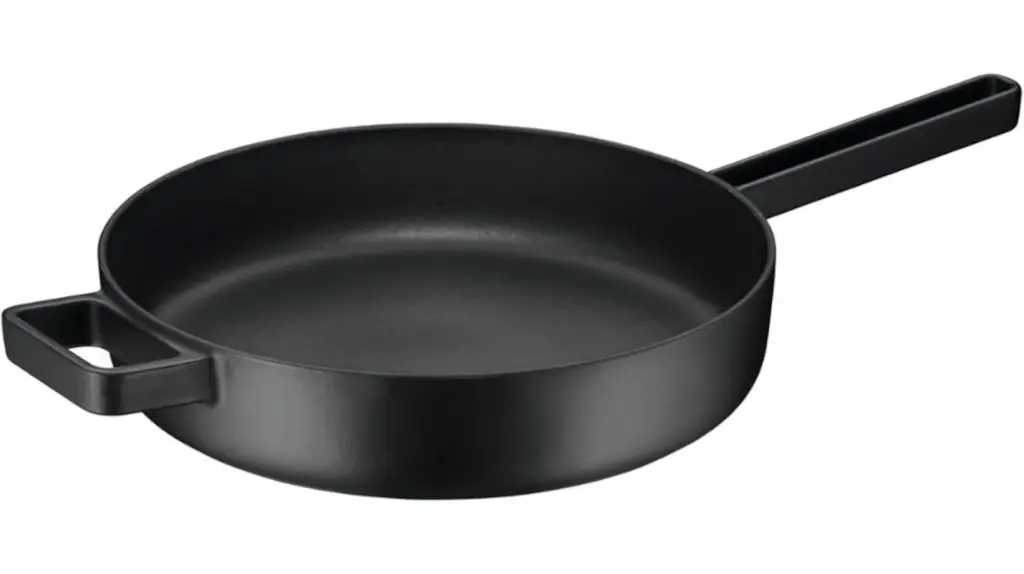
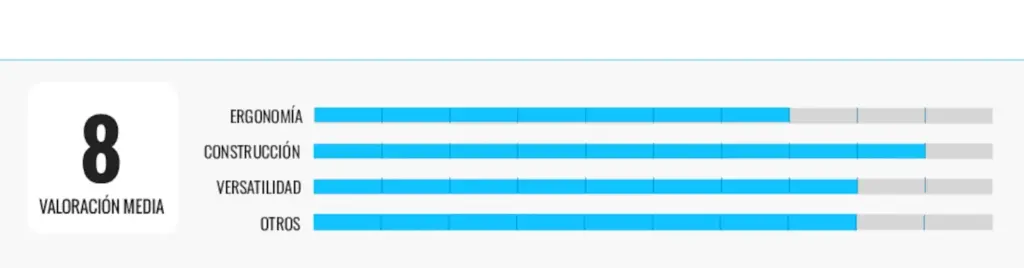
Who it’s for: those looking for a pan with the benefits of iron, but with less maintenance.
Why we recommend it: its design is elegant and minimalist in matte black enamel, a finish that not only adds style but also helps avoid many of the more cumbersome care requirements of classic un-enamelled cast irons. It has an enamelled surface that, with use, develops a somewhat non-stick natural patina: with oil and progressive heating, food did not stick more than I expected from cast iron.
I have tested the 28-centimeter model and I have to admit that it is very heavy: almost 4 kilos for the pan alone. The brand has improved the ergonomics when holding it because, in addition to the handle, it also has a helper handle that helps distribute the weight. As with all iron pans, you have to be careful when picking it up, because they get very hot. It is a very versatile pan with a lot of capacity: it has higher walls than normal, and I really liked it for searing meat over medium-high heat or the day I made a slow-cooked vegetable stew. In all preparations, I noticed that once it reached temperature, the heat was distributed homogeneously throughout the base and walls.
Its weak points: it is very heavy, and lifting it full of food is uncomfortable, especially if you use it directly to serve at the table. It does not have a pouring rim, so it is difficult to use for serving, and its handle gets hot.
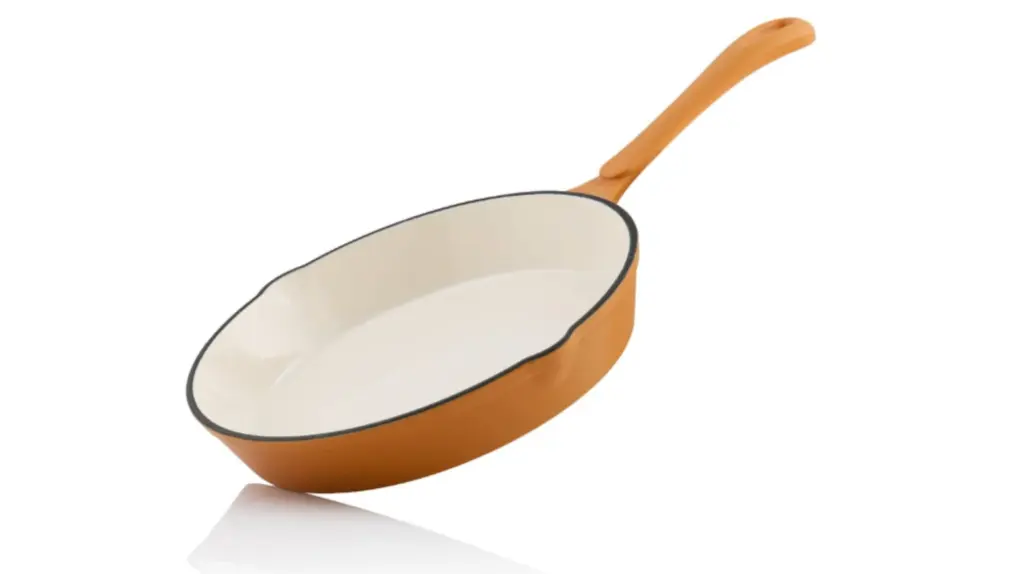
Enamelled: Mahlzeit Enamelled Cast Iron Frying Pan Sunny Orange
Who it’s for: those who want to start in the world of iron pans with a low outlay and little maintenance.
Why we recommend it: it is an enamelled cast iron pan, so it does not need seasoning. The first time I tried it —I used the 24-centimeter one— I made something as simple as grilled chicken breasts. Here I already noticed one of its main virtues: heat retention. Once the pan reaches temperature, it maintains it very stably, which allows for uniform searing and more homogeneous browning. Despite the interior enamel, it must be said that it is not directly non-stick and, as with the rest of the pans in the comparison, it must be preheated well beforehand. Otherwise, everything sticks. It has worked especially well for me with vegetables: I have prepared zucchini, pepper, and eggplant stir-fries several times, and here that ability to distribute heat uniformly is noticeable, even when I fill the pan quite a bit.
And I would like to highlight one more detail: it has two side pouring spouts. It seems silly, but since I started using pans with spouts or pouring rims, I don’t want anything else: when you’re going to pour oil, a sauce, broth… not a single drop is spilled.
Its weak points: the enamel makes things quite easy: it does not require seasoning like traditional cast iron and can be washed with soap and water without problems. But if something sticks, it doesn’t always come off easily. On one occasion, after cooking meat with a marinated sauce, I had to leave it soaking for hours, and even then it was difficult to get it clean.
Other interesting iron pan models
If you are looking for a pan with a handle that doesn’t get hot
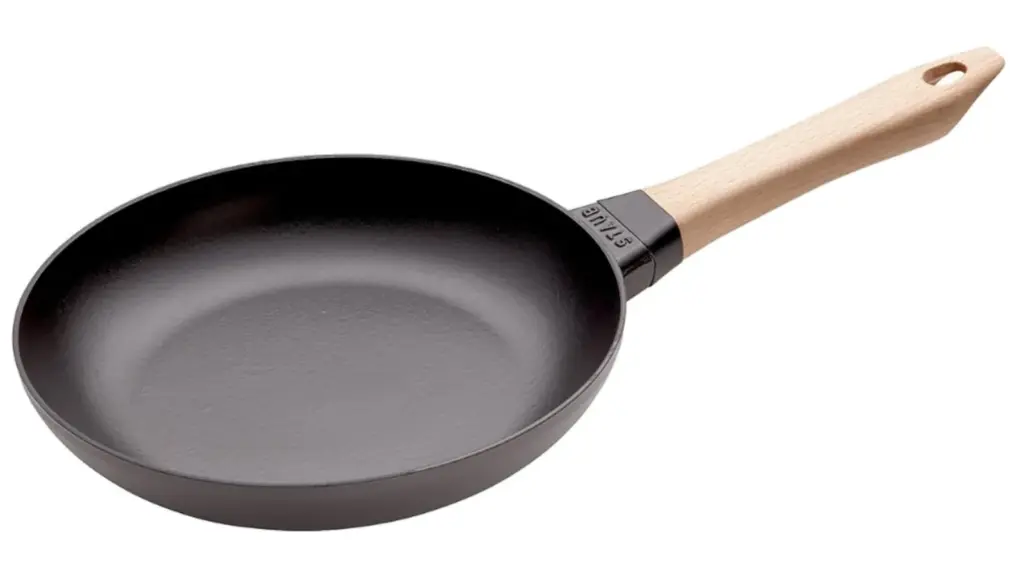
The STAUB cast iron model comes with a wooden handle and is suitable for all types of cooktops.
If you are looking for a pan suitable for barbecue
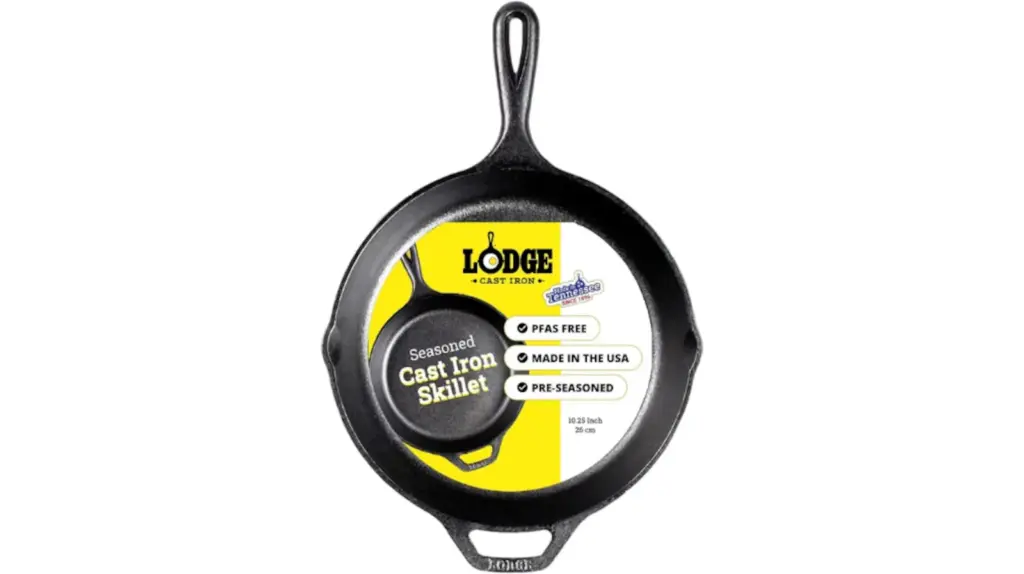
Lodge pre-seasoned cast iron pans can be used on all types of cooktops and even directly on the barbecue. It can be used with metal utensils without scratching.
Frequently asked questions about iron pans
What are the differences between cast iron, enamelled cast iron, and mineral iron?
Although often lumped together, they are not the same:
- Cast iron: it is the thickest and heaviest. It retains a lot of heat and keeps it for longer. Ideal for long cooking times and for the oven. It needs seasoning and regular maintenance.
- Enamelled cast iron: it is cast iron coated with vitrified enamel. It does not need seasoning and is easier to clean. It does not rust, but it can lose properties if the enamel is damaged.
- Mineral iron (carbon steel): lighter and thinner than cast iron. It heats up faster and responds better to temperature changes. It also needs seasoning and progressively develops non-stick properties.
Do all iron pans need seasoning?
No, only traditional cast iron and mineral iron pans. Seasoning involves applying a thin layer of oil and heating the pan to create a natural protective film, and it is essential to prevent rust and improve non-stick properties.
Are they really non-stick?
It depends on the type and use. Cast iron and mineral iron develop natural non-stick properties over time, but they don’t work like a pan with a synthetic coating from day one. Enamelled cast iron is not non-stick as such, although some models have more polished finishes than others. In all cases, they require technique: preheat well and use the right amount of fat.
Can they be used on induction?
Yes, all three types (cast iron, enamelled cast iron, and mineral iron) are compatible with induction because iron is ferromagnetic. They also work on gas, ceramic hobs, and electric cooktops. In addition, most are oven-safe (although it is advisable to check the handle’s temperature limit on each model).
Can they be put in the dishwasher?
It is not recommended in any case. It is best to wash by hand, dry thoroughly, and, in the case of cast iron or mineral iron, apply a thin layer of oil after drying.
Do they rust?
Only un-enamelled iron can rust if not dried correctly. If superficial rust forms, it can be resolved by cleaning and re-seasoning.
Are they heavy?
Yes, but not all equally. Cast iron (traditional or enamelled) is the heaviest. Mineral iron is lighter, although it is still heavier than an aluminum pan.
Are they suitable for cooking acidic foods?
In cast iron and mineral iron, cooking tomato, wine, or vinegar for a long time can affect the seasoning and impart a metallic taste if the protective layer is not well developed. In enamelled cast iron, there is no problem: the enamel acts as a barrier.
Are they healthy?
Iron does not have synthetic coatings and does not release plastic particles. In addition, it can release small amounts of iron into food (especially in acidic recipes), which generally does not pose a problem and can even slightly increase the intake of this mineral.
How long do they last?
With proper maintenance, they can last for decades. Cast iron and mineral iron are especially durable because they do not rely on a chemical coating that can degrade. For enamelled, durability will depend on the condition of the enamel.
*All purchase prices included in this article are updated as of April 22, 2026.
You can follow EL PAÍS ESCAPARATE on Instagram, or subscribe to our Newsletter here.