









EL PAÍS offers the América Futura section openly for its daily and global informative contribution on sustainable development. If you want to support our journalism, subscribe here.
Read more The cumbia chicha, refuge of rural migrants from the highlands
The streets of childhood, the first nightclub that was entered despite being underage, the family Sunday restaurant, grandpa’s favorite armchair, the tree in front of the house.
And then, the maps of our worlds that transform.
Grandpa is no longer here, the club is now a karaoke, and the restaurant has become a shopping mall. The tree was cut down. And on the corner, no one plays anymore.
The cities inhabited from memory, in a non-linear time, with memories that arise around a corner that was special; that remind us of the things that change, the places that disappear, and the people who leave.
Cities are not mere physical spaces, they are sensations in the body.
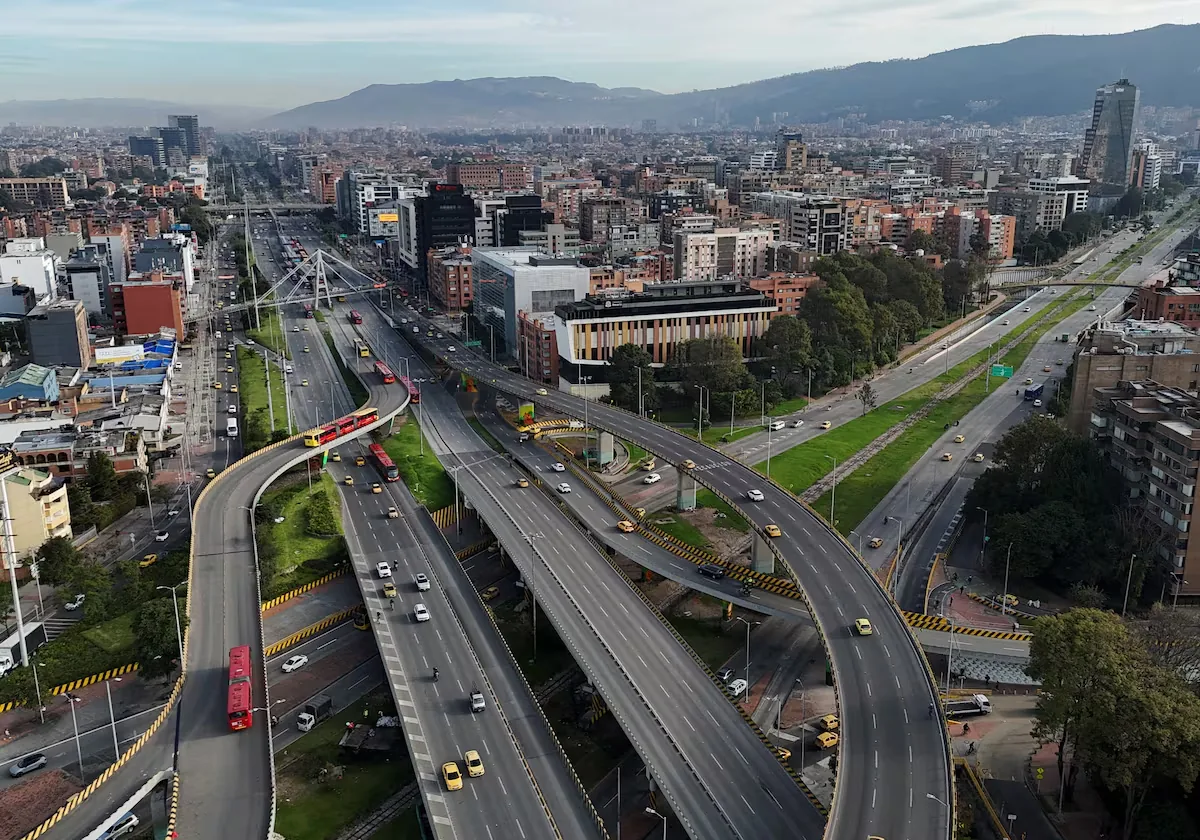
But our cities, increasingly monstrous, leave little space to feel: uncontrolled urban expansion, the absolute domination of the car that pushes to go far away in search of affordable housing; waves of forced evictions due to gentrification that make life unstable and the future uncertain.
Living in a city from closeness gradually becomes a class privilege: social segmentation translates into spatial and temporal inequality.
But building cities does not fall solely on politicians and real estate developers. Because the city is not just something to be subjected to, it is a human right that is exercised. We demand and resist from the smallest unit: the neighborhood.
When the city becomes dizzying, we must return to that core, to that neighborhood of interdependencies that supports us. And then, as social theorist David Harvey says, start thinking about the city from the common to change the reality of alienation, sedentarism, loneliness, and violence that expels the most fragile.
We need to strengthen neighborhood governance because it is the most faithful scale to understand what happens in the territory and the granularity of those who live there. Vote for participatory budgets to decide how and on what public money is spent. Support community markets, neighborhood care networks, and alternative mobilities.
Because we deserve to live in a city that approaches from closeness.
Proximity in every sense: shortening the physical distances between home and work, but also those of social classes to be able to coexist in diversity.
Also shorten the distance between beings. Because never like now, in times of crisis, has it been so important to meet others: that proximity of bonds that does not arise only from a nostalgic desire to connect, but from a necessity to survive. Rethink, then, the public space that fosters encounter and that should not be used only for demonstrations or mass celebrations. The public as that calm expression of continuity with housing.
Because a society that cannot meet in the streets says a lot about how polarized and fragmented it is.
Proximity also forces us to think about the living and the most vulnerable: if children and elderly people can move in their neighborhoods with more safety and independence, then the cities we are imagining will be livable for everyone.
We must also move away from the rational. Ordering territorial growth, regulating land use, managing rents are prerequisites, but they are not enough for life to arise. Much more is needed. Conditions for creativity must be created. Being able to imagine spaces to desire and live the city outside productivity, consumption, and private property.
It is, then, understanding that what we aspire to should not be the reflection of an individual who wants to lock themselves in a condominium to avoid exchanges outside their social class nor who sees the city with an aura of freedom because of endless options: options that are only for those who have money. Weaving from the common, from what we aspire to as a society, is opening up to exchange and daring to be uncomfortable, challenged, moved. Letting ourselves be affected by everything that surrounds us.
And in the end, the places we inhabit and build also say a lot about who we are.
In cities we imagine with care, let us also redefine the word to distance it from welfare, from that dominant being who takes care of something (someone) more vulnerable. It is, then, as urbanist Carlos Moreno mentions, stopping seeing care as a unidirectional emergency condition that seeks to repair fragility, to move to a network that supports us all as a routine, present, and everyday practice. As a basic condition to live better.
Finally, besides putting humans at the center of cities, we need to let nature infiltrate through the cracks of those megalomaniac and anthropocentric cities that can no longer sustain themselves. It is thinking about the shadows of trees that counteract heat waves that drive us off the streets, but also about those other non-human animals that can contaminate us with sensitivities that open up other possible futures.
Let us imagine and desire cities that are ready to support all kinds of encounters, that push us to walk and learn and marvel at what surrounds us, because what is the cost of stopping looking?
Let us imagine public spaces that invite us to recognize ourselves in others. Let our steps lead us to public libraries, museums, community cinemas because culture teaches us curiosity, because it triggers our capacity to be moved and to imagine.
And because in the end, from imagination arise other things that become possible. Even if it sounds like utopia. Getting excited imagining impossible cities in which we would like to live. Because there is no transformation without imagination, nor transformation without memory. Because there is no transformation without dreaming.
And then, climb to the highest point of the city and see life spread out at our feet. And from up there, look for your neighborhood, your streets, allow memories to surface and think that there are places of origin, but also those that are chosen; and stop running away to nowhere, because finally, the roots have grown enough to support a place to stay.
Read more “Don’t even go near the Sierra”: the war fractures in Sinaloa and violence intensifies in Mazatlán