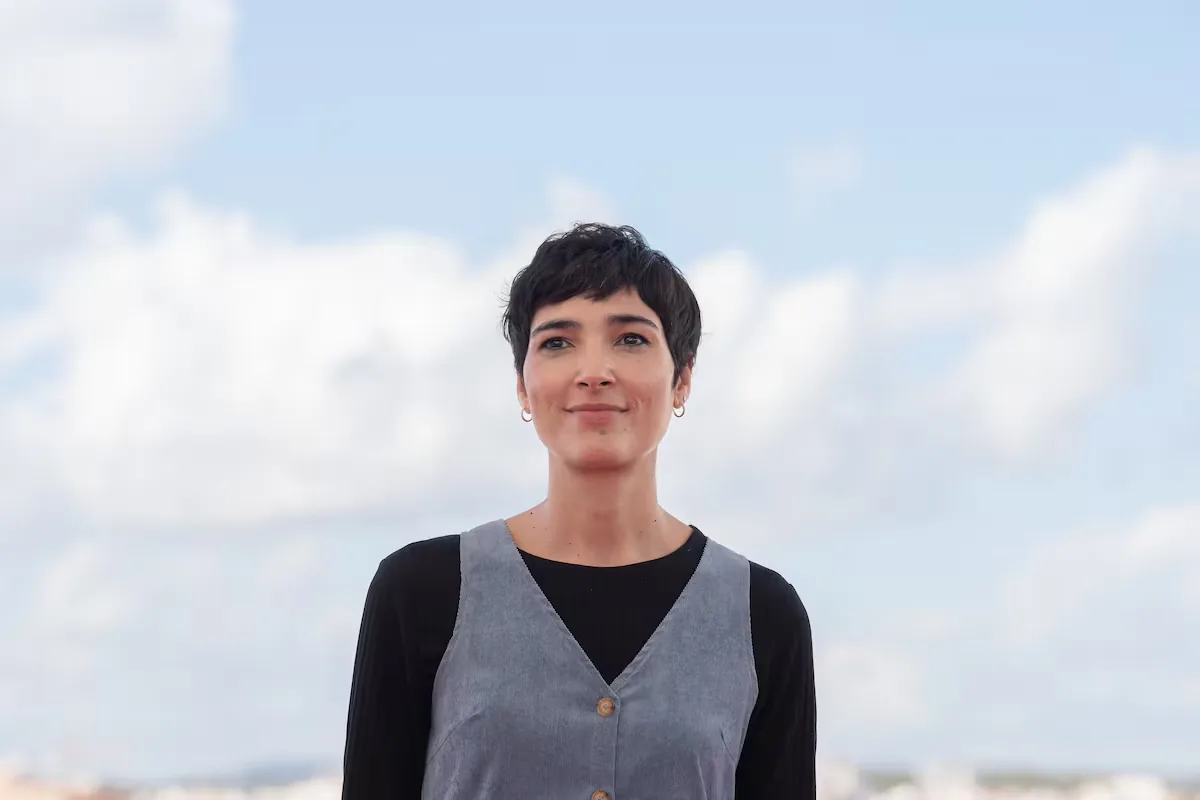
Isabel Peña (Zaragoza, 43 years old) may be one of the most prestigious and successful Spanish screenwriters: not only has she co-written all the feature films and series of director Rodrigo Sorogoyen, but she has also been behind films like El llanto, de series like Apagón and La peste, and at the upcoming San Sebastián festival she will debut as a showrunner with the series El castillo. She has a Goya for As bestas, the respect of the film industry, and tomorrow her latest collaboration with Sorogoyen, El ser querido, which competed at last Cannes, premieres in Spanish theaters… And yet, in her answers there are many blushes, a constant downplaying, and a palpable great desire to go unnoticed, something that makes it impossible for the success of her work and her very tall stature, over 1.80 meters.
Read more The three major protections against suicide: connection, purpose, and meaning
Peña is the only child of a couple who unconsciously determined her future. “My father is an absolute cinephile. And my mother loves cinema. For me, watching a movie was not something special, but everyday.” Her childhood and adolescence were marked by VHS first, then DVD, the Buñuel cinemas, and a magazine, the one monthly received by Canal Plus subscribers: “They listed the movies alphabetically so you could choose in advance and pay attention to what they programmed.”
Still, when she reached university, she took another path. “I started studying Journalism because I didn’t know I wanted to dedicate myself to film. I suppose it was somewhere very deep in my head, but I didn’t even dare to say it. Journalism was a kind of absurd pact between the Law degree my parents wanted me to study and the humanities degree I desired,” she recalls.
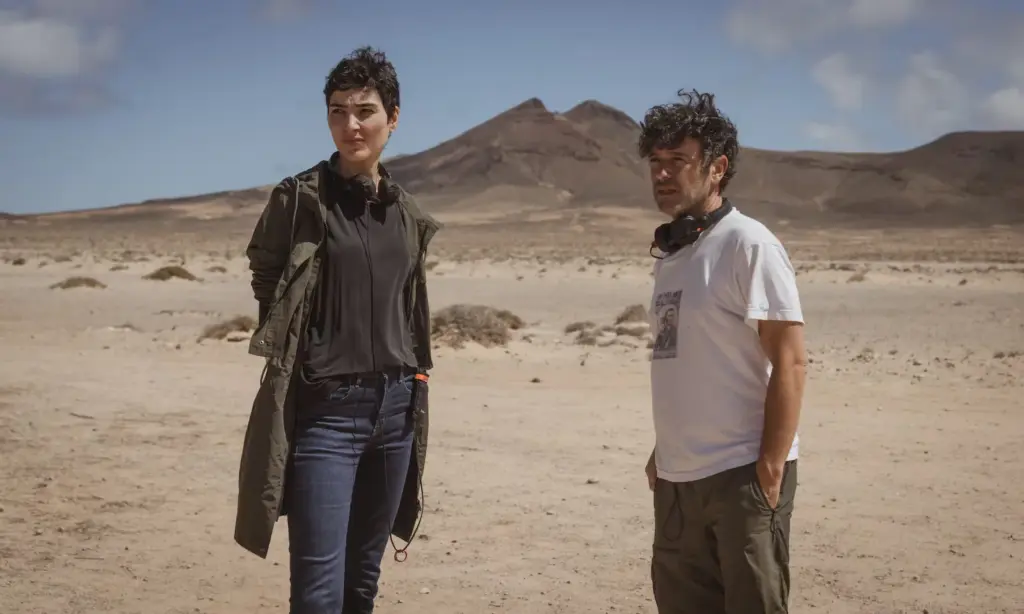
Until she finally enrolled at ECAM, the Film School of the Community of Madrid: “My parents have always supported me. I think they had a hard time because the uncertainty was enormous. In fact, it’s still here. Although now I’m living a very good moment, the uncertainty is always there.”
At school she specialized in screenwriting. Peña insists: “Again, it came from a hidden place, as if I sensed the steps I had to take, although I never verbalized them.” Without role models. “Because of my father, I loved William Wyler, Alfred Hitchcock, Fritz Lang… Later, with Canal Plus, I discovered David Fincher and Jane Campion, I reached modernity, I began to understand that there were screenwriters and directors. In fact, Campion was like an oasis in the total desert of lack of female role models, because I hadn’t even started researching. And I came to the Nouvelle Vague, and found Agnès Varda and her Cleo de 5 a 7, another oasis.” In that class, there were four women out of 12 students. “I shared a desk with Sabina Urraca,” she notes. And in those hallways she crossed paths with Sorogoyen. The mentioned one clarifies an anecdote told by Peña: “She must have told you that we became friends going back and forth from the metro, which then didn’t have a stop near ECAM. No, we already knew each other from class [laughs].”
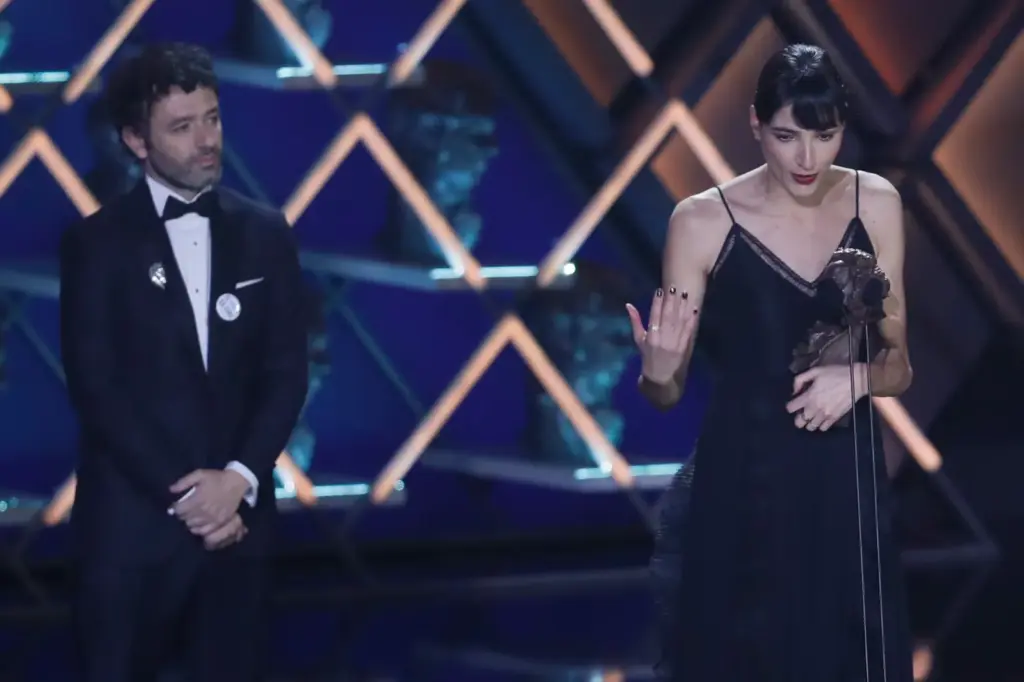
Sorogoyen left ECAM earlier, although he kept running into Peña at cinemas and bars in Malasaña. “And one day [in 2008] I ran into him on the street and he told me that a production company was looking for a female screenwriter, a phrase I’ve heard many times since, for the series Impares”. The test, they told her later, didn’t go very well, but Sorogoyen insisted on her talent. The director, who has always co-written his feature films with Peña, says: “Isabel, besides having a much greater work capacity than mine, at least in the script phase, has a brutal self-demand, she never gives up. And she has always brought her sensitivity, which is as valid as mine, but since it’s different, I take it very much into account. It’s a sensitivity, a very interesting perspective that is directed at other things. Obviously, there are other great screenwriters; however, I’m not interested in where they focus their gaze.”
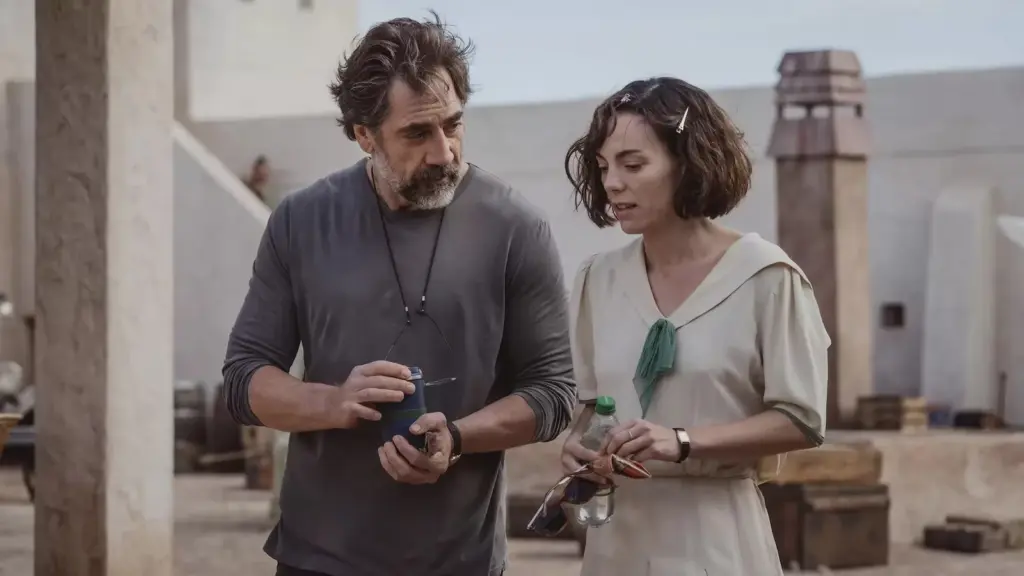
To work, they both talk a lot. “We like to converse, talk, debate, doubt, try to convince, have discussions, discussions in the sense of discussing a topic. This for months, even in some cases a year, like El ser querido, which is the script that has cost us the most to write.” In 2021 they met one day for lunch in Bilbao with Victoria Luengo, and told her the story, with the actress as the daughter. “We fantasized that Javier Bardem would play her father.” In 2022, at Cannes where As bestas premiered, they met with the actor and explained the project: “He said yes, that he was interested, but logically, he wanted to read the script first.”
Read more Dogs vs children: why is the increase in pets related to the decline in birth rates?
Why does Peña always write in company? Back to her shy smile: “I know individual writing exists because people do it. I don’t know how.” And she elaborates: “It’s very complicated to have a complex vision, that works with rhythms, tempos… I mean, that each sequence counts and doesn’t count what we need. And for that, I need, selfishly, a person by my side, talking. I enjoy it a lot. Then yes, when the topics and structure, the outline, are on the board, I write alone. When I have finished that draft, and my partner has also finished their part, the fact of being able to give it to someone who knows the story so well and knows me so well, who will give me the right notes and I can do the same… That process of constantly feeding myself amuses me and makes me better.”
The screenwriter self-defines: “Writing is making mistakes and doubting. And I am a doubt with legs.” And about her suffering in the process, she reflects: “This uncertainty that makes you more demanding will take you to a better place than if you are someone who is satisfied from the start, you know?”
Peña usually writes thinking of actors in her characters: “It helps with the dialogues, even if the cast changes later.” And for a couple of years she has verbalized in talks and interviews the importance of silences in films, silences that are already in the scripts and that, although she says she will never direct, make her a filmmaker: “In El ser querido there are many of those silences because there are many looks. They go hand in hand. Those looks are built from the trust in the director’s actors, who seeks to improve during filming, and also in editing, with Alberto del Campo, who keeps searching. In El ser querido, there are sequences that Rodrigo and I wouldn’t have written 10 years ago. Because we didn’t have the trust in the cinematographic that I suppose experience now accumulated gives us.”
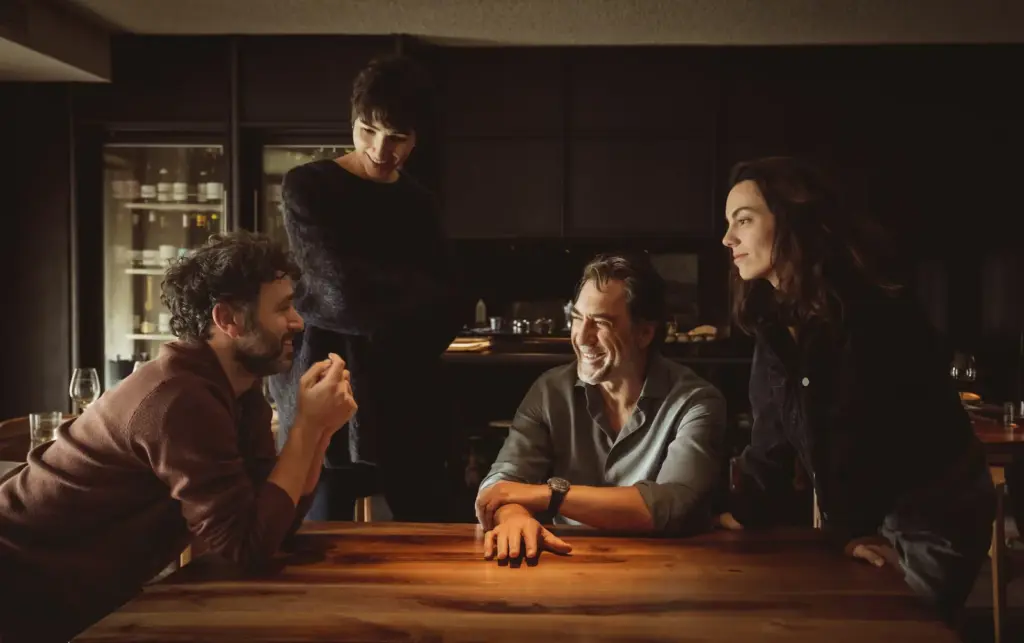
Peña already attends shoots, something she refused years ago because she felt “like an octopus in a garage.” Now she feels she contributes things during filming. In the series El castillo, a thriller that delves into prostitution in Spain, she has gone to the set every day, because she is the showrunner —a word she never utters in the interview— along with Eduardo Villanueva. “I liked that mix of screenwriter and executive producer, I found a filmic and creative place that interests me a lot. I hope to repeat more.” The project was passed to her by Villanueva, Sorogoyen’s partner at Caballo Films, when he read El proxeneta, Mabel Lozano’s book, because he understood that Peña could turn it into an audiovisual product. Villanueva, Sorogoyen, and Peña were on that writing team for the series Impares.
Now Peña is a reference for young generations of screenwriters. More blushing. “When in some talk a girl has spoken about my work, I have felt on one hand happy and on the other with a responsibility that I love.” That said, she will never direct: “Never, I wasn’t born for it. Like being an actress, which they have sometimes proposed to me [gestures, fleeing the possibility]. I am all uncertainties, remember? Although then Carla Simón comes and insists that in her shoots she embraces doubt. I listen to her and other filmmakers and think that maybe if I were now in a film school and heard her… No, for me it’s too late.”
Read more Listen to Europe and forge its future