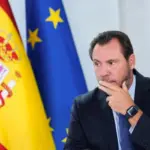
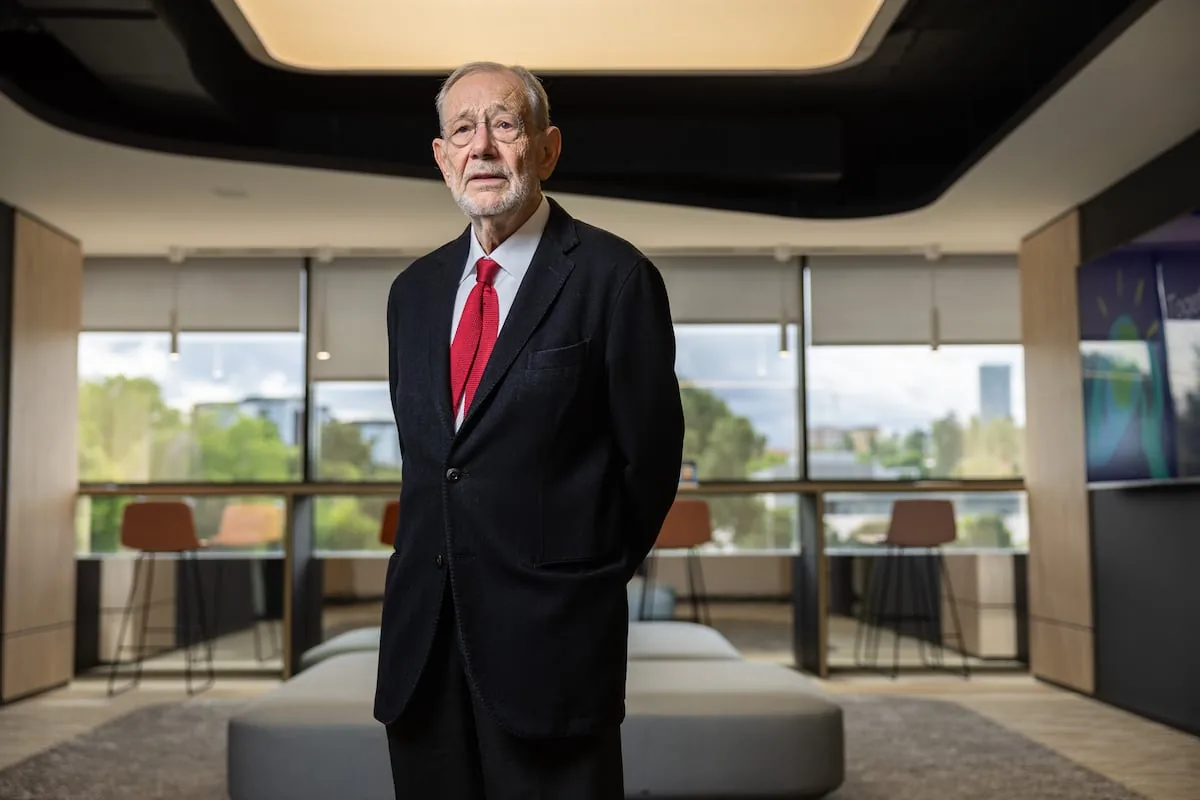
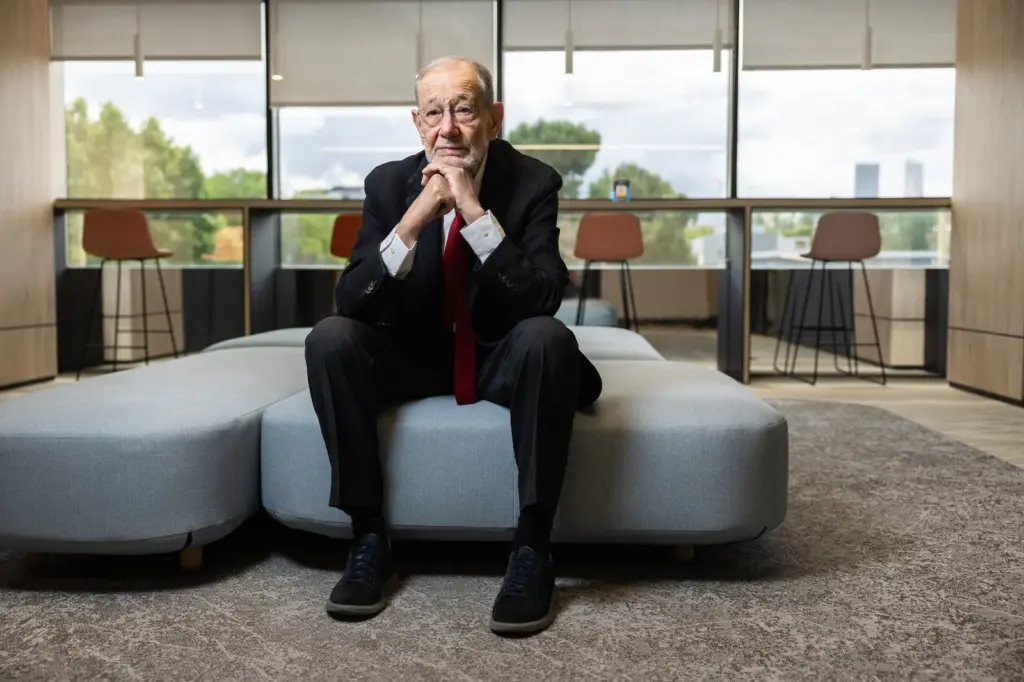
This interview with Javier Solana, former minister during Felipe González’s era, who was the High Representative of the European Union for Foreign Affairs and Secretary General of NATO, was conducted on May 13. This Saturday, Solana shared with EL PAÍS his reaction to what is happening now with José Luis Rodríguez Zapatero, his party colleague.
Read more Integrity elections
“The Zapatero I know,” says Solana, “does not match the one in the judicial report. It makes me very sad. I await José Luis Rodríguez Zapatero’s own response. I find nothing in his history that resembles what is described here. I remember the Zapatero who governed with important laws for society and I remember the decision that, in his time, ended ETA.”
The interview stems from the award the European Union granted him last Tuesday, alongside personalities like Angela Merkel, with the category of Honorable Member. Solana is, in addition to being president of the board of the Prado Museum, president of EsadeGeo (Center for Global Economy and Geopolitics). His passion is the science of the future and the future of Artificial Intelligence (AI). He dealt with Europe’s future when this continent was on equal footing with the United States and Russia. He looks back (and forward) at the times he met with the world’s greats. This is no longer the world he helped shape as High Representative of the European Union and Secretary General of NATO. Javier Solana, born in Madrid, is 83 years old.
Question. What also happened in your time was the attack on the Twin Towers…
Answer. They were so important for the United States that they were practically stunned. What seemed like it would be a good relationship between the United States and Russia was frustrated, because the United States, for a long period, was mainly focused on capturing [Osama] Bin Laden. Bin Laden was killed during [Barack] Obama’s time, years later.
Q. What consequences did it have for the world?
A. The attack itself was spectacular, dramatic. I was in Ukraine, with President Romano Prodi of the European Commission. I was High Representative and we had had a long conversation about Ukraine’s relations with the European Union. My phone rang. We stopped the meeting. What awaited us in Brussels was global shock. Many things changed.
Q. What consequences does it have today that there is no referee for what is happening?
A. It is much better that there are institutions that are respected at this moment. With the arrival of [Donald] Trump, multilateralism ended. I don’t know if it will return, but if it does, it will be in a different way than we know today. Because of Trump. I think it is the most important thing that has happened to the world.
Q. How worried does Trump make you?
A. I am worried about him himself, his personality. His personality worries me, worries me a lot… Hard to say, but it is true that at every step he takes, a member of his family always appears…
Q. You said in 2015 that we only have one planet and that if we continued like this, squandering it, things would go badly for us. A prophecy, because now things are going very badly…
A. 2015, 2015… We had already passed the 2008 economic crisis, climate change… It was a topic on the front page of meetings. 2015 is very important because the economic crisis was more or less under control… [Juan Antonio] Samaranch played a very important role in those Olympic Games… Xi Jinping was there, who now is seen to be a man of long breath and who remains the supreme leader of China. I think I was the only one who knew him before his rise. I didn’t realize what he was going to be, but now, when I think about it…
Q. You have dealt with many people. One day you told this journalist that you had also dealt with bad people…
A. Maybe I said I have dealt with people who did not have clear ideas of good… For example, [Vladimir] Putin. I met him when he was still in the KGB as director. Later I dealt with him as prime minister of [Boris] Yeltsin and finally when he was president. I had a fairly intense relationship with him… Putin had very little affection for the then Commission president, who was Durão Barroso, and I was the High Representative for the European Union’s Foreign Policy.
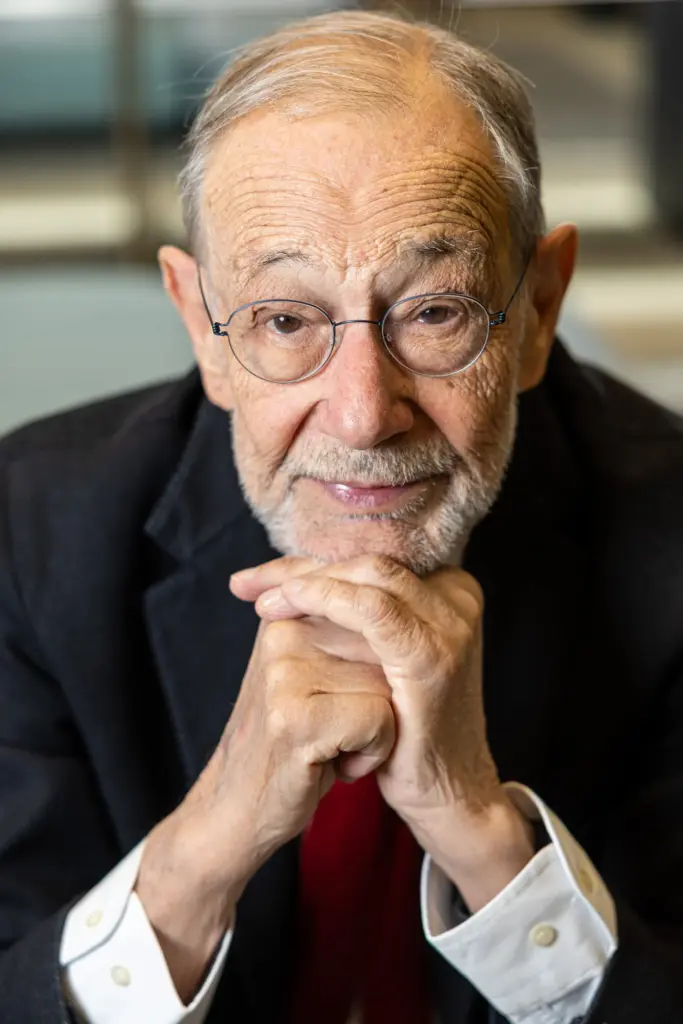
Q. You were the first High Representative of the European Union, Secretary General of NATO… What did you do there that was worthwhile as a human being?
A. The heads of government respected me, liked me, I was able to do things that others had not been able to do… During my term we carried out the first peacekeeping operations with European Union forces. We were very involved in all issues related to Congo and we were able to guarantee the security of the border crossing between Gaza and Egypt. That was done by Europeans. This has changed completely. The presence of the European Union, in what was a very important function, has declined. I am not saying that what we did in those years was the preamble to what today could be a European force. But there was that feeling of putting peacekeeping operations into practice.
Q. What consequences did it have for this country that you were that High Representative?
A. Those years, Felipe González’s government had extraordinary international respect. I was the last Foreign Minister of that turn-of-the-century era. And there was great respect for Spain. Felipe González was an international leader of great dimension and that affected the foreign minister… If you asked me why I ended up in NATO, I have to say it was a coincidence. As minister I was a member of the United Nations Security Council. I therefore had a relationship that made me close to the United States Secretary of State, Madeleine Albright, and my name reached Bill Clinton… I was with him in some meetings and that created a climate that ended up leading me to be that figure in NATO.
Read more Mexican economy: poor start in 2026
Q. When did peace break?
A. When the Twin Towers… The attack. The position the United States took. They wanted revenge and until they found Bin Laden, whom Obama found, they did not stop. It distracted them from many things. Until now. The war we live in has no pause. There is the war that began then.
Q. Don’t you think this might not be a good time for anything?
A. This is a moment when Europe has to be able to give its best. Objectively, it is not the best moment for Europe. We still have France pending very dramatic elections, from which someone from the far right could be elected… We have Brexit and the United States says that the European Union was created, let’s say, to annoy, in quotes, the United States. That is written, maybe not in the same words, but it has been verbalized by President Trump on hundreds of occasions. For Europeans, that is an important issue… I was reflecting on Spain and the 40 years of our presence in the European Union and I thought that one of the most important problems is the situation of the United States with Europe. And the second is Artificial Intelligence. They are completely different facts, but represent changes compared to what was yesterday… These things are on the table and will make this period of time different. Nothing will be the same in the relations of the United States with the world, especially with Europe, and also with everything that AI may mean, which is a very important battle. The great millionaires involved in AI companies have a very strong commitment among themselves. What they say means they do not want regulation and, obviously, if AI has no degree of regulation, this will be a big problem.
Q. What is Spain now in Europe?
A. A pro-European country. We have demonstrated it on multiple occasions. I have some concern about the new generations. I don’t know if they will be pro-European or not like the generations we belong to… I would like us to continue being pro-European. For us, the European Union was a salvation. An extraordinary event.
Q. You live in today’s Spain. In your country. How do you relate this time to the unrest that is felt?
A. The unrest of the younger generation, I think, has to do with expectations that are not fulfilled. The future will be worse… I am no longer in politics, but I am in Spanish society, I speak when I have to speak and keep quiet when I have to keep quiet, but I feel that what the polls say now about young people’s vote is worrying.
Q. And politics in general, the one your fellow party members do, but also the others?
A. I think this is a country with a fairly solvent economy, recognized by everyone, by Europeans, by the World Bank… Everyone recognizes that the Spanish economy is doing well. It is true that political tension is high and it will be very difficult to calm it down before the next elections, and I would have preferred it not to be this way. I think it is a bad situation. Politics also has to do with dialogue among us, and this lack of dialogue between the government and the opposition seems to me not good, and it would be better if it were not so.
Q. How many things have you done out of enthusiasm?
A. Almost all. Because enthusiasm is also an act of will. I think it is better to do things with enthusiasm, with dedication. Enthusiasm is doing the things you do and doing them well…
Q. That passion included your first ministry, Culture.
A. That period went quite well from a management point of view. It seemed like there was only movida, but there was a lot of infrastructure. Auditoriums, museums, the Thyssen, the Reina Sofía… I enjoyed the Ministry of Culture. Now I continue in culture. I am president of the Prado Museum, which was what I asked President Zapatero for upon returning from my international trips. “Do you want anything?” he asked me. Well yes, to be on the board of the Prado Museum… A vacancy came up that year and he appointed me. And I am still there.
Q. Do you now find a decline in culture?
A. For civil society it has been very important, and it must be defended from politics… The democratic transition was a moment when society mobilized. I think the entire period of Felipe González’s government is something history must vindicate. They were very important years for Spain and we not only joined the European Union.
Q. You are now an optimistic man.
A. I am 84 years old. I am alive.
Q. What makes you happiest?
A. It makes me happiest to think about science. I believe that at this moment science can take giant steps, also thanks to Artificial Intelligence. What we are doing in medicine, biology, and generally in everything related to the scientific mindset, is very healthy. It is the best way we have to face life. Life is not known what it is, but it is understood scientifically… Read the latest book by Juan Luis Arsuaga [The Answer], which tells us how we humans got here. It thrilled me!
Q. Would you have been Felipe González’s successor?
A. I don’t know. I don’t know… In the years I was NATO Secretary General, we were thinking about the party’s two possible successors. I had some cards… But, well, life has taken me where it has taken me. I am delighted with this period that has led to international politics. It is a facet I never thought would be part of my life. I have met important people in the world, Americans, Africans, Arabs, Chinese, Russians…
Q. Now this is another world. Trump, for example, must be a disappointment.
A. I did not expect that in my lifetime there would be a US president who said Europeans were his adversaries, and here we are.
Q. Our country, now. Would you sit Felipe González with Pedro Sánchez?
A. Felipe is a great friend to me. I value friendship. We lived through 15 years of government. I was there from the first day to the last; I was almost there more than Alfonso Guerra. My relationship with Felipe González I think is mutual. And I see Pedro Sánchez when he calls me and I go gladly.
Read more A Certain Scent of Peña