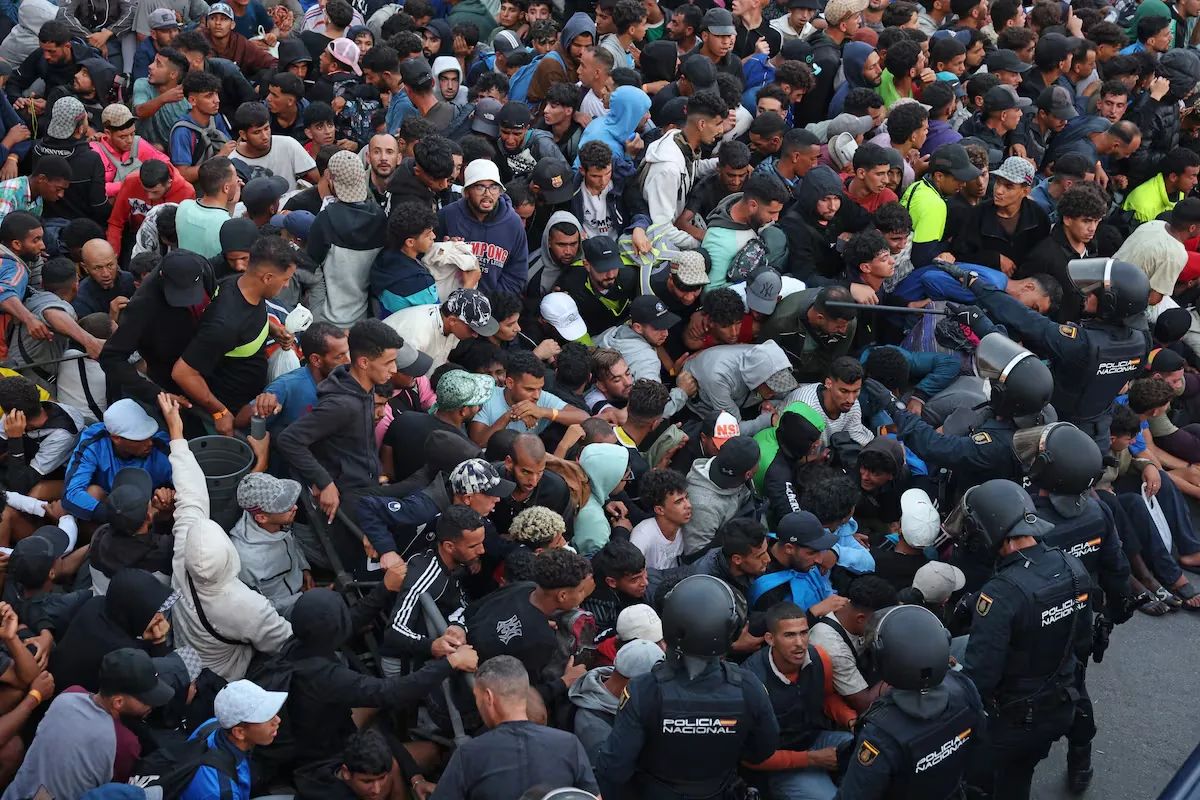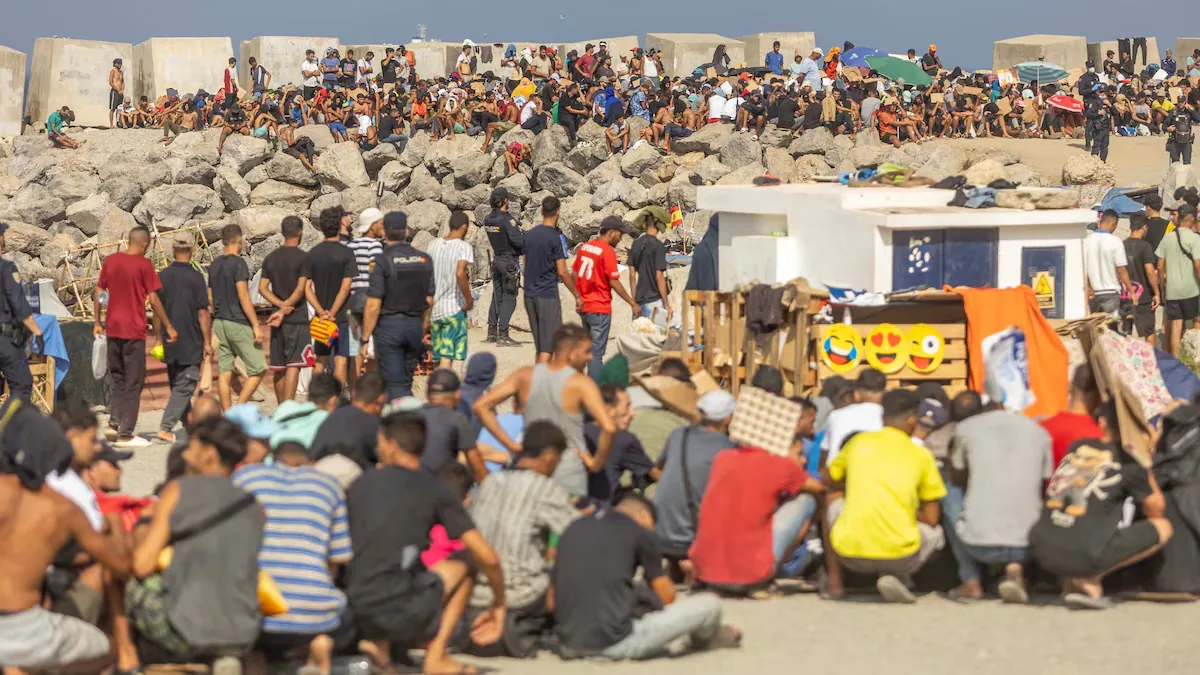
PP spokesperson Borja Semper has described Pedro Sánchez’s appearance in Congress to report on the migration crisis in Ceuta, resulting from the entry of 80,000 people from Morocco, as “delirious,” and has called for strengthening the border “with a much more significant police presence than there is now” and “a reinforced and dignified military presence worthy of the challenge we face.” The popular politician made these statements hours after the Ceuta Government agreed to appear as a private prosecution in the case being investigated by the National Court regarding the massive entry of migrants for directly and seriously affecting the public goods and interests of the autonomous city. After the massive demonstration on Wednesday, which gathered about 20,000 people in a city of 83,000 inhabitants, the people of Ceuta took to the streets again tonight to protest against a new migrant reception center that the central government plans to build at the Muelle de Poniente. Residents have even blocked traffic in the area and have affected the disembarkations at the port of Algeciras.
Read more Badosa offers a proud resistance against Gauff, but ultimately falls
EL PAÍS offers the latest on the migration crisis for free. If you want to support our journalism, subscribe.

Grande-Marlaska and Brunner “advance” on European emergency aid for Ceuta
European Commissioner for Home Affairs and Migration, Magnus Brunner, has stated that he achieved “important progress” in the demand for emergency aid for Ceuta requested by Spain during a conversation with the Interior Minister, Fernando Grande-Marlaska, in which the latter also informed him of the current situation and the “next steps” to complete the return of migrants who entered irregularly.
“I had a good phone conversation with Minister Grande-Marlaska about the evolving situation in Ceuta. He updated me on Spain’s response and the next steps regarding the return of those who remain illegally, as well as efforts to improve security on the ground,” Brunner revealed in a message on X. The conversation took place on Thursday afternoon, according to community sources.
At the same time, both have achieved “important progress in the demand for emergency aid to provide financial and operational support to Spain,” he added. A few hours before Thursday’s call, a community spokesperson had assured that the Spanish request is still being analyzed as a “priority” in Brussels but indicated that there were still “some important pending issues” to which Spain had not yet responded.
Brunner is participating this Friday in a closed-door commissioners’ meeting with the President of the European Commission, Ursula von der Leyen, to design the State of the Union speech that the German will deliver on September 16 before the European Parliament. The speech marks the start of the political year and also sets the Commission’s work lines for the next 12 months, in which migration policy will play a prominent role. The Ceuta crisis will be part of the discussions.

PP demands more police and military presence in Ceuta and Melilla, and calls for the return of migrants: “We talk about return, not distribution”
PP spokesperson Borja Semper has demanded in an interview on Telecinco to strengthen the border of Ceuta and Melilla “with a much more significant police presence than there is now” and “a reinforced and dignified military presence worthy of the challenge we face.” Semper insisted that the relationship with Morocco must be based on understanding, but making it clear that “Spain’s national interests are above any particular interest.” Asked about possible measures, such as suspending the Friendship Treaty, he replied: “Obviously, we do not rule anything out.”
The popular leader also rejected that Spain should assume the social policy of Moroccan minors who arrived irregularly through the border: “Morocco’s social policy, to be reasonable, should be done by Morocco, not by Spain.” Semper demanded the urgent return of those who entered irregularly: “We talk about return, not distribution,” he concluded, recalling that, according to the Government of Spain and the European Union, Morocco is “a reliable partner” and “a safe country.”
Semper calls Sánchez’s appearance on the migration crisis “delirious” and denounces the collapse of health and justice in Ceuta
PP spokesperson Borja Semper has described Pedro Sánchez’s appearance in Congress to report on the migration crisis in Ceuta, resulting from the entry of 80,000 people from Morocco, as “delirious.” Semper denounced that despite the seriousness of the situation — a crisis he considers “health, migration, security” and “also institutional” — “they will not assume any responsibility in the Executive.”
The popular leader warned of the collapse of services in the autonomous city: “Health care is overwhelmed, the Ceuta court is overwhelmed, the city of Ceuta is overwhelmed, and the Government tells us to be calm, that they are already doing it. It’s a joke.” Semper added that, a month after the start of the crisis, “we really don’t know how many immigrants there are in Ceuta. The Government doesn’t even know how many minors there are.”
Semper made these statements in an interview with Telecinco, in which he also extended the responsibility for the crisis to the Government’s investiture partners, whom he accused of accepting “lies” just to keep Sánchez in power: “What they come to say is ‘lie to me, but tell me you love me.’”
Tellado calls Robles “cynical” and reminds her of her “responsibility” in managing the Ceuta crisis
PP Secretary General Miguel Tellado has called Defense Minister Margarita Robles “cynical,” considering her “a judge who betrayed herself” for staying in Pedro Sánchez’s Government, and reminded her of her “responsibility” in managing the migration crisis in Ceuta.
The PP number two echoed images in which Robles applauded less enthusiastically than the other ministers during Pedro Sánchez’s appearance in Congress to report on the crisis, resulting from the massive entry of 80,000 migrants from the border with Morocco. She also did not applaud the president when he announced he would publish Intelligence reports on prior warnings.
After the debate, Robles told journalists that she remains proud to be part of the Government since 2018 and to lead the Armed Forces, although she claimed her right to show her gestures and expressions.
Tellado, in a message on X, responded that “making faces and clapping half-heartedly” does not exempt her “from the same responsibility as her colleagues”: “She is wrong. It only makes her cynical.” According to the ‘popular’ leader, “the memory of this country” will remember Robles “as a judge who betrayed herself, a staunch supporter of Sánchez,” with “political dignity totally lost.”
Read more F1 Italian GP: schedule and where to watch the race
MIGRATION CRISIS
The “Ceuta moment” and the trap Europe set for itself
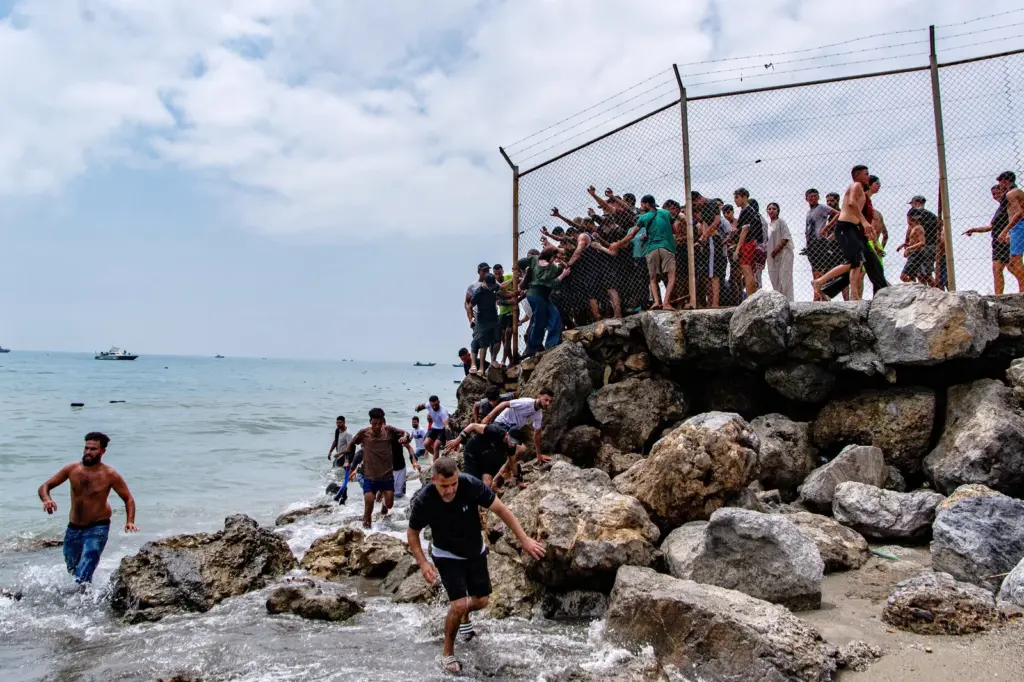
The massive and unexpected assault of immigrant people in the territory of Ceuta cannot be understood solely through the lens of probable indirect manipulations by third countries to destabilize the Spanish Government. And the deeper meaning of the Ceuta moment is not exhausted in a simple geopolitical and conjunctural game: it highlights the inexorable trap that the European Union has woven for itself in developing its migration policy.
You can read the full opinion here.
Migration crisis
The uncertain wait outdoors for a place in a reception center in Ceuta: “It’s very hard to spend the night there”
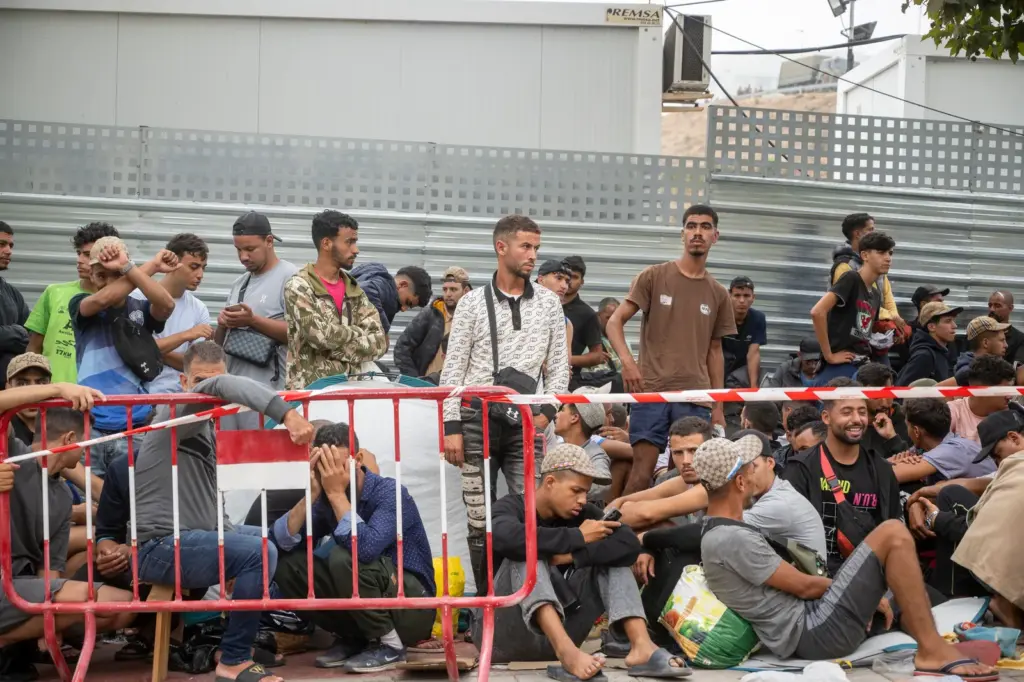
Hundreds of people crowd at the main entrance of the Loma Colmenar reception center, one kilometer from the Moroccan border of Ceuta and at the foot of the University Hospital. Those who do not fit in this space wait across the street, with the uncertain hope that a new expansion will give them a bed and a roof to sleep under. Some ask when that day will be, others have heard from someone who in turn knows someone else who says the day could be today. Abselam Hamed, a neighborhood resident who lives opposite the center, has already witnessed how the last expansion, from 700 to 1200 beds at the beginning of the week, ended with police firing shots into the air: “It’s very hard to spend the night there. And they are afraid to go elsewhere because they get robbed,” says Abselam Hamed, whose balcony faces the center’s doors.
You can see the full information here.
MIGRATION CRISIS
Ultimatum to solidarity in Ceuta: “Tomorrow there will be no food for 250 women and children”
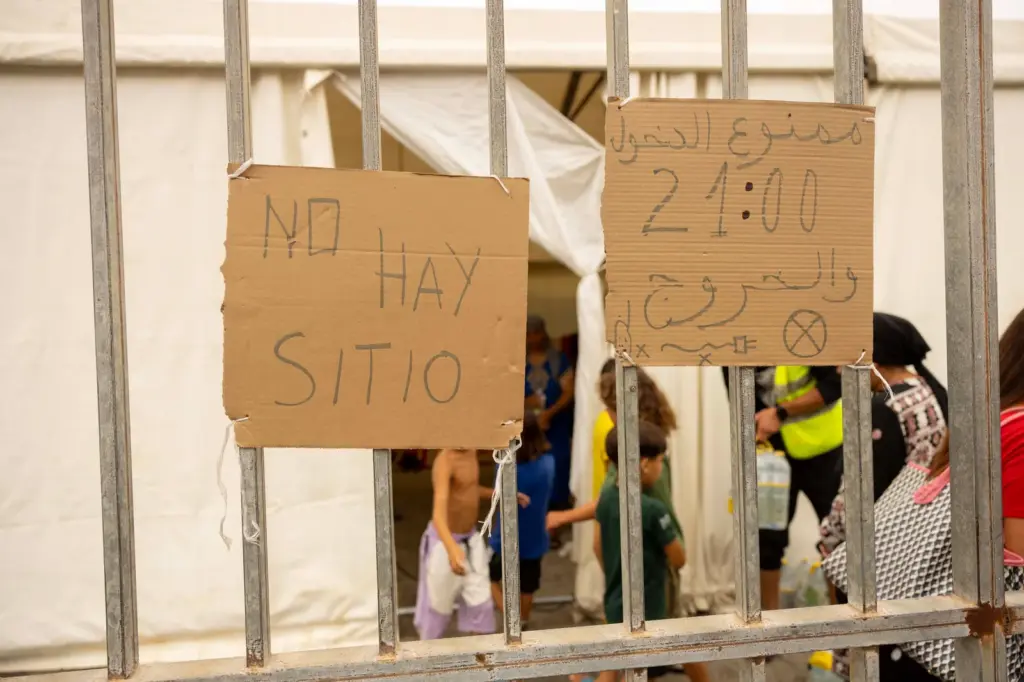
The sign on the entrance gate reads “no space,” in Spanish and Arabic, but it doesn’t matter. Dozens of Moroccan women have been sitting on the sidewalks for hours waiting for reality and the sign to change, which will not happen. Because inside the situation is at the limit. In the tents that have been hosting more than 250 women and children in the Sidi Embarek neighborhood in Ceuta for weeks, they have reached a point of no return. “As things stand, tomorrow we will run out of food,” says Uzman Bersabé, from the Social and Neighborhood Movement of Ceuta, one of the organizations that has been taking care of the most vulnerable migrants in a supportive and voluntary way for over a month. First, in a precarious football field that overflowed, and now from this space next to the neighborhood mosque, whose land has been ceded by the NGO Luna Blanca to set up the provisional camp. But “provisional” has lost its meaning in this city. Because the Government Delegation assured them that this settlement would be temporary, and they would relocate the migrants to the facilities of the Equestrian Center, known as La Hípica, but it has not happened. “They moved the women who were housed in another camp in El Príncipe there, and took the unaccompanied minors from here, but that’s it. There are still 250 women here with their children for whom there is no longer space,” explains Uzman.
You can read the full information here.

Crisis in Ceuta
War hysteria and misinformation on a pro-Israel digital network: “Ceuta is now Gaza”
“Ceuta has become Gaza,” “Ceuta is now Gaza.” Laden with exaggeration, also with a pull to capture digital attention, these phrases constitute an essential message of the pro-Israel network of channels Estrategias Militares, with 560,000 subscribers on YouTube — where their videos approach 190 million views —, 70,800 followers on X, and almost 26,900 members of their Telegram broadcast list. The network, which broadcasts in Spanish but has links to Israel — from whose authorities it does not receive funding, Estrategias Militares assures —, is characterized by integrating two discourses into a sensationalist maelstrom. Which ones? The first, an openly favorable narrative towards Benjamin Netanyahu’s Government, especially regarding Gaza and Iran; the second, a frontal attack on the Spanish Government for the Ceuta crisis, presented as the result of a war action by Morocco facilitated by Pedro Sánchez.
You can read the full information here.
Ceuta: what the Government did not explain
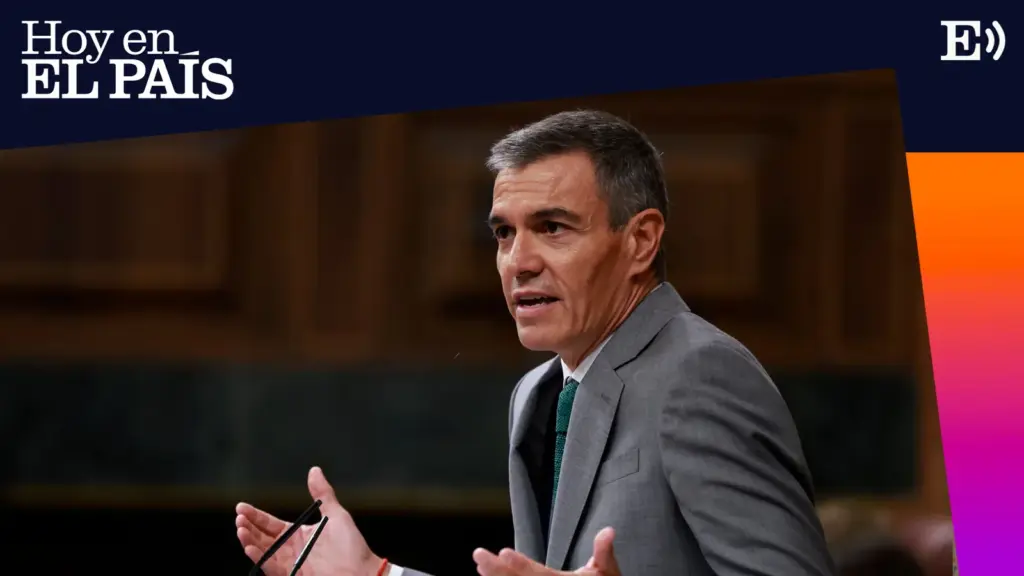
After hours of explanations this Thursday in Congress, many questions remain open: What exactly did the Government know about the massive arrival of migrants in Ceuta? What did the Police know and why didn’t they share it? And how far is Pedro Sánchez willing to go with Morocco?
You can listen to the full information here.
editorial
Ceuta, no time to lose
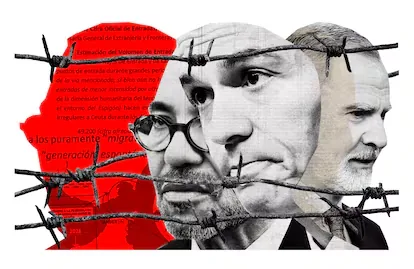
The exceptional situation in which the people of Ceuta have lived for more than a month is an unacceptable anomaly and demands a full commitment from the State to restore trust durably. The arrival of nearly 80,000 immigrants in Ceuta at the end of July not only caused a geopolitical, humanitarian, and political crisis still unresolved. It also left the population with an unacceptable feeling of helplessness, thousands of immigrants in precarious situations, and a neighbor, Morocco, that does not hide its will to take over this European Union territory. The late reaction of the authorities and partisan discord have not helped at all. The response of the Government, parties, and institutions — the State with all its strength and mobilization capacity — cannot be delayed any longer.
You can read the full information here.

MIGRATION CRISIS
Feijóo and Abascal bet on the criminal route in their offensive against Sánchez over the Ceuta crisis
“Pedro Sánchez, to prison!” chanted protesters gathered in front of Madrid City Hall this Wednesday at the protest called by the PP and supported by Vox in support of Ceuta. The right-wing bases, or at least part of them, are not satisfied with a change of Government but want the Prime Minister to be imprisoned. And the leaders of PP and Vox, with different nuances, have sung that tune with the Ceuta crisis. The PP leader, Alberto Núñez Feijóo, warned Pedro Sánchez from the Congress podium on Thursday that “he will pay before Justice,” while Vox leader Santiago Abascal demanded that Parliament open the procedure to try him for treason. The right insists on betting on the criminal route in their offensive against Sánchez, with the expectation that, as the popular leader emphasized from the podium, the case in the National Court — which is still in a preliminary phase and has not even been opened — will be elevated to the Supreme Court because it involves some Government official with parliamentary immunity.
Feijóo warned Sánchez in Congress that in the Ceuta crisis he considers “there are political and judicial responsibilities.” “Yes, judicial responsibility will be resolved during the case already opened in the National Court, in which my party has already appeared and will probably escalate to the Supreme Court,” he warned him. “We are talking about an attack on the territorial integrity of the Nation, and it will not stop there. You know it. It is obvious that you already act on the advice of your lawyers, right, Mr. Marlaska? Mr. Sánchez, do not expect from me the condescension with your acts that you have with the Kingdom of Morocco,” charged the PP leader. And he finished, with a defiant tone: “Mr. Sánchez, look at me. You will pay before Justice and at the polls.”
You can read the full information here.
CONGRESS OF DEPUTIES
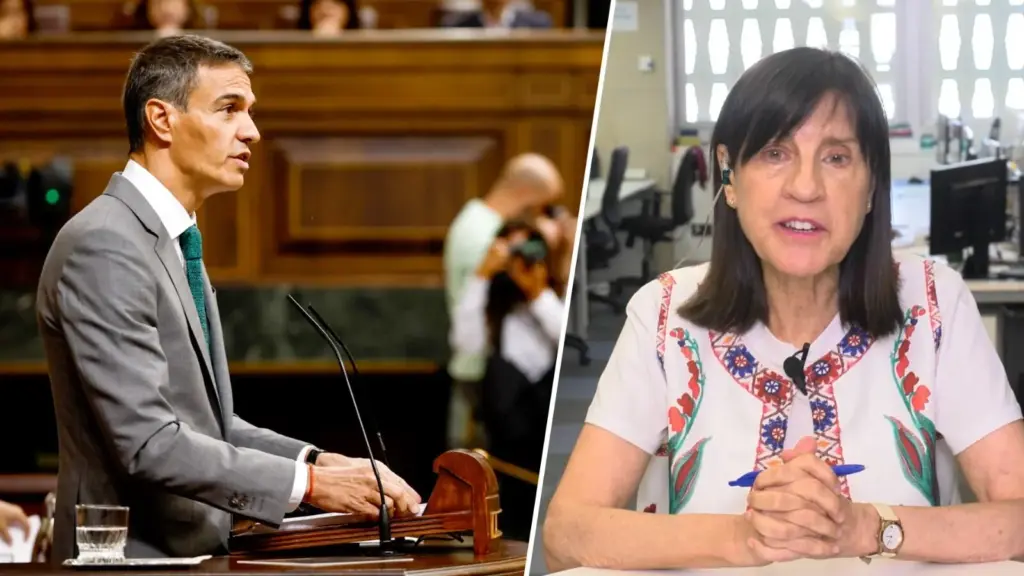
Congress session where they talked about changing the relationship with Morocco and taking Pedro Sánchez to court
Alberto Núñez Feijóo does not hide that one of his goals is to involve the judiciary in Pedro Sánchez’s future using the Ceuta crisis and the relationship with Morocco as an argument to denounce him
You can see the full information here.

MIGRATION CRISIS
Sánchez opens to Morocco’s authorship to ease pressure
Politics almost always works under maximum pressure. The Prime Minister faces one of his most serious crises at the worst possible moment, on the doorstep of general elections that could be in a few months if he finally brings them forward to be held before the regional and municipal elections, as some presidents and mayors ask him. The entry of 72,000 immigrants at once in Ceuta and a very disputed subsequent management have left the Executive very shaken.
Sources from La Moncloa admit that Pedro Sánchez knows that the majority of the Spanish population, including the left and many PSOE voters, blame Morocco. He insists that he cannot do so without evidence, because he is not responsible for unleashing a diplomatic or even military conflict with uncontrollable consequences without clear proof that Rabat organized, promoted, or directed the jump on July 30 and 31.
You can read the full information here.
Good morning. Here begins the live narration of the latest news this Friday, September 4, about the migration crisis in Ceuta. The day is marked by the decision of the Ceuta Government to appear as a private prosecution in the case being investigated by the National Court regarding the massive entry of migrants, understanding that it has directly and seriously affected the public goods and interests of the autonomous city. The tension on the street shows no respite. After the massive demonstration on Wednesday, which gathered about 20,000 people in a city of 83,000 inhabitants, the people of Ceuta took to the streets again tonight to protest against the new migrant reception center that the central government plans to build at the Muelle de Poniente. Residents have even blocked traffic in the area and their protests have affected the disembarkations at the port of Algeciras.