





Key moments
- 35 roads cut off by fires
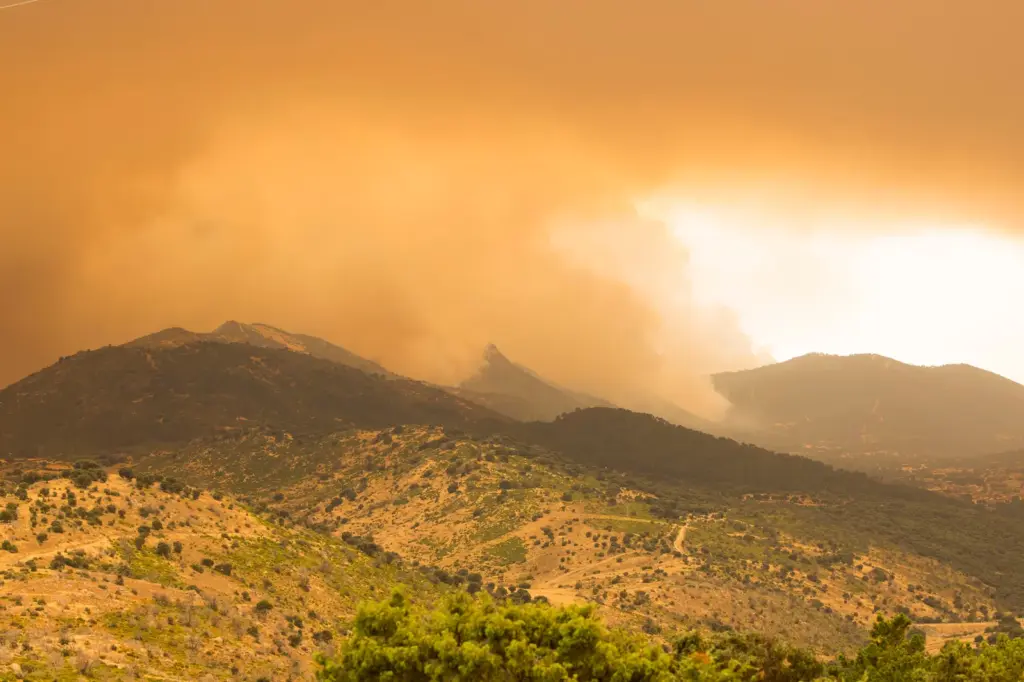
The fire devastating the southwest corner of the Community of Madrid, which has already burned more than 6,000 hectares, continues active and uncontrolled this Saturday. The region’s emergency service has reported that “the fire remains active” and that its evolution “will be determined by the wind regime in the coming hours.” Firefighters have worked “intensely” throughout the night, taking advantage of three factors that, according to the Government delegate in Madrid, Francisco Martín, opened an “opportunity” to try to control the flames: lower temperatures, less wind, and increased humidity, which was very low throughout yesterday. In Ávila, the night has been positive: temperatures have dropped significantly, and winds have helped contain the northern area of the fire. The most problematic area remains to the south, with the possibility still present that it could merge with the large Madrid fire. The Ministry of Interior reported last night that more than 60,000 people had been evacuated or confined between both provinces, with no personal injuries reported so far.
Read more Geely pays 221 million for 34% of the joint venture with Ford in Almussafes
EL PAÍS offers free real-time updates on the fires. If you want to support our journalism, subscribe.

The fire in Madrid faces a “complex” day due to increased wind
The improvement in meteorological conditions during the night, with less wind, higher humidity, and a drop in temperatures, has favored the firefighting efforts in Madrid. The fire has advanced little and lost intensity, although the emergency remains active, according to a statement from the Government Delegation in the Community of Madrid published on the social network X.
However, the forecast for this Saturday is expected to be “complex” due to increased wind. From 10:00 AM, the Delegation explained, a new increase in wind intensity is expected, in addition to sudden changes in direction.
Despite the favorable evolution, traffic restrictions continue on roads M-501, M-507, M-512, and M-533. Additionally, the municipalities of Chapinería, Navas del Rey, Colmenar del Arroyo, Fresnedillas de la Oliva, Robledo de Chavela, Navalagamella, Valdemaqueda, Aldea del Fresno, Zarzalejo, and Peralejo remain evacuated, while San Martín de Valdeiglesias, Pelayos de la Presa, and Villa del Prado remain confined.

Forest fires
Taking a break, confined, displaced and worried in Cebreros while the mountain burns
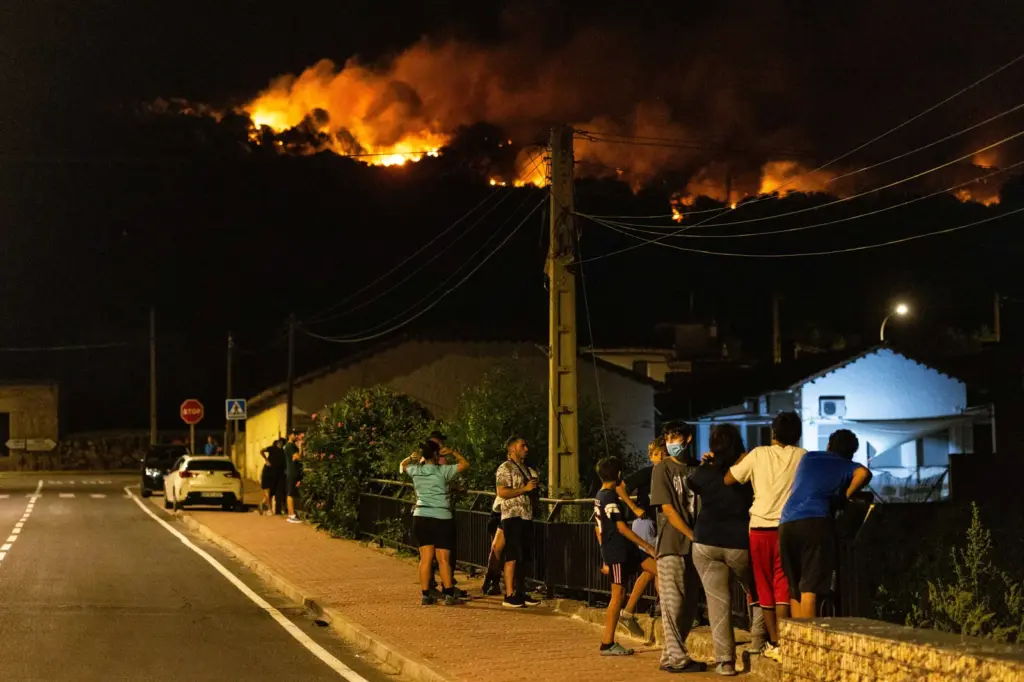
Red night in Cebreros (Ávila, 3,400 inhabitants). Red blankets from the Red Cross wrap around the displaced, or the chilly volunteers, in the municipal sports center that houses residents of El Tiemblo (4,600) who preferred to sleep there rather than return to the town. Red is the glow of the arc of fire around the municipality in the form of threatening fronts, flanks, and tongues that are discussed while enjoying the longed-for cool air: finally, nighttime temperatures drop a little, essential to try to contain the horror that has loomed over them since Wednesday. Red is the moon, covered by smoke that will take days, or tornadoes, to dissipate. The siren lights of fire trucks try to compete on a dark and tense night, with contained winds, windows of opportunity for the exhausted firefighters. It’s going to be a long one.
You can read the full information here
Reception points are already assisting more than 2,000 people displaced by the Madrid fire
The Community of Madrid maintains 14 active reception points that are already assisting 2,044 people displaced by the Madrid fire, compared to the 1,800 counted in Friday’s last balance. The facilities, enabled in coordination with the City Councils, are distributed among Las Rozas (250 people), Villaviciosa de Odón (215), Móstoles, Villamanta, Alcalá de Henares and Alcobendas (200 each), Brunete (182), Leganés (171), Getafe (150), Alcorcón (102), Villanueva de la Cañada (72), Villamantilla (60), Navalcarnero (21) and Villanueva de Perales (21).

The fire in Madrid remains active and uncontrolled after a night of intense work
The fire devastating the southwest corner of the Community of Madrid, which has already burned more than 6,000 hectares and forced the evacuation or confinement of 50,000 people, remains active and uncontrolled as of this Saturday. In the 7:00 AM report, the region’s emergency service informed that “the fire remains active” and that its evolution “will be determined by the wind regime in the coming hours.” Firefighters have worked “intensely” throughout the night, taking advantage of three factors that, according to the Government delegate in Madrid, Francisco Martín, opened an “opportunity” to try to control the flames: lower temperatures, less wind, and increased humidity, which was very low throughout yesterday. For now, the flames of this fire have not joined those of the fire in Ávila, which is the main concern.
35 roads cut off by fires
A total of 35 roads are cut off by the forest fires ravaging Spain, according to the latest DGT report.
Read more Red night in Cebreros: “We are screwed, practically the entire town has burned on all four sides”
Most of them (14) are in Guadalajara. Another 9 in Ávila, 8 in Madrid, 3 in Teruel, and one in Huelva.

Lower temperatures and winds help contain the northern area of the Ávila fire
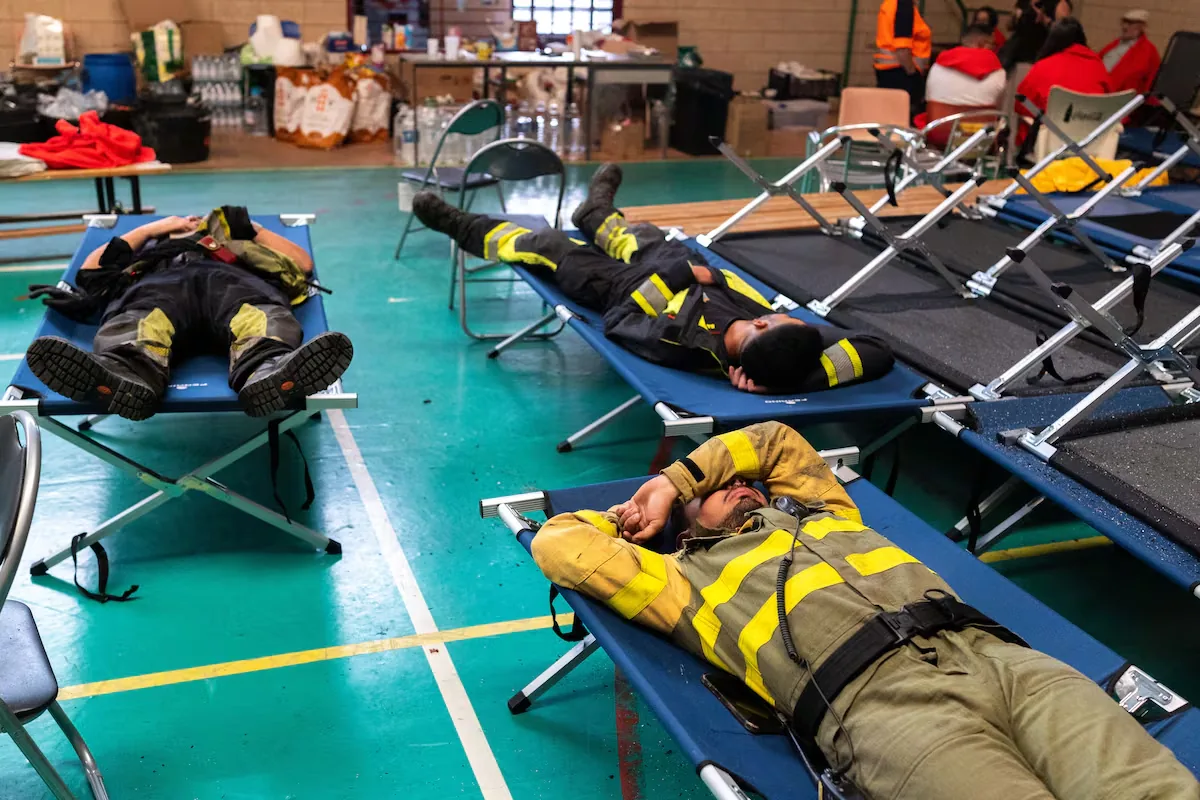
Firefighters resting in the Cebreros (Ávila) sports center report that the night has been positive: temperatures have dropped significantly, and winds have helped contain the northern area of the Ávila fire. The most problematic area remains to the south, with the possibility still present that it could merge with the large Madrid fire. Everything will depend on the day’s evolution and the temperature, intensity, and direction of the wind that arises.
Forest Fires
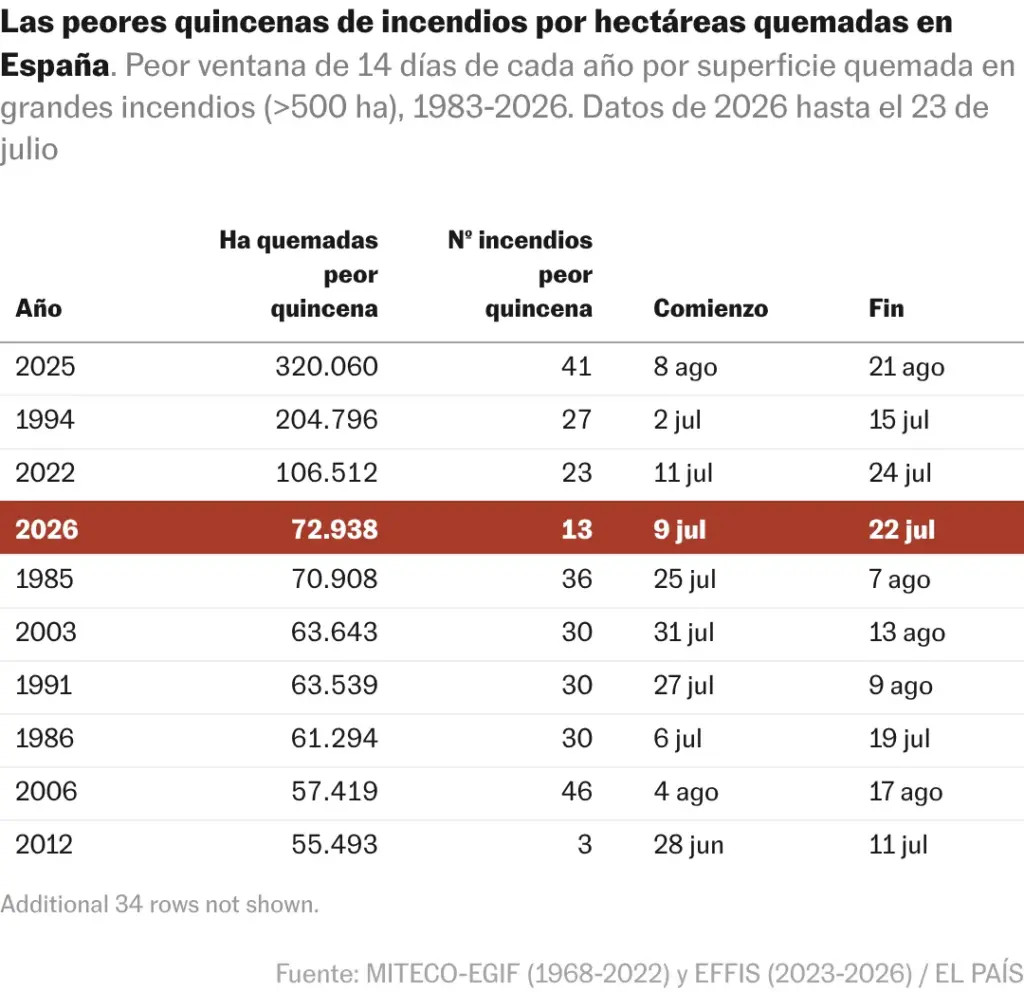
Data | Few fires but large and fast: July already leaves one of the worst fortnights in over 40 years
In the last two weeks, the curve of hectares burned in Spain has taken a sharp leap. This has not been caused by fires spread throughout the peninsula, but by fires that have expanded very quickly and concentrated in very specific areas.
You can consult all the data here
Climate conditions in Madrid offer an “opportunity” to control the fire
The Government delegate in Madrid, Francisco Martín, has indicated that the climatic conditions of the early morning offer “a real opportunity” for the firefighting teams to control the fire, thanks to the drop in temperatures and the fact that the wind has slowed down and relative humidity has increased. Martín is confident in tackling the fire “with guarantees of success.” (Efe)
FIRE
A mayor who looks fire in the eyes
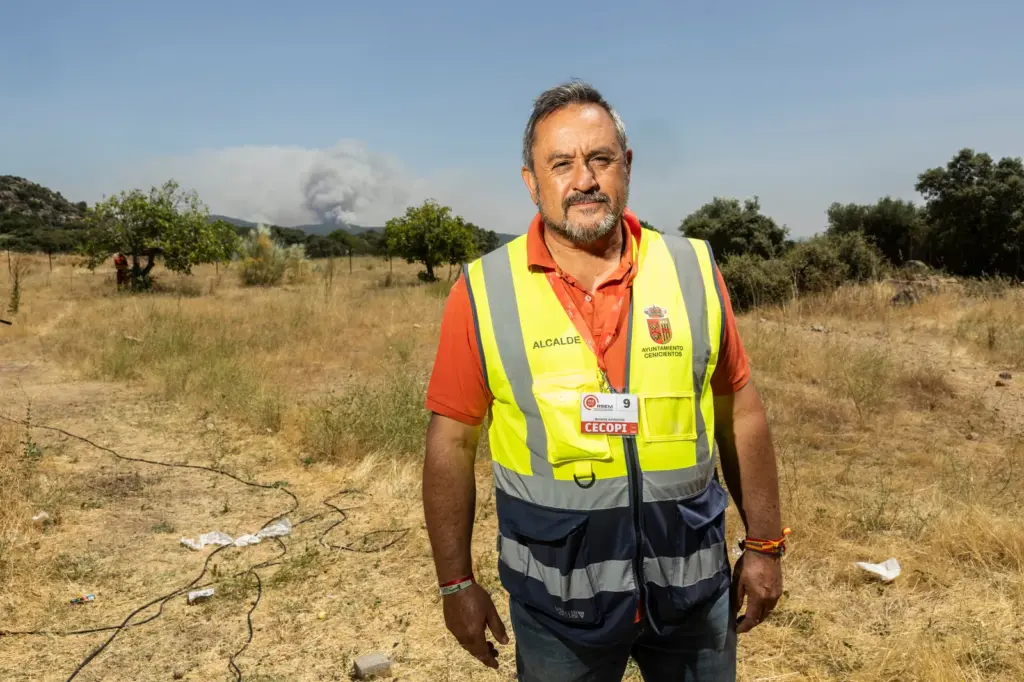
In the town of Cenicientos, everyone knows that their mayor was a soldier. “I wasn’t, I am and I always will be. The day I die, they will bury me in uniform,” assures Jerónimo López, 65. That will happen someday, but not today. Jero, as his neighbors know him, first has to fight a fire and save many lives.
You can read the full information here
forest fires
The dangerous fire threatening Madrid: fifth generation and with the 30-30-30 rule
The extinction of the three fires that just merged this Friday afternoon into a single one in the southwest corner of the Madrid region is hampered by a dangerous meteorological cocktail: the so-called 30-30-30 rule. Used by firefighters, meteorologists, and forest experts, it summarizes the three factors that trigger the risk of a fire becoming a monster that advances at sprinter speed and turns it into what it already is, a level 5 or fifth-generation fire, meaning it exceeds extinction capacity: temperatures above 30 degrees, relative humidity below 30%, and wind gusts exceeding 30 kilometers per hour.
You can read the full information here
Good morning. We begin the live coverage of the latest news on the fires in Spain, this Saturday, July 25. The fires affecting the Community of Madrid and the province of Ávila remain uncontrolled, after reaching their “peak moment” yesterday afternoon and several of their fronts being “beyond extinction capacity,” as acknowledged by the Minister of Environment, Agriculture, and Interior, Carlos Novillo. The fire was heading towards El Escorial and San Lorenzo de El Escorial, whose protection became the main objective of the operation, while the Military Emergency Unit worked to establish a defense line. The Ministry of Interior reported last night that more than 60,000 people had been evacuated or confined between both provinces, with no personal injuries reported so far. The burned area in Madrid could already be around 12,000 hectares, while in Ávila, the Burgohondo fire had burned nearly 9,000. The operation hoped that the decrease in wind during the early morning would open a “window of opportunity” to advance in controlling the flames, although gusts were expected to intensify again this Saturday.
Read more National Lottery: Saturday, July 25 draw