





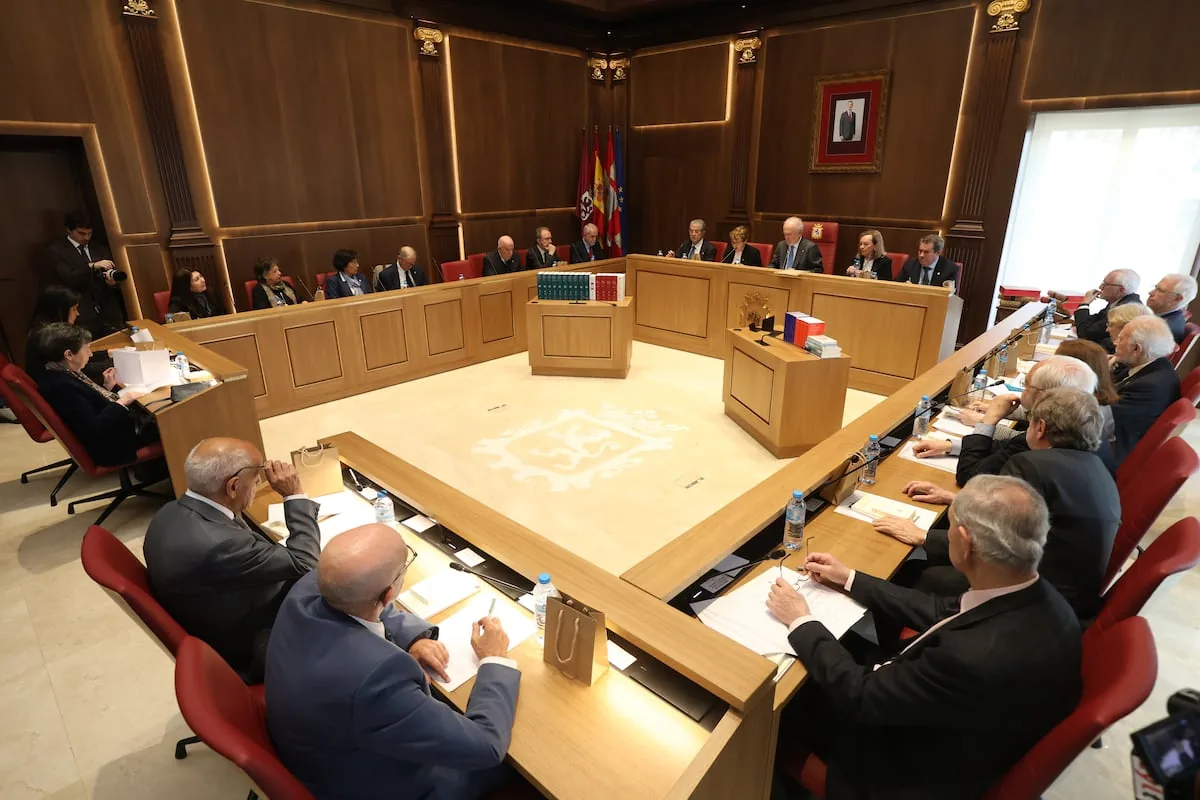
With the ringing of the bell (ting-ting-ting) and the traditional prayer in Latin, the Royal Spanish Academy (RAE) held an extraordinary plenary session this Thursday in León in which, among other matters, the Leonese writer Luis Mateo Díez, Cervantes Prize winner in 2023, read the praise of merits of the Nicaraguan author Sergio Ramírez, the only candidate to occupy chair L of the institution, vacant since the death of Mario Vargas Llosa on April 13, 2025. For Díez, the writer born in Masatepe in 1942 is an “ideal candidate, who lives in forced exile and maintains the composure of his radical testimony against the dictatorship that exiled him and the creative freedom of one who continues to attend to his work with the quality and ambition he assumed from the beginning.”
Read more The death of two US military personnel in Morocco marks the largest maneuvers in Africa
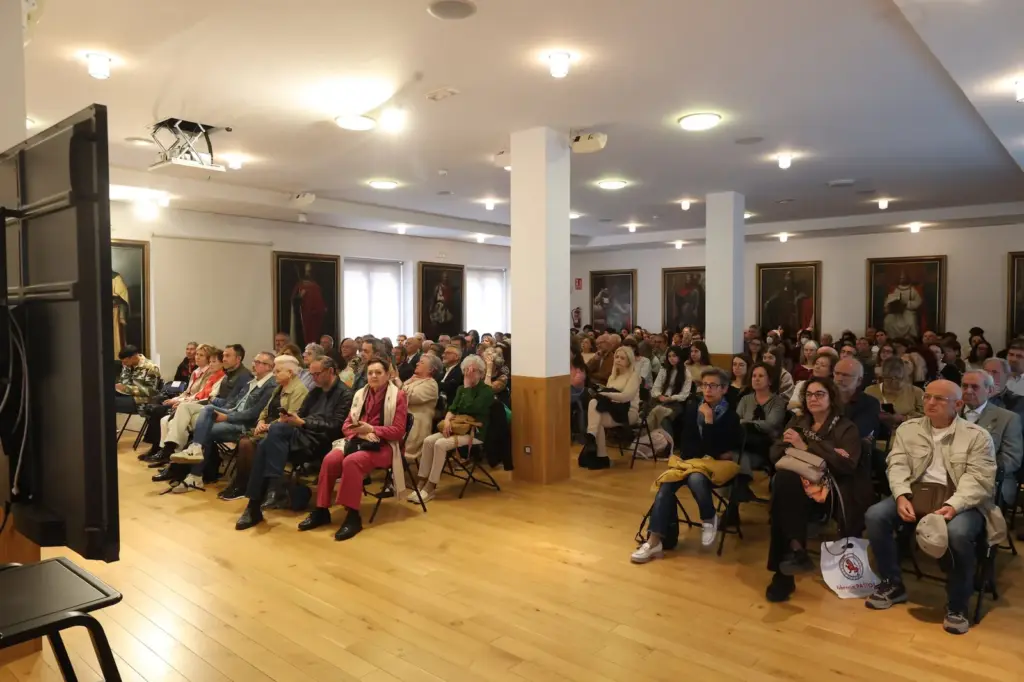
Díez’s words were heard in the plenary hall of the León City Council, where the RAE held a plenary session outside its Madrid headquarters for the fourth time in its more than three centuries of history. In addition, it was open to the public and the media. On this occasion, the director of the Academy, Santiago Muñoz Machado, said: “We live too much locked up in our headquarters, we have to go out more and make ourselves more present in the main Spanish provinces.” Seventeen of the 45 full members of the RAE attended this plenary in León, as well as the secretary general of the Association of Academies of the Spanish Language (Asale), which brings together the 23 sister academies worldwide, Francisco Javier Pérez.
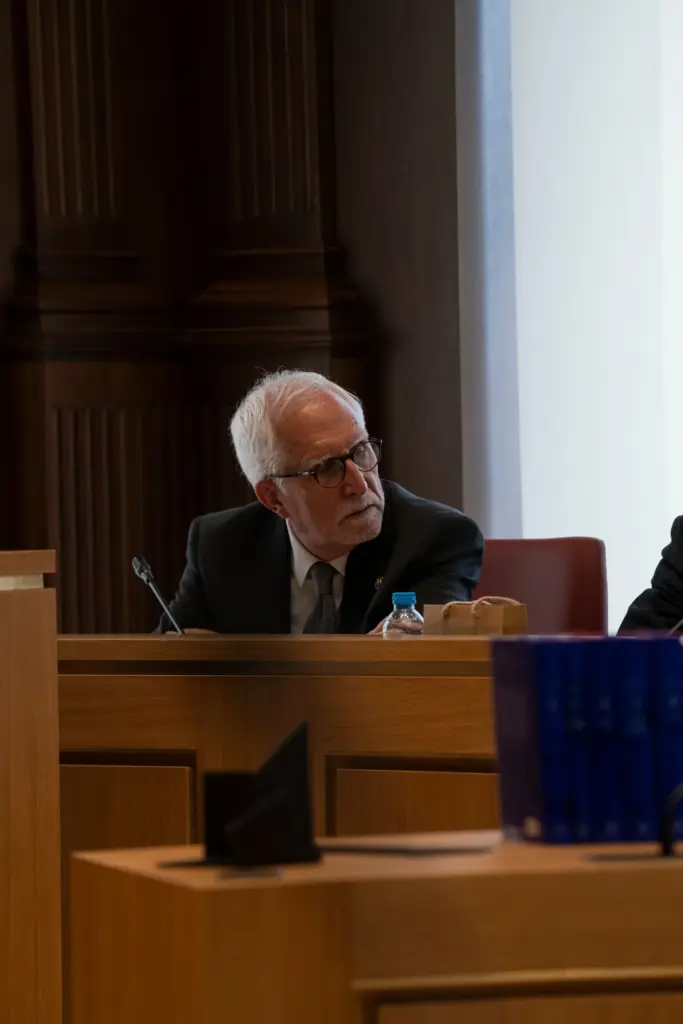
Returning to Díez’s speech, he highlighted the “unique choice” of Ramírez, who will be voted on at the next plenary session on Thursday, May 21, for a chair that Vargas Llosa held for 31 years, “one of the most illustrious writers of the last century and representative of Hispanic America in our institution.” His career “culminated with the awarding of the Nobel Prize to a writer so fundamental in the creation of the literary universe of our language and so committed to academic work.”
As the Leonese recalled, Ramírez, “the first Central American to win the Cervantes Prize, in 2017,” studied Law in León (in this case the city in Nicaragua) and began publishing short story books in the early sixties. Later he joined the Sandinista Front, whose guerrillas overthrew the dictator Anastasio Somoza in 1979. He himself was vice president of a provisional government, presided over by today’s dictator Daniel Ortega, whom he eventually opposed. With Spanish nationality since 2018, he lives his exile in Madrid. He has been a star contributor to EL PAÍS for 30 years and received a special Ortega y Gasset award on May 4 for “being a moral reference,” according to the jury.
His life has motivated that his books “are full of references to Nicaragua, with a deep humanistic perspective,” Díez continued, and with “the fate of the committed politician who is plundered and expelled by the new dictators.”
Of the half-century of titles that make up Ramírez’s work, “with novels in which he weaves historical and police plots with the lives of characters who fight for survival,” Díez highlighted Divine Punishment (1988), Margarita, this beautiful sea (1998), with which he won the Alfaguara Prize; The sky cries for me (2009) or Tongolele didn’t know how to dance (2021). He also recalled his essays, “fundamental to understanding the history of Central America, such as Goodbye boys, from 1999.”
Read more The new high jewelry collection from Cartier: the art of turning stone into an eternal work
Meanwhile, in his speech, Muñoz Machado gave a quick overview of the history of the RAE since its founding in 1713, with its first dictionary, which was completed in 1739, followed by the Orthography in 1741 and the Grammar of the Castilian Language (1771). “Since then we have tried to make Spanish a beautiful language. The RAE is concerned that Spanish has unity in all the territories where it is generally used. That the 600 million Spanish speakers understand each other and that our language does not fragment.” He also recalled the RAE’s edition of classics of Spanish literature and referred to a monumental work of the institution, the Historical Dictionary of the Spanish Language, of which a 10-volume version was presented a few months ago, which is “the documented biography of each word.” He also announced the presentation at the Academy of the Dictionary of Synonyms, Antonyms, and Related Words next Wednesday, May 20.
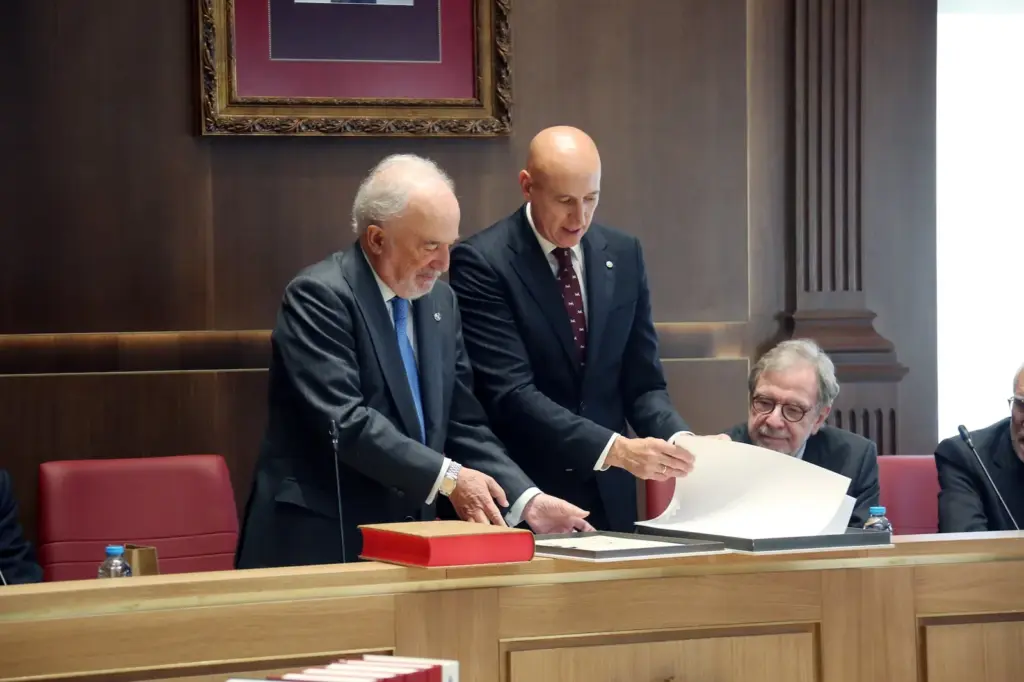
For the León audience, Muñoz Machado referred to several words that from this area are requested to be incorporated into the Dictionary of the Spanish Language, related in this case to Holy Week, such as “papón,” which is already included, but with different meanings than the one claimed from León, which is that of a brotherhood member. However, “it will be studied,” he said. However, regarding another word, “seise,” which in León is the leader of a Holy Week float and is also in the dictionary, but with the meaning of “choir boy,” the director of the RAE believes it is more complicated to add it because it would require doing so “with other similar words from other Holy Weeks.”
Finally, the director explained that among the reasons for holding the plenary session in León, besides the personality of Luis Mateo Díez, whose work has focused on the imaginary region of Celama, an evocation of the rural Leonese world, there are two other academics linked to this land, such as the writer José María Merino, National Prize for Spanish Letters in 2021, and the linguist Salvador Gutiérrez Ordóñez.
For his part, the mayor of León, José Antonio Diez, did not miss the opportunity to say that in this land they do not feel “identified with the term Castilian-Leonese” for the natives of the autonomous community of Castilla y León, despite it being defined as such in the dictionary. The mayor emphasized that historically it has been complicated to get that adjective written as “Castilian and Leonese.”
Thus ended the fourth RAE plenary session outside Madrid. The three previous occasions when the academics left the capital were Cádiz, on the occasion of the bicentennial of the Constitution, in 2012; in Argamasilla de Alba (Ciudad Real), in 2015, in tribute to Miguel de Cervantes; and in Zaragoza, where it was held in 2023 for two academics linked to this city, Fernando Lázaro Carreter and Manuel Alvar, who were directors of the Academy.
Read more Two killers and a TV actor, among the most wanted British criminals in Spain