







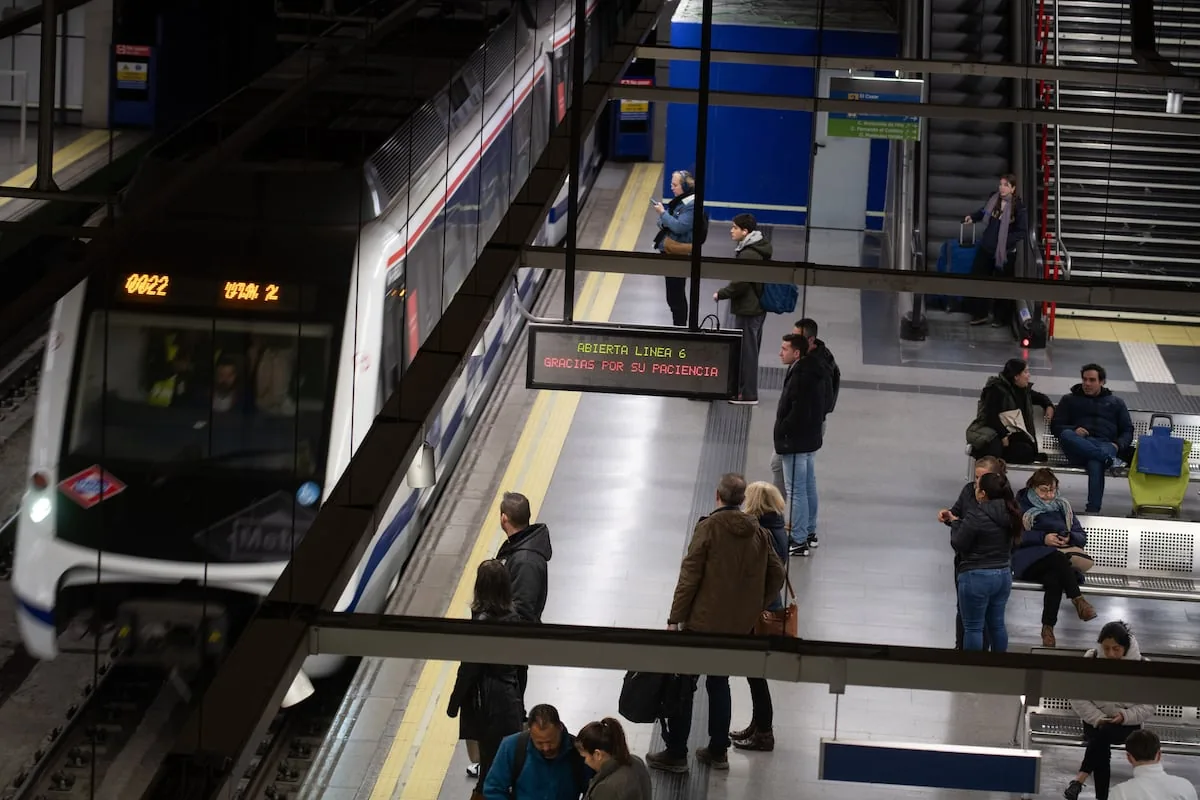
The visit of the supreme pontiff to the capital is posing a logistical challenge of enormous proportions for the various administrations. The Community of Madrid announced this Monday that it will reinforce the Metro Madrid service on some of its lines by up to 125% during the Pope’s visit to the capital, from June 6 to 9. Traffic cuts are expected up to 10 days before León XIV arrives in the city (starting this Wednesday, May 27), according to the Madrid City Council, and at least two days after he leaves (until June 11) due to the large influx of faithful from inside and outside the city, so the Madrid Regional Transport Consortium (CRTM) has developed a plan “in coordination with the different operators to guarantee travel.”
Read more The electric screwdriver that makes everything easier is now at its all-time lowest price on Amazon
The Pope’s visit will mean “the largest police mobilization in the history of Spain” with 14,000 officers in charge of security during León XIV’s stay in the capital, according to the Government delegate in Madrid, Francisco Martín. “It is 96 hours and 40 minutes that the Pope will be in the region,” he said, and therefore emphasized that the police operation has taken into account risks related to international terrorism and “possible actions by radical groups.” Specifically, there will be 9,700 national police officers, 625 Civil Guard agents, and 4,000 municipal police officers, as the mayor, José Luis Martínez-Almeida (PP), announced last Thursday. The coordination and command center for this operation will be installed at the National Police headquarters, the delegate added.
Increased frequency on metro lines
The Madrid metro will increase service on June 6, 7, and 8 with up to 42 additional trains on various lines. Additionally, due to the mass scheduled for June 7, 55 trains will be put into service to meet the extraordinary increase in demand expected that day.
According to the Community of Madrid, on Saturday, June 6, the increase in trains will apply to lines 1, 6, 7, 8, 9, and 10 during certain time slots, between 11:00 and the end of service (1:30 for all lines except Line 6, which closes from Sunday to Thursday at 23:00).
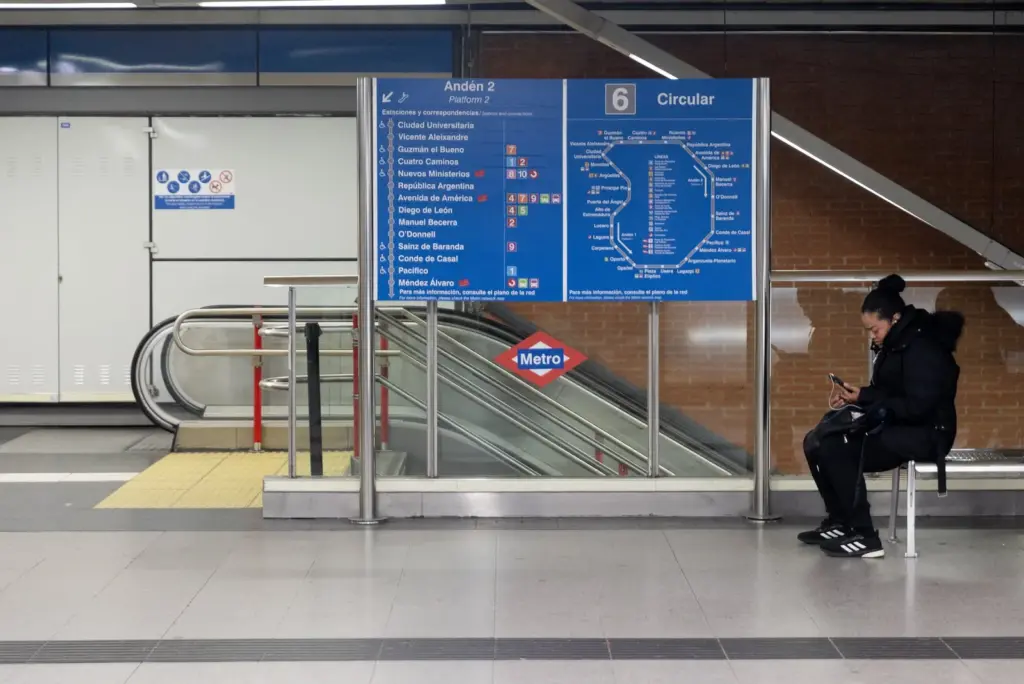
On the other hand, on Sunday, June 7, a special operation will be activated on lines 1, 2, 3, 4, 5, 6, 9, and 10, where frequencies will increase by up to 100% during the central hours of the day, from the start of service until 21:30.
Likewise, on Monday, June 8, lines 1, 2, 3, 5, 6, 9, and 10 of Metro Madrid will be reinforced between 16:30 and 23:00, with increases of up to 75% in the number of trains. And on Tuesday, June 9, line 8 will have a reinforcement of up to 25% between 8:00 and 11:00.
Closure of metro stations
The mobility plan devised by the CRTM also includes the suspension of service at some stations and the possibility that trains will run without stopping at specific points on the network to ensure passenger safety.
On Saturday, June 6, from 17:00, the Nuevos Ministerios station will be disabled at the entrances closest to Plaza de Lima, where the vigil with young people will be held, although internal transit towards the exits to the shopping center, Orense, and Agustín de Betancourt will be maintained. The situation will return to normal at 22:00. Meanwhile, Cuzco and Santiago Bernabéu stations, currently under construction, will also be non-operational.
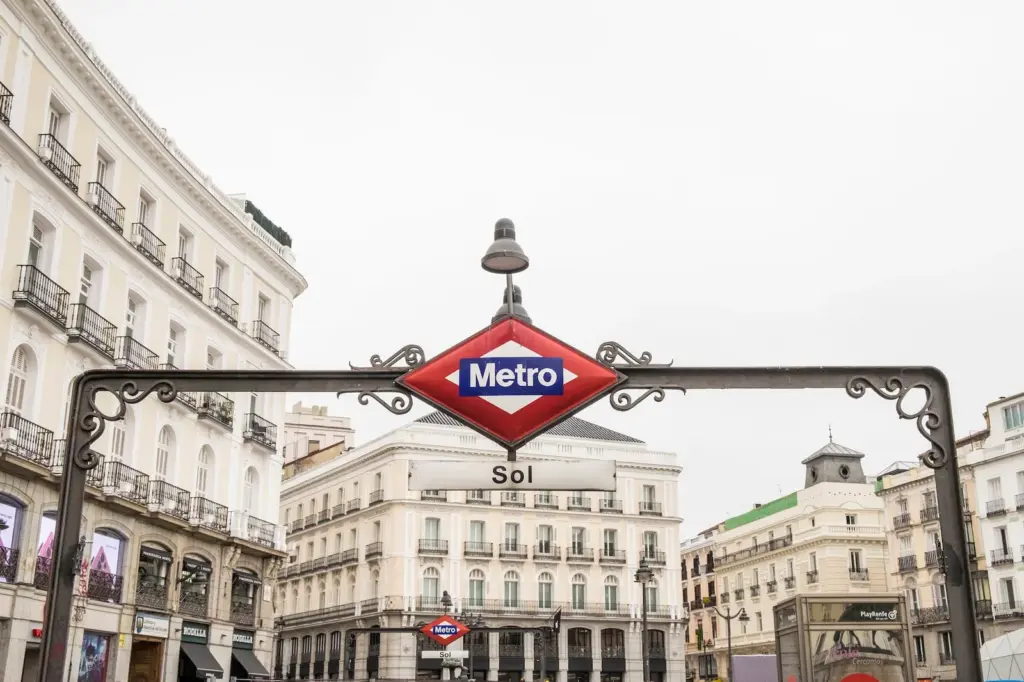
For Sunday, June 7, from the start of service until 10:00, several stations in the city center will remain closed, including Bilbao, Tribunal, Plaza de España, Noviciado, Ópera, Sol, Sevilla, Banco de España, Retiro, Príncipe de Vergara, Serrano, Colón, and Chueca. No trains will stop at their platforms.
In the case of Sol, the station will remain open, with the transfer corridor to Gran Vía closed, and trains will stop between 6:05 and 7:00. Also, between 10:00 and 14:00, the stations Colón, Serrano, Velázquez, Retiro, Banco de España, Sevilla, and Chueca will cease operations.
The Community of Madrid reports that, “however, these measures may be modified according to the indications established by the Government Delegation and the National Police in accordance with the development of events and public security needs.”
Read more Education summons unions to negotiate to unlock the Valencian educational conflict
Additionally, Metro Madrid will expand its operation with 10 train maintenance technicians to ensure the proper functioning of the service during these days. Station staff will also increase by 120 more personnel, reaching a total of 316 active workers. The company’s security operation will have 100 additional guards at stations, raising the total to 286.
Interurban buses
Interurban buses will also increase their frequencies to facilitate the movement of visitors staying in municipalities around the capital, for which the service will be reinforced with an additional fleet of 100 vehicles. According to the Community of Madrid, neighboring municipalities maintain permanent contact with the CRTM “to convey their specific needs and adapt, as far as possible, the planned offer to the estimated demand.”
Furthermore, a special monitoring operation will be deployed to adjust the service, especially during the weekend, when usual connections decrease compared to weekdays, thus promoting more agile and fluid mobility.
Municipal buses
The EMT, dependent on the Madrid City Council, will reinforce the night network with 25 additional buses and adapt the daytime service to the detours planned due to the occupations in Plaza de Lima — both in the square itself and the adjacent public road — and for the mass celebration in Cibeles. The disruptions will begin this Monday, May 25, due to stop changes and lane occupations.
Specific actions will be taken in certain corridors and travel generation points to match frequency to weekday levels during peak demand periods. Among these actions, there will be reinforcements on interurban lines such as 491, 484, 571, 573, or 671, as well as an increase in night services.
EMT and Bicimad buses will be free between June 3 and 9, the day the Pope heads to Barcelona, his second stop on the visit to Spain.
Traffic cuts
According to the Madrid City Council last week, the logistical demands for the supreme pontiff’s visit will especially affect the Castellana-Recoletos axis, with Plaza de Lima and Cibeles as the center of the cuts, which will be progressive. In Cibeles, whose roundabout will be gradually secured, disruptions began last Thursday with the loading and unloading of materials to set up the stage. Since this Saturday, the right lane of Paseo de Recoletos northbound has been permanently occupied, and starting this Monday, the bays for night buses and three other lanes will be occupied, as the choir for Sunday’s mass will be installed there. The total closure of the square will occur on Thursday, June 4, when vehicles will be forced to go around it.
Plaza de Lima will be the second most affected area, right in front of the Santiago Bernabéu stadium, where León XIV will meet the faithful on Monday, June 8. Since last Thursday, the left lane of Paseo de la Castellana northbound has been closed from Plaza de San Juan de la Cruz to Raimundo Fernández Villaverde. Starting this Monday, all central lanes of the Castellana in this square will be occupied. Vehicles will be able to circulate through the lanes up to the roundabout and, once there, must divert to the sides. The total closure will be on Wednesday, June 3, and from then on no cars will be allowed access.
This Monday, Madrilenians have already encountered the first cuts on Paseo del Prado, Paseo de Recoletos, with two lanes occupied, also in the section connecting Plaza de San Juan de la Cruz with Nuevos Ministerios. At 9:30, a mobility agent directed vehicles crossing Plaza de Cibeles on where to circulate. “This morning there have already been some problems, mainly on the Castellana-Recoletos axis,” the mayor said. The reason, he explained, is that early on they found that the companies responsible for setting up the structures for the massive mass on Sunday, June 7 — expected to have 1.5 million attendees — have “exceeded” the authorized road occupation and surpassed the lane limit authorized by the city council. “We immediately contacted the companies to tell them they must strictly adhere to the authorized public road occupations. We are monitoring scrupulously,” Almeida told the media.
Read more About twenty hospitalized after inhaling an unknown substance in an attack in Tokyo