









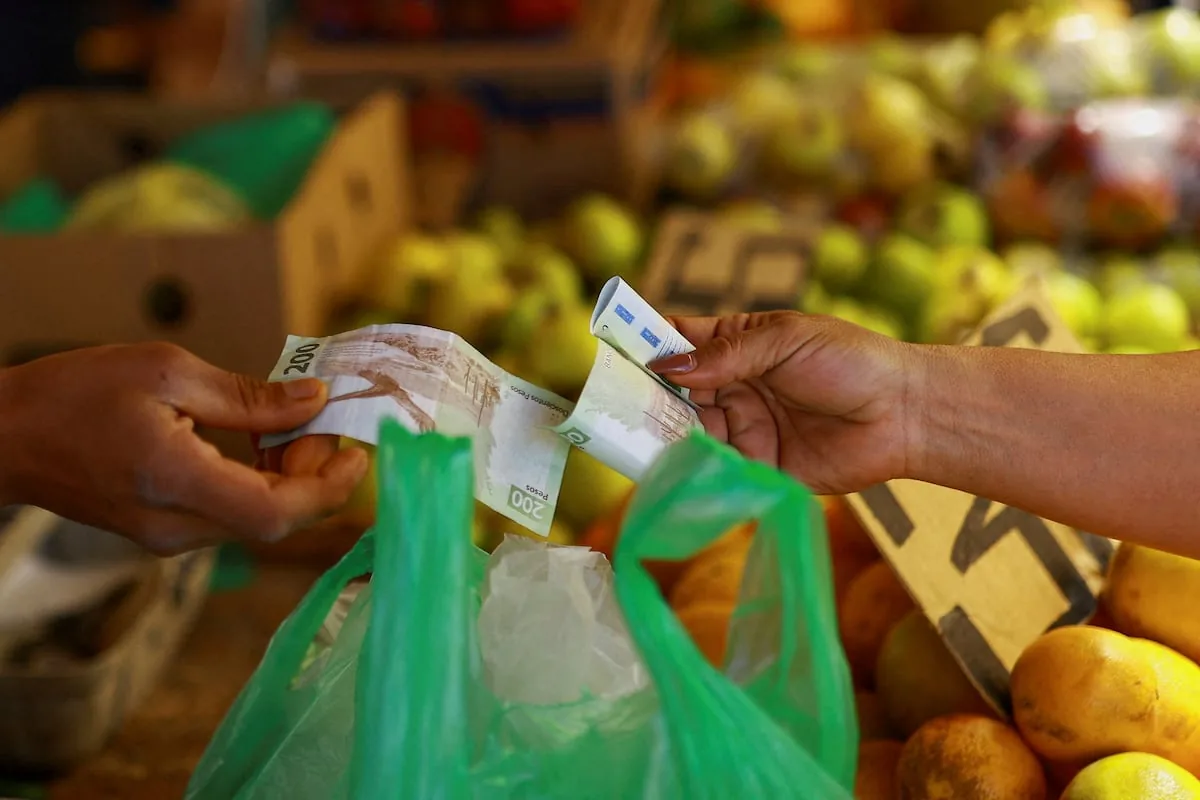
The Mexican economy has been sending mixed signals to markets and analysts. On one hand, it sends signals of weakness, low dynamism, and slow growth. On the other, it sends signals of stability and resilience in the face of a highly complex external environment. Let’s look at each type of signal separately.
On one hand, real economic activity in Mexico has shown some sluggishness. The timely GDP figures for the first quarter of 2026 reveal very low growth compared to the same period last year (just 0.2 percent), while, compared to the immediately preceding quarter, the economy contracted by 0.8 percent. In fact, with this result, Mexico’s GDP would have returned to the same level reached in the third quarter of 2024, which would imply a year and a half of economic stagnation in absolute terms and, therefore, a decline in GDP per capita terms.
This result is explained predominantly by the downward trend in investment over the last 19 months and, secondly, by the apparent exhaustion of private consumption, especially of domestic goods. In the first case, the accumulated contraction from July 2024 to February 2026 is already close to 11 percent; while, in the second case, the contraction of private consumption compared to its peak (reached in October last year) is close to 2%, although the reduction in private consumption of domestic goods is around 4% (compared to its peak in April 2025).
On the other hand, the extraordinary resilience that the Mexican economy has shown in the face of the complex economic environment prevailing abroad is somewhat striking. Neither the uncertainty associated with talks regarding the continuation of the USMCA, nor the conflict in the Middle East seem to significantly affect the country’s economic stability or the expansion of a Mexican export sector that has responded very positively to the new tariff context generated by Donald Trump’s policies.
In terms of stability, the peso-dollar exchange rate, a very sensitive indicator of the prevailing situation in the country, is practically at the same level it had just two years ago. Additionally, the Mexican peso has appreciated by about 20 percent compared to its value at the start of President Trump’s administration. While it is true that the dollar has generally depreciated against other currencies, it is also true that the Mexican peso is one of the currencies that has strengthened the most in its relationship with the dollar.
Other indicators also suggest a certain economic stability in the country: the unemployment rate remains at its lowest levels since comparable records exist, both the inflation rate and the Bank of Mexico’s target interest rate have fallen by more than 4 percentage points from their highest levels, the capitalization indexes of the banking system have improved significantly and are well above minimum regulatory levels, the labor poverty rate is at its lowest levels in history, and the country has managed to maintain its investment grade.
Finally, what really draws attention to the recent performance of the Mexican economy is what has happened with our manufacturing exports. These have grown significantly, despite fears generated by the new tariff policies of the United States president. The figures for March 2026, compared to those a year earlier (that is, just before the announcement of the tariffs on the so-called Liberation Day), reveal growth close to 30 percent. While automotive exports remain stagnant, non-automotive manufacturing exports grew by more than 43 percent in just one year. The comparison with the same month two years ago is even more impressive: total Mexican manufacturing exports grew by 42 percent and non-automotive ones by more than 60 percent.
The above is undoubtedly the result of the relative improvement in our tariff position produced by Trump’s tariffs. However, this significant increase would not have occurred without having an export sector capable of quickly adjusting to the new prevailing conditions and capable of meeting the growing demand for domestic products abroad. In fact, the rapid expansion of our exports is what has allowed the Mexican economy not to fall into recession, highlighting the importance of having such a dynamic sector in our economy.
Looking ahead, this also justifies some optimism: the stability and resilience that the Mexican economy has demonstrated allows us to think that once the uncertainty about the USMCA begins to dissipate, and investment begins to stabilize and grow, it is possible that the country can return to a better path of economic growth than we have had in recent years.