



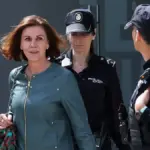


A joint operation by the Guardia Civil, the Mossos d’Esquadra, and the Ertzaintza has resulted in the arrest in the province of Gipuzkoa of a 17-year-old Spanish national as the alleged author of death threats received earlier this year by, among others, Podemos MEP Irene Moreno and commentator Sarah Santaolalla, according to sources close to the investigation reported to EL PAÍS. The agents consider the minor “the main reference in Spain of the extremist organization 764,” a virtual and transnational terrorist group created by a teenager in the US in 2021 with Nazi, satanic, and pedophilic overtones, which advocates perpetrating all kinds of violence to achieve the collapse of society and dedicates part of its efforts to recruiting and sextortion (sexual blackmail) of other minors.
Read more The message of the exodus: “The border is open and you can cross without papers”
A recent operation involving nine European countries, led by Spain, located 4,340 internet links hosting violent propaganda from this and other similar groups gathered under the network The Com (English abbreviation for The Community). After his arrest on July 16, a court in San Sebastián ordered his preventive placement in a juvenile center, according to a joint statement released by the police forces on Sunday.
The detainee is also considered the alleged author of numerous threats sent to educational centers, town halls, libraries, social associations, public bodies, and leisure centers between January and April 2026, in which he “announced shootings, armed attacks, and other violent actions that never occurred, although they caused significant social alarm and required the deployment of extraordinary security measures,” according to the police statement. In his communications, he referred to his supposed membership in group 764 and announced that he would broadcast the murders live over the internet so that other members of this sect-like organization could follow them.
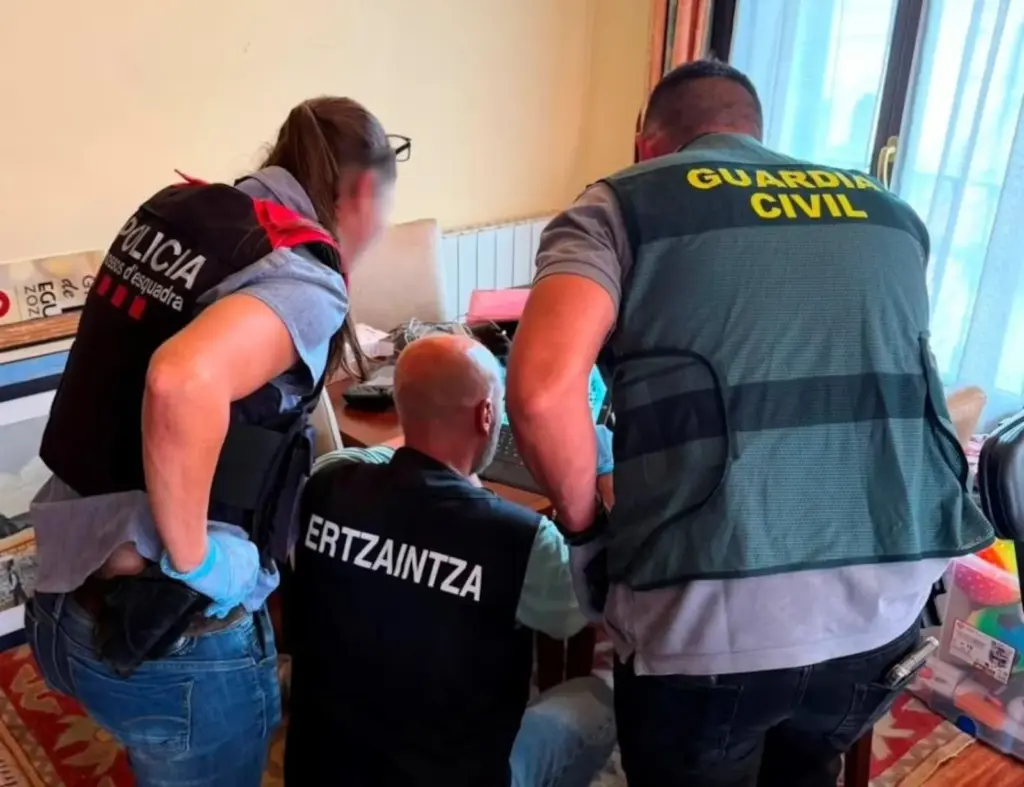
The investigation revealed that the arrested individual is also the alleged author of harassment through doxing and swatting of a person residing in the Basque Country and another in Catalonia. Doxing consists of obtaining and disseminating personal data of a person to extort, threaten, or target them for harassment campaigns. This information can later be used to carry out swatting actions, which involve falsely reporting an emergency at the victim’s home to the security forces to provoke a police response that endangers the targeted person or their family.
The investigations also revealed that the detainee participated in social media chats, gaming platforms, and instant messaging applications where psychological manipulation was applied to other vulnerable minors and young people, to later force them into extreme humiliation practices, such as the so-called blood walls (literally meaning walls of blood) and cutsigns (cut signs). In the blood walls, group members force their victims to make drawings on their skin with blood or feces featuring the aggressor’s alias or the group’s name. The term cutsigns refers to the obligation or inducement of victims to record cuts on their bodies. In both cases, everything is documented with photos or videos for later dissemination as proof by the aggressors of the control they exert over their victims and thus to increase their prestige within the group.
Read more The return to stay of rental ‘scooters’ to Mexico City
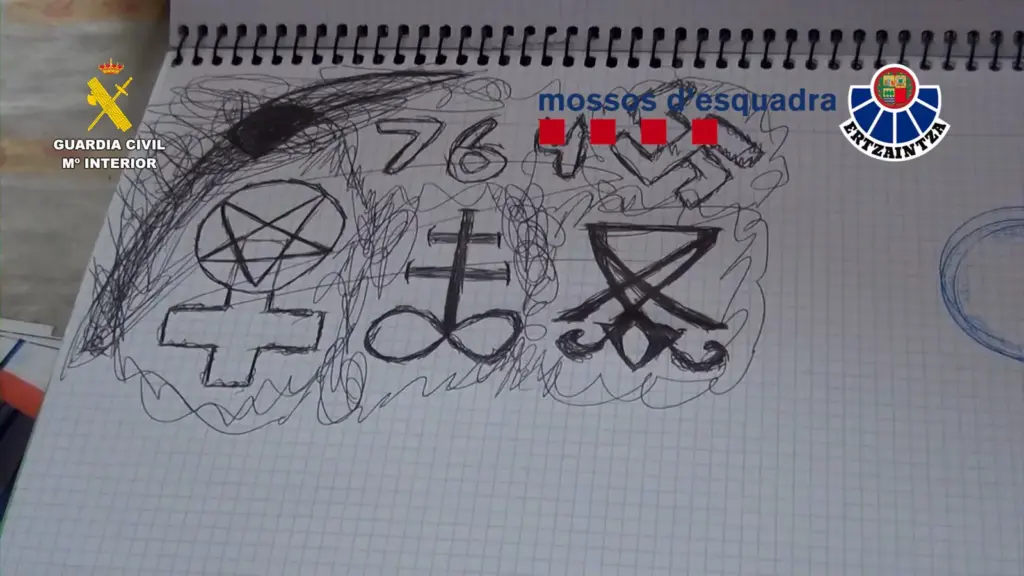
Sometimes, satanic symbolism or elements associated with violent extremism were also incorporated into these practices, either as ideological expression or to increase the impact, intimidation, and provocative capacity of their content. During the search of two homes in Gipuzkoa linked to the minor, numerous electronic devices, digital storage media, and documentation related to the detainee’s activity and the 764 organization were seized, including handwritten notes with Nazi and satanic symbolism.
The European Union Agency for Law Enforcement Cooperation (Europol) noted in its latest report on terrorism trends in the EU the danger posed by 764 and other groups operating under the umbrella of The Com that share the main objective of “destabilizing social structures” through attacks and the recruitment and corruption of minors. “There is no single ideology dominating this area, and members usually lack a coherent or clear objective,” the European agency’s document added, highlighting that its members are mainly united by “an attraction to sexual or other violence, nihilism, misanthropy, satanism, misogyny, or elements of jihadist or far-right violent terrorism and extremism.” Its members are almost entirely teenagers and young adults, mostly male.
The Interior Ministry has also placed the threat posed by this network among its priorities in line with the National Strategy against Terrorism. Police sources indicate that this type of group has experienced “marked expansion over the last two years to become a global threat.” Similarly, police forces in other countries have also opened investigations into 764’s activities due to their links to sextortion crimes, organized harassment, distribution of child sexual exploitation material, inducement to self-harm, dissemination of extreme violence content, animal abuse, and campaigns of threats and harassment against institutions, social entities, and individuals. Canada classified this group as terrorist last December.
Police sources emphasize that 764 and other extremist organizations orbiting around The Com mainly use social networks, gaming platforms, and instant messaging applications as channels to access minors and young people, their main pool for recruiting members but also for finding victims. To do this, they use seemingly harmless content adapted to the language and cultural codes of young people. After that first contact, the next step is to attract these young people and children to private groups and chats “where more intense processes of recruitment, radicalization, manipulation, and victimization take place,” these sources add. “In these spaces, victims can be induced or coerced to produce child sexual abuse material, self-harm, animal abuse, harass others, or participate in violent actions,” the same sources add.
Read more Earthquake survivors in Venezuela take refuge in faith