








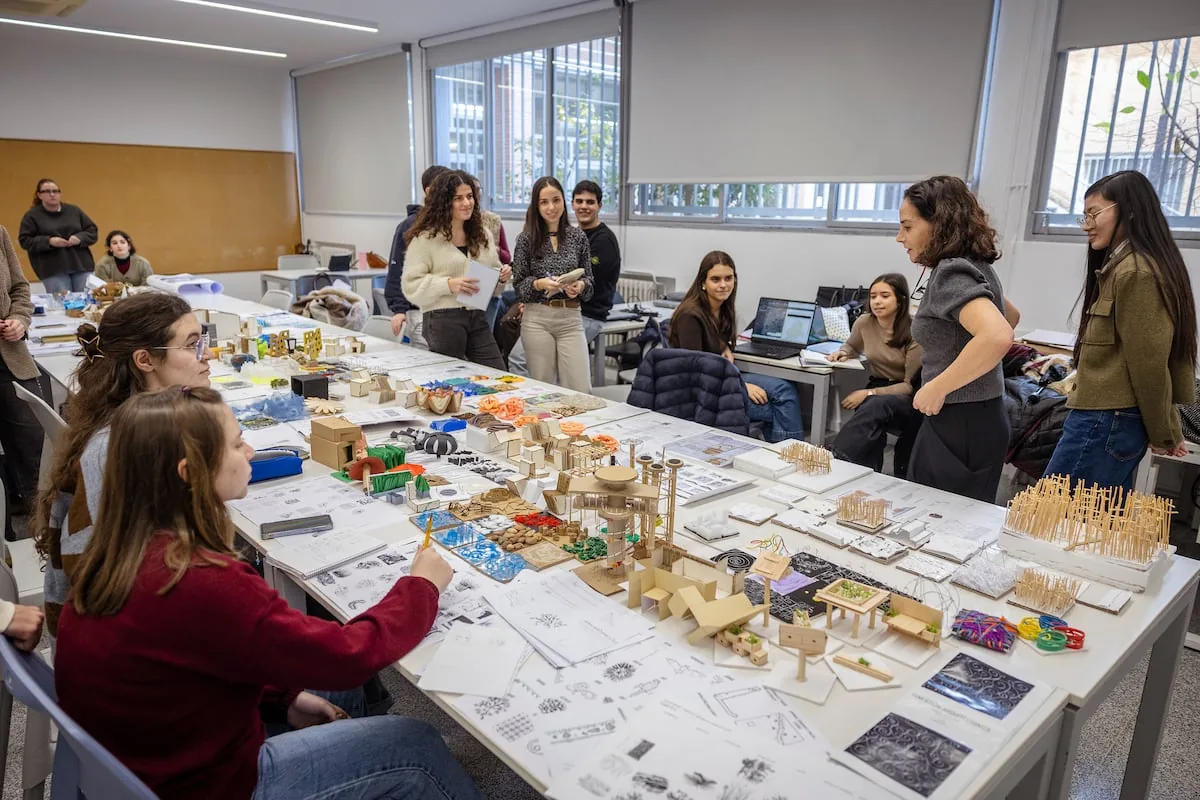
Sandra Bestraten teaches two elective subjects in the Architecture degree at the Polytechnic University of Barcelona with a strong social component ―Housing and Cooperation and Low-Cost Technologies― and she is not surprised that 80% are women, although in the degree they make up just over half. “As soon as the social impact of our profession is emphasized, women are there, because that is what drives us. In our DNA, I don’t know if ancestral, this vocation is present.” Women are there, but in the shadows.

Search engine: check the cutoff score for each degree in Spain
Ramón Picó, dean of Architecture at the University of Seville, agrees with the diagnosis: “The more technical subjects usually tend to have a more male profile, and those that contribute that social component have a female majority.”
In the 2024/2025 academic year (latest official data) there were for the first time in Spain more women enrolled in the sum of degrees in the construction branch ―degrees in Architecture, Building (formerly quantity surveyors), Urban Planning, surveying, and Civil Engineering― than men, with a difference of 50.7% in public universities and 57.1% in private ones. However, their relevance does not correspond to their presence in the classrooms. In the case of the master’s degree, they represent 49.3% of graduates in the construction branch, they usually do not exceed one-third in professional architecture associations and even less in technical ones, and they are hard to find on construction sites. Where do they work? Do they change professions?
Argentine architect Verónica Benedet received a scholarship from the Basque Institute for Women in 2019 to study the visibility of her female colleagues in Euskadi and reflected her conclusions in a graphic that simulates a pipe losing water, which represents women. 61.62% of Architecture graduates at the San Sebastián school of the University of the Basque Country in 2019 were women, yet they only sign 2% of the publications. “The concept of architecture encompasses many parts, not just the architectural project, which is what is valued. We don’t disappear; we are in urban planning, research… everything collaborative. Or maybe what we lack is a proper name,” Benedet reasons.
“We are also not present in publications and awards, because the works seem to be assumed by a single person, when in reality they are a group, and the award goes to the man. In those given in Euskadi, only 20% are for women,” continues this researcher from the University of the Basque Country, who has written extensively about the pioneers of Basque architecture.
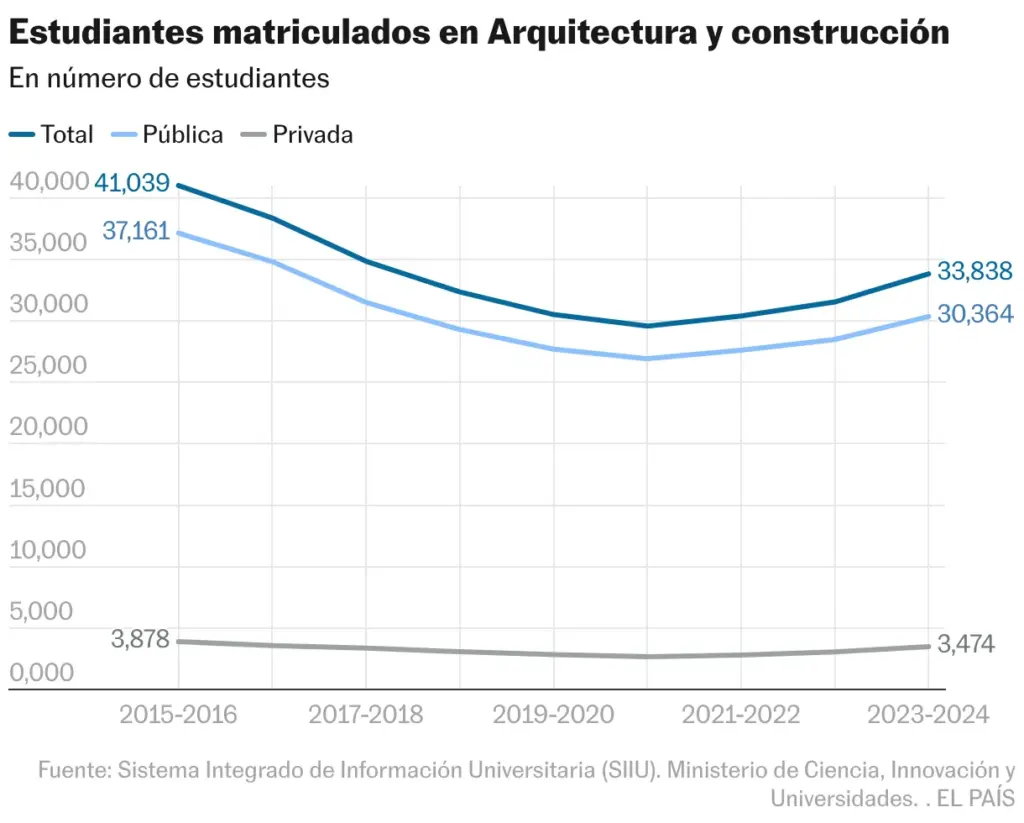
The construction crisis collapsed the number of university students in Architecture and, although it is growing, only half as many graduate as in 2015. And among them, women have always been the majority during this time. They have gone from 52.3% of graduates to 56.2% in nine years. That is, architecture is being revived in the hands of women, but shifting towards a more social view of their work.
Professor Bestraten, also president of the Barcelona Branch of the College of Architects of Catalonia (COAC), is optimistic about female progress, because in her professional association women are barely a third but are growing in parallel with the rise in the percentage of female university students. “In the 30 to 39 age group, equality is almost reached, as we have 597 female members and 668 male,” she explains.
Read more Discomfort over pilgrim camps in public schools in Madrid during the Pope’s visit
The problem is that often architecture is “a complement” for them. A COAC survey of 600 female architects revealed that 63% worked in more than one sector. “Women seek stability, whether in administration, urban planning, or education, which allow better work-life balance. Although advances have been made in architecture. They want a fixed salary and the complement is the professional office,” she emphasizes, and recalls that “professional couples are quite common” in studies.
According to this Catalan survey, many female architects opt for rehabilitation and restoration or landscaping, in which they were pioneers. “The great experts in landscaping are women. They themselves told us: ‘We chose this sector because it was not attractive to men or was considered secondary. They were more into building, stone. They saw a gap they could fill and reach the top.’ And in large firms “we often see that the second-in-command is a woman, who manages the internal and even external part of the office, but the visible face of the office is the man by definition.”
Female architects are in teaching but not at the top of the system, dominated by full professors. “In the new selection processes at this school, a majority of women are already entering assistant positions, in the FPU [contracts to do the thesis],” emphasizes the dean of Seville. And he notes another niche. “We are seeing, from the follow-up of graduates, that more and more architects are in charge of construction execution, when before it was the trade of construction workers.”
The wage gap, as in almost all professions, is evident. The Official Bulletin of the Parliament of Andalusia (BOPA) quantified it at 21% in the region. And it estimated that 95% of the projects with the largest budgets were signed by men. “This translates into lower solvency for female architects, who combined with maternity periods and other work-life balance measures, do not promote under equal conditions in the public sector within the required periods, forcing 22.2% of women to stop being members, compared to 2.4% of men,” concludes the Andalusian Council of Official Colleges of Architects (CACOA).
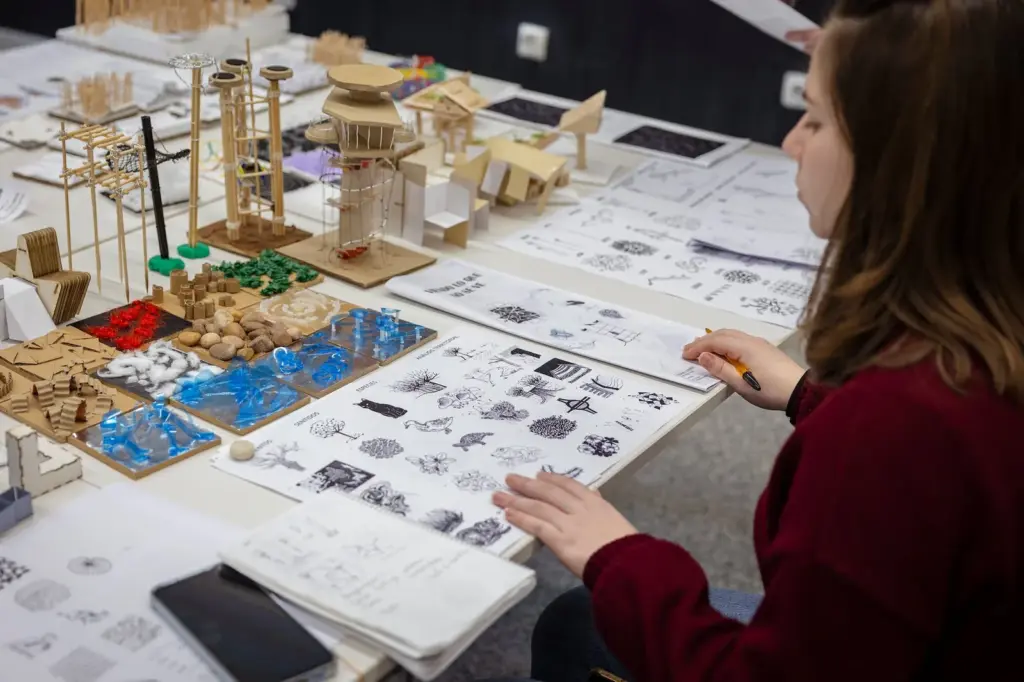
In Building (formerly Technical Architecture) there is a dramatic drop in the number of graduates―since the Bologna Plan they last one year longer, while the architecture degree grants access to become an architect with a master’s―from 2,036 in 2015 to 496, nine years later, but women are advancing. They make up 42.7% of graduates, compared to 40.3% then. In surveying they are 34.7% when they were 31.6%, and in civil engineering they represent 34.2%, when they were 29.9%. In any of these fields, the collapse in graduates is overwhelming.
A study, Technical Architecture in Spain. Comparative Vision between Women and Men 2020, revealed a particularly worrying situation among quantity surveyors. 14% had felt victims of inappropriate and derogatory comments, 7% ignored because of it on some occasion, and above all, 75% discriminated against when looking for work.