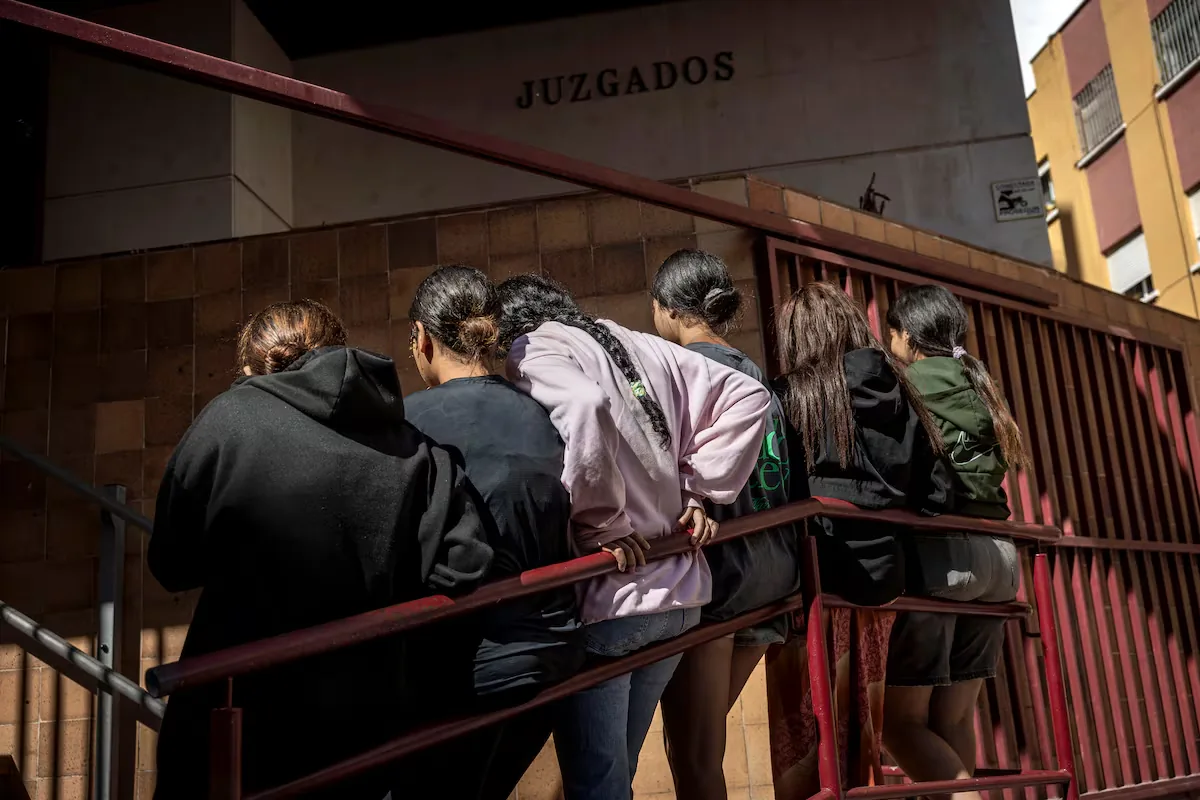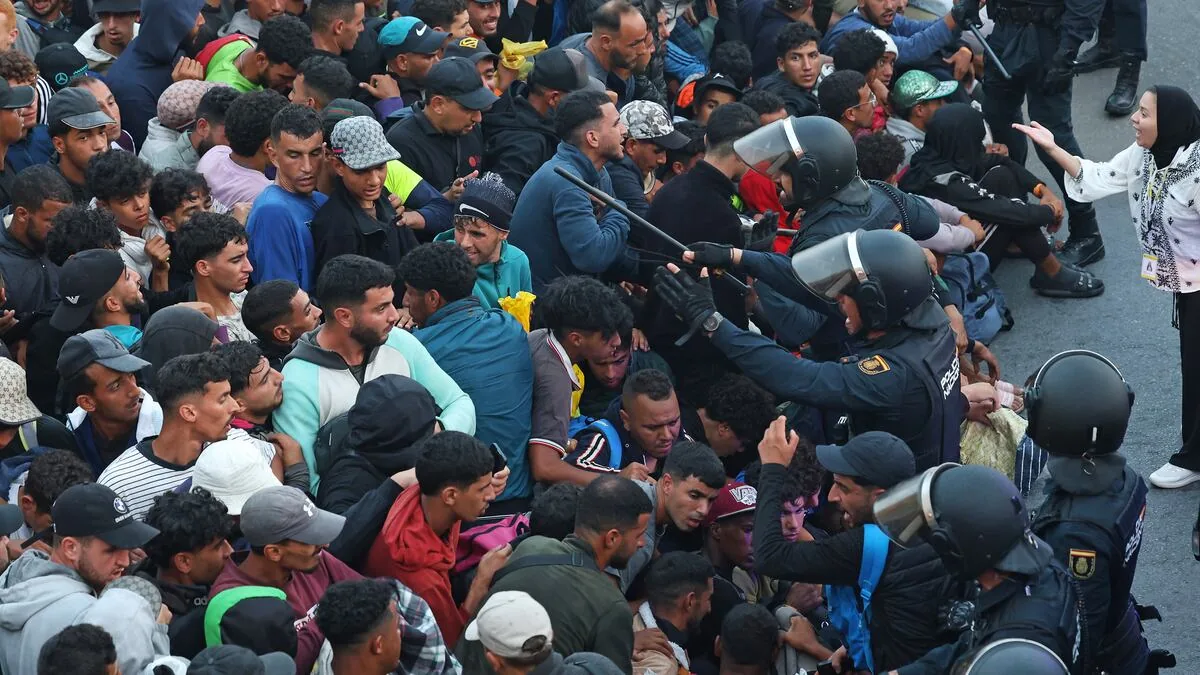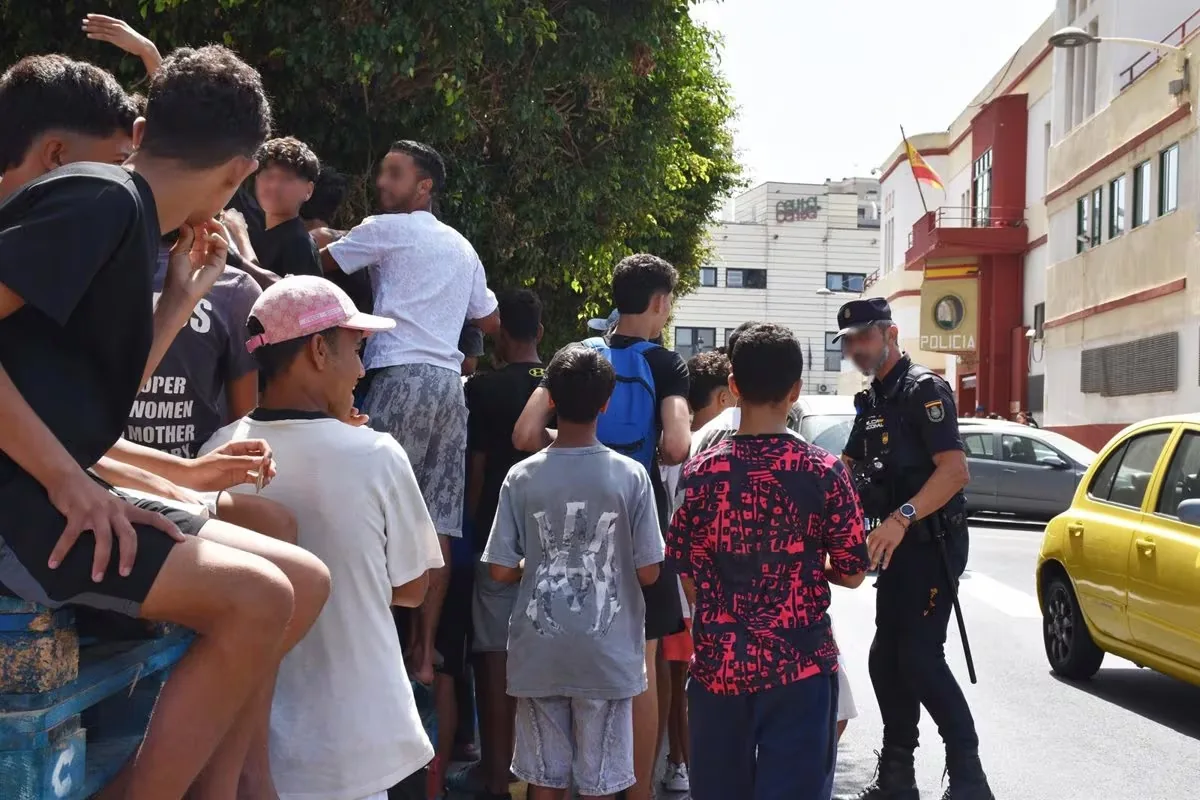
The immediate return claim of the 2,500 Moroccan minors who fled to Ceuta in the current migration crisis crashes against the legal walls that protect children and adolescents in Europe. It also threatens to open a new diplomatic rift with Spain. The Minister of Justice, Abdelatif Uahbi, who already demanded on Friday that the Spanish Government hand over “all” unaccompanied minors of Moroccan nationality who remain in the autonomous city, linked this Saturday the acceptance of the bodies of migrants who died trying to reach Ceuta’s soil to the effective return of the children and adolescents.
Read more Hundreds of Haitians protest at the Haitian embassy in Chile over issues with immigration procedures
The request for the return of the minors was already raised in the last three weeks by the Ministries of Interior and Foreign Affairs. The Justice Minister, who is in the middle of the campaign for the legislative elections on September 23, now conditions the collection of the bodies of drowned migrants (up to 141, according to estimates by Moroccan NGOs) on the delivery of detailed reports and the repatriation of the minors, according to his statements to the Saudi channel Al Arabiya cited by the Efe agency.
“Morocco will not allow the entry of the bodies without finding a global solution through an agreed procedure and framework. It must be done in the context of an agreement between us and the Spanish,” insisted Uahbi, leader of the Authenticity and Modernity Party (PAM), which is emerging as the most voted in the elections. The minister trusts that an understanding between Madrid and Rabat will be reached “soon.” When asked by Al Arabiya why Morocco has not collected DNA samples from the families of the missing to compare them with the bodies coming from Ceuta, he replied: “It is they [the Spanish] who must do it and prove that they are Moroccan.”
As highlighted by the juvenile prosecutor of the State Attorney General’s Office, Teresa Gisbert, the immediate and collective return to their country of the Moroccan minors in Ceuta “makes no sense.” Spain vetoes their automatic expulsion and is subject to national and European protection rules that require detailed and case-by-case evaluation of returns.
“The Moroccan minors who are in Ceuta must be heard and each situation must be evaluated individually. The consultation on their willingness to remain in Spain or return to Morocco should be managed by the Spanish authorities. The opinion of the child or adolescent must be part of the assessment, taking into account their age and maturity, although the decision cannot depend solely on whether they express a desire to remain in Spain or return to Morocco. The fundamental criterion must always be their best interest and the existence of adequate protection conditions, both in case of staying and returning,” clarifies Mariam Essaadi, coordinator of the Moroccan Association for the Protection of Childhood and Family Awareness (APISF).
“The return should not be limited simply to transferring the minor to Moroccan territory. There must be a true protection process: individual identification, location and assessment of the family, evaluation of the best interest of the minor and, when family reunification is possible and safe, support for their return to the family environment. In cases where this is not possible, other protection solutions will need to be sought,” she clarifies in a message exchange on behalf of that Moroccan NGO based in Tetouan.
Although Morocco has reiterated the willingness to immediately repatriate its minors who are in Ceuta and return them to their families, its government acknowledges that the individualized legal process in Spain may delay the return. The agreement signed between Spain and Morocco in 2007 regulates the coordination of the handover subject to Moroccan authorization. International treaties also require a detailed report on the family situation of each minor, once identified, before authorizing their return.
Read more Italian tourist injured in a tourist train accident in Toledo
From Moroccan civil society, Essaadi states that APISF has professional teams and specialized structures in the protection and accompaniment of minors to participate in a reception, orientation, and accompaniment device for those minors who return, always in coordination with the authorities and together with other Moroccan NGOs. Her organization emphasizes social and psychological support programs for minors, mediation and family search, legal guidance, and other protection services.
During the migration emergency of July 30 and 31, when about 80,000 irregular migrants broke into Ceuta, APISF teams mobilized at the Fnideq (Castillejos) border to provide assistance, supply water and food, first aid, and particularly support minors who needed to contact their families and had lost their phones. “One of the aspects that has worried us most since the beginning of the migration crisis is precisely the anguish of families, parents who did not know where their children were, whether they had managed to reach Ceuta or had been returned to Morocco, whether they were well…,” explains the NGO coordinator from Tetouan.
Human dimension
“Beyond migration or political issues, it is important not to lose sight of the human dimension. Behind each minor there is a different situation and, in many cases, a deeply worried family,” concludes the head of the humanitarian organization. “Any solution must be built in a coordinated manner between Spain and Morocco, but always placing the protection and best interest of each minor at the center of decisions.”
Repatriation can be agreed on a case-by-case basis, but mass return is not possible, as a 2024 Supreme Court ruling made clear, which declared illegal the return of 55 unaccompanied minors who entered Ceuta in 2021. The European Union, meanwhile, insists that “all” migrants who entered the autonomous city illegally since July return to Morocco, while reminding that Spain has the “duty” to protect minors in vulnerable situations. European return regulations stipulate that, “before expelling an unaccompanied minor from the territory of a member state, the authorities of that member state must ensure that they will be handed over to a family member, a designated guardian, or appropriate reception centers in the return state.”
The Moroccan Ministry of the Interior has not made official figures public on the number of irregular minor migrants who have left the country. The same department reported that in 2025 security forces thwarted 73,640 attempts of illegal departures from the country, without offering details by age groups or nationality.
In Morocco, other NGOs such as the Moroccan Association for Human Rights (AMDH) highlight the “worrying situation” of hundreds of unaccompanied minors in Ceuta. “The state has the obligation to adopt all humanitarian measures to protect them,” specifies this NGO affiliated with the left. The Moroccan Organization for Human Rights (OMDH) has emphasized in its first report on the migration crisis the abandonment suffered by minors in the Spanish autonomous city.
Read more Athletic awakens all its ghosts and falls in a rough match against Sevilla