










That Naomi Watts receives the Donostia award from the San Sebastián festival this Saturday means that the event honors a hardworking member of the industry, an actress who spent years facing rejection after rejection in Hollywood (even from David Lynch and his Mulholland Drive), a performer who has known how to use her best assets while seeking scripts suited to her interests and who now navigates complex characters in Ryan Murphy’s series. She has survived the worst predictions Hollywood made about her in 2001.
The breakthrough and rise to fame of this Englishwoman raised in Australia — she is one of Nicole Kidman’s best friends, and they lived together after Kidman’s divorce from Tom Cruise — came with the aforementioned Mulholland Drive (2001), by David Lynch. Soon after came The Ring, Le Divorce, her impressive work in 21 Grams (her first Oscar nomination), the tenderness of King Kong, Eastern Promises and Funny Games. All in less than a decade. “I have worked hard over the last four decades. And I have done so with great creators. That I receive the Donostia is thanks to them. And it would be an echo of my gratitude. I have tried to change the narrative, help describe the human psyche… Cinema is a very important and powerful medium for that,” Watts said at her press conference this Saturday morning in San Sebastián.
About the filmmaker who gave her her big break, the actress said: “I met Lynch when I did the casting for another film, a decade before Mulholland Drive. I was living in continuous rejection: either I was missing something or had too much of something. And suddenly I returned to Lynch. Also, I played two incredible characters in the same film. I worked with him again in Twin Peaks. And David will always be in my heart. Because, as a gift, every great filmmaker saw Mulholland Drive and the doors of the industry opened for me.”
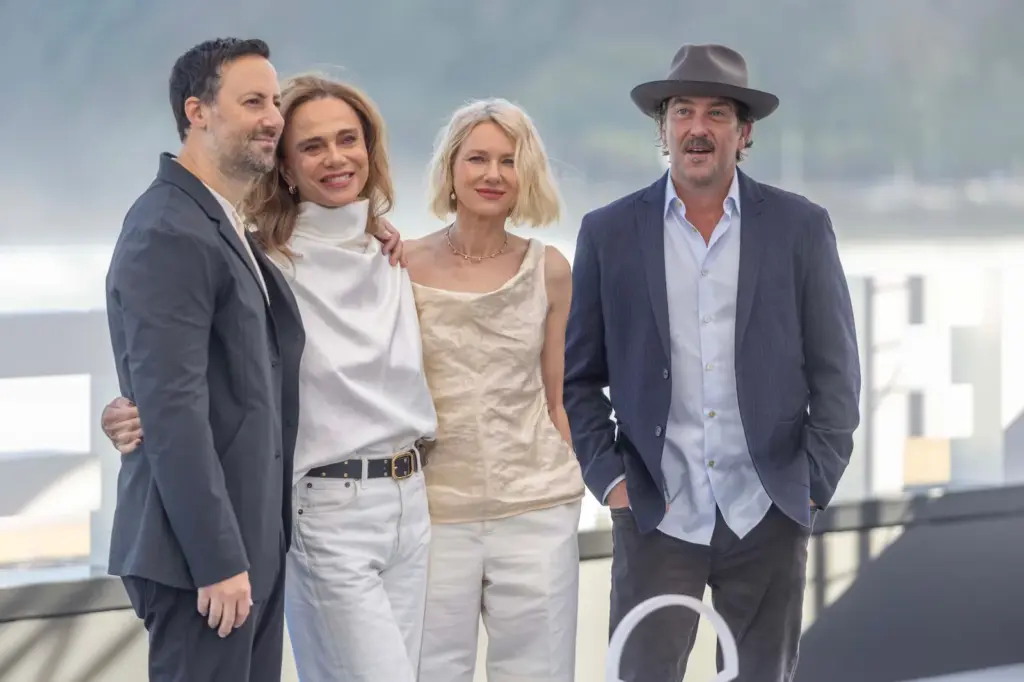
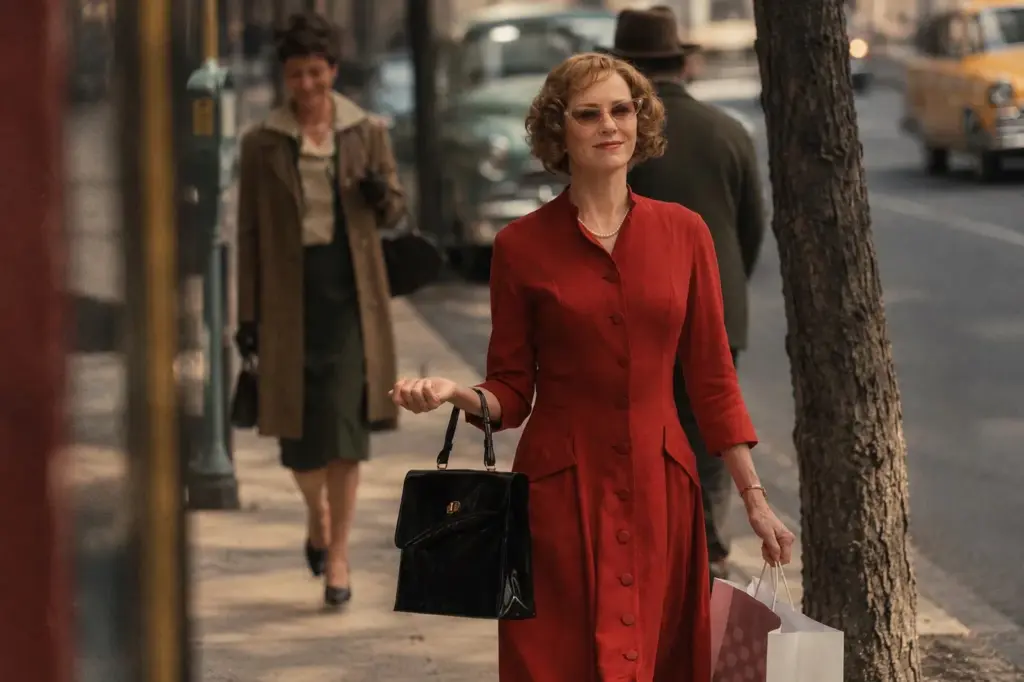
In The Perfect Wife, the film whose screening accompanies the award ceremony, Watts brings to life the protagonist, Hermine Braunsteiner Ryan. It is based on a true story: in 1964, a young journalist from The New York Times discovered a possible Nazi officer living in hiding in Queens, but his investigation takes a disturbing turn when he befriends the suspect’s charming wife. Nothing is as it seems in this thriller, inspired by a real case, although the director, debutant Ben Shirinian, explained in San Sebastián that “much has been fictionalized for a better construction of the film narrative.”
The role of Hermine fits perfectly in Watts’ career: “For me, as an actress, I am especially interested in immersing myself in scripts about pain and identity. Maybe because of my age, many think I am at the point of playing villains. I procrastinated this character for a while until I decided yes, it was my turn.”

Watts has entered the battle against ageism in cinema. “By Hollywood standards, I started late, at 30. Then they told me to get moving, that by 40 my career would be over. And here I am in my fifties [she will turn 58 next September 28]. Did you see the Emmys last week? There were many winners my age, because times have changed. It was encouraging. I think things have changed. Women are consumers of film and television, and their stories must be reflected. A change in that narrative was necessary. And I feel grateful to be a small part of that change.”
Read more Does AI steal our ideas? “It cannot be proven 100%, but it is logical to think so”
Watts herself is an immigrant in the US, like the protagonist, in a country built by migrants, and which today seems to turn its back on them. “I went to the US with hopes and dreams, and I have surpassed all my dreams. Hermine arrived after World War II. Her journey was more about finding a new place and blocking out her past. In my case, I have American children. I love the United States. The situation today is complicated. I am nervous about current events, but I have faith that things will change.”
For the actress, The Perfect Wife serves to go beyond the merely cinematic: “Hate is growing and what is happening in the world is frightening. When I read the script for the first time eight years ago, we lived in a different atmosphere. Now everything has changed. We must be alert, we must pay attention and prevent this from happening again. We hope The Perfect Wife generates a debate. But as a character, it has not been fun, it has been complex in its creation and has immersed me in some mental storms.”
At the end of her talk, she paused on some of the queer characters she has played in her career: “We have to tell these stories; storytelling is important, especially now. I am proud to be part of the LGBTQ+ community. Minorities are being attacked right now, and it is terrible and unacceptable. My heart is with these communities, especially with my family. I will do everything possible to defend minorities.” By her family, she refers to her youngest daughter Kai Schreiber, who at 17 achieved this summer the Breakthrough Model of the Year, becoming the first transgender woman to receive this award given by The Daily Front Row magazine.
Juan Antonio Bayona recounts in the festival’s daily that, due to weather complications, they had to alter the shooting schedule of The Impossible, and filmed the reunion of the Álvarez Belón family in the first days, without the actors, especially the children, having solidified their bonds. The day went better than well, and the next day Bayona showed them a first cut. Watts saw it and ran away. Bayona did not understand what was happening until he was told: the actress had gone to congratulate her makeup artist. “That is Naomi. She had just seen a scene where her work was extraordinary and her first impulse was not to think about what she had done. She had thought about someone else. Someone on the team whose work had helped build what she had just seen.” For her work as María Belón, Watts received her second Oscar nomination. Tonight it will be Bayona himself who will present her with the Donostia in an act of mutual gratitude.
Read more The road to prison for Trompas, the confessed killer of Claudia Tacoronte