









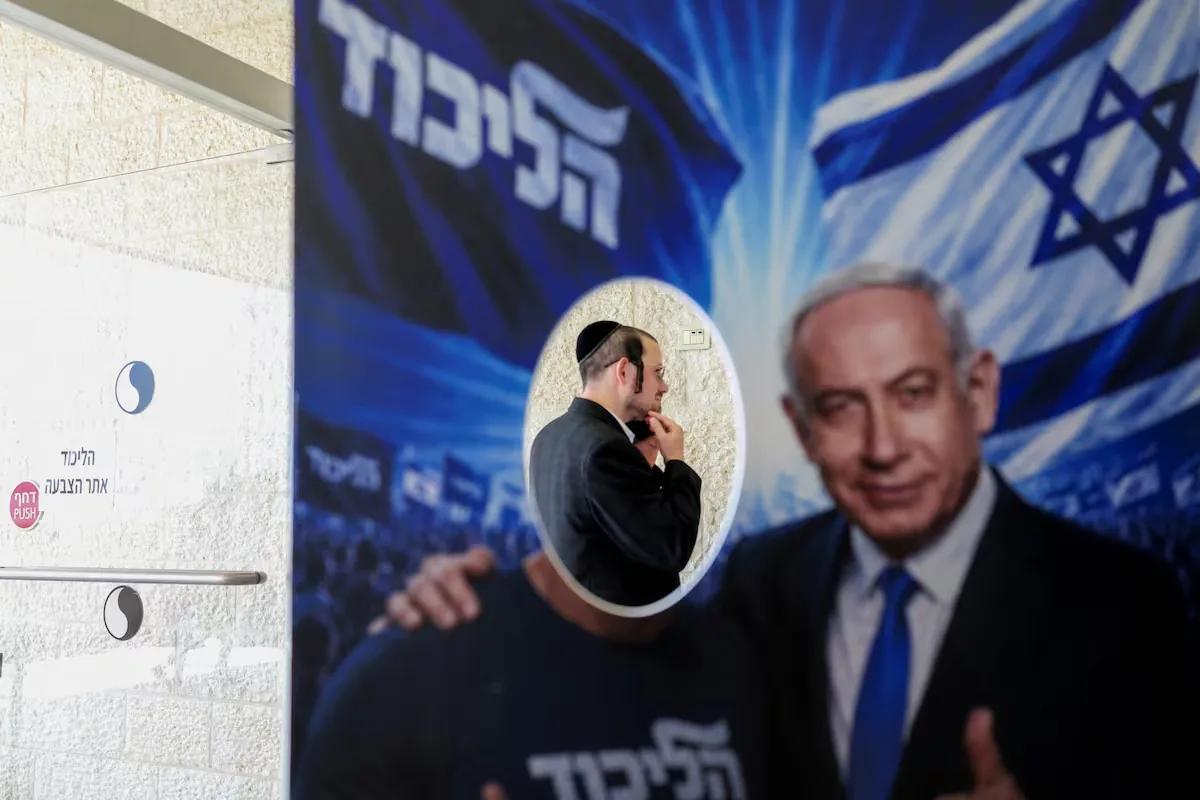
The exclusive from the newspaper Haaretz that the Emirati president, Mohamed bin Zayed, warned Benjamin Netanyahu of the possibility of a major Hamas attack, a week before it happened on October 7, 2023, but he did not relay this to the army or intelligence services, has fueled controversy this Wednesday around the political responsibility of the prime minister. But these attacks and their consequences have marked the pre-election campaign for weeks ahead of the October 27 elections. The opposition has been reproaching him both for the policies he adopted towards Gaza in his previous years in power (2009-2021) and for his disregard of prior warnings about what is probably the biggest security failure in Israel since its creation in 1948. The information threatens to complicate Netanyahu’s re-election, which, 48 days before the elections, is anything but assured.
Read more Israeli journalist Amira Hass wins the Manuel Vázquez Montalbán Award
The information coincided with the end of party registration this Tuesday. The two days of last-minute registrations and alliances have resolved the last doubts about the forces that will run in elections that carry — this time with reason — the often-used adjective of crucial. Under the watchful eye of the international community, the country will decide which direction to take after four bloody and turbulent years under the most right-wing coalition in its history, led by Netanyahu.
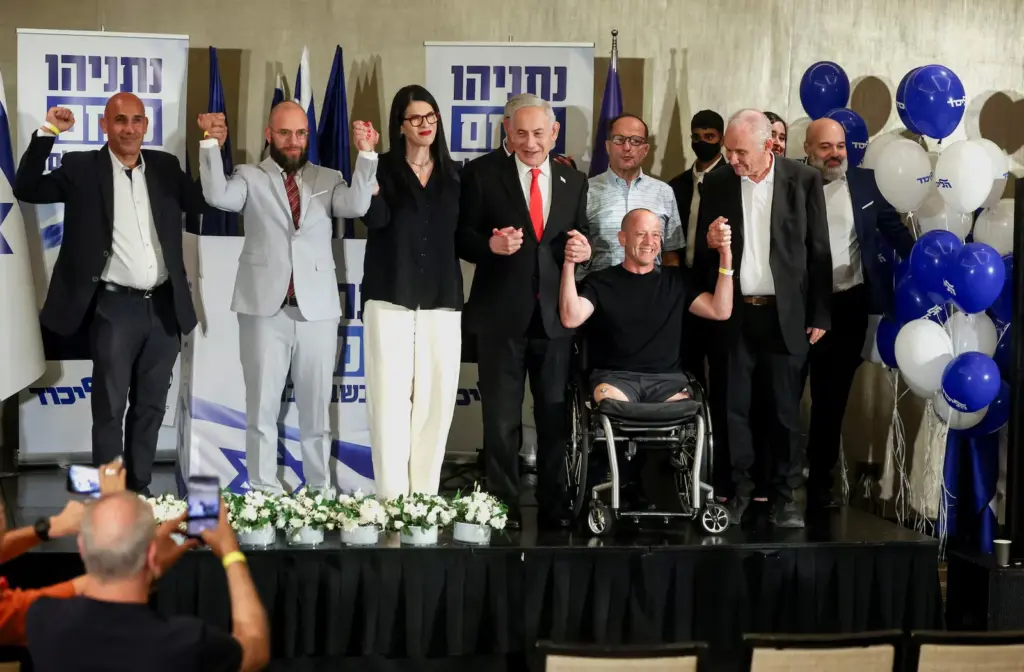
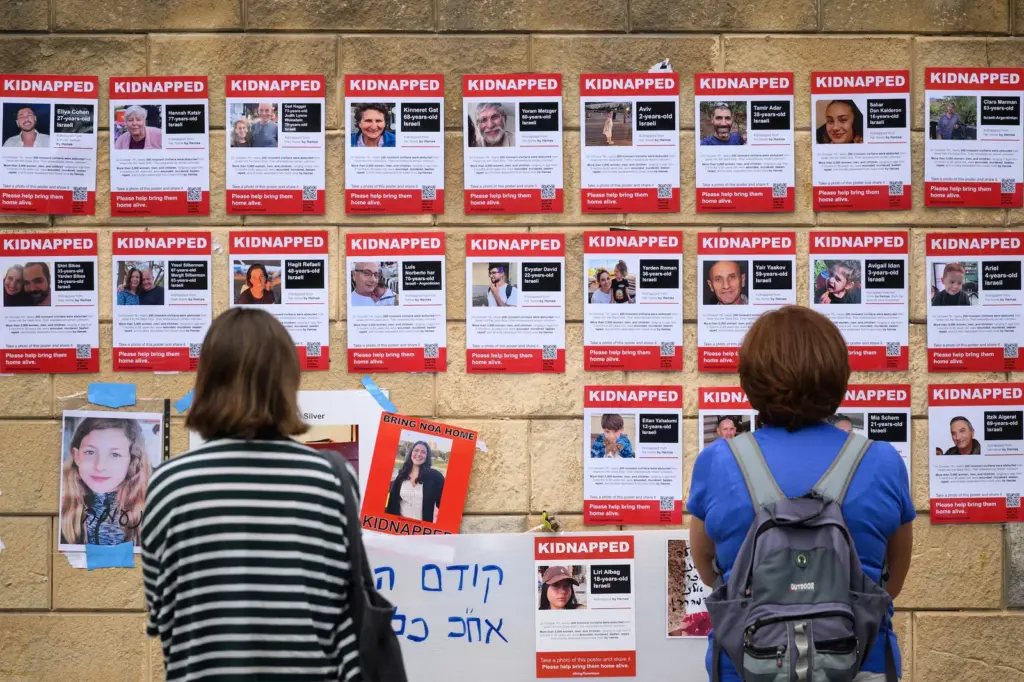
October 27 will be the first time millions of Israelis go to the polls since the Hamas attack, which has changed the country and ignited the Middle East. Despite everything that has happened since then (the Gaza massacre, four confrontations with Iran, a war with Hezbollah in Lebanon, more bombings and occupation in Syria, the West Bank fire…), that October 7, 2023, remains the central theme of the elections.
Above all, the role of Netanyahu, who has been blocking the creation of an independent commission to investigate what happened, against the wishes of 70% of the population, including almost 60% of those who voted right-wing, according to polls.
The prime minister argues that it would become a political witch hunt. There are numerous indications and investigations pointing to the fact that the political and military leadership ignored the signs and warnings (from Egypt or the soldiers in the control tower) because they were too dramatic. They clung to the interpretation that besieged Gaza was under control and Hamas was content to govern it and to the economic relief of permits to work in Israel for thousands of its inhabitants.
The difference is that he was the prime minister that day and today, the only senior political or military leader who has not done self-criticism or resigned. The pre-campaign has only increased his defensive attitude (regarding criticism) and offensive stance towards his rivals, with a succession of low blows and lies.
“They didn’t wake me up”
The biggest example took place last week. Netanyahu accused the security leadership of choosing not to wake him when the attack began, because he “feared” that he would “deploy the air force and the entire army and not let anyone approach the fence [the separation barrier], that we would kill them immediately.”
The scandal escalated several levels when his wife, Sara, aired another conspiracy theory directly before the cameras. She insinuated that the leader of the social-democratic list The Democrats, Yair Golan, knew about the attack in advance. He is a former number two in the army who earned the admiration of compatriots of different political stripes by rushing to the vicinity of Gaza as soon as he learned of the attack. “When you are a military officer of such high rank, you claim you fought on October 7… at dawn you were already there dressed and ready at a very, very early hour while others knew nothing, including the prime minister,” Sara Netanyahu said to Channel 14, which acts almost as the family spokesperson. One of their children, Yair, speaks directly of “betrayal” by a kind of deep state.
62% of Israelis consider that the prime minister acted “badly” that morning, according to a survey by Israeli public television, released before the Haaretz investigation. The timeline released by his own office to try to quell the growing controversy places his first conversation with then-Chief of Staff Herzi Halevi at 09:55 (three hours after the attack began).
“More and more evidence points to the same conclusion: Netanyahu led Israel blindly into the disaster of October 7,” wrote former Chief of Staff Gadi Eizenkot on social media X this Wednesday, the rising star who draws votes from varied audiences, equally upset with the current leader. The day before, he put aside his differences with the other three main opposition leaders (Naftali Bennett, Avigdor Lieberman, and Yair Golan) to jointly call for an “immediate and thorough investigation” into Netanyahu’s “errors.”

The new controversy further undermines Netanyahu’s image, whom polls do not place as the most valued to lead the country. His party, Likud, has been the second force for months, hovering around 20 of the 120 seats in the Knesset (the national parliament). He is surpassed by Eizenkot’s party, Yashar.
“Netanyahu has about 20 seats that depend on his most loyal base, who will vote for him in any case. It’s like when Trump said he could stand on Fifth Avenue and shoot someone and nothing would happen. But the party is losing — as we see in the polls — and his credibility is very low. Also, many things that used to work for him with public opinion, like controlling the narrative or stratagems, no longer yield such good results,” says Ilana Shpaizman, senior researcher at the Department of Political Studies at Bar Ilan University, near Tel Aviv, by phone.
Two blocks
Everything will once again revolve around two blocks of Jewish parties — Bibi [Netanyahu], yes; Bibi, no — with the possibility that a Palestinian party, the United Arab List, acts as a swing vote.
This was not the case for decades, when Israeli politics was structured around the left-right axis based on their positions towards the Palestinians: more open to agreements, the former; tougher and expansionist, the latter.
Lior Sheffer, associate professor of Political Science at Tel Aviv University who studies political behavior, places the change around 2019, with Netanyahu’s indictment for several corruption cases. The political system then experienced a “reorientation”: the traditional axis ceased to be the only one “defining potential coalitions” and a “cross-cutting dimension” (the so-called pro- or anti-Netanyahu blocks) emerged, which two years later brought together in government parties with disparate rhetoric and approaches towards the Palestinians, he emphasizes by phone.
“This new dimension has evolved, following the judicial reform, to focus on perceptions about democracy, the rule of law, the supremacy of the Supreme Court, and corruption. Its meaning has changed, but its emergence as another axis of political alignment is increasingly important. One thing to wonder is how it is possible that, after October 7, the elections do not revolve around security. The reality is that the local political system has firmly consolidated around these two blocks,” he adds.
Thus, by blocks, is actually how the media present the poll results, besides by party. And things look bad for Netanyahu, although the contest is close and a handful of votes can tip the result or lead the country to another cycle of constant repeat elections, like the one experienced between 2019 and 2022.
Every new poll that the media pompously present these days is actually a sign of how tight these elections are shaping up. Public television, for example, raised the chances of Netanyahu’s block (52 deputies) 10 days ago because Amjá Israel — a newly created party by a far-right ex-general who supports ethnically cleansing Gaza, Ofer Winter — surpassed the 3.25% vote threshold necessary to gain parliamentary representation. Its natural allies are the current coalition partners: Netanyahu’s Likud (20 in this poll), two ultra-nationalist formations (Jewish Power, of the famous Minister of National Security, Itamar Ben Gvir, with seven; and Religious Zionism, of Bezalel Smotrich, key in the settler explosion, with six) and two ultra-Orthodox parties: the Ashkenazi United Torah Judaism (eight) and the Sephardic Shas (seven).
Maariv’s Tuesday poll, on the other hand, gives 57 seats to the four major Jewish opposition parties: Yashar, Yahad (the alliance of former prime ministers Naftali Bennett and Yair Lapid), The Democrats, and Israel Beiteinu. These forces would also achieve a bare absolute majority (61) if they obtained the support of the four deputies of an alliance — sewn at the last minute and not affiliated with any block — that some polls place outside the Knesset and others, like this one, inside. It is led by the center-right deputy Yoav Hendel (Minister of Communications both with Netanyahu and with the broad coalition that ousted him between 2021 and 2022) and the liberal economist Yaron Zeleja. They have said they will only join a “Zionist government” and demand prior approval of a conscription law that includes the ultra-Orthodox, another central issue of these and previous elections.
A lot will be decided at that 3.25% threshold. Falling below it, even by hundredths, means zero deputies. Surpassing it grants, at minimum, four. It is the equivalent in Spain to the 12 seats that Junts and Bildu add up to. Some small formations have allied in recent days to ensure they surpass it. Also the three Arab parties (which represent Palestinians with Israeli citizenship, one-fifth of the country’s population), who will run under a joint list.