








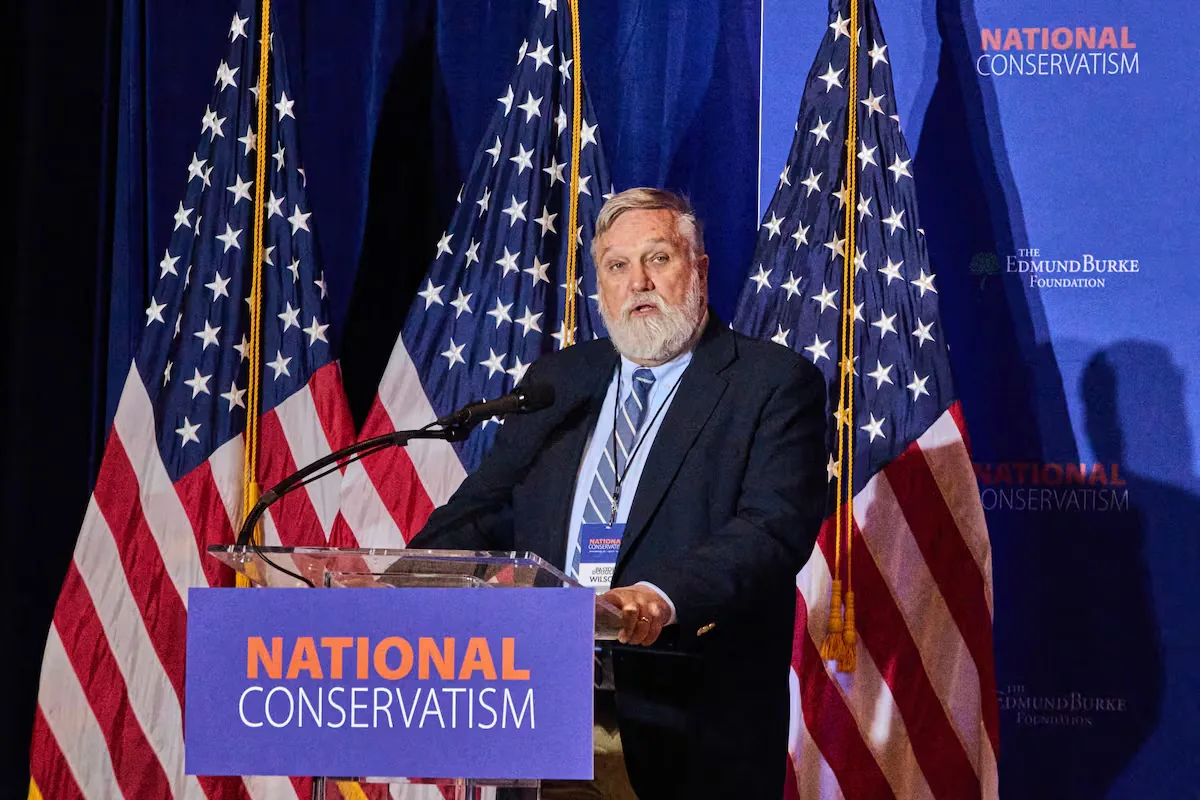
Theologian and pastor Doug Wilson has been preaching from his literal and metaphorical corner of the United States since the 1970s. He is co-founder of his own Christian denomination, named Comunión de Iglesias Reformistas Evangélicas, which has about 170 congregations nationwide. He is also the leader of an ultraconservative ideas empire that includes a small university and a primary and secondary school, a streaming service, and a publishing house. He manages all of this from the town of Moscow, Idaho, one of the most conservative states in the Union.
There are many preachers like him in a country where religion is also a lucrative business, but not all of them count among their parishioners the Secretary of Defense, Pete Hegseth, who has even invited Wilson to the Pentagon to give a sermon.
This proximity to Washington’s new power has recently focused media attention on the ideas of this religious figure who brazenly defends a theocracy based on the principles of white Christian nationalism. Especially on his proposal to abolish the Nineteenth Amendment, whose approval legalized women’s suffrage in 1920. He aspires to change it to the system with which, he often reminds, decisions are made in his congregation, where suffrage is “by family unit”. It is about combating the “cancer of individualism” which, according to him, the aforementioned amendment brought.
It sounds outlandish and unrealistic that the United States would strip women of their right to participate in the democratic process; it would require the support of two-thirds of Congress and three-quarters of the states. Though with this country, you never know. Nor did it seem likely that the Supreme Court would overturn federal protection for abortion rights. And it happened in 2022.
The success of these marginal theories’ journey to the center of discourse amidst a process of global regression ”lies in the very fact that they have some currency or visibility,” says philosopher Wendy Brown, one of the most influential political thinkers in the United States, in an email. “They are supported by both men and women, which means that those who do so are willing to consciously renounce their own status as citizens.” To Brown, however, more serious, because much more “realistic,” are the strategies with which US President Donald Trump threatens to influence next November’s elections: “electoral district manipulation (gerrymandering), laws requiring voter identification, and intimidation strategies that restrict the participation of the Black population and limit their electoral weight.”
“Wilson loves to provoke, hear himself speak, and go viral with the most extravagant and hateful comments,” according to Professor Matthew Avery Sutton, author of Chosen Land (La tierra prometida, no Spanish translation), a recently published essay that aims to be the definitive history of Christianity in the United States. “Almost no one in Moscow sees anything in him that reminds them of Jesus Christ, but the white nationalist militias of northern Idaho adore what he represents.”
Perhaps he is the most famous, but the pastor is not the only one with a megaphone advocating for stripping women of a century-old right. It is all part of a movement called “masculinism,” for lack of a better label. It has grown strong thanks, as always, to social media and in the circles of the MAGA manosphere (Make America Great Again).
Read more Daniel Ortega consuma en Nicaragua la última tiranía de América Latina
The Rise of ‘Masculinism’
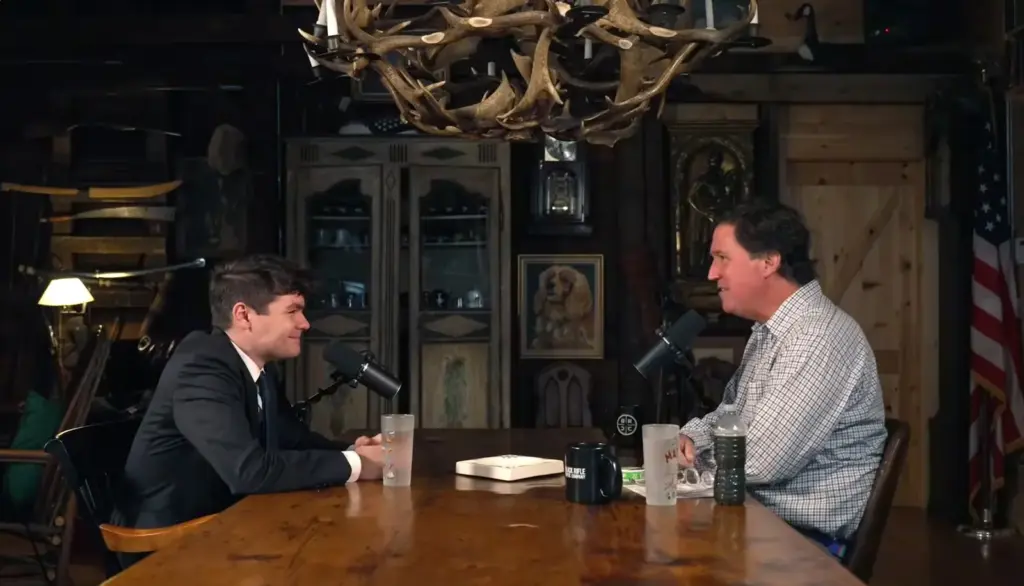
Helen Lewis defined it in the June cover story of The Atlantic magazine as “a movement to counteract the advances of feminism and reassert male supremacy.” It is a body of ideas with religious origins, based on the notion of the head of the family’s power and on “St. Paul’s belief that pious women should ‘keep silent’,” writes Lewis, who warns that secular masculinists are also abundant, among them, “those who identify as Muslim, like the streamer Sneako,” “self-proclaimed pimp Andrew Tate,” or Nick Fuentes, an antisemitic and misogynistic leader of a sector of dissatisfied Gen Z men.
“Attacking women works well on social media and generates a lot of advertising revenue from sectors like cryptocurrencies, sports betting, and supplements. You can make a lot of money telling men they are the truly oppressed sex,” Lewis says in her article. It is also possible to find traces of masculinism in Washington; perhaps nowhere as much as in the Pentagon’s leadership, whose chief, Defense Secretary Hegseth, systematically blocks the promotions of women and minorities in the Army and last week caused a small political earthquake by announcing mandatory testosterone tests for American soldiers (“warriors,” he calls them) over 30 years old.
The defense of the “one family, one vote” equation (provided the vote is that of the husband or, in the case of single women, the father, a brother, an uncle…) also finds an echo among some women in Trump’s America and the rise on the internet of the retrograde lifestyle of tradwives (traditional wives). Perhaps the most famous of all its proponents is the influencer Savanna Stone, who participated in June in the Women’s Leadership Summit, held in San Antonio (Texas) by the MAGA youth proselytizing organization Turning Point. Founded by Charlie Kirk, assassinated in September 2025, it is now chaired by his widow, Erika Kirk.
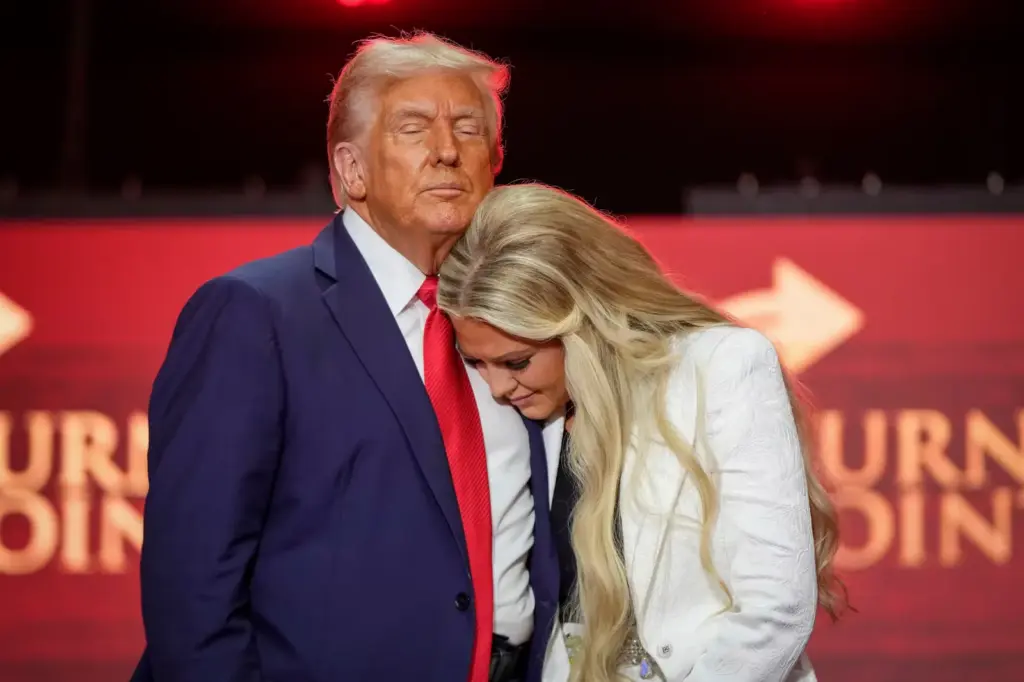
Stone defined feminism on stage as the “spirit of Jezebel redivivus,” referring to the biblical queen who went down in history as an example of manipulation. “It is the biggest lie we have been told as women,” Stone said, “when in reality it is a movement funded by the most wicked rich to destroy marriage and family.”
In the 2024 elections, a version of “one family, one vote” gained traction in some Republican circles, including among Hispanics, where the man of the house was encouraged to control what his wives and daughters would vote. The aim was to prevent them from voting for Kamala Harris and not for Trump. 54% of women chose her, compared to 44% who opted for him.
From those polls emerged a government with a conservative agenda that is changing the United States in such a way that outlandish ideas like prohibiting women from voting no longer seem so. This is what in political science is defined as the “Overton window,” a model that describes how certain activists manage to make their proposals, initially unthinkable and radical, eventually seem acceptable by moving that window with even more outlandish ideas. Trump has proven to be a firm believer in the effectiveness of that strategy and in the idea that anything can come to sound reasonable if repeated many times.
Read more The violence in Zacatecas clouds Morena’s chances of retaining the Government in 2027