









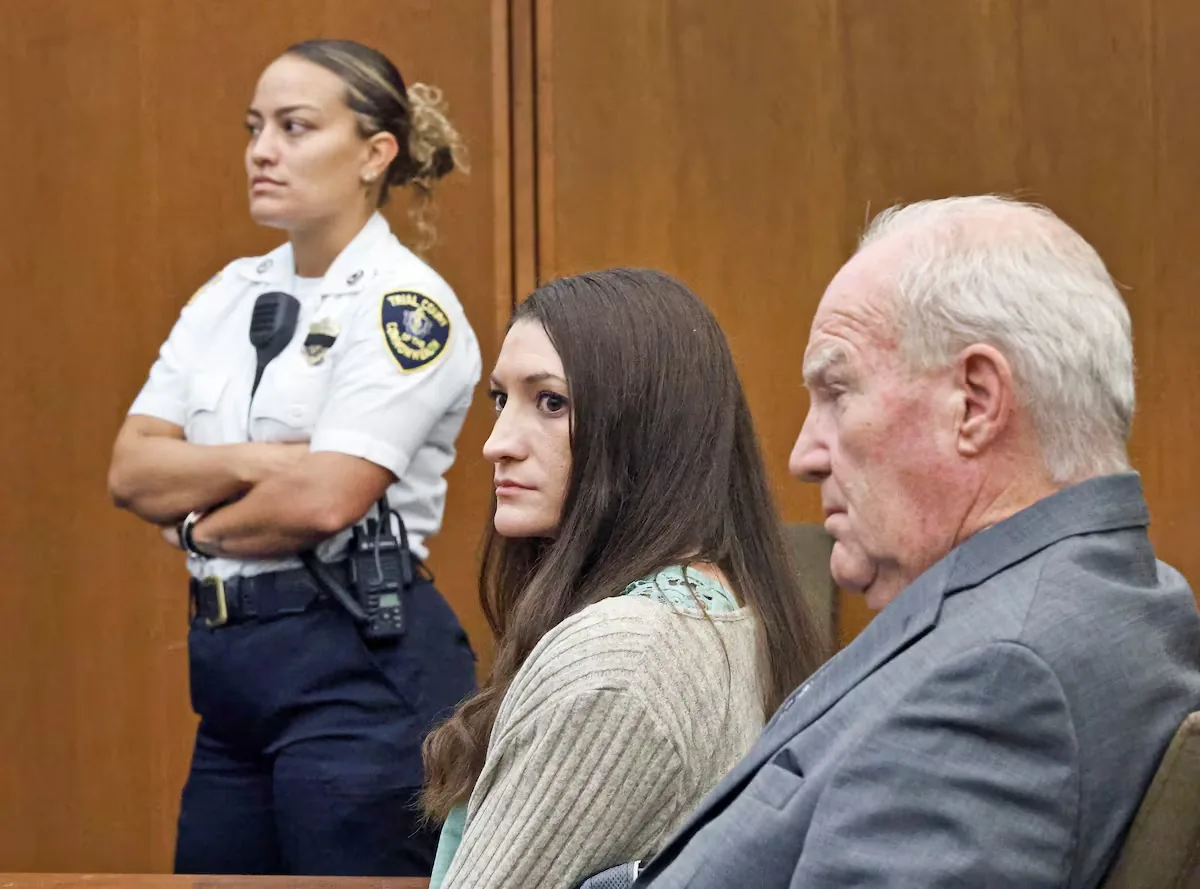
The case of Lindsay Clancy, the nurse who on January 24, 2023, strangled her three children in the basement of her home on the outskirts of Boston, is heading towards a dead end. This Thursday, the sixth day of jury deliberations, a completely unusual scene took place. After hours and hours of discussions, Clancy’s lawyer, Kevin Reddington, fed up with the deadlock, passed a note to the judge to request the removal of a juror who, according to the defense, is preventing the necessary consensus. This would create a situation of 11 against 1.
Read more Eugenio Garza Sada Award, 33 years of leadership, entrepreneurship, and innovation from Nuevo León
William F. Sullivan, judge of the Plymouth Superior Court in the State of Massachusetts, rejected the request, considering that it would be taking sides with one of the two groups: those who believe Clancy is responsible for her actions and therefore should spend the rest of her life in prison, and those who believe her mental illness exempts her from responsibility and request that she be admitted to a psychiatric hospital. The session will resume on Friday. If the nine women and three men who make up the jury are unable to agree, the judge will have to declare the trial null. The prosecution could then decide whether to retry the case or prefer to negotiate with Clancy’s defense.
“The court has received a communication in which the jury foreperson reports that there is a member who refuses to follow the instructions you have given regarding reasonable doubt,” Reddington told the judge. From these words, it is inferred that 11 jurors are inclined to reach a verdict favorable to Clancy against one who is obstructing it. It would be “a real shame,” the lawyer continued, if the trial were declared null because a jury “disregards the instructions of this court.”
The jurors have informed the judge in recent days that they are unable to reach a verdict. And he has insisted that their duty is to keep trying. “I asked them if they are able to follow my instructions,” he said this Thursday. When they meet again on Friday, the jury will have spent more than 35 hours over six days trying to find a way out of this legal puzzle. The possible verdicts being considered are five. Three of guilt (first-degree murder, second-degree murder, or manslaughter) and two of innocence (one general and another for lack of criminal responsibility).
The judge is doing everything possible to get the jury to reach a verdict. “There is no reason to assume that the case will be submitted to 12 people more intelligent, impartial, or competent to decide it than you… It is your duty to decide on this case, if you can do so conscientiously,” he told the jurors on Wednesday. He was responding to a note they had sent saying they were at a deadlock. A scene that repeated this Thursday, when the judge explained one by one, under oath, the legal meaning of reasonable doubt.
The growing possibility of a permanently deadlocked jury casts doubt on the outcome of this case, which has had great media impact both in the United States and abroad.
This trial has touched a sensitive nerve in a country enamored with true crimes like the United States. It has also shown how heated the debate has become around the role of men and women in society. Those who have shown solidarity with Clancy have seen in this 36-year-old nurse an example of the healthcare system’s inability to respond to the needs of mothers who go through severe mental health problems after pregnancy.
“She sought help, but no one gave it to her,” summarized lawyer Kevin Reddington in his closing argument. This idea has been symbolized in images of women dressed in pink protesting in front of the Plymouth courthouse in Massachusetts, where the sessions have been held.
The other group, with much echo on social media, reproaches Clancy’s defenders—especially the women who have shown support—for turning a blind eye to brutal facts and always shifting responsibility away from women, even when they commit acts of violence. The debate has been very heated, with social media messages accusing the women in pink of supporting the murder of children.
Mental health deficiencies
Apart from this debate, the Clancy case has served to talk about a topic considered taboo until recently: the mental health difficulties that many mothers face after pregnancies, with very serious disorders such as postpartum depression or, in an extreme situation, postpartum psychosis. Clancy’s defense has argued that this last condition explains the tragedy. They claim that a male voice demanded that she first kill her children and then commit suicide.
In her closing arguments on Thursday, prosecutor Jennifer Sprague argued that despite suffering from depression, Clancy was able to meticulously plan the three murders and was aware that she was committing an atrocity. “She had other options. She could have killed herself and left the children alive. She knew what she was doing was wrong,” she added. As evidence, she pointed out that Lindsay sent her husband, Patrick, out of the house to carry out her macabre plan.
All testimonies agree in describing Clancy as a good mother, attentive and loving, until her mental health problems began. On January 24, 2023, she strangled her three children with sports elastic bands in the basement of her home, then cut her wrists and neck and jumped out the window. That was the brutal scene her then husband and father of the children found upon returning from buying dinner for the family. As a result of those injuries, Clancy will have to use a wheelchair for the rest of her life.
Read more Much wear and little accuracy between Real and Celta