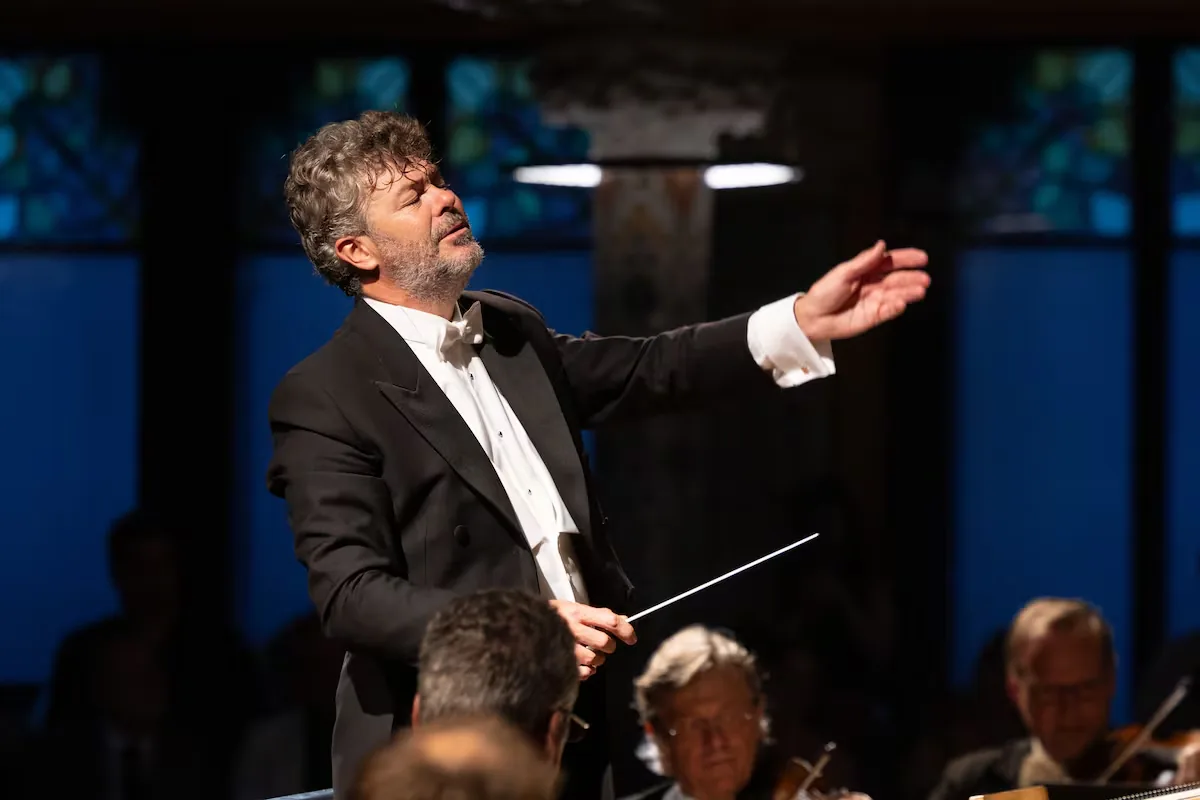
When Pablo first entered the mystical pit… It sounds like the beginning of a magical tale, doesn’t it? Well, that’s how it was. It happened in 2023 and since then he has been doing it for four years with more long-term projects. Now, let’s translate it as much as possible into reality: Pablo Heras-Casado is the Spanish conductor (Granada, 48 years old) and the mystical pit is the orchestra pit at the Bayreuth Festival, the temple of Wagnerianism worldwide, which takes place in a theater conceived by the composer to represent the total artwork he pursued in his operas.
In this story of Pablo in the mystical pit, elements of reality and fiction blend. When he took that space to which many of the greats in music history have not adapted, Heras-Casado fulfilled a dream he hadn’t even dared to project when he was young. To begin with, he has been the only Spanish conductor to have worked at Bayreuth — except for the special recognition when tenor Plácido Domingo conducted Die Walküre in 2018 — no one had had that privilege. Now he has embarked on a tour of Spain that began on the 29th in Barcelona, stopped on the 31st in Cantabria to close the 75th edition of the Santander International Festival, and continues the rest of the week through Seville, Madrid, and Valencia, with the orchestra that year after year meets in the mystical pit.
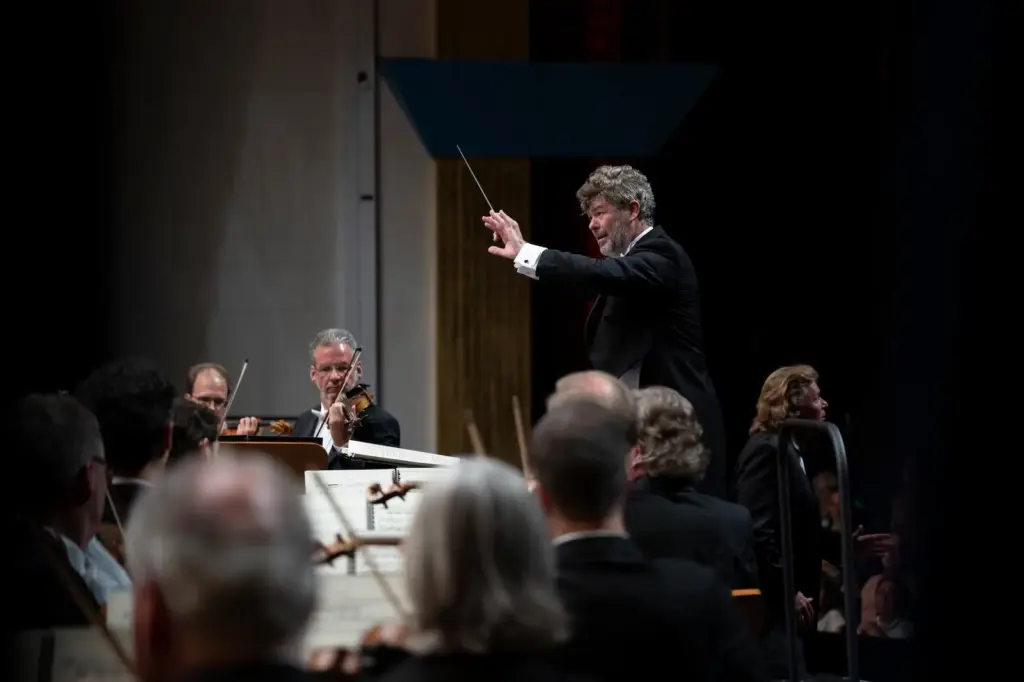
His career has been measured steps in different fields. The young musician from Granada who created a baroque choir at 18, studied Art History in his city, was the grandson of a shoemaker in the Albaicín, son of a national police officer and a housewife, explored contemporary music alongside Pierre Boulez in Lucerne and Paris, had the trust of Gerard Mortier at the Bastille Opera and the Royal Theater of Madrid, is today a reference in the Wagnerian repertoire with frequent appearances of the German composer’s operas in Vienna, Paris, Munich, and, of course, Bayreuth, where he has conducted 22 performances of Parsifal and has the commission to undertake the musical direction for a new production of the Ring Cycle in 2028.
Being the first Spaniard to descend into the mystical pit does not give him any chills: “It’s something I don’t think about at the moment of making music,” he assures in Santander. That cavity 14 meters wide by 11 long houses up to 120 musicians tightly packed who can endure the four, five, or six hours that any Wagner title can last and has a specific design for its acoustic conditions. It is covered. The stage is not visible, so the balance between the singers and the conductor is difficult and must be synchronized differently. “But that’s how the composer wanted it so that no element would distract the audience from what was happening on stage,” justifies Heras-Casado.
It’s not comfortable and lends itself to continuous uncertainties that must be measured rehearsal after rehearsal. You adapt to it or not. It is designed for bold spirits. And yet, some cannot endure it. A great Wagner expert like the Hungarian Georg Solti could not, and although he suggested uncovering the space, the Wagner family invited him to leave. If you don’t like it…
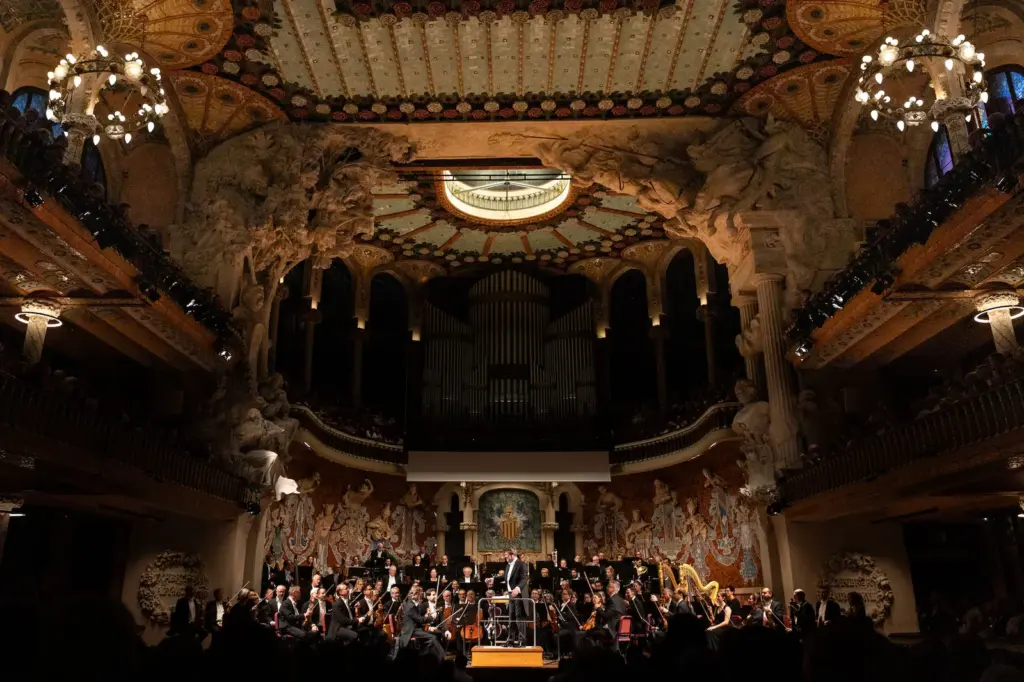
Pablo Heras-Casado fit in. Not only in the pit. Also with the orchestra. “When they were offered to go on tour, they said they wanted to do it with me. An honor,” he assures. And this was evident in Santander last Monday with an enthusiastic and joyful rapport in the repertoire from which Heras-Casado drew dynamics, power, dimensions of the world centered on the universe of The Ring, which thrilled the audience. It serves as a prologue to the entire tetralogy, the four titles, the 16 hours of music they will tackle together in 2028 and of which they gave a sample with passages from Das Rheingold, Die Walküre, Siegfried, and Götterdämmerung alongside three exceptional voices also involved in the tour: soprano Catherine Foster, tenor Klaus Florian Vogt, and baritone Jonathan Brownlee.
All, this time, on stage. Singers in the foreground and musicians in view. Not locked in their pit. Free, liberated from the mysterious aura of that nook where Heras-Casado knows how to enjoy their company: “The first time I entered, I felt great respect, I was entering a sacred, legendary place, with complex, peculiar acoustic qualities, where you must play in a unique way and those who do it generation after generation know how to convey its importance in a certain way. Despite its complexities, it is the place where I feel happiest making music,” says Heras-Casado.
Read more Riki Blanco: content and container
His Wagnerian journey began in 2016 at the Royal Theater of Madrid with a The Flying Dutchman directed on stage by Álex Ollé, from La Fura dels Baus. Then came his first Ring Cycle also at the same theater alongside Robert Carsen. That launched him because Katharina Wagner, great-granddaughter of the composer and current director of Bayreuth, heard a recording of it and invited him to the festival. “My understanding with her has since been based on an unbreakable mutual respect,” he states. “It had to then move to complicity with the orchestra and that is key to strengthening the relationship there.”
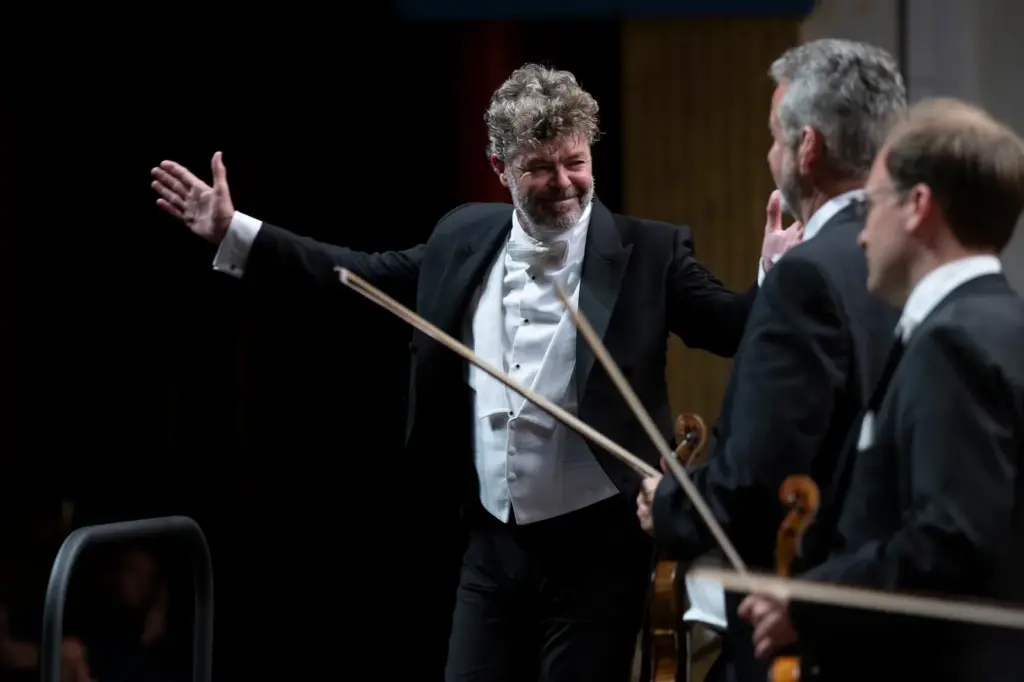
Today it is a fixed place for his summers and fundamental in his personal and artistic growth. Every time he descends the stairs of the pit to one and a half meters from the stage he feels better and more connected to that universe. To a whole wealth that systematically serves as a guide to understand through a complex artistic ambition keys capable of perfectly connecting with the darkness of the past and also of today’s world. “We grow by deepening into his operas, I feel it very palpably. That’s how I feel every time I face some of his titles. In both a physical and mystical dimension,” he states.
The demand, the devotion that Wagner pursues in his prophets and disciples is total: “You must give yourself to it because if you don’t do it body and soul, you don’t survive, you fail,” says Heras-Casado. “It demands the greatest challenge at a dramatic, aesthetic level. Something extreme for the artists and for the audience’s endurance. Wagner knew it, that’s how he established it. It is one of the keys for the fascination with his music not to decline. I firmly believe it,” he assures.
Why? “It accompanies you throughout life as an element of continuous transformation,” he adds. “My fascination never decreases. He predicted from a lyrical, dramatic, and mythological point of view, in a sublime and terrible way, modernity. He foresaw what we were heading for with our greatness, necessary balances, and miseries. He was not wrong.” So much has been written, from all perspectives, about his work… We have interpretations beyond art and music: in the social, political, ecological sphere… His footprint traces an inexhaustible legacy ready to explain each era, according to the Andalusian musician. “He draws such accurate parallels through symbols and myths that are capable of exemplifying the modern world with all its harshness. He has only been right with his predictions about self-destruction and what derives from it. That’s why I understand that thousands of people are willing to pilgrimage every year to Bayreuth to listen to it.”
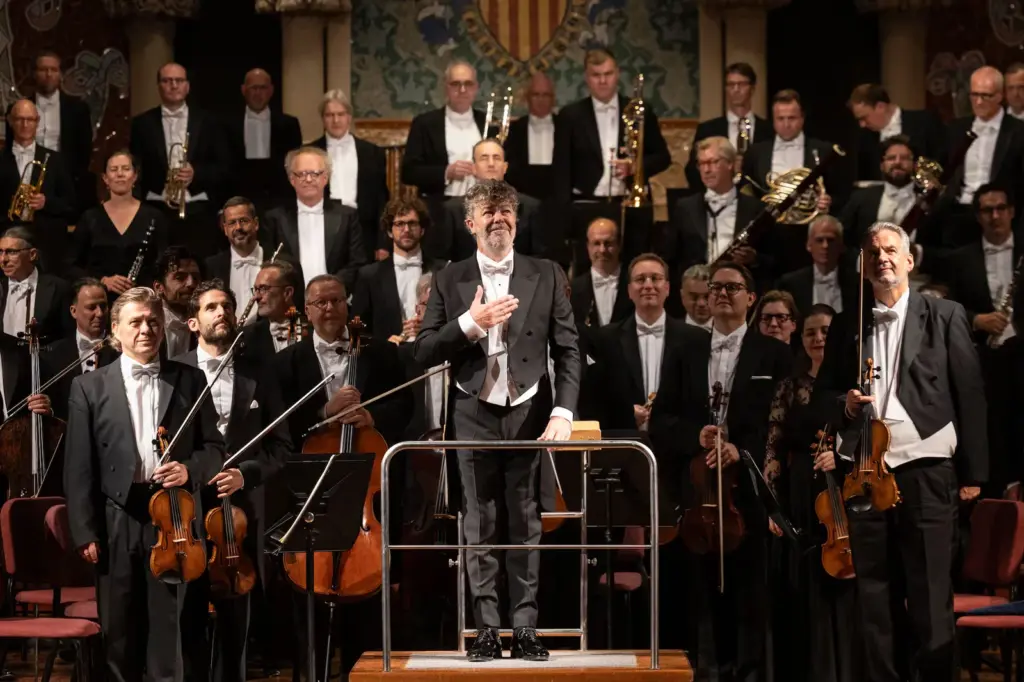
Pablo’s tale in the mystical pit does not end in Germany thanks to a magnetic and visionary power like Richard Wagner’s. In Santander, it expanded last Monday to another recognition on the first day he arrived in the city. He received the Barraca Award there, a prize given by the Menéndez Pelayo International University in memory of a fellow Granadan: Federico García Lorca. The poet was there during 1934 and 1935 with his itinerant theater group. It was presented to him in a ceremony by the rector, Ángel Pelayo, and the vice-rector of culture, Paloma Ortiz de Urbina.
The musician thanked it as a Lorca devotee, deeply knowledgeable of his brilliant fellow countryman when he fulfilled another dream by conducting in 2015 the opera that Mauricio Sotelo composed about El público, that title by the immense and universal creator that marked Heras-Casado before his intense Wagnerian journey. Perhaps it is the best contemporary Spanish opera premiered so far this century, but that would be another story…