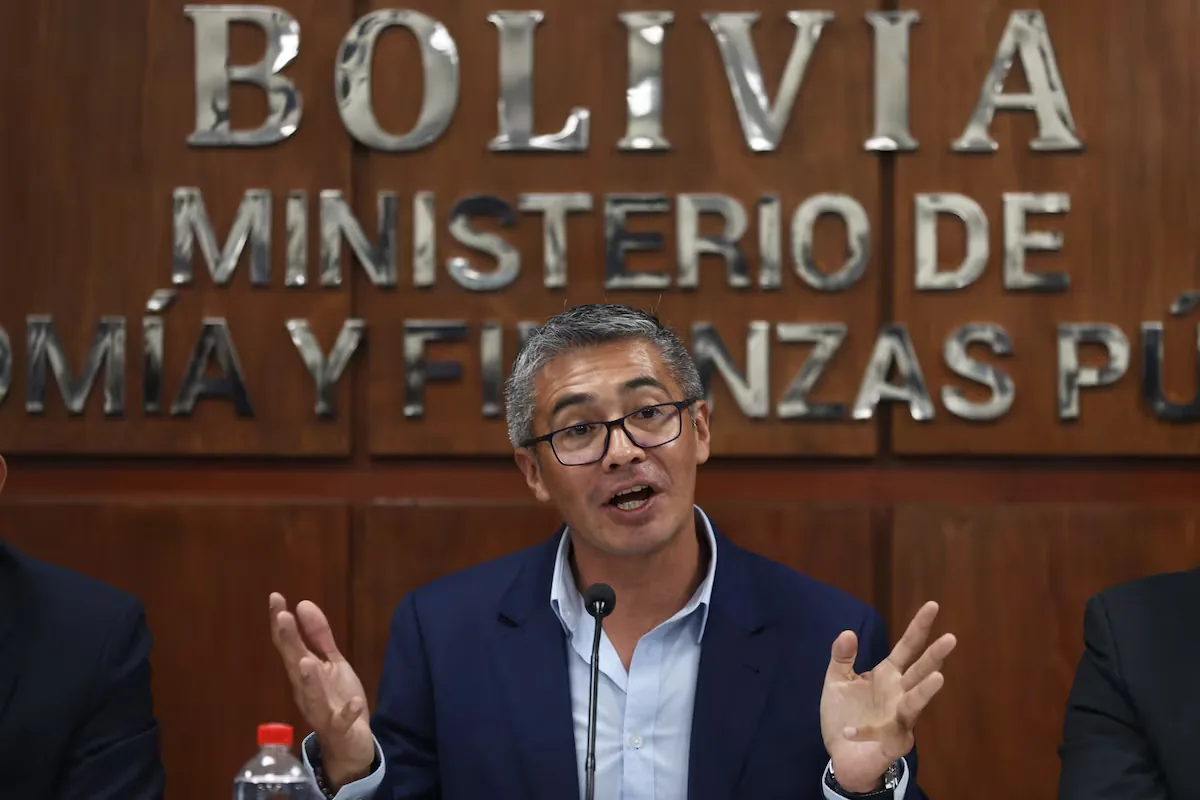
Bolivia’s president, Rodrigo Paz, dismissed his Minister of Economy, José Gabriel Espinoza, this Friday. He made the decision after the Assembly censured Espinoza on Tuesday, with two-thirds of the votes, for not appearing before the legislators to explain the Government’s economic policies in the face of the economic crisis, a constitutional obligation. The minister was also hit by the controversy over the purchase of a luxury truck that allegedly was registered at a price below the market to evade taxes.
Paz has signed a decree that formalizes the dismissal and has appointed as replacement the person who until this Friday was the head of the Ministry of Sustainable Production, Environment and Water, Óscar Justiniano.
Espinoza had tried to remain in office by filing an amparo action before the Constitutional Court against the legislative censure, arguing that only 129 of the 166 members of the legislative body were present at Tuesday’s Congress session. The strategy was unsuccessful.
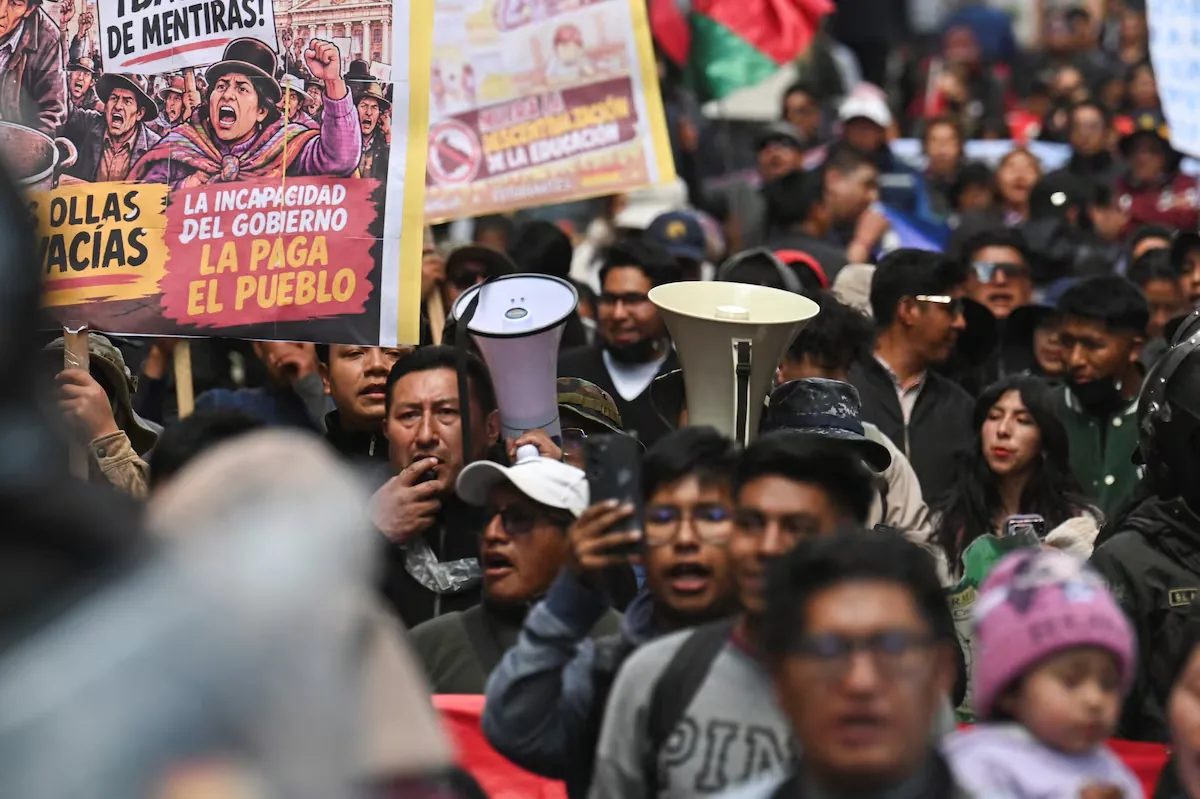
The assembly members summoned Espinoza on August 18 to question the policies with which the Government is facing Bolivia’s economic recession, the worst in South America, and the shortage of dollars. The now former minister was in the eye of the storm when he invalidated bills from series B for a few days after a plane carrying 50 million bolivianos (more than 4 million dollars) crashed and passersby collected some of the money. He was also questioned for the new dollar exchange rate, which changed from fixed to flexible, causing in the first month a devaluation of the Bolivian currency of up to 25%. The trend reversed two weeks ago following the announcement of an IMF loan and a new monetary policy.
Espinoza claimed a trip to Santa Cruz and Brazil to avoid appearing for the interpellation. The Assembly rejected the justification given by the minister and then voted to censure him.
Read more Why is a man being tried for the murder of rapper Tupac Shakur 30 years after his murder?
This is the seventh resignation or dismissal of a minister since Paz appointed his first cabinet last November 9. Of the 15 authorities who took office that day, only five remain.
Espinoza’s resignation occurs when relations between the Executive and Legislative branches are not at their best. The assembly members felt offended when Paz, in his speech for Bolivia’s independence anniversary on August 6, stated that to pass structural laws he would negotiate “with individuals, not between organizations or political leaders, as corresponds to a serious democracy.” Likewise, although the party that brought him to the presidency, the Christian Democratic Party (PDC), holds the majority in Parliament, not all its members respond to his orders. The PDC in the Assembly is divided between those who support the president; others who follow the vice president, Edmand Lara (separated from Paz since December); and those who claim loyalty to the structure of the long-standing party.
The second largest bloc, Libre, is led by the conservative Jorge Tuto Quiroga, who was his rival in the second round of last year’s presidential elections. Meanwhile, the third bloc, Unidad, led by businessman Samuel Doria Medina, recently withdrew the support it had shown in the first months of the administration. The legislative body is one of the public institutions that most pressures Paz to clarify the functions performed within the State by his Argentine advisor, Fernando Cerimedo, accused of attempted femicide.