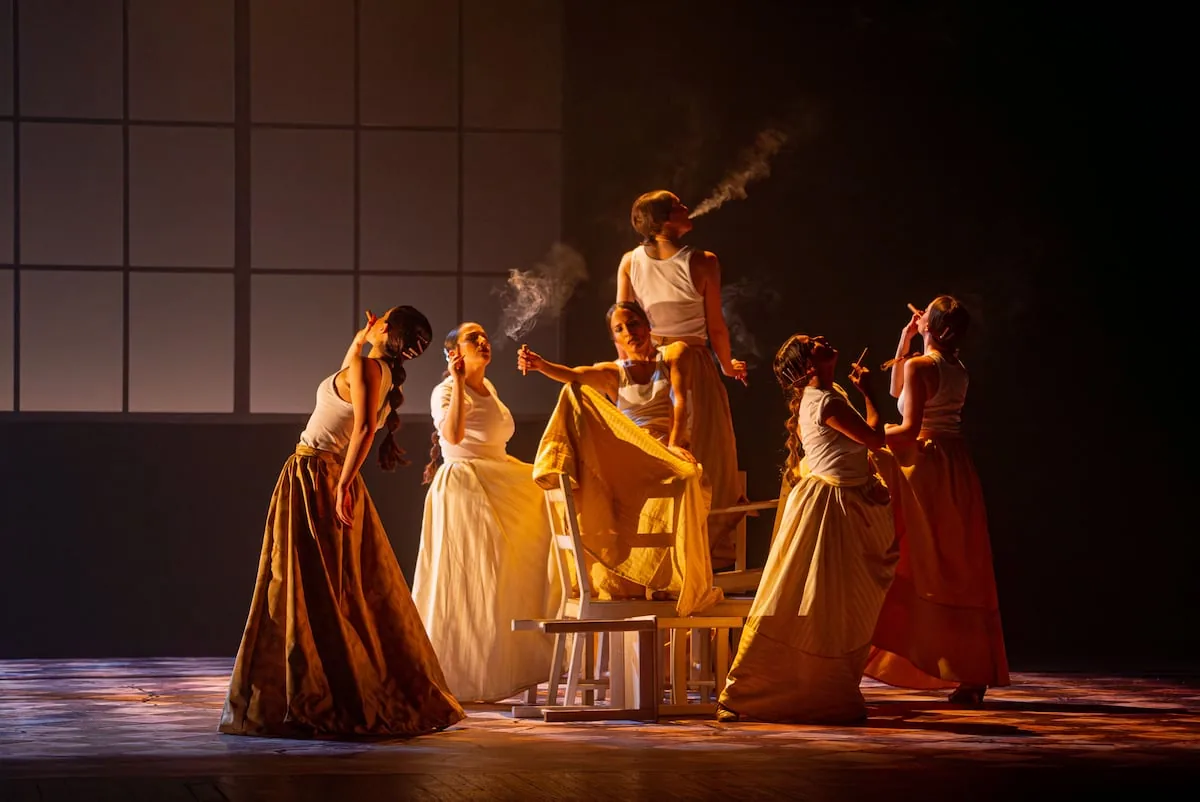




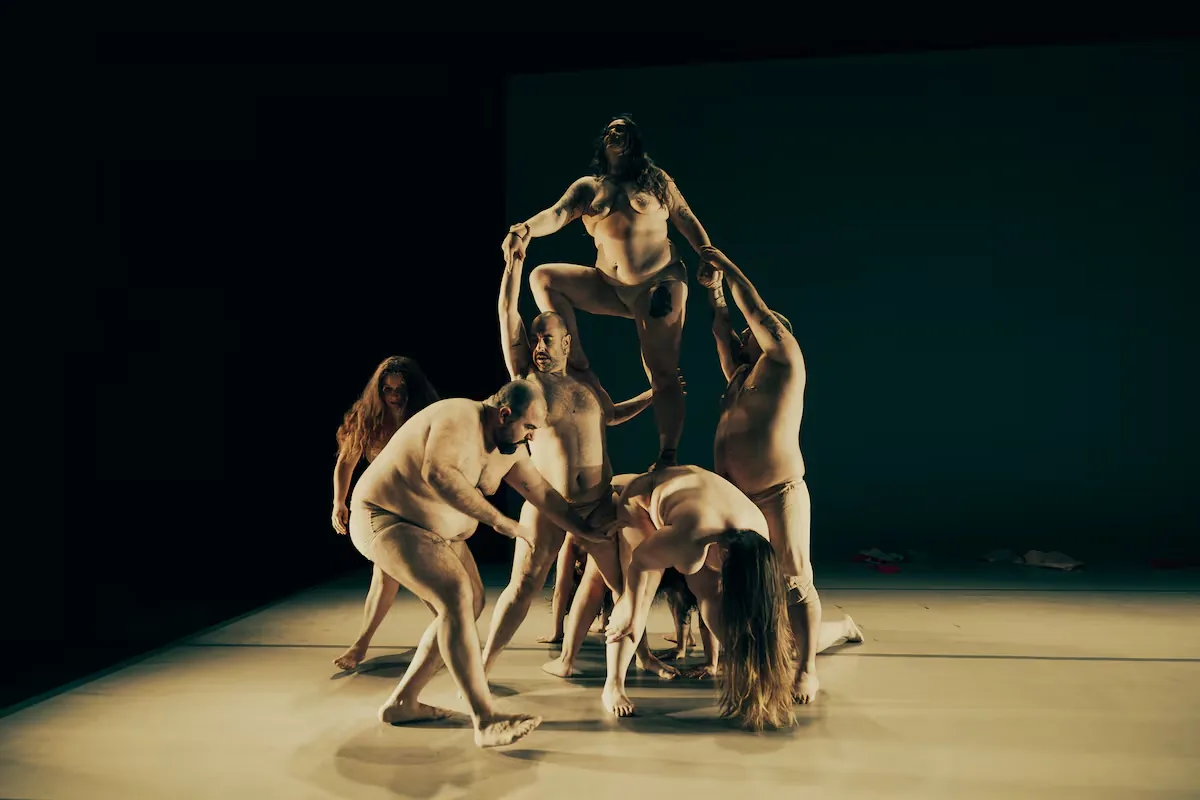
There is a phrase written by Alberto Velasco in the program booklet that could well summarize the show Sacresize: “A body dances and is celebrated. And that’s it.” The statement works as a basic declaration and puts the seal on everything written earlier in that program, about “a dance piece with exclusively fat bodies.” But if that “that’s it” is reread after having seen the work, it can sound like justification, clarification, and even defense, in case someone expected something more. Which it turns out to be.
Read more ‘The Burnt Garden’: Juan Mayorga elevates historical memory to theatrical tragedy
The concept of Sacresize is powerful. Bringing together on stage a group of people with fat bodies dancing together contains appeal and dissent, activism and denunciation. It opens a necessary and unusual space to show and claim from the dance stage. Because if the imperative of a normative physique is imposed in any situation and context, let alone in the arts of movement, still subjected to old rigid and archaic structures.
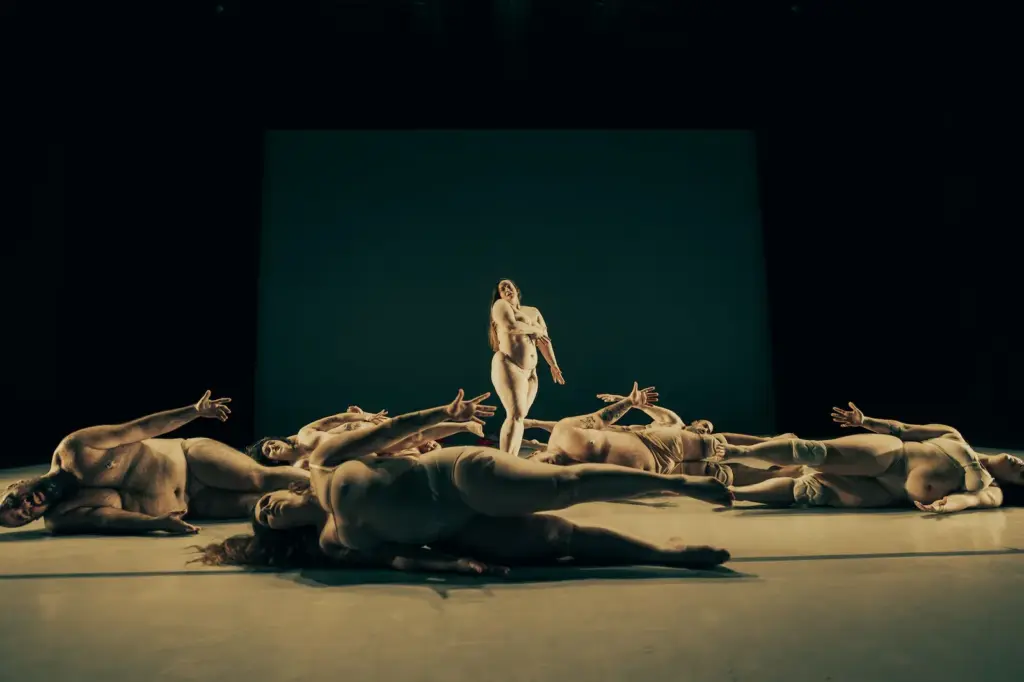
On the bodily level, Velasco also proposes something usually rejected, which is of great beauty: the bounce of a fat body when it moves in a certain way. He began working on it in his previous show, Move Mountains, and even then it crystallized as one of the peak and most interesting scenes. Because of the proposal itself, with Velasco wearing a sweaty shirt pulled up covering his face, while his torso vibrated showing what he calls “fatness”; and because of the challenge he threw to the audience to hold the scene without looking away.
In Sacresize, this collective bounce of eight bodies in unison, while Stravinsky’s The Rite of Spring plays, crosses great moments. Like when the semi-naked performers standing together in a block look straight and challengingly at the audience. It is undoubtedly the choreographic proposition that truly conveys Velasco’s purpose with maturity and scenic depth. But it lasts little, not even a minute, and only occurs three or four times in the hour-long show. The bounce is a choreographic proposal of great depth due to all the information (visual, scenic, and social) it contains. And if it ran throughout the work from the choreographic perspective, as a true discursive premise, it would gain in depth and solidity, but it remains a mere promise.
By the way, this bounce of the group of dancers already appeared in The Rite of Spring, by Pina Bausch. A classic in the history of dance, premiered in 1975, which Velasco has confessed to feeling fascinated by on several occasions. Another scene from Pina Bausch’s The Rite is also reproduced in Sacresize, such as when the performers run as a group in the same way; or the reference of the costumes, in flesh tones and reds, also like Bausch’s production. It is surely Velasco’s tribute to the work of the German choreographer, but the similarities are so evident in these described aspects that it should be mentioned in the program.
Read more ‘A good life’: compassion, tenderness, and firmness
Divided into prologue, first, second, and third parts, it is the second part of the show that accumulates a more reflective voice and where the performers shine with their own identity, especially actors Juanki Fernández and Jack Gómez, who perform two unexpected and powerful solos. Gómez’s comes almost at the end of the show and also feels too short. Actress Esperanza Guardado stands out throughout the work with fundamental strength and presence, full of concentration and commitment to the scenic act, more fragile in other performers. Stage director Carlota Ferrer also participates in the cast, which apparently will change depending on the city where it is shown, to participate with local performers and open new spaces of scenic activism to combat fatphobia.
The third part, whose purpose is to address the audience, thus proposing a new form of inclusion, which is entirely relevant and interesting, is overshadowed by how it is articulated and underlines that too explicit naive atmosphere that crosses most of Sacresize.
Sacresize
Original idea, choreography, and staging: Alberto Velasco
Double choreography. Size (20 minutes) and Sacre (35 minutes).
Cast: Esperanza Guardado, Juanki Fernández, Carlota Ferrer, Jack Gómez, Fiona Orioli, Lucia Palacios, Vicki Schmidt, and Alberto Velasco.
Read more The theater and dance premieres of the week
Teatros del Canal. Madrid.
Until June 7.