









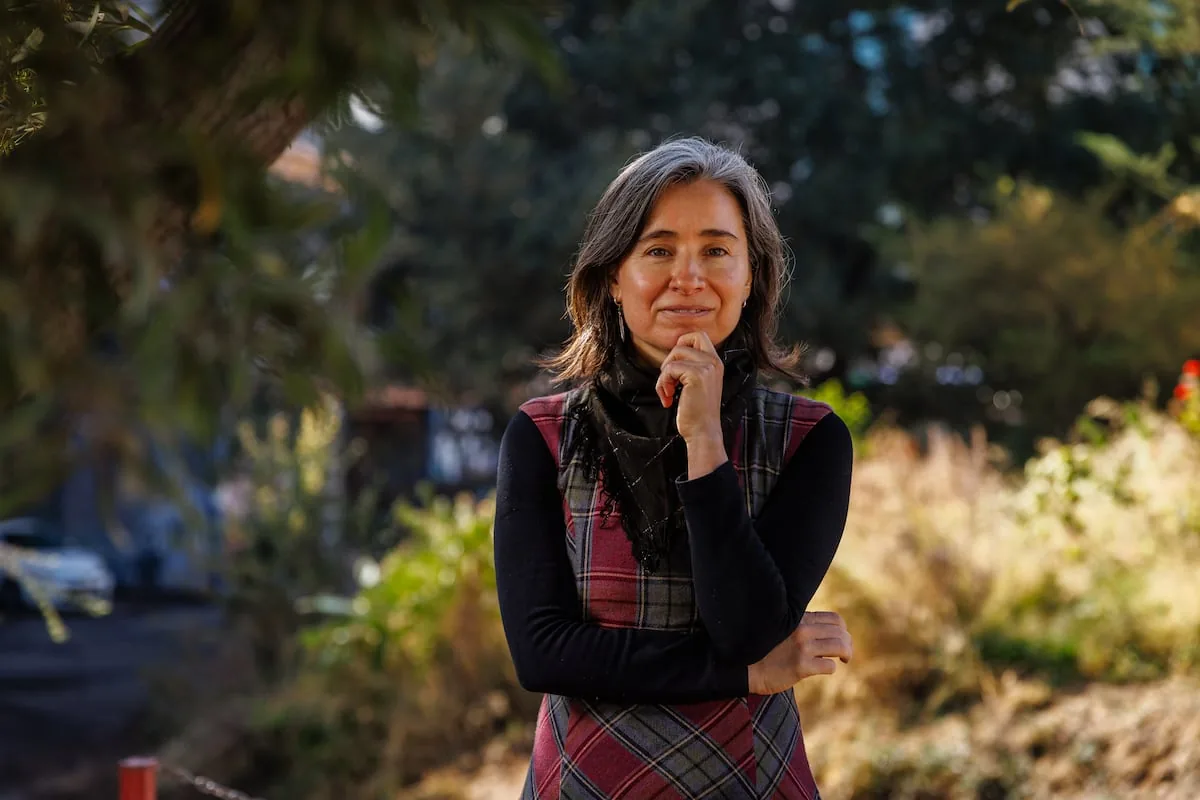
The path leading to La naturaleza encasillada. Una revisión de hábitos mentales para una ética de la sobrevivencia (FCE, 2025), an essayistic book by Sandra Baquedano Jer (Valparaíso, 46 years old), full professor at the Department of Philosophy of the University of Chile, has several stations. Perhaps the first of them is the Biobío River basin, in the region of the same name, about 500 kilometers south of Santiago. The future academic and essayist arrived there in the mid-90s, then a high school student mobilized in opposition to the hydroelectric projects that had begun to develop there.
“I had to live closely the construction of the hydroelectric plants,” she says, settled in her office on the fifth floor of the Faculty of Philosophy and Humanities, itself located on the Juan Gómez Millas campus, Ñuñoa commune, east of Santiago. And she adds: “I found out what was happening at that time and was able to get to know closely the reality of the Pehuenches [mountain people integrated into the Mapuche ethnicity], the displacement that occurred in these communities.”
Much later stations were the University of Leipzig, where she earned her doctorate with a thesis on the concept of nothing in Arthur Schopenhauer’s metaphysical system, as well as expeditions into the idea of compassion, eco-ethics, the nature of suicide, and contemporary environmental philosophy. In this last line, she has made use of terms that have strongly emerged in certain cultural and academic circles, such as Anthropocene (a geological epoch characterized by the impact and dominance of human activities on the planet), speciesism (discrimination based on species), and ecocide, understood as a massive process of species extinction caused by humans. And if the latter can be turned against those who cause it, she speaks of ecosuicide (as well as ecosuicidology).
“A global force ecocidal agent,” the author writes in the sixth chapter, “human beings, through mental habits and concrete behaviors, are perpetrating a great mass extinction event of species, becoming not only a powerful agent capable of making transformations on a geological scale but one that can exterminate itself through its acts.”
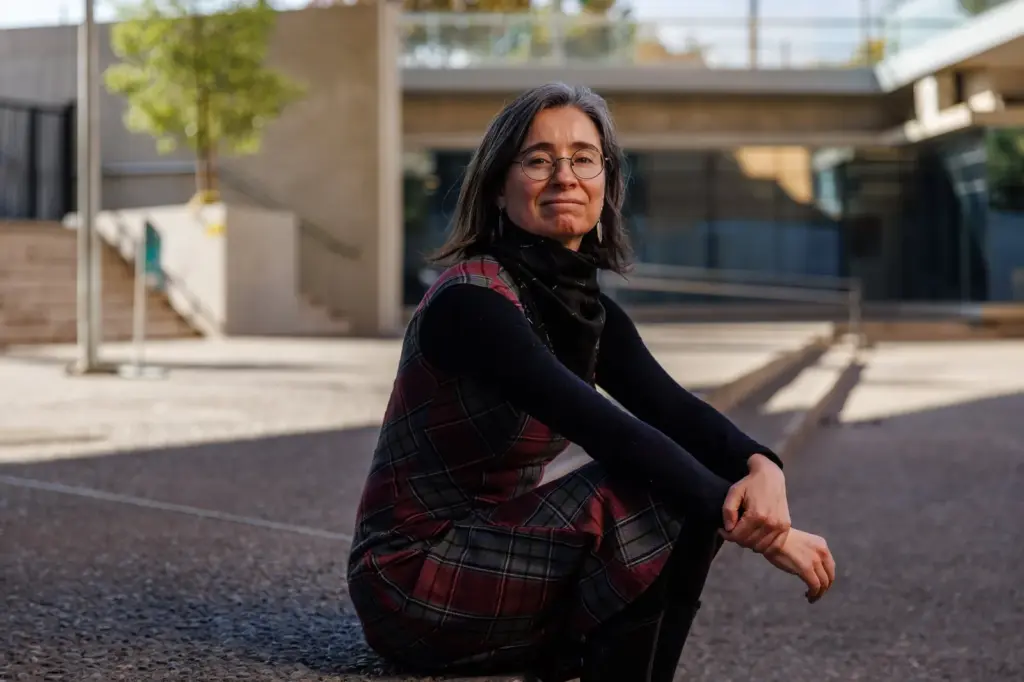
A defender of a feminine ethos inclined to care for and conserve nature, the academic reviews in her work the different human ways of appropriating the environment, measuring it, and using it to satisfy their own ends and understanding it as something at their disposal, as if there were no other purposes or possibilities in it: in modernity, she states, “Western tradition elevates to the level of philosophical wisdom having a rather instrumental and functional view of nature.”
How does she come to frame things in these terms? Between serenity and conviction, she says that in her case there was an interest in phenomena such as “suffering in the world”: “I found it interesting to investigate the fact that it is not only something that humans can feel, but that it is possibly extendable to other species. That’s when I began to research speciesism, animal ethics, environmental ethics, that is, not only focused on relationships among human beings.” And such an approach, she clarifies, “does not necessarily come through philosophical works, but from the problems of life itself, from a rather intuitive, direct approach.”
Once sentience (the condition of beings, human or not, capable of feeling) is established in her discourse, Baquedano adds the “very beautiful” and “very profound” issue of compassion, understood as a feeling “very different from pity,” which “has to do with a personal discomfort for the pain or suffering of the other.” Her idea is to understand compassion as “forgetting oneself and letting oneself be carried away by the suffering of the other.”
Thus, “there can also be an extensive compassion: a deeper state of consciousness in which one identifies with the suffering of the other. I am thinking of an openness to the mystery of suffering in non-human species; a disposition that seeks active compassion, that is, that leads to undertaking actions with the intention of lessening the pain of the other. It is a very positive trait of human beings, and it would be wonderful if it were more present in the relationships we establish with other beings.”
Read more The set that cyclists choose this spring: lightweight, breathable, and a bestseller on Amazon
So to speak, it is not all about us, human beings, so we should not be the center of all things, even when we have attributed ourselves to be created “in the image and likeness” of a divine entity (this is where the theonar-cissism discussed in La naturaleza encasillada comes in). It has been heard a thousand times, but it is worth insisting, the essayist seems to think, who thus questions the ancient maxim of Protagoras: man (the human individual) “is the measure of all things.”
Of course, there are more ways to approach the matter. “I am thinking, for example, of the weakening of the belief that human beings are the exclusive center of aesthetic experience, or the opening to the non-instrumental sensitivity of nature in a disinterested sense, or seeing the environment as a co-agent of aesthetic experience. All these are ways out that can help to remove our anthropocentrism.”
Baquedano concedes, having said the above, that there is an epistemic anthropocentrism: that “we cannot get out of the perception of the world derived from us. We are human beings, and so we look with the eyes of a human being. But it is different when that anthropocentrism is elevated to a moral level. There, we begin to organize ourselves functionally, to think that the rest of the species were created to serve us, or simply to use them as mere means, without considering that they are ends in themselves, that they have intrinsic value beyond what I can grant them.”
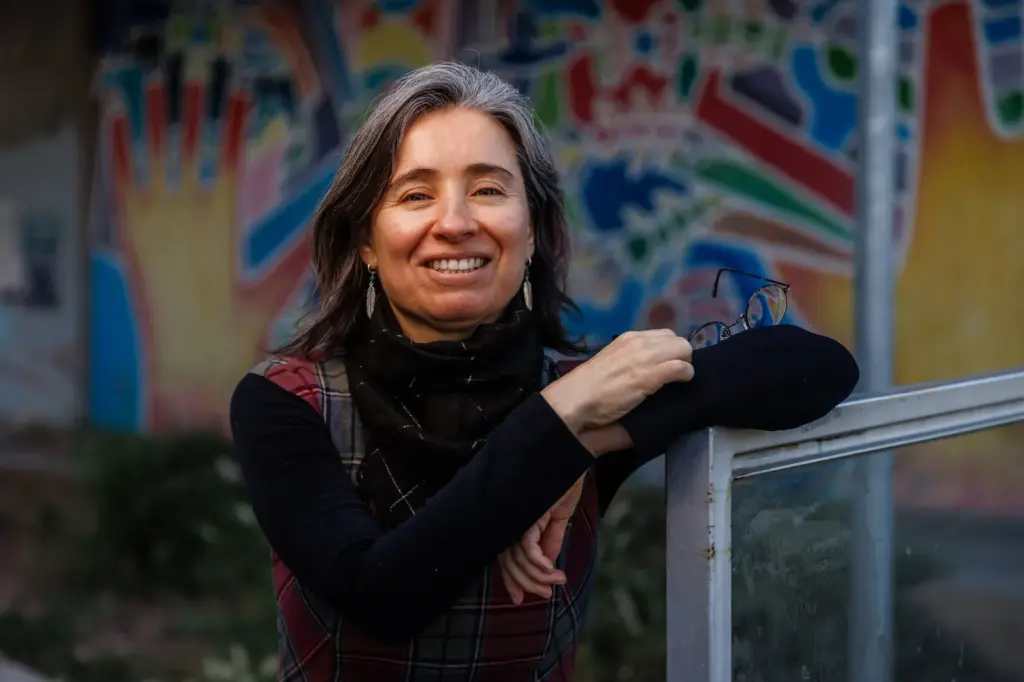
The latter runs into a topic that in 2022 transcended academic discussion and was installed amid the campaign for the plebiscite for a new Constitution: the rights of nature. In her opinion, this item “was the subject of a politicized discussion, but I think it should be a cross-cutting objective and, collectively, a country challenge: to promote and have less harmful relationships with the rest of living beings.”
As for each of us, the mentioned challenge involves “knowing our own mental habits to then be able to distance ourselves from them, little by little, as well as from forms of discrimination based on species or on anthropocentrism elevated to an ethical maximum.” It cannot be, Baquedano believes, “that the protection of animals or our forests depends on the government in power: we are not isolated individuals from the rest, but we come to be in our affective relationship with other living beings. With them, we collectively form ecosystems, share habitats where we develop.”
Therefore, “motives focused on caring for a single individual, member of a particular species, and that endorse different forms of discrimination against other living beings, end up affecting the entire ecosystem. We share the biosphere with the rest of the species, and including them in the ethical sphere would improve not only our relationship with them but also the very relationship we will have with the rest of the people.”
Read more To die and die and die… and die and die again until escaping hell