


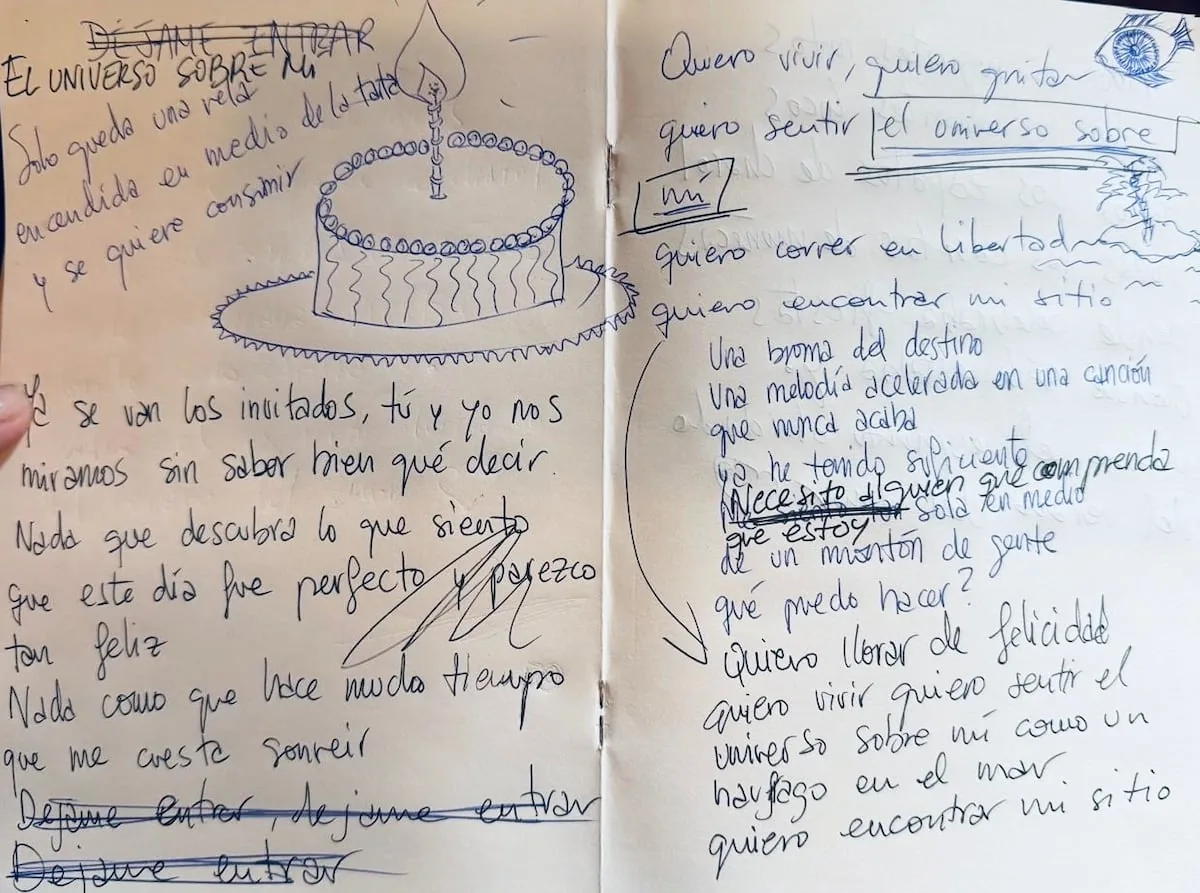
“I want to live / I want to shout / I want to feel / The universe over me / I want to run free / I want to find my place.” The chorus of what is probably Amaral’s most popular song, El universo sobre mí, released on the album Pájaros en la cabeza (2009), strings together metaphors about the loss of innocence or the loneliness felt by so many people in big cities. However, that song was originally called Déjame entrar. Those two words are crossed out at the beginning of the double page of the notebook in which the duo, formed by Eva Amaral and Juan Aguirre, wrote it. It is one of the surprises for visitors to the small exhibition hosted by the Instituto Cervantes in Madrid, titled Las mejores letras en español, with free admission until June 21.
Read more Secretary Markwayne Mullin warns that funds to pay DHS employees will run out in May
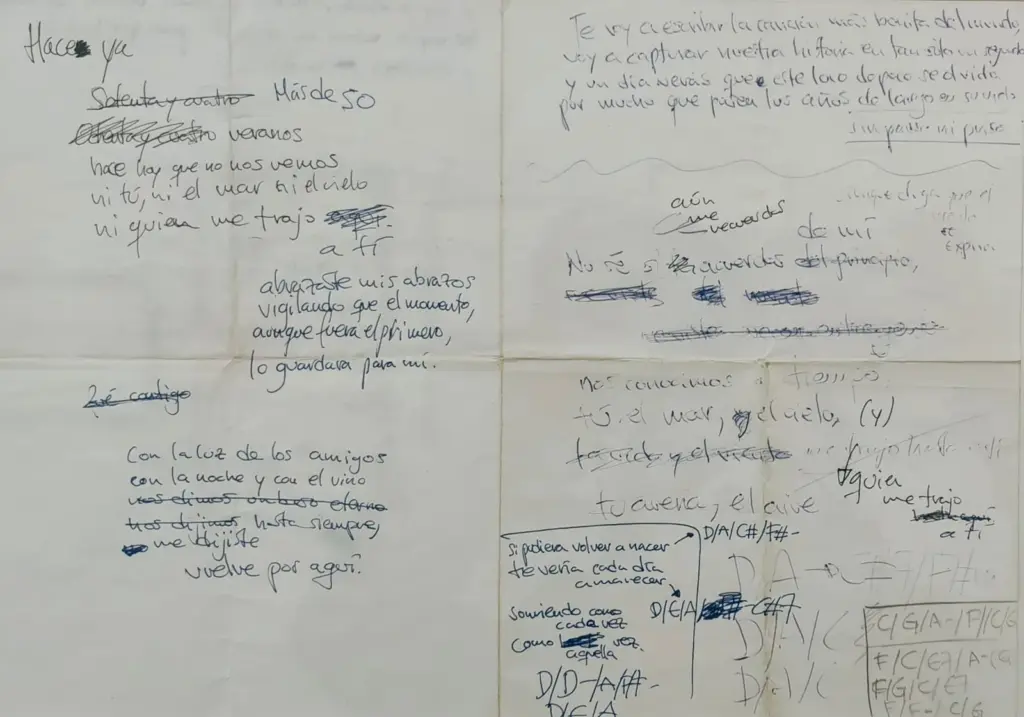
This exhibition brings together 42 song lyrics from the sixties to the present day. Almost all handwritten on sheets, notebooks, cardstock… they represent an emotional journey through Spanish music through different artists and genres; sounds and words that have accompanied several generations through good times and bad. Of El universo sobre mí, for example, Eva Amaral says: “It’s about wanting to find your place in the world and feeling life again, perhaps, with that intensity of childhood years.”
The idea of collecting these lyrics emerged in January. Since then, the organizers have contacted artists or their heirs to provide the original manuscripts. The exhibition, held on the occasion of International Spanish Language Day, April 23, is organized by the Cervantes Institute and Apple Music —Apple’s music streaming subscription service—. Beneath each of the lyrics, framed in glass, there is a brief explanation of the song and an Apple Music QR code which, when downloaded, allows listeners to hear the tracks and some authors or their relatives, explaining how they were composed. Thus, Pedro Guerra says that “pulling the thread” of the chorus of Contamíname “the rest of that song was built,” which, “in part,” he had composed thinking that Ana Belén and Víctor Manuel would sing it.
Among the selected artists are also José Luis Perales, with ¿Y cómo es él?, which was initially intended for Julio Iglesias, but “due to his company’s demands, he ended up recording it himself,” says the caption; Mari Trini (Dos errantes), Joaquín Sabina (Que se llama Soledad), Víctor Manuel (España camisa blanca), Miguel Ríos (Vuelvo a Granada), Antonio Vega (El sitio de mi recreo), La Oreja de Van Gogh (La playa), Vetusta Morla (Puñalada trapera), Nacho Vegas (Tiempo de lobos), Nacho Cano (Hoy no me puedo levantar), Rozalén (Entonces), Pau Donés (Te miro y te tiemblo), Luz Casal (Me voy a permitir) or the group Arde Bogotá. Precisely, from this rock band from Cartagena (Murcia Region) is the most recent song in the exhibition, Instrucciones, included in their upcoming album, scheduled for May, the organizers explain.
Before the inauguration, Carlos Vega, Antonio Vega’s brother (who passed away in 2009), spoke about El sitio de mi recreo, one of Antonio Vega’s anthems. Carlos had formed an acoustic duo with Antonio when they were kids. “He always showed me the songs he made.” Carlos Vega confesses how impressed he was when he heard this gem from his brother: “Of sun, wheat and desire / Are his hands in my hair / Of snow, hurricane and abysses / The place of my recreation.” “It came out in one go. It’s a lyric that defines his personality and in which I recognize him the most,” he notes. In this case, the clean copy of the lyrics on a sheet and a black cardstock on which Antonio Vega had written part of the song in different colors are contributed to the exhibition.
Read more The Kremlin will suspend the shipment of Kazakh oil to the refinery on which Berlin’s supply depends
How did Antonio Vega compose his songs? “He had no discipline, he was chaotic; but he was very experimental. The germ of his songs was always the music. Furthermore, the lyrics are very musical, meaning he was clear that the sound of the words should enhance the song. That’s not easy to achieve.” The result managed to “reach the depths of each person.”
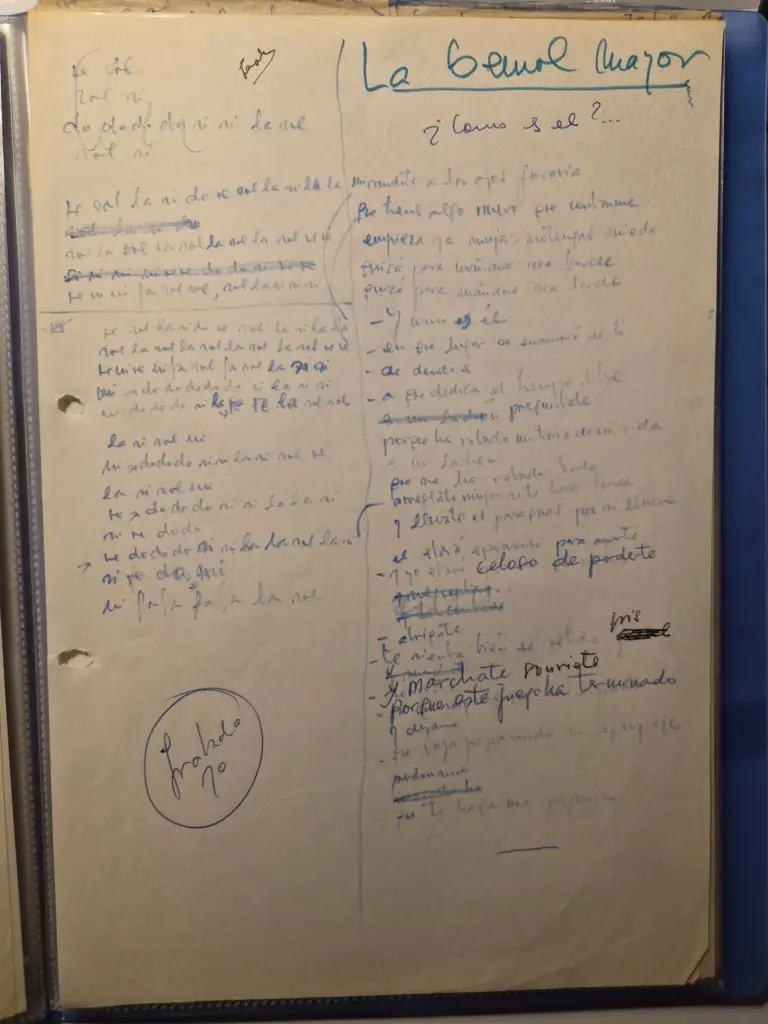
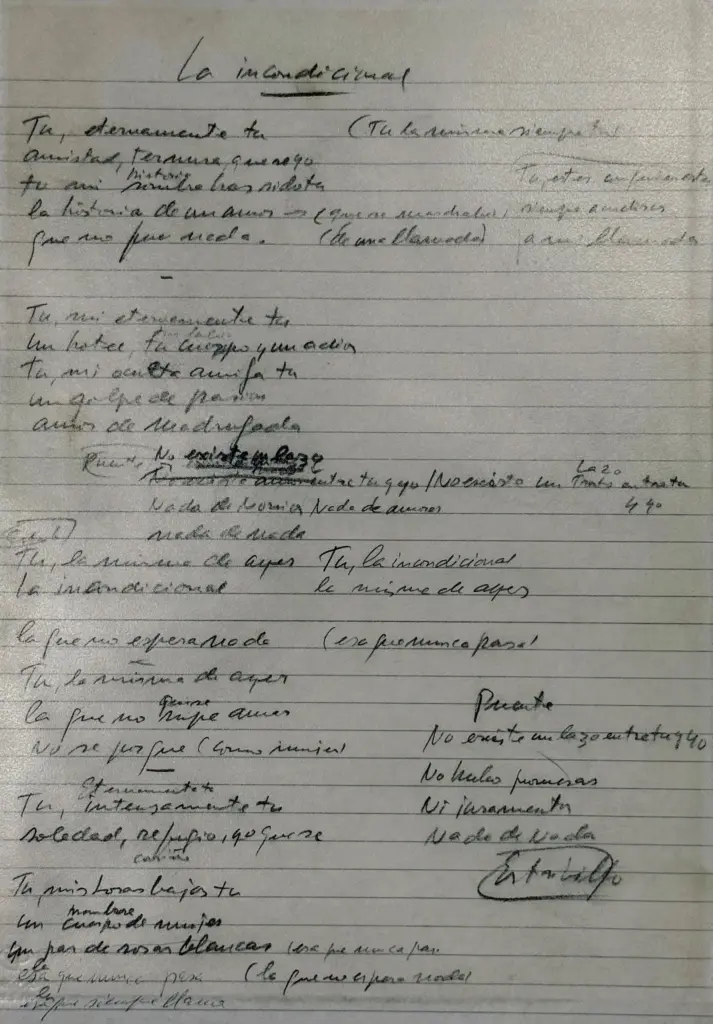
When contemplating the songs, one can intuit the creative process and the personality of their author. Thus, Miguel Ríos’ almost calligraphic handwriting, the numerous cross-outs by Xabi San Martín, of La Oreja de Van Gogh, on the sheets of La playa; Manolo García’s large handwriting or Rozalén’s tiny one.
Miguel Aute, on the phone, recalls when he used to pass by his father, Luis Eduardo Aute’s, study at home, and his father would be searching for muses. “I would hear him sing softly. He didn’t like to show what he composed until he considered both lyrics and music finished.” His son visualizes that study, “extremely ordered in its chaos; he used to say that everything was in perfect disorder.” From Aute, who passed away in 2020, the composition Mojándolo todo is included, on a sheet where the lyrics are accompanied by some children’s drawings by his daughter. “He worked from morning until night, only stopping to eat lunch and dinner,” adds his son, who announces that among his father’s legacy papers and objects there is a notebook with drawings and poems that he would like to publish one day.
More careless were the brothers David and José Manuel Muñoz, Estopa, whose lyrics for Pesadilla familiar are included, which they scribbled on whatever they had at hand at the time, a sheet from a Seat notepad, the company where they worked. And more formally, typewritten on a musical score, the classic Se nos rompió el amor, which composer Manuel Alejandro orchestrated with his wife, Ana Magdalena. The song was immortalized by Rocío Jurado in her album Paloma brava (1985), with her volcanic interpretation. It’s impossible not to remember her when one reads on the wall: “Our love broke / from using it so much.”