





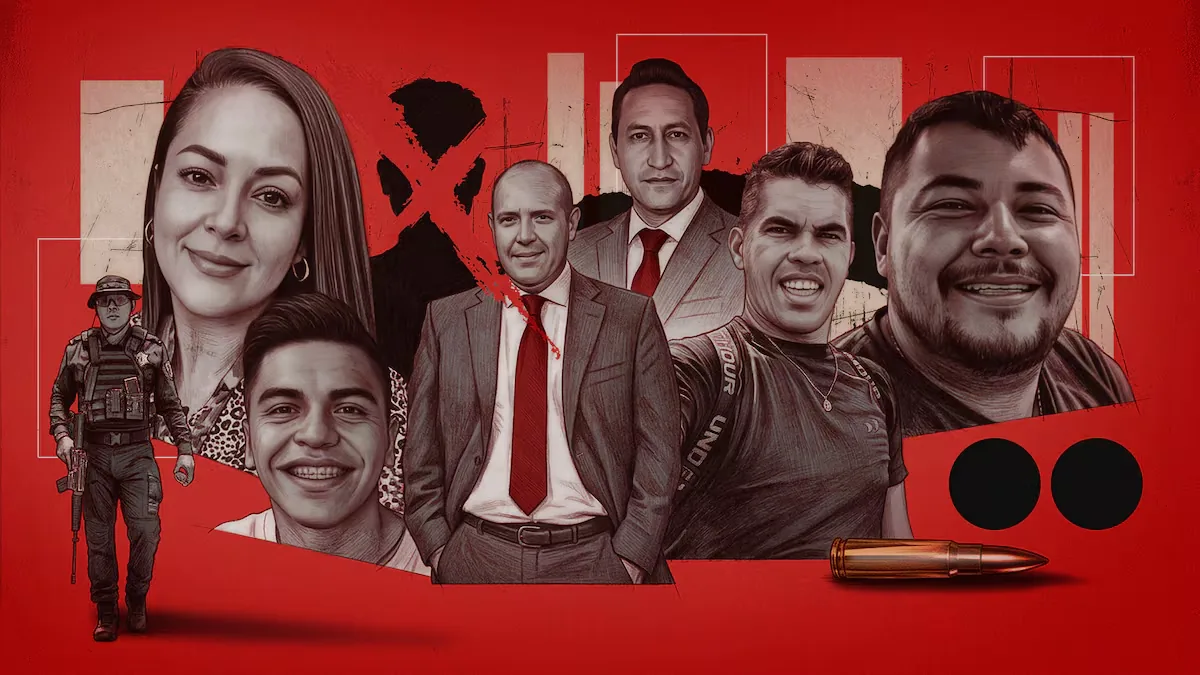
Francisco Alejandro Leyva Aguilar was killed while he was eating. He was murdered when his back was to the street. He was shot directly in the head and he couldn’t even see his attackers; perhaps he didn’t hear them approach either. Leyva Aguilar, at 60 years old, with a long professional career in Oaxaca media characterized by his fierce criticism of Morena governments, has become the seventh journalist murdered in Mexico this year alone. As in all other cases, authorities have assured that Leyva’s case “would be investigated.” From Palacio Nacional, President Claudia Sheinbaum, in a brief and repetitive response, has assured that she has instructed her cabinet to address the matter. However, the seven cases share something in common: impunity. “We are not just talking about the number of journalists murdered, but about a context in which threats, physical attacks, disappearances, stigmatization campaigns persist, and all of this is protected by an impunity that continues to send the message that attacking the press has no consequences,” explains Mariana Suárez, protection coordinator for Article 19 in Mexico and Central America.
Read more La promesa de la guerra total y el pospetrismo
“It’s not a sum of cases; all of this becomes a pattern,” she specifies. They received prior threats through different means, and some of them had received protection measures for previous complaints, without that meaning anything to keep them alive. Most of the victims were dedicated to uncovering cases of political corruption and insecurity problems.
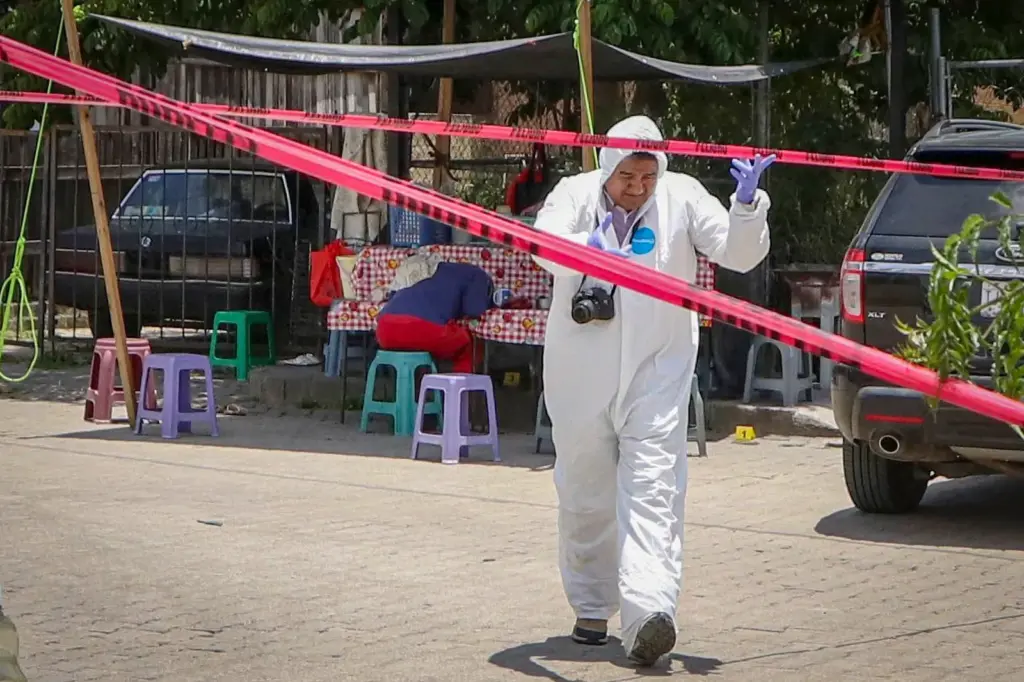
‘The Buzz of the Gadfly’
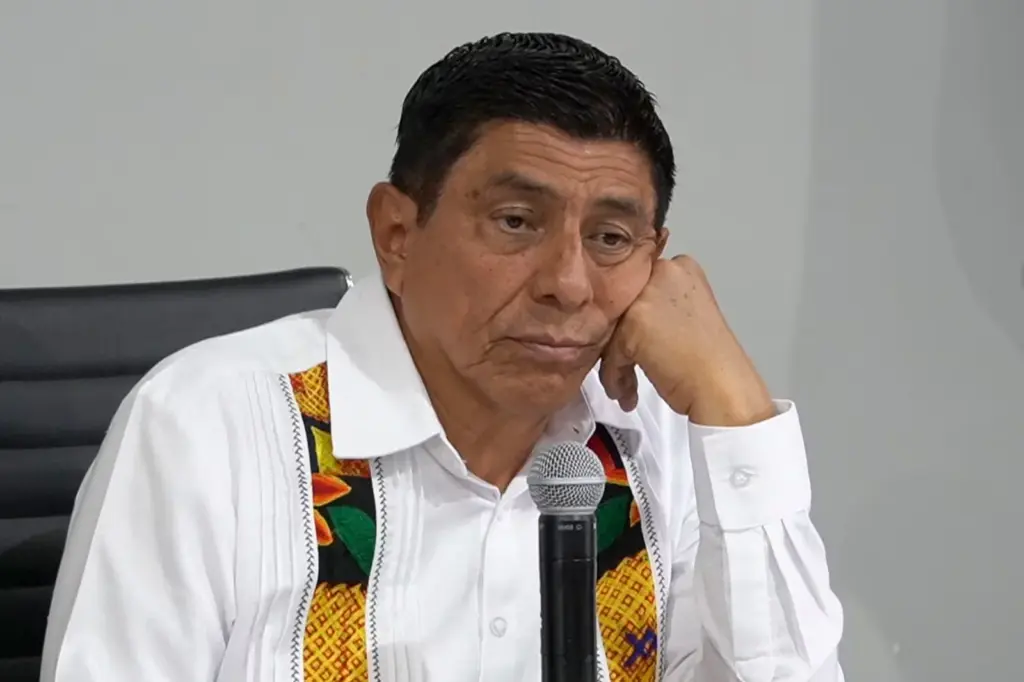
Leyva Aguilar wrote the column El zumbido del Moscardón, which he also shared on his TikTok account. Thanks to that record, it is known that in November 2025, the journalist, a father of two, a loving brother and son, a lover of reading and poetry, warned on that social network that if anything happened to him or his family, he would hold the governor of Oaxaca, Morenista Salomón Jara, his Government Secretary, Jesús Romero, and the state government’s legal advisor, Geovany Vásquez Sagrero, responsible. All from the Morenista administration governing that State.
In his last video, Leyva Aguilar recommended his column of the day and announced that it contained information about “Governor Salomón Jara’s permissiveness in institutionalizing crime” through his brother, Noé Jara, and the ASAEO, Alliance of Unions and Associations of the State of Oaxaca, for alleged extortions. In other previous content, he also accused the governor of having “the narco up to his nose” in his administration, which, he said, explained the increase in violence in the State. He had also criticized the organization of the Traditional Folkloric Festival of Guelaguetza, its low attendance, and the possible links, he denounced, between the Ministry of Tourism and organized crime.
Governor Jara said this Friday that he is willing to testify if the Oaxaca Prosecutor’s Office summons him to take his statement. Regarding what Leyva said in his column, he assured: “There is no element to support such an incriminating assertion; the Prosecutor’s Office must determine responsibilities.” Local authorities released videos of the moments prior to the attack on July 22, in which at least three men and a motorcycle are implicated in the murder. One of them, before shooting, makes a call on his cell phone.
Reporters Without Borders (RSF) documented that on July 14, 2025, Leyva went to the Oaxaca People’s Human Rights Ombudsman’s Office to file a complaint after receiving death threats. Additionally, he later filed a complaint with the FGR against the governor and the two officials he denounced in his video.
‘The Jaguar’
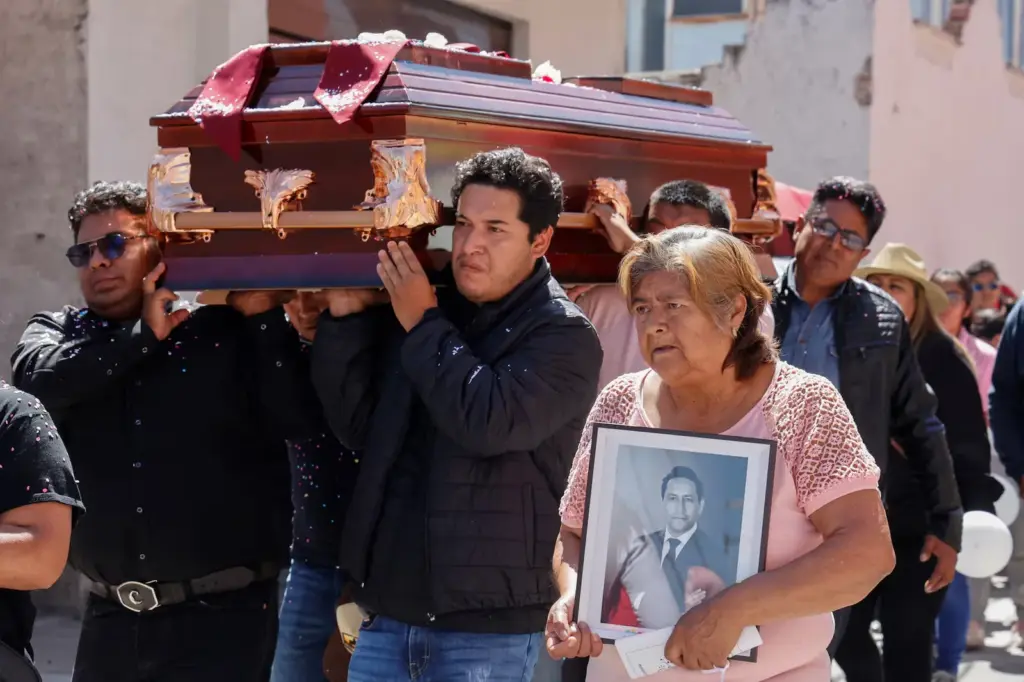
Josué Martínez Contreras, 39, was murdered last July 16 in front of his mother and his 13-year-old son, who made the call to emergency services. Upon their arrival, they could do nothing. Several men on a motorcycle shot him near his home in Puebla. He was the director of the digital media outlet Noticias San Martín Texmelucan, a lawyer and academic, who used to report local news on security, public services, and local administration.
He was called El Jaguar and was a fervent follower of the municipal president of Uruapan, Michoacán, Carlos Manzo, also shot dead on November 1, 2025. A few months before his death, Contreras had changed his profile picture on social media to one paying tribute to Manzo, leader of the Hat Movement, an object that first became a symbol of resistance against the harshness of violence in Mexico led by the mayor, and then took its path as a political movement.
A video from last November already showed the harassment he suffered from the authorities, after he denounced the existence of clandestine potable water taps in his municipality and the lack of transparency of public money collected for that service. According to what the journalist himself recounts in that recording, the municipal president, as well as personnel from the National Water Commission (Conagua), arrived at his house and accused him of not having paid several water bills. The journalist shows the paid receipts to the camera and assures that, although he had clarified the situation and presented his proofs, he still paid a kind of “fine” of 6,000 pesos (about 350 dollars). “The crux of this whole matter is that we don’t let them make a juicy business out of taking the water […] What they want is to remove me, to push me aside,” he says.
The video ends with the following phrase: “Remember that it is better to die with the strength of the people than to die on your knees. I tell you this: we are going to fight for our people and for our municipality,” he said. Just a few days ago, Javier Montalvo, auxiliary president of San Lucas Atoyatenco, was arrested for attempting to bribe police investigating Contreras’s murder.
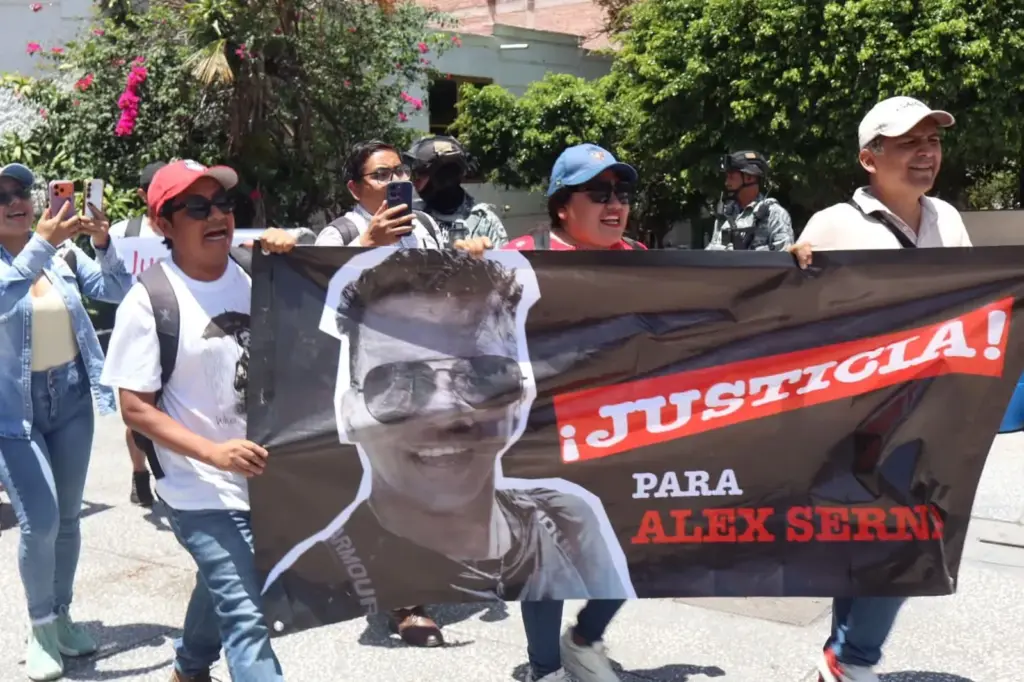
Alex Serna
Manuel Alejandro Mora Serna was 39 years old and created journalistic content for YouTube and social media about the environment, especially water management, environmental damage, and possible cases of corruption involving companies and local authorities in Zihuatanejo, Guerrero. It didn’t matter if they were businessmen, politicians of any party, or alleged members of organized crime, Serna would go to remote places to verify, with his camera, for example, the structures placed to impede water flow, whose alleged perpetrators he named by name.
They Hide the Water in Zihuatanejo or Destroyed Zihuatanejo Pier are other titles of his videos. According to the Committee to Protect Journalists (CPJ), in March, Serna published a screenshot of a death threat he had allegedly received from a relative of Zihuatanejo’s PRI mayor, Lizette Tapia Castro, whom he regularly accused of corruption. Citing an anonymous official from the Federal Mechanism for the Protection of Human Rights Defenders and Journalists, the CPJ confirmed that Serna had not been incorporated into a protection program by the agency.
The journalist last posted on his social media on June 20. Before that, he had denounced with documents that a mango dehydrating company had been operating since 2017 without environmental permits in La Saladita, a beach about 40 kilometers from Zihuatanejo. His family reported his disappearance and the Search Commission disseminated his missing person’s report. On July 3, the Guerrero Human Rights Commission confirmed the discovery of his body. Some local media reported that he showed signs of torture.
Read more Competing with a 40°C feel: the climate challenge of the Central American and Caribbean Games
Veracruz, the most dangerous for the press
The terror in Veracruz, the State that has been the most dangerous for the press in recent years, began to be felt from the first days of 2026. On January 8, independent journalist Carlos Leonardo Ramírez Castro, 26, was shot dead in Poza Rica, a municipality in the north of the State. Ramírez was the director of the digital media outlet Código Norte Veracruz and covered local crime news, citizen complaints, and social events in the region. He had previously reported threats against him and since 2024 had protection measures from the State Commission for Attention and Protection of Journalists (CEAPP), which concluded only a few months before his murder, after Ramírez temporarily left Veracruz. That same year, as confirmed by Article 19, he was a victim of intimidation by municipal police. He had returned to the city in the last months of 2025.
The criminal group that perpetrated his murder published the video of the attack. “The fact that the hitmen recorded and subsequently disseminated the crime reflects the level of impunity with which they operate in the region,” local media reported.
Ramírez Castro’s case did not end solely with his murder. On the day of his funeral, January 10, two 23-year-old women disappeared. They are Wendy Arantza Portilla Ramos and Karime Monserrat Murrieta Reséndiz; the former was the journalist’s partner, who was accompanied by her friend to the ceremony. Both women remain, to this day, missing. Their missing person’s reports flood the social media of family and friends, amidst the silence of the authorities, while two arrest warrants have been issued as part of the investigations into the journalist’s homicide.
In that same city, five months later, Luis Ángel López Valdez, a 29-year-old reporter and collaborator for Vanguardia de Veracruz, was shot dead. The journalist was also an engineer and part of the Cruz Ámbar organization, dedicated to pre-hospital medical emergency care, rescue, and civil protection, and had the protection of the State Commission for Attention and Protection of Journalists (CEAPP), after having previously received threats.
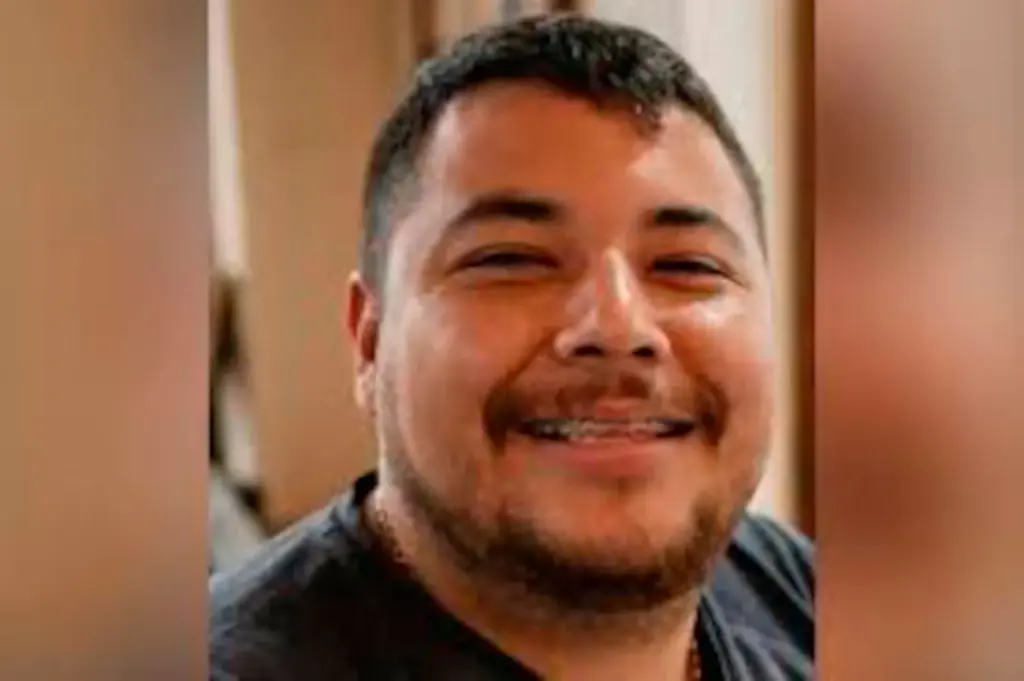
During his funeral, two of his colleagues described him as a very hardworking, cheerful young man, an engineer by profession who, above all, dedicated himself to journalism. “He was a man who loved his work, was passionate about it, which was police reporting and where reporters have no guarantees. He requested protection measures that were not fulfilled. It is sad and regrettable that, as a media outlet, as reporters, we are reporting the news of a colleague who has fallen, while exercising his work,” they said, in tears.
Vanguardia de Veracruz assured, citing the state Government Secretary, Ricardo Ahued Bardahuil, that one of the lines in the investigation into López Valdez’s murder is a complaint the reporter had filed for harassment against elements of the Public Security Secretariat (SSP) against him.
The case that has most shaken the State and the entire country in recent months has been, due to its brutality and visibility, that of journalist Roxana Berenice Guzmán, founder of Pulso Informativo del Sureste, who on June 2 documented how several hooded men forced and broke down the door of her house in Nanchital, in the south of the State, to take her away.
The woman’s remains were found last July 3, and authorities confirmed the arrest of eight people related to her disappearance and murder; among them are four municipal police officers from Ixhuatlán del Sureste, a neighboring municipality. This same week, the prosecutor’s office has asked the Veracruz Congress to remove the immunity of the municipal president of Ixhuatlán, whom it accuses of having ordered the kidnapping and crime of the journalist because, according to the investigation, he had a photograph that compromised him as a politician: he appeared carrying a long gun.
‘Táctica SS’
Juan David Gámez was the director of the portal Táctica SS, where he shared coverage on police matters, drug trafficking, and corruption at the local level. He used to make complaints about security conditions in the area, and his website does not show personal information or images of his face. He published reports on robberies, operations, kidnappings, body discoveries, and armed attacks. His last social media post was one day before he was shot dead in the municipality of García, Nuevo León. Among his last posts, on March 16, two days before his death, he wrote: Why can’t we do investigative journalism in Nuevo León without receiving threats?
Why journalists are killed
The organization Article 19, after more than 20 years of monitoring the context for practicing journalism in Mexico, is clear: “It is a painful question, a question that outrages and hurts deeply. It is a question that we at Article 19 constantly ask ourselves. And perhaps you will hear other colleagues say the same thing I am about to answer: In Mexico, journalists are killed because they can be. Who am I referring to with this? Impunity,” says Mariana Suárez.
The organization has documented that most journalists who are attacked cover corruption and politics. They represent 55% of the aggressions; followed by those who cover security and justice, sources known as crime news, with 24%, and then those who cover human rights-related issues, which represent 12% of the aggressions, and finally, those who address private sector and land and territory issues. “Impunity is not just the absence of justice. It is also a factor that favors the repetition of aggressions. Because as long as those who attack or murder journalists face no consequences, the risk for those who practice journalism remains,” says Suárez.
Read more The Government of Peace in Bolivia strips the State of indigenous symbols