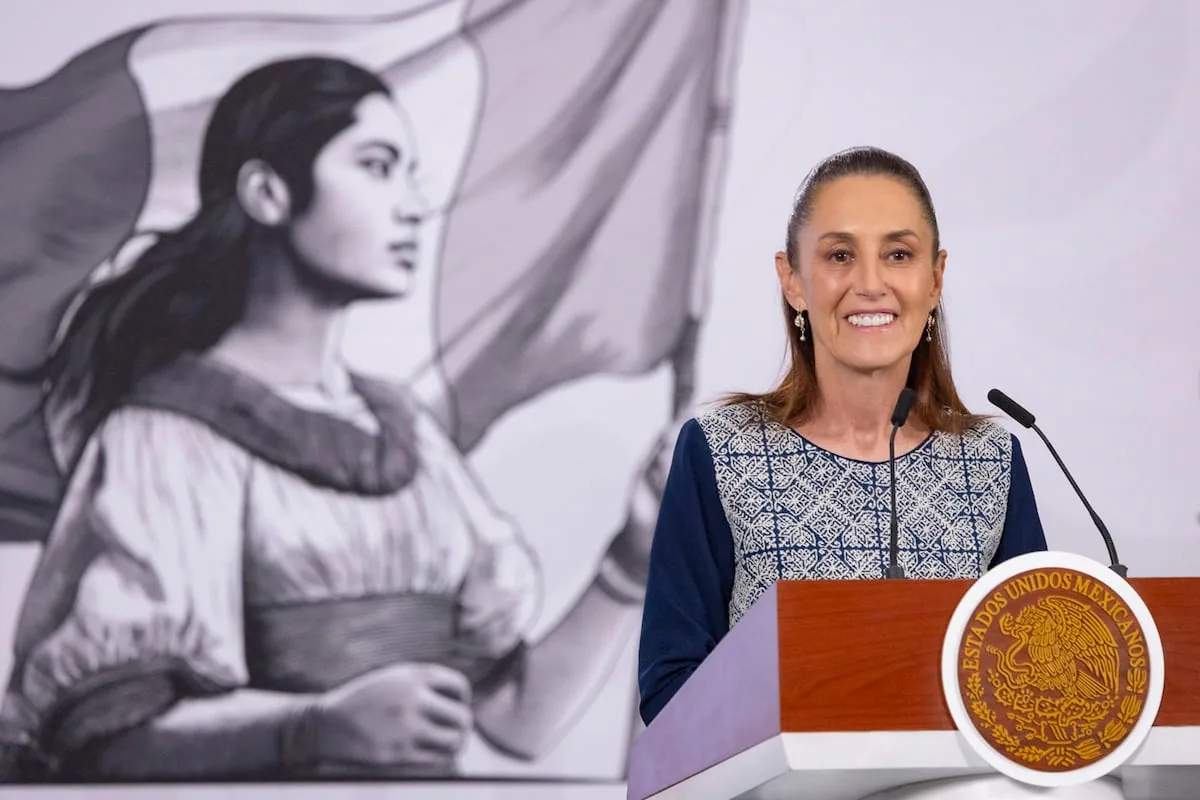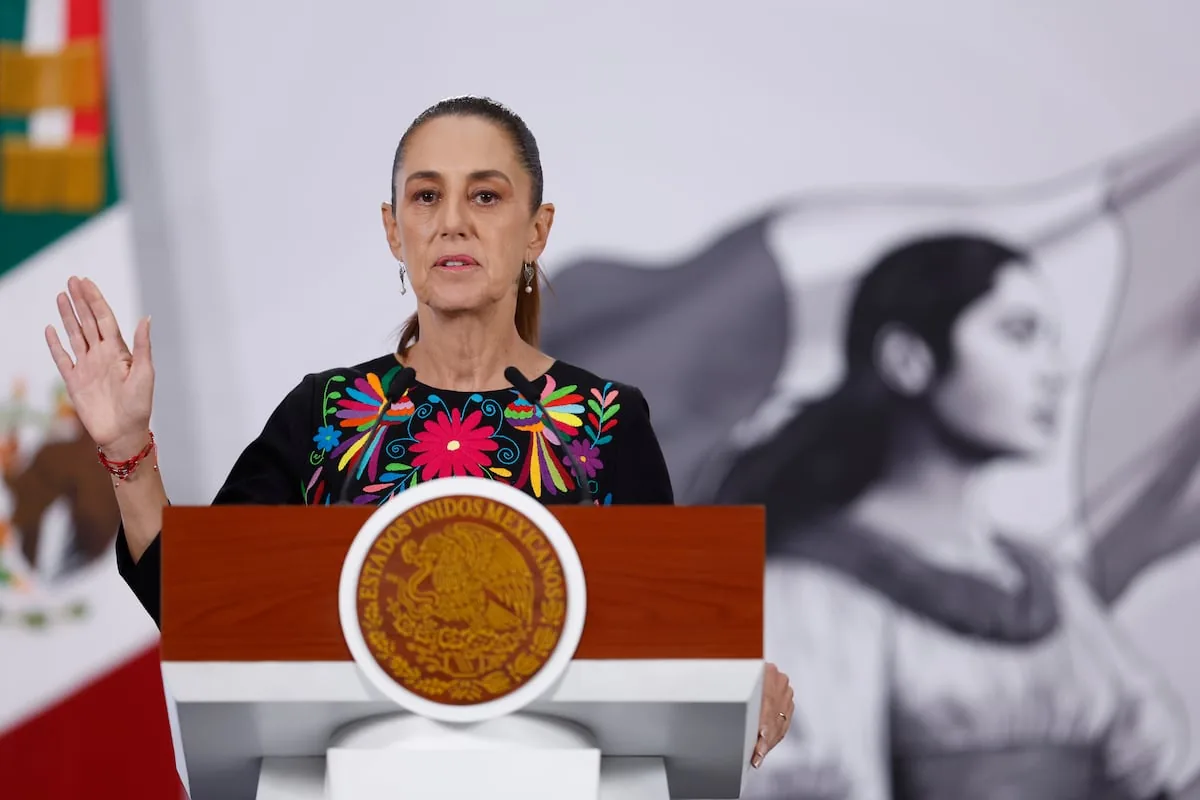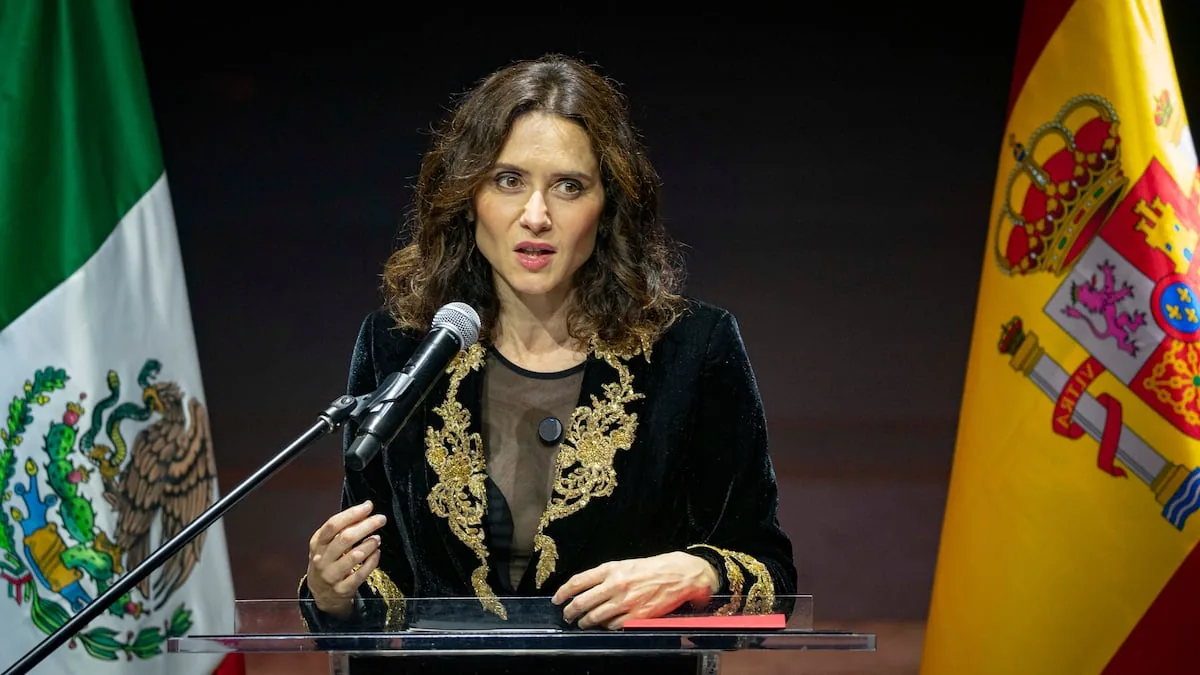









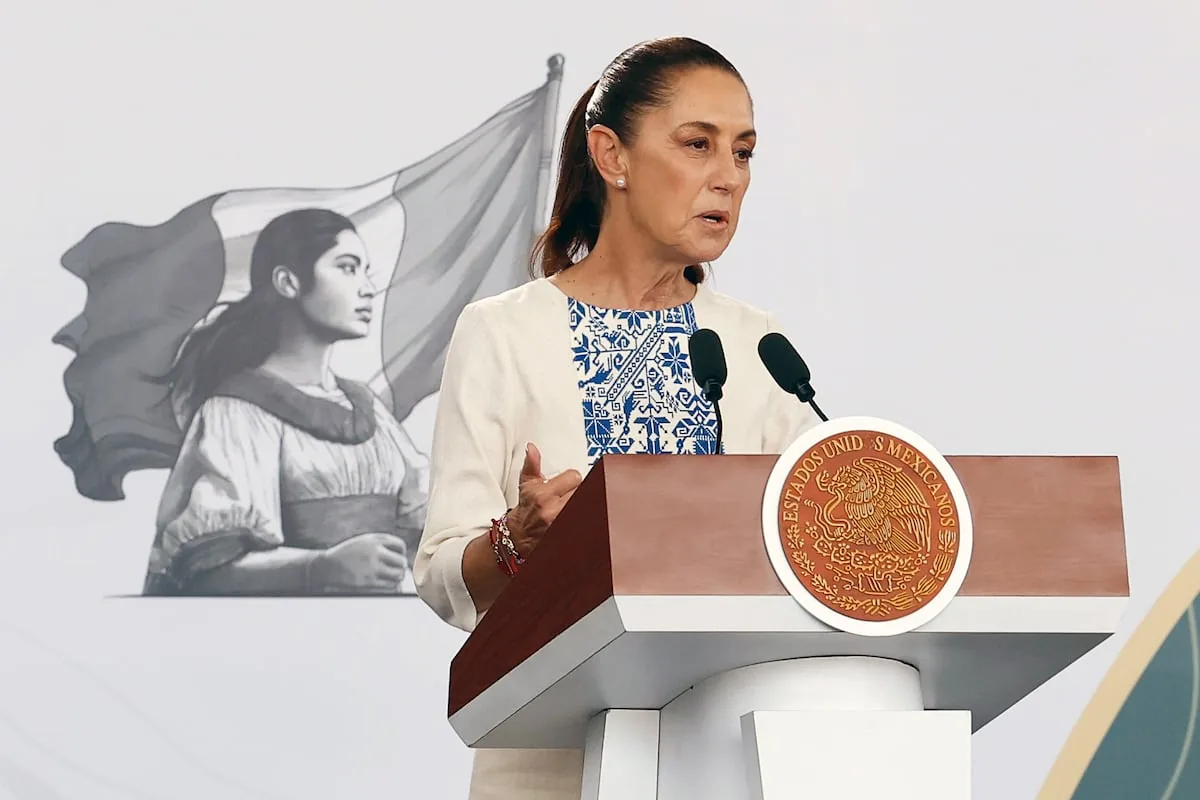
Mexico’s president, Claudia Sheinbaum, has made a strong defense of her country’s sovereignty in the face of recent episodes of pressure from abroad. The president took advantage of the commemoration of the historic Battle of Puebla of 1862, in which Mexico resisted a French invasion, to launch jabs at the domestic right and conservatism, which she said are very ready to hand over the nation to foreign interests. Sheinbaum alluded, without mentioning her, to the right-wing Isabel Díaz Ayuso, president of the Community of Madrid, who visited Mexico (Méjico, according to her) on Monday, where she praised the Conquest and the figure of Hernán Cortés, a culturally and politically thorny topic that has even put bilateral relations with Spain at risk. “To those who revive the Conquest as salvation, we say: you are destined for defeat; […] to those who seek to vindicate Hernán Cortés and his atrocities, we say: you are destined for defeat,” the president said in a speech before thousands of soldiers.
The ceremony, in the city of Puebla, was loaded with enormous symbolism at a time when the discussion around Mexico’s sovereignty is in vogue in the public sphere. Not only because of Díaz Ayuso’s visit, taken by the ruling party as an act of provocation, but also because of the pressures exerted by the United States in matters of security and the fight against organized crime. In an unprecedented move, the Donald Trump Administration has targeted the governor of Sinaloa, Rubén Rocha, and other officials and former officials for their alleged ties to drug trafficking. Sheinbaum’s government has pointed out that the accusation is not accompanied by evidence sufficient to arrest and extradite the governor, who belongs to the ruling party, Morena, and who has already stepped down to facilitate investigations from Mexico. Days earlier, the discovery that CIA agents were deployed in Mexico in unclear operations had set the stage for confrontation.
The ruling party has closed ranks and framed the matter as an act of external interference. The Rocha case, in turn, has given weapons to the opposition, among which there are voices calling for direct intervention from Washington, while they talk about Mexico as a “narco-state” and Morena as a “narco-party.” Sheinbaum sent a message this Tuesday to those she characterizes as conservatives: “To those who seek foreign intervention, to those who today boast and defend interference, to those who applaud foreign television stations when they speak ill of Mexico, we say to them, with truth and justice, that those who seek external support because they lack popular support in our country are destined for defeat.”
Sheinbaum’s speech was a back-and-forth through passages of history in which Mexicans defended their territory from invasions, starting with the consummation of Independence in 1821, after three centuries of Spanish rule, that long period that Díaz Ayuso has defined as a civilizing process and not a genocide. “Mestizaje is the message of hope and joy,” the Spanish politician celebrated on Monday from the Mexican capital. Since the administration of Andrés Manuel López Obrador, Mexico has asked the Crown to recognize that the Conquest was a period of abuses against the indigenous populations of America. The request divided opinions on both sides of the Atlantic and caused a cooling of relations between the two countries, although recently firm steps have been taken toward reconciliation.
Read more Commissioner Villarejo sentenced to three and a half years in prison for the ‘Dina case’
Sheinbaum, who traveled to Barcelona a few weeks ago to participate in a summit of progressive governments sponsored by Pedro Sánchez, president of the Spanish Government, has embraced the figure of the liberal indigenous Benito Juárez, recalling his defense of sovereignty. “No foreign power is going to tell us Mexicans how to govern ourselves. We are free,” the president said. “We are a people who love our freedom, our independence, our sovereignty, and we are always willing to defend it,” she added.
The president has attacked conservatives (“traditional enemies of all change and who have existed in societies of all times”) for promoting the establishment of a monarchy in Mexico in the 19th century and favoring the French invasion. She also pointed to contemporary “wise jurists,” recalling that several past intervention attempts were based on “legal assumptions from the invader’s perspective,” from England, France, and Spain to the United States. The governor of Puebla, the Morenista Alejandro Armenta, has also joined the wave of patriotism and criticized the “voices that believe Mexico’s problems should be solved from outside.”