









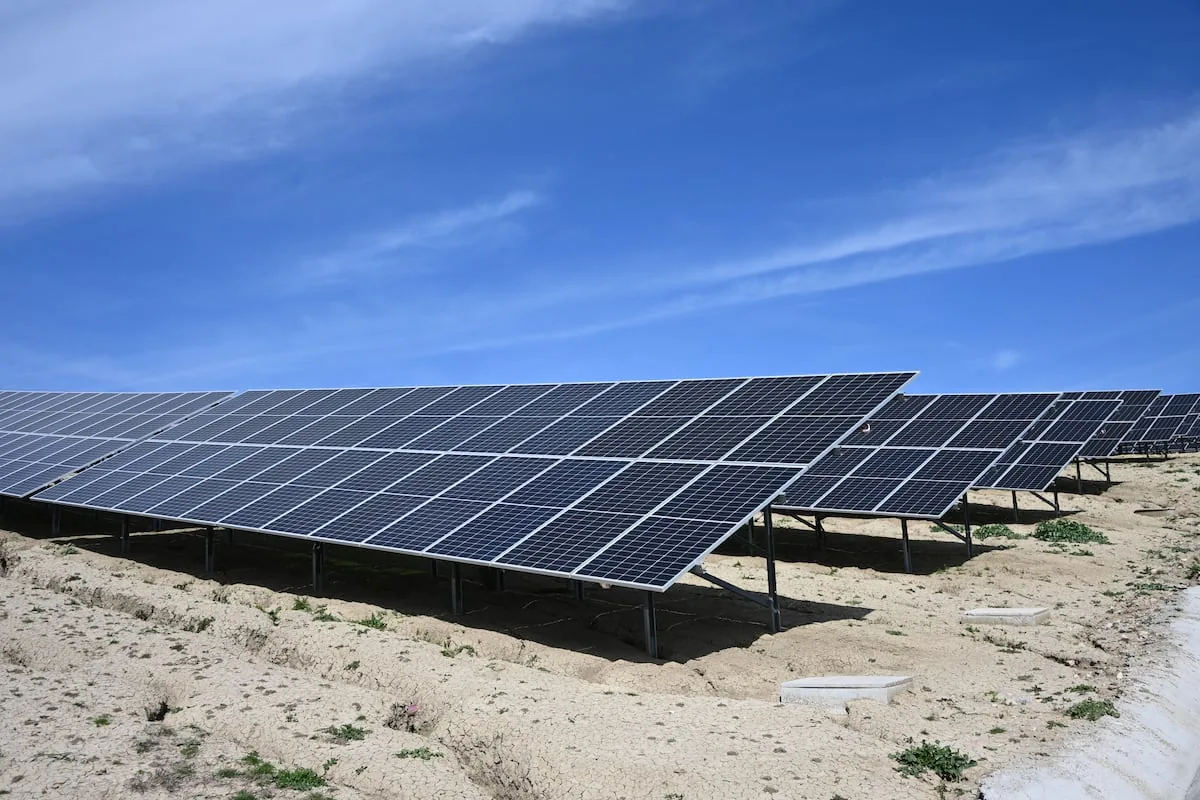
The world is experiencing an energy shock due to the supply of fossil fuels from the Persian Gulf, but alternative energies are making strong inroads as a response to the increase in energy demand. For the first time in history, a renewable technology, solar photovoltaic, was the one that contributed the most to cover the increase in global energy demand. It was in 2025 when solar panel plants covered more than 25% of the demand increase, which was 1.3%, below the 2% of the previous year. Electricity demand, however, grew by 3%, more than double the global energy demand, due to the boom in electric cars and data centers.
Read more Zayn Malik and Louis Tomlinson, chronicle of a wound impossible to heal
“Global energy demand continued to increase in 2025 in a complex economic and geopolitical context, with an unequivocal trend: the growing electrification of economies,” said IEA Executive Director Fatih Birol. Solar photovoltaic energy is growing more than any other energy source, accounting for a quarter of the total growth in global energy demand. “In today’s rapidly evolving landscape, countries that prioritize resilience and diversification will be better positioned to manage volatility and provide secure, affordable energy in the coming years,” Birol adds in the annual report published today by the IEA on general sector trends. For the first time, photovoltaics displaced natural gas from the top position, which accounted for 17% of that increase in energy demand, mainly due to its continued role in many countries for electricity generation.
In relative terms, gas consumption grew by 1% in a context of high prices in the first part of the year, compared to 2.8% recorded in 2024, and this modest increase was still higher than that of other fossil fuels.
In the case of oil, its growth continued but was very weakened, proof of the unstoppable process of reducing fossil fuels in the global energy mix. The increase in oil as a global energy source was lower than in the previous year not only in percentage, but also in volume (650,000 additional barrels per day, compared to 750,000 in 2024) and is well below the annual average (of 1.4 million additional barrels per day) that had been observed between 2010 and 2019, until the outbreak of the COVID crisis.
This significant slowdown in the appetite for oil is particularly related to its replacement as propulsion energy in transport, with a 20% surge in electric car sales in 2025, which accounted for one in four of those registered worldwide. For 2026, the IEA already forecasts a drop in oil demand, for the first time since the pandemic, due to the price increase caused by the closure of the Strait of Hormuz. It estimates that global demand will decrease by 80,000 barrels of crude oil per day.
As for coal, its demand advanced in 2025 by an even more timid 0.4%, which summarizes in some cases contrasting trends among the major world economies. Even so, its contribution to the increase in consumption was 9%, equivalent to that of wind energy. China reduced coal use, replaced for electricity generation by renewables, and India did the same for slightly different reasons (the monsoon was earlier and stronger than usual), while the United States increased it to respond to the sharp rise in electricity consumption and use it more for generation instead of gas, which had high prices.
One of the consequences of the slowdown in the growth rate of fossil fuels was that global carbon dioxide (CO2) emissions from the electricity sector increased by around 0.4%. But with an important aspect, that China, the leading polluting country, reduced its emissions due to the rapid development of renewables, complemented by the increase in nuclear energy capacities. While the United States emitted more CO2 by resorting more intensively to coal for electricity generation and somewhat less to gas.
Read more Maíllo aims to double results after the unity agreement in Por Andalucía
What are considered low-emission sources (renewables, biofuels, and nuclear, essentially) accounted for 60% of the increase in global energy demand. However, last year a new record for global warming emissions was reached, with more than 38 billion tons.
Growing weight of electricity
One of the outstanding elements of the energy scenario is the growing weight of electricity, with a 3% growth in 2025 (more than double that of the sector as a whole), which is lower than the 4.4% of the previous year for partly non-structural reasons (such as heat waves in countries that use a lot of air conditioning being less prolonged).
China, where the increase in electricity demand rose by 5% (after 7% in 2024), accounted for more than half of that increase, particularly to cover cooling needs.
Two determining factors in the global growth of this demand were data centers, with a 17% increase last year, which was particularly marked in the United States, and the powering of electric vehicles, with a 38% increase.
Last year, new electricity production capacities with solar photovoltaic energy were installed for 600 terawatt-hours (TWh) up to a total of 2,700 TWh, which represented 8% of the total generation
Read more EL PAÍS and Cadena SER present ‘Infiltrators in Gaming’, the second episode of ‘The Ultra Wave’