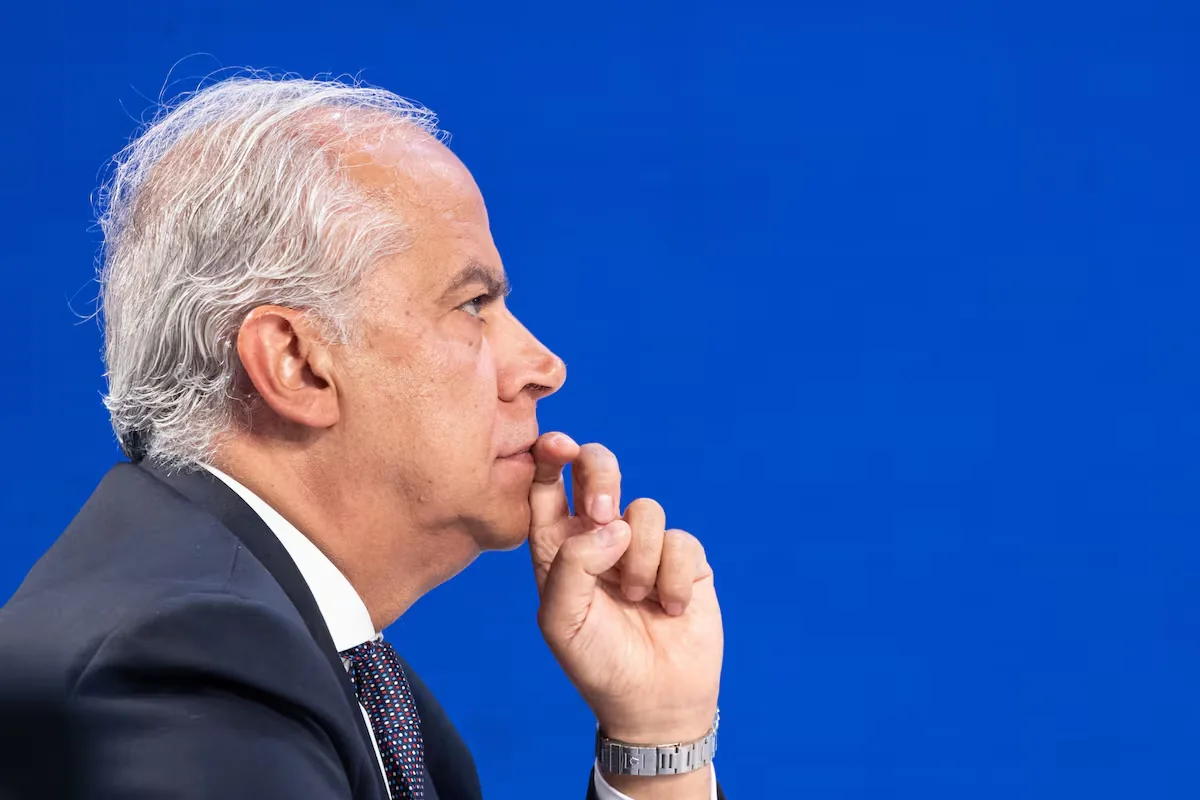
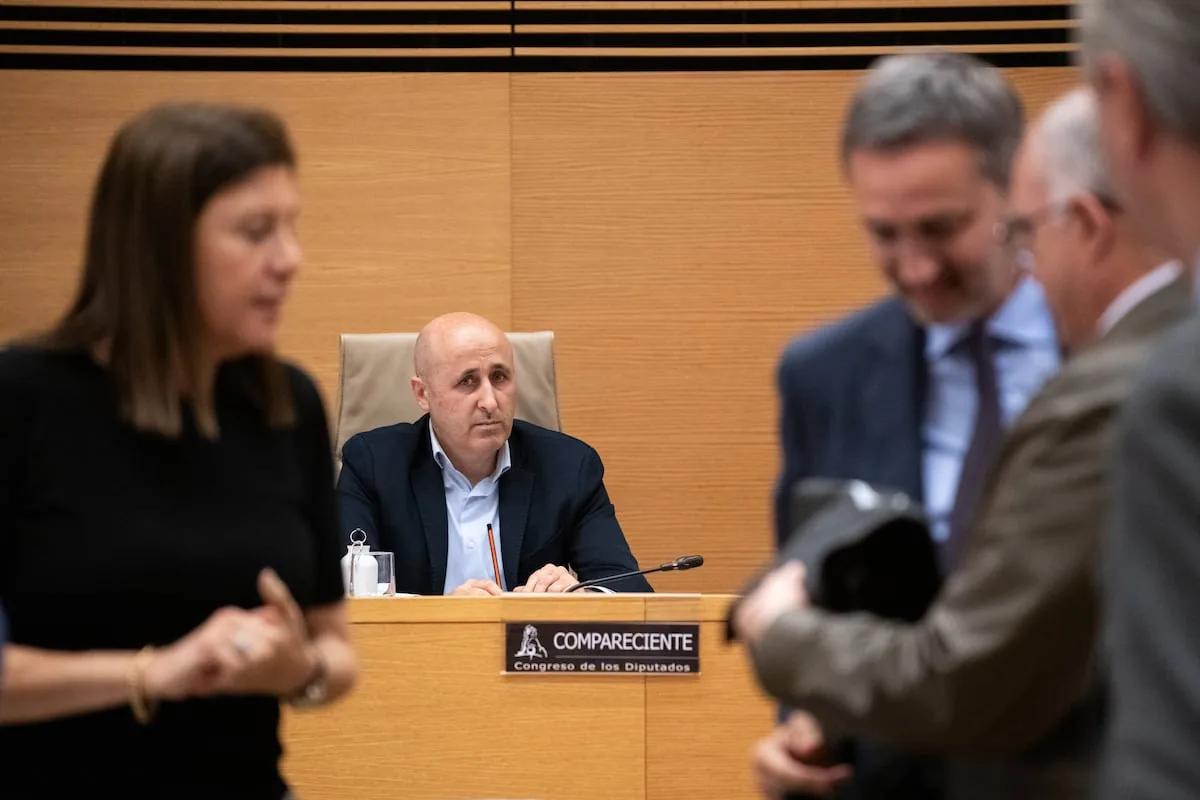
Late and chaotic. This is how Miguel Polo, president of the Júcar Hydrographic Confederation (CHJ), described the Cecopi (Integrated Operational Coordination Center) meeting on the day of the dana on October 29, 2024, in Valencia this Monday. “It is clear that there was no planning. In our attendance [of the Confederation’s directors] at Cecopi, we saw that it was chaos and that the person who had to make decisions did not make them,” Polo declared before the parliamentary commission on the management of the dana. Polo points to Salomé Pradas, then vice president, emergency councilor, and one of the officials who was supposed to lead Cecopi. Polo stated that shortly after the meeting began, at five in the afternoon, the option of sending a mass alert to the population was already on the table. But the Generalitat finally did not order its sending until three hours later, after eight, when at least 156 people had already died and another 37 were in an unsalvageable situation, according to an investigation by this newspaper. The victims of the floods amount to 330. “What people needed was to be warned, not the declaration of emergency 3,” says the president of the Confederation.
Polo detailed the meetings he held that day, from eight in the morning with his team and then with the Government delegation at 9:30. He also acknowledged that at 11 he attended the inauguration of a course at the Polytechnic University in which the Confederation collaborated, but he was back by 12. “The next meeting was at four with the CHJ management team to monitor the dana, and we did not leave until the next day,” he recounted. The president emphasized that from the beginning of the day “everyone knew there was going to be a dana” and that at five in the afternoon he said at Cecopi “that there were already very significant flows circulating through some channels.”
The president of the confederation, an agency dependent on the Ministry for Ecological Transition, already declared in the same terms last September before the judge of Catarroja who is investigating the flood case. In that appearance, he stated that around 18:00 during the Cecopi meeting he requested the sending of a warning to ask citizens to go to the upper floors of buildings. He also told the magistrate that he urged the activation of the alert that afternoon due to the risk of Forata (dam in the course of the Magro river, a tributary of the Júcar).
Before the judge, he also answered questions about why the CHJ did not inform the Generalitat’s Emergency department about the flow of the Poyo ravine (which caused most of the victims) between 16:15 and 18:43, one of the main reproaches made by the PP and the Generalitat. Also where they hide to avoid their responsibility. Polo justified: “the threshold of 150 liters fits perfectly in the Poyo channel. The plan itself establishes a monitoring system. It is not the CHJ’s responsibility. That information is not relevant. During the time you mention, a one-hour warning is sent in Chiva, Ribarroja. It is sent automatically.”
This Monday before the deputies, Polo explained that, according to the flood plan, there are several emergency information registration systems and that that day the only one that worked uninterruptedly was the Automatic Hydrological Information System (SAIH). “The only strategy some have is to try to dismantle the only information that was available. The only team that was where it had to be and providing all the information was the SAIH. And that is what they want to destroy. They want to make people believe there was no information, but they will not succeed,” said the president of the CHJ.
The PP deputy attacked the head of the Confederation during his speech and accused him of making “an information blackout” on the afternoon of the tragedy. In a report from the entity chaired by Polo and sent last year to the judge of Catarroja, it is recorded that the Confederation sent 18 emails and 330 hydrological references of the Poyo ravine on the day of the dana.
Read more Who said you couldn’t travel to Thailand with ulcerative colitis
Regarding the information, the president of the CHJ recalled that the data available from the early hours of the dana day indicated “the risk” of flooding and that, with that, the authorities “could have planned” matters such as road closures, warnings to the population, suspension of classes, etc. “That was not done,” the official stressed.
Polo also recounted that “the problem with Cecopi was not the format, but the hours at which it was convened.” The decision to meet was made at three in the afternoon “to coordinate an emergency situation in Utiel that had been flooded for three hours” and the start time was set at five in the afternoon. “A striking thing,” Polo commented, adding that he considers it “unthinkable” that those responsible for managing the emergency did not arrive at Cecopi until after 12 and that shortly after, they left to travel to the town of Claret: “That says it all. Where was the planning?”
When the Cecopi meeting began, a dozen people had already died as a result of the dana and 112 had already accumulated 9,461 emergency calls. At that time, the then president of the Generalitat was extending a lunch with a journalist at a restaurant near the Palau.
Regarding emergency management, Polo attributes the failures to a combination of factors that go beyond the role played by Civil Protection. “There were previous problems in land use planning. Many infrastructures caused problems. Why did the bridges fall? Because they were probably poorly designed, calculated, built, I don’t know… They should not have fallen (…) Or the infrastructures that acted as barriers, or the road drainage works that did not have sufficient capacity,” he enumerated.
On the other hand, Polo pointed out that, in his opinion, the reconstruction works “are progressing well” and that he estimates that most of them “will be finished next month.” Although he recalled that the defense works in urban centers that are being carried out “are punctual,” but that “in most cases they improve or at least equal the safety situation prior to the dana.”
Read more Shakira’s lawyer, after the sentence: «The tax authorities have acted recklessly»