The central problem of the Ceuta crisis is becoming increasingly evident. The Government is looking for spaces to house immigrants as quickly as possible, in order to speed up affiliations and, therefore, returns. But the easiest spaces, which already have bathrooms and sewage, such as sports centers and other similar locations in inhabited areas, are systematically rejected by the city, led by the popular Juan Jesús Vivas. The veteran Ceuta leader even threatened this Tuesday to lock himself in the sports centers and encourage people to do so if Pedro Sánchez’s Executive tried to use them. “If they want to use the sports centers, I’m going to lock myself in there, and anyone who wants to come with me,” he said.
It is a completely different attitude from that of the 2021 crisis, with another massive influx, when it was Vivas who offered a sports center to house minors. This behavior is generating much discomfort in the Government, which, however, has chosen to resolve everything by agreement and has committed to the president of Ceuta to decide the locations by consensus. The leader of the autonomous city requested a single command, but does not want the Government to decide where the immigrants go. To try to avoid problems, the Executive even accepted a new decree that excludes sports centers, even as an extreme possibility, which is what Vivas demands. But the problem remains where to quickly house the thousands of people who arrived in the city on July 30 and 31.
In this context, the population of Ceuta, who see thousands of immigrants still on the streets or in the mountains, is beginning to lose patience and is organizing protest demonstrations against the Government. But the situation is a kind of vicious circle: residents do not want immigrants to be on the streets, but neither do they want them to be housed near their homes. This pressure delays the solution, because spaces far from the city are not equipped and some need conditioning works that take time. That is, residents want them to be returned to Morocco as soon as possible, but by rejecting some easier locations, they delay their ability to be controlled, affiliated, and therefore, for the return process to begin.
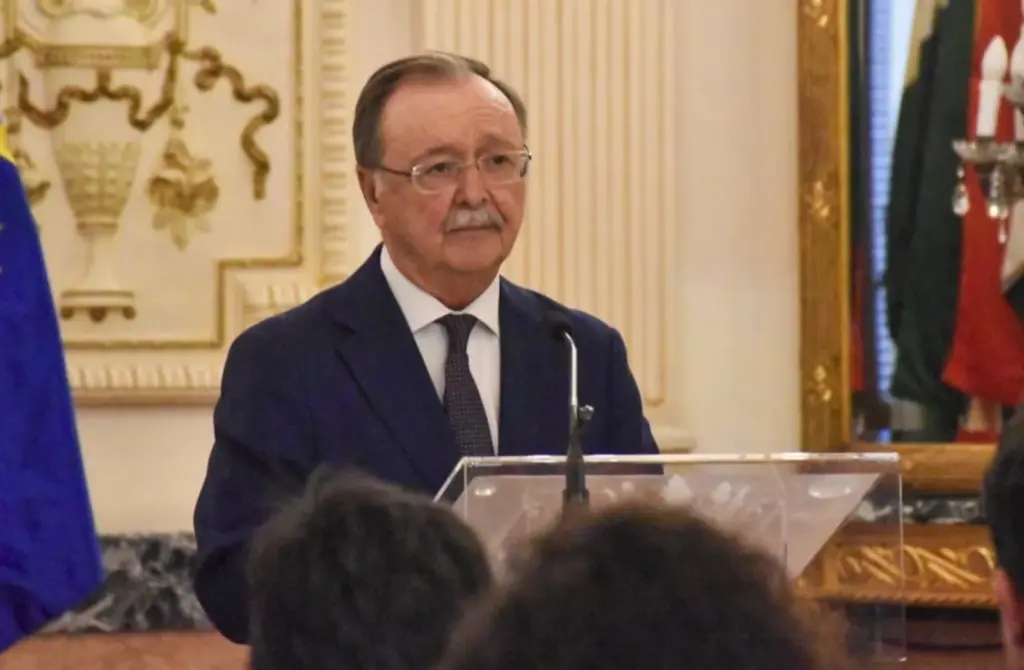
This vicious circle situation became very clear on Wednesday night in statements by Vivas. Almost a month after the large influx, the city still has not proposed locations. He was asked several times what places he proposed. And since he did not answer, the journalists insisted. So in the end, the PP leader somehow admitted that he is trapped by the pressure of the residents and asked for time, despite at the same time demanding that the situation be resolved now with returns. “This must be done very calmly,” he assured, and suggested that they will look for locations “that cause the least objection and the least possible harm to the residents.” “We are in contact with neighborhood associations; when we have a [space] for sure, we will discuss it with them.” Vivas thus summarized what the management of the crisis has been like these weeks: the pressure from residents complicates and delays the solution they themselves urgently demand.
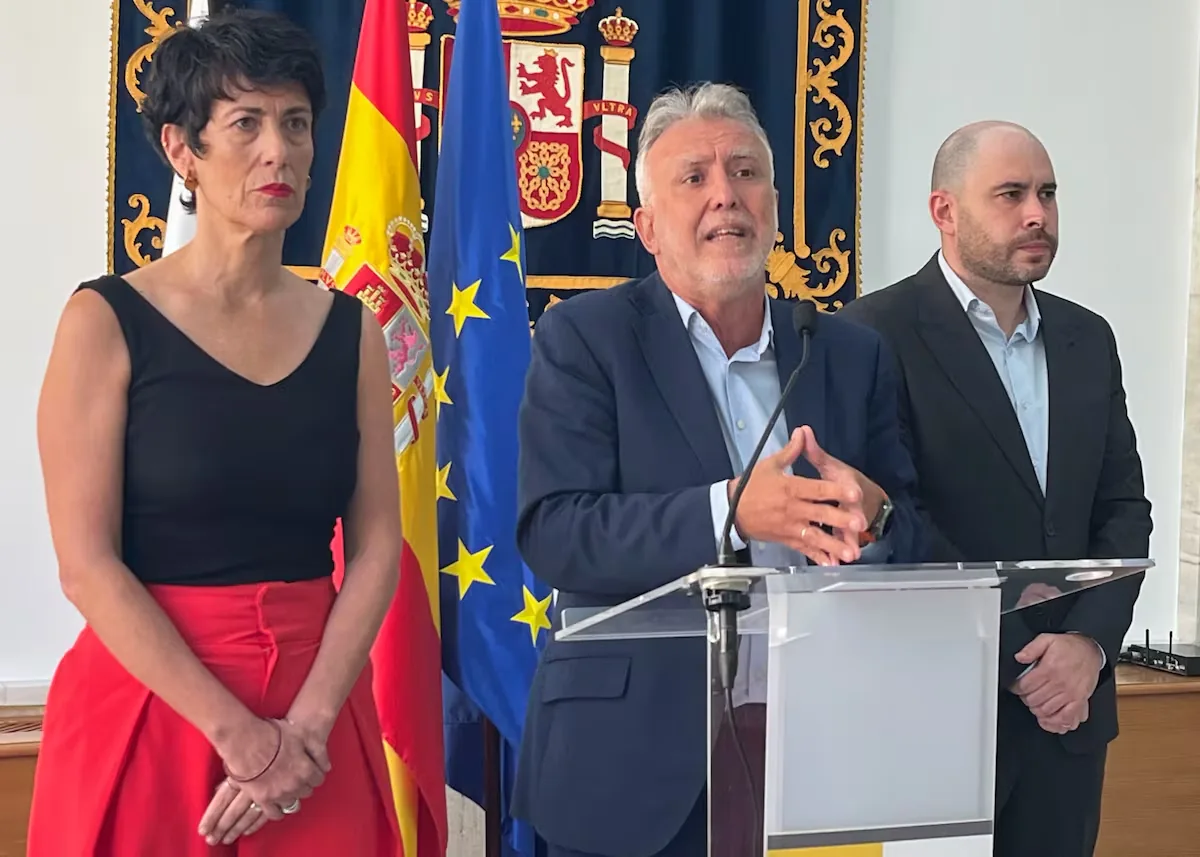
Given this situation, the head of the single command, Minister Ángel Víctor Torres, after meeting with Vivas and all the ministers involved in the solution, was very clear in a message to the population that was also for the president of Ceuta. “Our priority is to return the immigrants who entered, but we have to do it within the law, because in 2021 two officials were convicted for doing it hastily,” he pointed out. “If we don’t have spaces as soon as possible, things will drag on, because we cannot affiliate them [the immigrants], we cannot date them. The sooner we have spaces, the sooner they can be returned. I understand that someone complains about having a space close to where they live, but if we want to return them, we need spaces,” concluded the head of Territorial Policy.
The Government, according to several consulted sources, believes that Vivas —who has a lot of leadership in the city— could do more to try to calm tempers. It considers that everything would be easier if he had an attitude like that of 2021, when he housed migrants quickly and without social crisis —also in the sports center— and little by little returns began, as well as some transfers to the peninsula, something that both the PP and the European Union now reject.
Almost all paths, therefore, lead to dead ends in this impossible crisis in which the very rejection of immigration —which has grown significantly throughout Spain since 2021— further complicates the management of an increasingly delicate situation. The Executive is trapped between the residents, who demand that all immigrants be returned now, but block solutions; justice, which demands that everything be done correctly or there will be disqualifications; officials, who do not want to make any decision if it is not clearly protected by law to avoid such disqualification; the city, which does not offer locations due to pressure from residents; the PP, which rejects that both minors and adults be transferred to the peninsula; and the European Union, which also demands that all be returned from Ceuta without going to continental territory.
Read more Claudia 4.0 starts, the decisive stage
Even so, the Executive believes that in the coming days it will be able to have new locations and accelerate returns. Vivas changed his tone at the last minute, after the meeting of the single command in which he again received —he had already had them the day before— guarantees that any location will be agreed upon by both governments and obtained the promise that sports centers will not even appear as an extreme possibility in the decree that enables the single command.
It is, therefore, a very particular single command: the Government directs it, as Vivas and the PP had requested, but with its hands tied to decide the spaces, the key to the solution and above all to the speed with which the crisis is resolved.
Vivas sent a message to the residents that, in any case, the chosen locations will be temporary, and wanted to reassure them with the idea that everyone, including the Government, is working together to ensure that Ceuta returns to normality. However, the president applauded the demonstrations, which are becoming increasingly tense, to the point that aggressions against some journalists are beginning to occur, preventing them from covering these protests. Vivas, however, demanded that they be peaceful. “I believe that Ceuta society is legitimate, it does well to demonstrate, but it can be done without ever using violence,” he stated. Torres also referred to this violence with concern and asked for calm. “Violence goes nowhere,” he said after calling for coexistence and promising that “normality” will return to Ceuta “in the shortest possible time.”

In this context, former president and former PP leader José María Aznar will visit Ceuta this Thursday and meet with Vivas, something that worries the Executive, given his usual harsh tone, while Torres announced that the President of the Government, Pedro Sánchez, will preside over the next meeting of the single command this Friday from La Moncloa.
Sánchez visited the city immediately after the massive influx on July 31, and since then has left the spotlight to his ministers. The president will begin the political year on Monday 31 with the Ceuta crisis wide open, and on Thursday 3 he will appear before Congress on this issue that has blown up the political agenda. La Moncloa hopes to see some light at the end of the tunnel by then, with new locations and the return mechanism already in motion, but anything can happen in an increasingly tense city and with a Government that has not yet found a way out of this impossible hole.
Read more Driver captured who ran over Paz Ramírez, sister of actress María José Prieto