









José Luis Guerrero, a 31-year-old Venezuelan, was unable to meet his daughter who was born just under a month ago. He was captured by U.S. agents 44 days before his wife gave birth, when he attended his immigration appointment in Tulsa, Oklahoma. He fell into the bureaucratic trap and was first locked up in the Otero County Detention Center in Chaparral, New Mexico, and then transferred to the Sierra Blanca Detention Center in Texas.
Read more The cloud that unites them
Guerrero lived in the shadow of the two prisons because he could not leave, due to the earthquake that shook his country and halted all immediate deportations. Before being arrested by ICE agents, he went Monday to Saturday to a tamale factory where he had worked and was saving money for the birth of his little girl. His life in the United States was summarized in trying to obtain legal status alongside his wife to have a better life, but it all ended in a failed attempt that he now recalls with heavy nostalgia, from Tapachula, Chiapas, in southern Mexico.
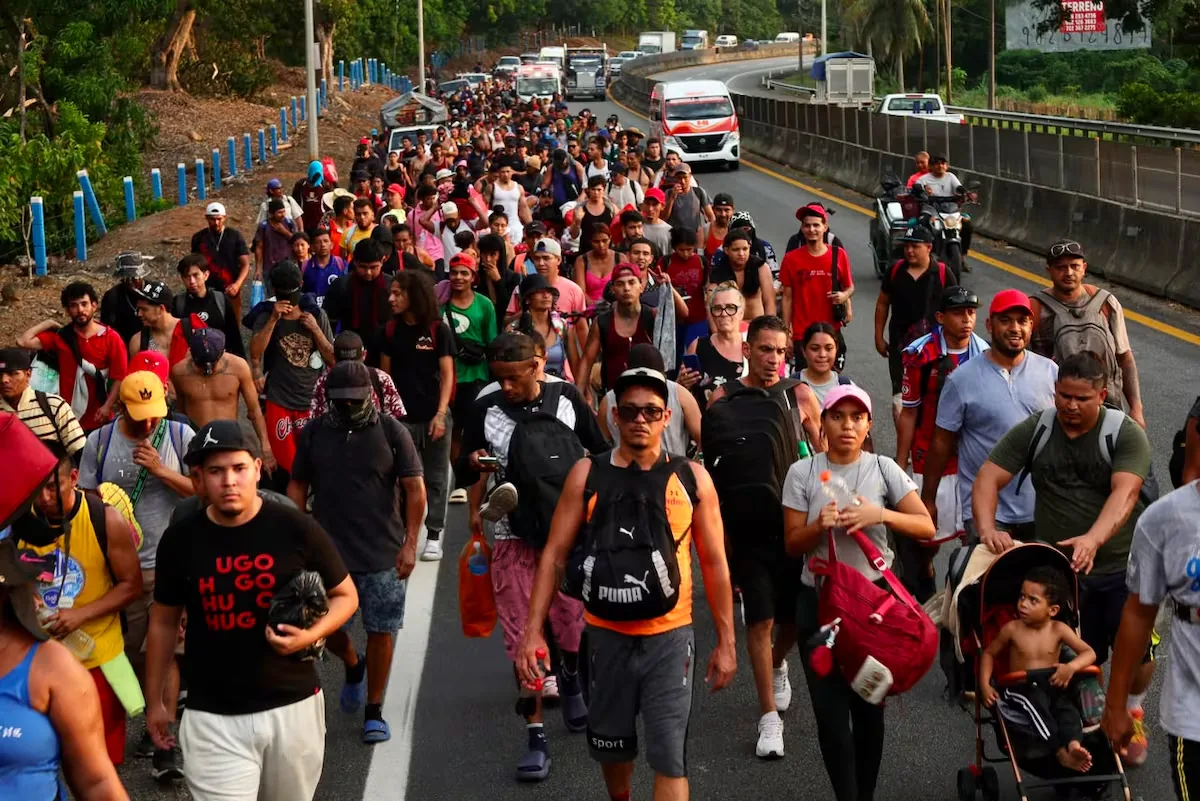
When the time finally came for his expulsion from the United States, they sent him precisely here, to the city he had passed through 14 months earlier on his way to the northern border, coming from South America. Tapachula now gathers thousands like him. This city and Villahermosa, in Tabasco, have become the two main points in Mexico to leave more than 10,000 migrants of different nationalities adrift. Between 300 and 400 have now joined a larger caravan to walk back north.
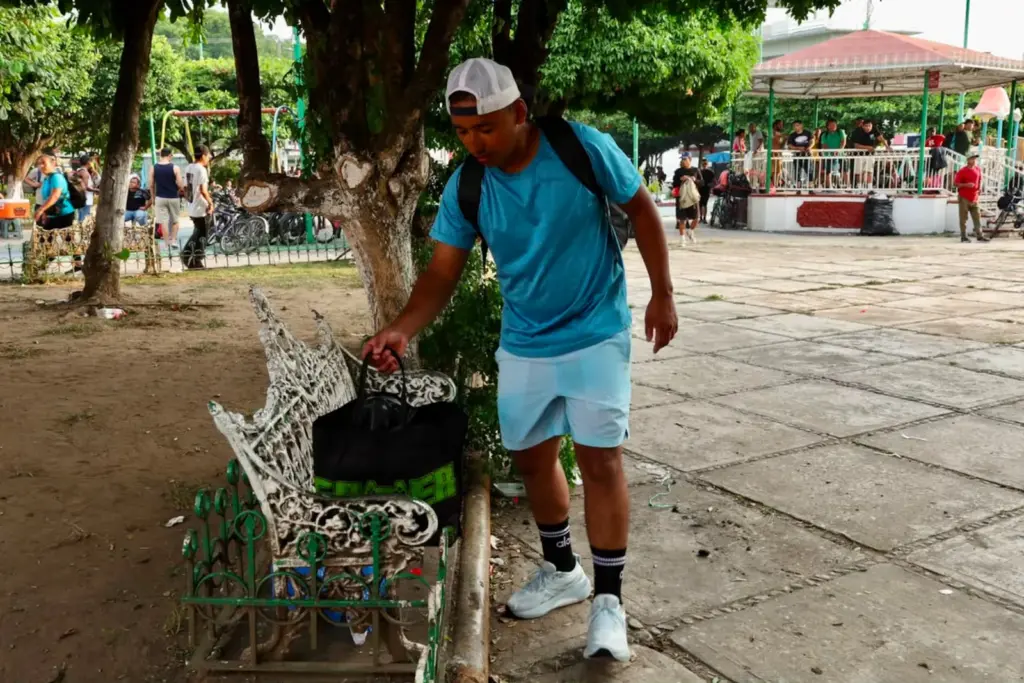
Many now tell stories of sadness. In Guerrero’s case, his baby, named Cloe, and his wife Maryeni remained on the other side, in Oklahoma, thousands of kilometers away. “My wife tells me that things in the United States are very complicated, you can’t go there anymore, so now I will have to move to Mexico City in search of a job opportunity but far from my family,” the migrant recounts.
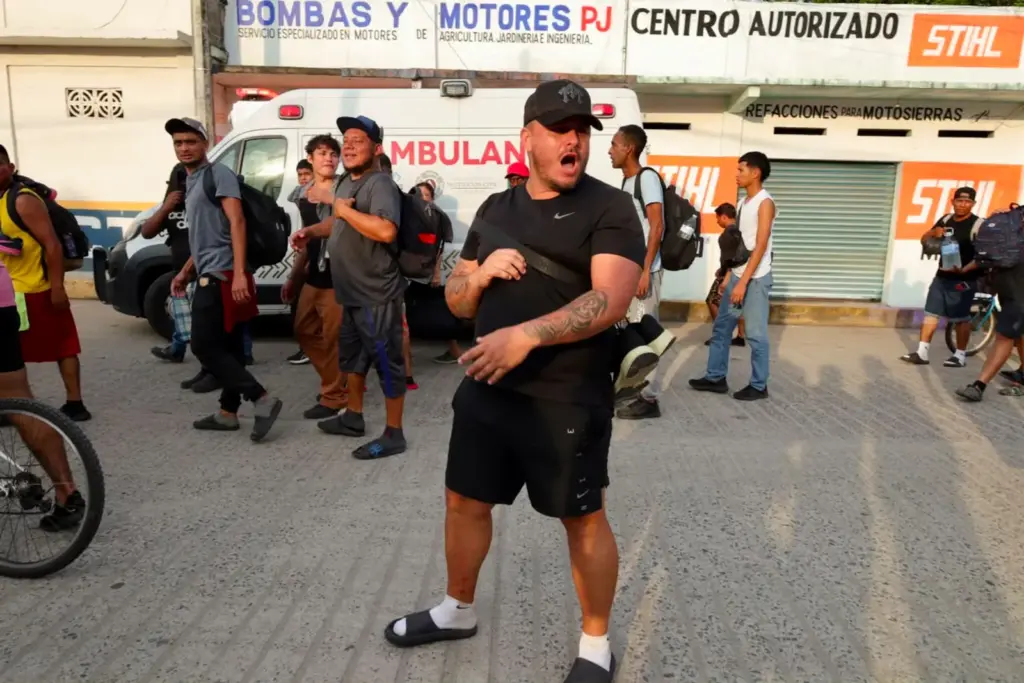
César Gómez, also from Venezuela, was captured almost at the same time as José Luis. One Wednesday afternoon after his workday painting and conditioning a building for public relations and business marketing, he went to a baseball field to play with his friends. The home run races turned into a mass escape when ICE agents stormed the sports unit south of Los Angeles. Many didn’t even get a chance to run, and those who ran fared worse: they were beaten and forcibly loaded into patrol cars to be taken directly to various detention centers and then to the border with Mexico.
César and the group of friends left the United States in a flash, and when they realized what was happening, they were already arriving by bus at the border with Guatemala. “How does a person go from playing baseball to being in a country they don’t know and without money?” he questions with anger and despair.
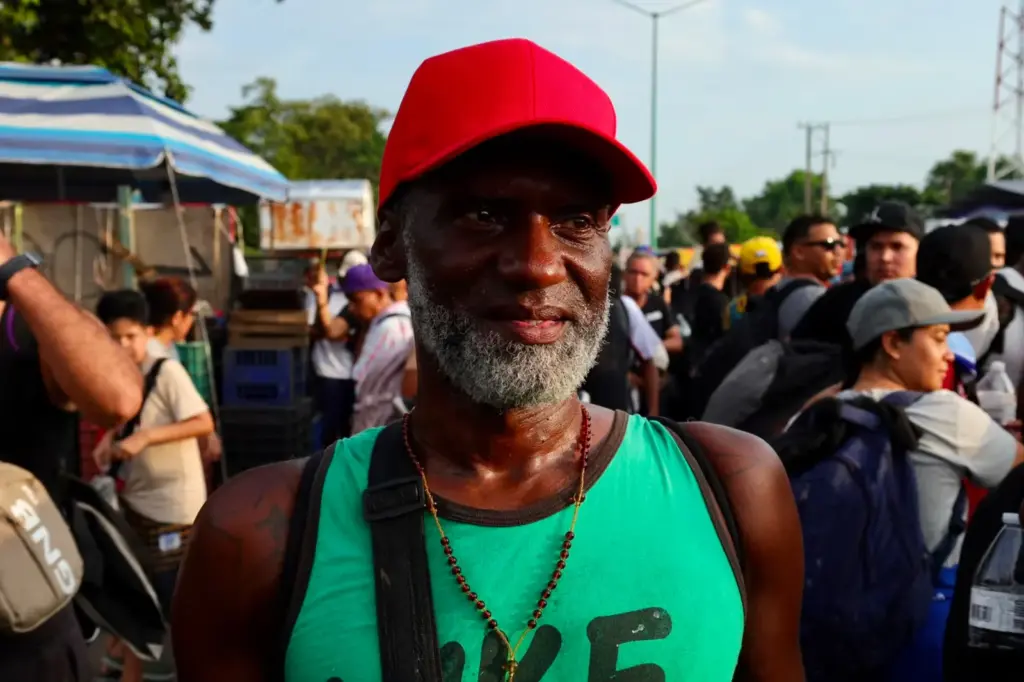
Francisco Gómez Toro was deported on May 11 from the United States. He can barely walk, so he supports himself with a cane he has improvised from a thick tree branch on which he writes his grievances so as not to further affect his emotional health.
Read more 14 migrants die in a shipwreck off the Tunisian coast
He spent his whole life in Arizona where he lived for more than 30 years. He went from being with his family in a home with furniture and beds to occasionally sleeping on the street in Tapachula for lack of money. For this 60-year-old Cuban, he is technically kidnapped in this border city as a native of another country and having been thrown to his fate in a nation where he finds no work, food, or dreams.
“We are the same or worse than in Cuba, because there you can’t go anywhere, but you are with your family. Here we are alone, unable to work or move to other places. I will go as far as my feet allow, but I can’t stay in Tapachula because this is a prison,” he states.
The three men have something in common: they are now walking in a caravan that has taken a route from the southern border heading to the center of the country, desperate to find a way that allows them to access U.S. soil again or, at least, have a better chance of life in some Mexican city even closer to their loved ones on the other side of the border. They were separated from everything: family, work, cities, and hopes, and now they have to row against the current.
The cocktail of corruption prevailing in the Mexican Commission for Refugee Assistance (Comar) and the National Institute of Migration (INM) prevents hundreds, even thousands of migrants, from obtaining a legal document to remain in the country. This has pushed the members of the new caravan to walk unevenly, along a route where organized crime has established strongholds to recruit the foreign community into illicit practices. They were expelled from one hell and arrived at another.
According to estimates from the Center for Human Dignification, the departure of the migrant caravan barely represents a fraction of the number of foreigners that Donald Trump has sent to southeastern Mexico since taking office on January 20, 2025.
Many members of the caravan called “Dreams Without Borders” spent months in Tapachula waiting for a refugee or migration permit resolution after being expelled from the United States, but tired of the bureaucratic spiral that only moves in a straight line if large amounts of money are paid, they have embarked on a journey that perhaps, now yes, has no return.
Read more The new Valencia, identical to the old one, is unable to create danger for Celta