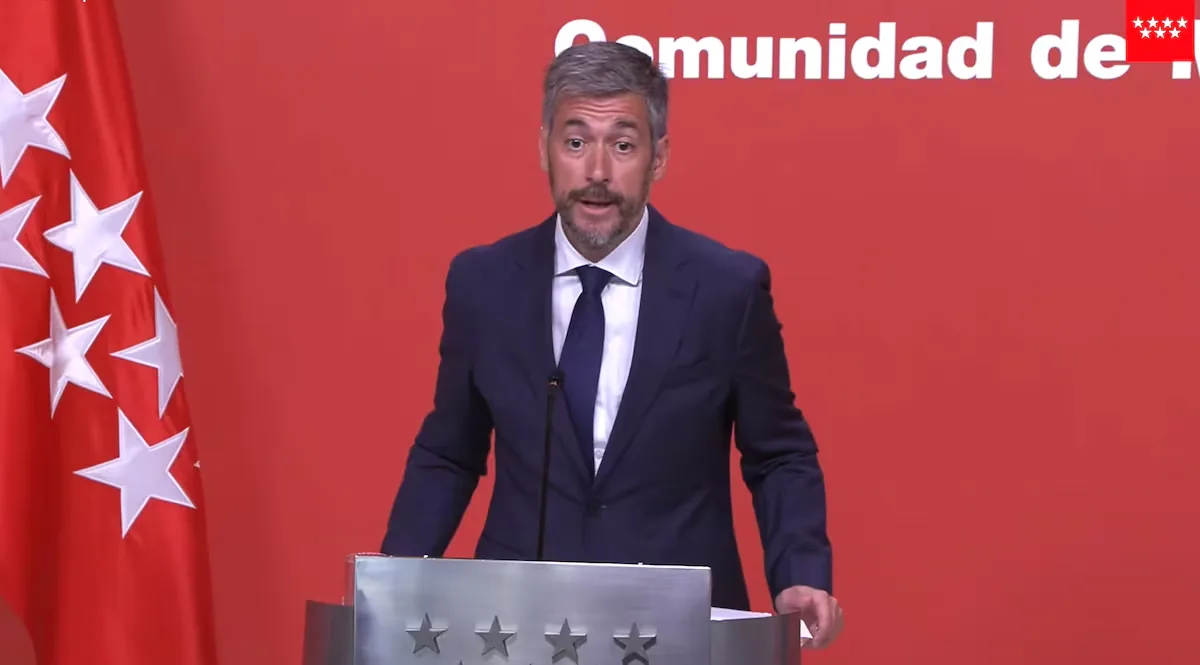








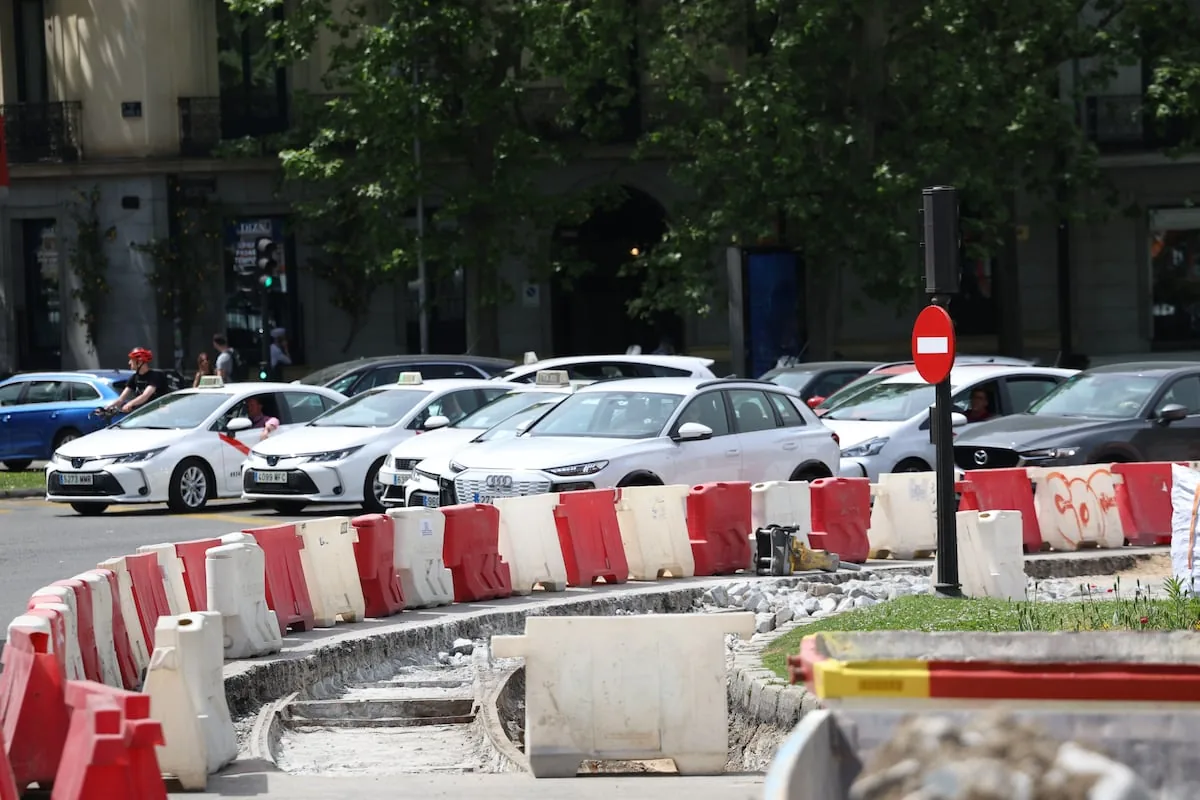
The last tram lines in Madrid stopped running on June 1, 1972, but their rails still remain under the asphalt. The remodeling works on Calle de Alcalá between Cibeles and Independencia squares have uncovered the railway track that proves the tram once ran along the capital’s main artery, remains that the Community of Madrid has announced it will study. The Minister of Culture, Tourism and Sport of the Community of Madrid, Mariano de Paco Serrano, announced this Tuesday that an archaeological study will be carried out this week with the aim of determining the age and heritage value of the vestiges.
Read more Sheinbaum questions security at the Teotihuacan pyramids: “How does one enter with a weapon?”
“Madrid is very rich in heritage, and both the Community and the City Council are characterized by the defense and preservation of that heritage,” said the minister at a press conference, while insisting on the need for experts to determine the historical relevance of remains that could be post-1948, according to the delegate of Works and Equipment in the Madrid City Council, Paloma García Romero. “In principle, we believe these are tracks from after that date, 1948, but we are at the disposal of what the General Directorate says regarding their treatment or possible conservation,” she explained. The Municipal Transport Company (EMT) took over the existing tram from 1948, so, pending the definitive report, it is considered that the remains could be from after that date.
Now all eyes are on the incorporation of the tracks into the boulevard project, a demand championed by the Retiro Norte Neighborhood Association. “We believe that the tracks should be integrated into the definitive landscape of the Puerta de Alcalá; the fact that the Community is going to study the remains is a very positive step,” says the president of the neighborhood group, Ángeles Rodríguez.
Today, during the works on Alcalá street, the old cobblestones and tram tracks that surrounded the Puerta de Alcalá have appeared.
— A.V. Retiro Norte (@AVRetiroNorte) April 20, 2026
As was to be expected, in Almeida’s Madrid, not a trace of these historical remains will be left. Tomorrow there will be nothing left. pic.twitter.com/eNiEAUU8b5
For Más Madrid, “it’s very good that the PP is going to study the remains of the tracks,” but Rita Maestre’s group distrusts the intentions of the governments of Isabel Díaz Ayuso and José Luis Martínez-Almeida. “Since this intervention is being carried out in the area of the Landscape of Light, which is a World Heritage Site, we demand that the City Council not act on its own and instead inform and listen to the contributions made by the Civic Social Council,” states Cuca Sánchez, councilor and heritage spokesperson for Más Madrid, and insists on the need for an archaeology department within the Culture Area: “It is an agreement and an unfulfilled commitment, like so many others, of the Almeida Government.”
In the eyes of the Socialist Municipal Group, the study announced by Isabel Díaz Ayuso’s Executive was not necessary to confirm the value of the rails as a “witness” to the city’s history. “Ultimately, more than delving into the value of the tracks or not, it’s about having the political will to preserve something that costs nothing and poses no problem, and which, without a doubt, will add immense value to the reform of the Puerta de Alcalá surroundings and, in general, to the city,” states Antonio Giraldo, councilor and urban planning spokesperson for the PSOE in the capital.
Read more Karol G returns to Spain in 2027 with concerts in Barcelona, Seville and Madrid
The major discovery of tram rails under the city’s ground is part of the renovation works that will allow citizens to walk under the Puerta de Alcalá and involve the creation of a pedestrian promenade between the Cibeles fountain and the Plaza de la Independencia, works that will not suffer any delay. “In principle, we do not believe that the discovery will prolong the works,” explains a City Council source, who also assures that the remains “will not be touched” until José Luis Martínez-Almeida’s Government receives the report from the General Directorate of Cultural Heritage.

The section of Alcalá street where the remodeling will take place is 425 meters long, and the works will affect both the uphill and downhill sections from Puerta de Alcalá to Cibeles, as detailed by García. The street currently has four lanes per side, one of which is for buses. With the reform, one of these lanes will be eliminated to allow one of the sidewalks to be widened from seven to ten meters.
Also, 57 trees will be planted in the expanded pedestrian space, and a bike lane will be established, separated from traffic by the trees. The result: two lanes for cars and one for buses per side, a bike lane on the south side, and a central pedestrian promenade 3.8 meters wide leading to the monument. The intervention will also involve a renovation of all the paving, which will consist of granite slabs and cobblestones, and the road asphalt will also be renewed.
The boulevard will complement the latest restoration of the Puerta de Alcalá, which was in an advanced state of deterioration, was covered by a huge canvas in 2022, and was out of sight of tourists for 11 months. The renovation process cost 3.1 million euros.