








The Government has achieved the ratification in Congress of the royal decree-law endowed with 309 million euros for Ceuta with the support of the PP, which maintained suspense until the end about the direction of its vote and had signaled that, at most, it would abstain. Finally, Vox was the only party that voted against the million-euro package of aid, bonuses, and investments to the city. The Government’s measures obtained 304 votes in favor, against 33 from the far right. The seven deputies from Junts voted blank. The royal decree will be processed as a bill through the urgent procedure.
The Government’s expectations were not optimistic with the PP, which surprised. The scenario considered was the abstention of the popular bench. The reason was the hardening of Génova’s criticisms of the Executive in recent days, which made it seem very unlikely that Alberto Núñez Feijóo would give the instruction to support the royal decree-law. The feeling in La Moncloa was that Vox would exploit the coincidence of the PP with the PSOE and Sumar in a full-right struggle to be the most benefited from the Government’s wear. In the end, Génova opted for a positive vote, just on the eve of Feijóo’s visit to Melilla. Before that, he will meet in Madrid with the European Commissioner for Interior and Migration, Magnus Brunner. On Monday he will go to Ceuta with the leader of the European PP, Manfred Weber.
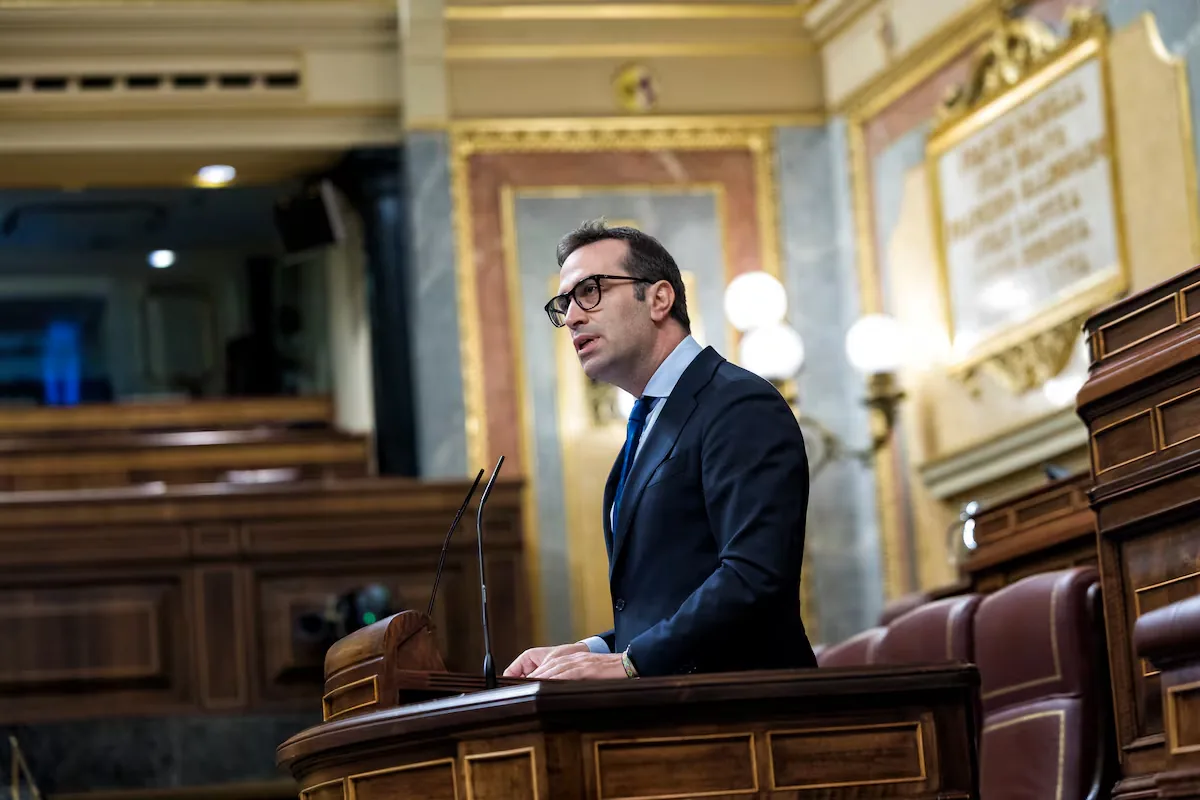
The attempts of Carlos Cuerpo, who has appealed on several occasions to “the institutional responsibility of all parliamentary groups towards the city of Ceuta,” have ended up succeeding. The first vice president and Minister of Economy has defended that the royal decree-law approved by the Council of Ministers on September 1, with the purpose of dispelling the premise of “abandonment” of Ceuta that its president, Juan Jesús Vivas, has reproached since the beginning of the crisis, will allow “a return to normality as soon as possible” for the people of Ceuta because its content is “the response to the concerns” that social agents, business associations, the city, and its citizens of Ceuta had conveyed to him in August. The number two of the Government has reiterated that the package of aid, bonuses, and investments is a “very precise diagnosis of the nature and evolution of the economic impact” caused by the migratory avalanche. On July 30 and 31, about 80,000 irregular immigrants entered the city, of whom an undetermined number is still present, estimated between 5,000 and 10,000 people.
“A saying from my land says that at night everyone goes to reap, but in the morning only those who go go. Come with us, ladies and gentlemen,” the vice president used the proverb to convince the entire chamber, particularly the popular members. The PP’s reaction did not invite a vote in favor. “Apply it to Sánchez and his Government, who have been a month without coming to reap, neither at night nor during the day,” deputy José Vicente Marí retorted. “If what is happening in Ceuta were a migratory crisis, what Sánchez would have said is not that it was a violation of our territorial integrity. He would not have affirmed the Spanishness of Ceuta and Melilla. What there has been is an invasion, a conscious, instigated decision, a hybrid attack,” the PP parliamentarian added. Cuerpo did not mention Morocco once in his speech.
Read more ‘La mesa de Hora 25’, in EL PAÍS | Program of September 16, 2026
The PP and Vox have competed to see who signed the most raw and insistent speech on the return to Morocco of the irregular immigrants who remain in Ceuta, as seven weeks have passed since the border jump. Once again, the far right has shown that it is unbeatable there. “The Government puts all resources in favor of those outside and none for those inside,” said José María Figaredo. The Vox spokesperson also defended, unlike the PP, the breaking of the Friendship Treaty with Rabat. “Ceuta suffered an invasion, a hybrid war act launched from Morocco, warned and detected by the CNI. The Government stood idly by. What does Pedro Sánchez owe Morocco? Why does he seem to systematically defend Morocco’s interests?” repeated the leader of Santiago Abascal’s party.
The entire right, including Junts, agreed in dismissing the shock plan designed by the Government, which allocates 118 million euros to humanitarian reception, 80 million to companies and workers, 90 million to security, and 21 million to strengthening essential services. The PP deputy defined it as the “umpteenth plan that does not seek to help the people of Ceuta but to spread the Government’s propaganda.” “They cannot plug their incompetence with money,” he concluded. “Return the invaders to Morocco now, stop handing out alms. Do you really want to tell us that these crumbs will serve to fix anything?” Figaredo raised his tone. Junts did not lag behind either. “Now they want to cover up with money that they are late again. None of this million will be paid by the Interior Minister or President Sánchez, none of the political leaders responsible for this crisis will pay it, we will all pay it (…) Do not try to present as an exemplary response what is an emergency repair of a problem they did not know how to manage. This royal decree shows the cost of their incapacity,” criticized Josep Maria Cruset.
Read more The PSOE of Jaén ignores Montero with two candidates for the mayoral primaries