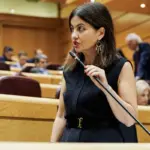


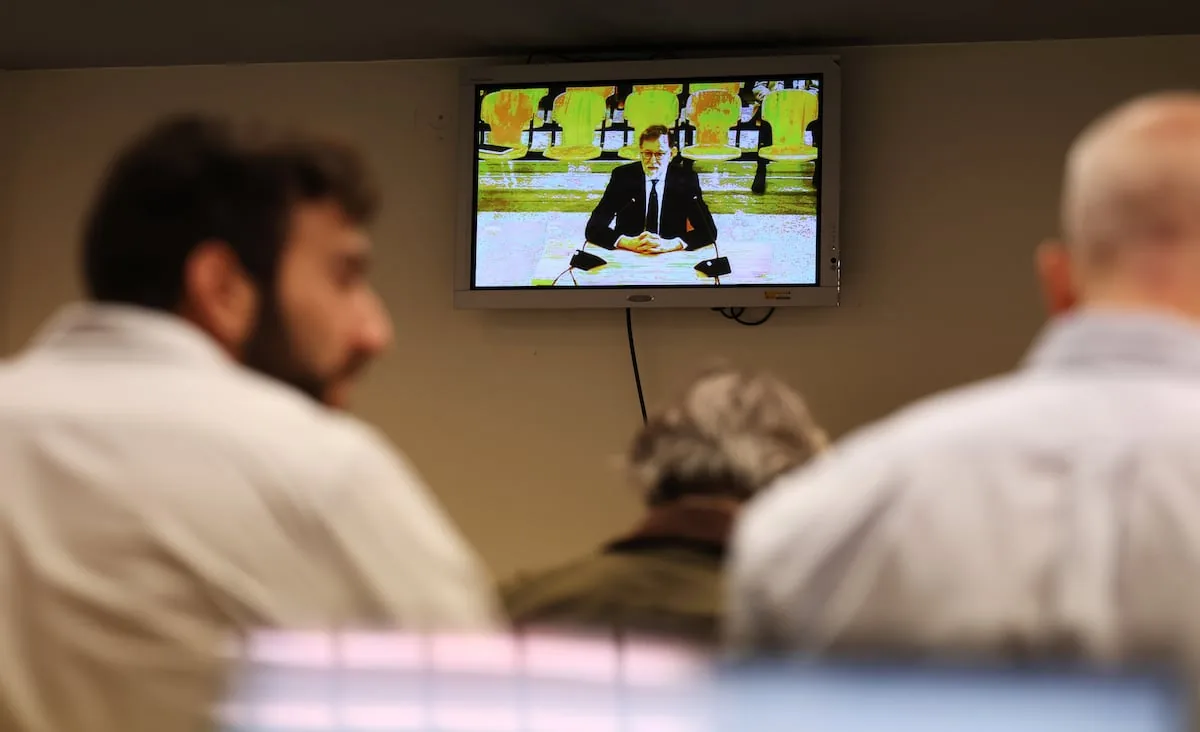
When it’s the turn of the PSOE lawyer, the president of the Kitchen court, Teresa Palacios, looks up, ready to intercept all questions she believes stray from the fold. Not even the presence of a former Prime Minister on the stand has eased the tension (which is going in crescendo session by session) between lawyer Gloria de Pascual and the magistrate, a veteran of the Audiencia Nacional. First question to Mariano Rajoy and first clash. “He handed him an envelope…”. “Madam lawyer, please, the facts of the accusation do not include that.” “I protest.” The judge tries to focus the interrogation on the parapolice operation against Bárcenas, avoiding any possible questions about the PP’s slush fund or its derivatives. A couple more questions and, again, an interruption from the president. “I protest, I’m going to protest everything,” De Pascual snaps with weariness. “Madam lawyer, please withdraw that impertinence.” “I withdraw it.”
Read more An immersive experience to redefine the car as a living space
The PSOE lawyer tried again and again this Thursday. After all, almost all the witnesses on this important day were at her request. She wanted to know if Rajoy shredded the party’s black money papers, if Rajoy was El Asturiano, or if he knew about the existence of Kitchen. And to help him with his memory, she wanted to show the former president some messages he exchanged with Bárcenas. But not that way either. “Please ask the question,” the magistrate insisted. Rajoy remembered some messages, but not all. The one about “Luis, be strong,” for example, yes. “I remembered it because it has been repeated every day over the last 15 years,” he clarifies.
The former popular leader started with monosyllables, but grew bolder and even ended up showing his conviction that if any police operation existed — which he was unaware of — “it fully complied with legality.” The former Prime Minister held the same thesis as the defenses. It was to uncover Bárcenas’s straw men and his money abroad. Because Bárcenas “was not clean.”
Unlike former Interior Minister Jorge Fernández Díaz, who, in the words of the second exceptional witness (former PP Secretary General María Dolores de Cospedal), was a “straight and upright” person. “And he has suffered a lot, if I may add.” “I’m sorry,” the PSOE lawyer continued. “Me too.”
De Pascual tried late in the morning to circumvent the president’s strict controls. With little success. She stumbled right at the start: “Could you tell me the institutional positions you held during the 21st century?” “Oh, please…”, Palacios quickly interjected. Laughter in the room, of course. Fortunately, Cospedal only listed them from 2002 onwards.
The lawyer managed to keep interrogating the former Minister of Defense for a good while longer than she managed to hold Rajoy. 40 minutes just delving into her relationship with Commissioner Villarejo. At 33 minutes, Rajoy was already out.
Read more The Spanish legacy of Octavio Paz
That she met him because her husband introduced him to her, and that she was interested in having a relationship with him because the police officer had ties with all Spanish press. “Practically all journalists in this country had spoken with him.” So her meetings “almost always” in her Ferraz office and occasionally in a cafeteria (“a five-minute coffee”) were to discuss two matters. One, who was leaking information from the summary against Rita Barberá. “Because she was a lady and a very good friend of mine.” And two, to clarify “the more than well-founded suspicion” that someone from the Ministry of Interior was spying on members of the PP. No one delved further into this second point, but when the PSOE lawyer wanted to go into Barberá’s matter… “a person who was also part of the Gürtel.” Again, a jab from the president: “That comment is unnecessary, especially about a lady who has passed away.”
So many questions had left Cospedal parched. She asked for a little water. A recess, Palacios suggested. But no, she just wanted something to drink. “If with the water you are going to bring me…”. The president found herself in the position of explaining to the former Minister of Defense that no one served water there, but fortunately a lawyer appeared with a small plastic cup. Next question.
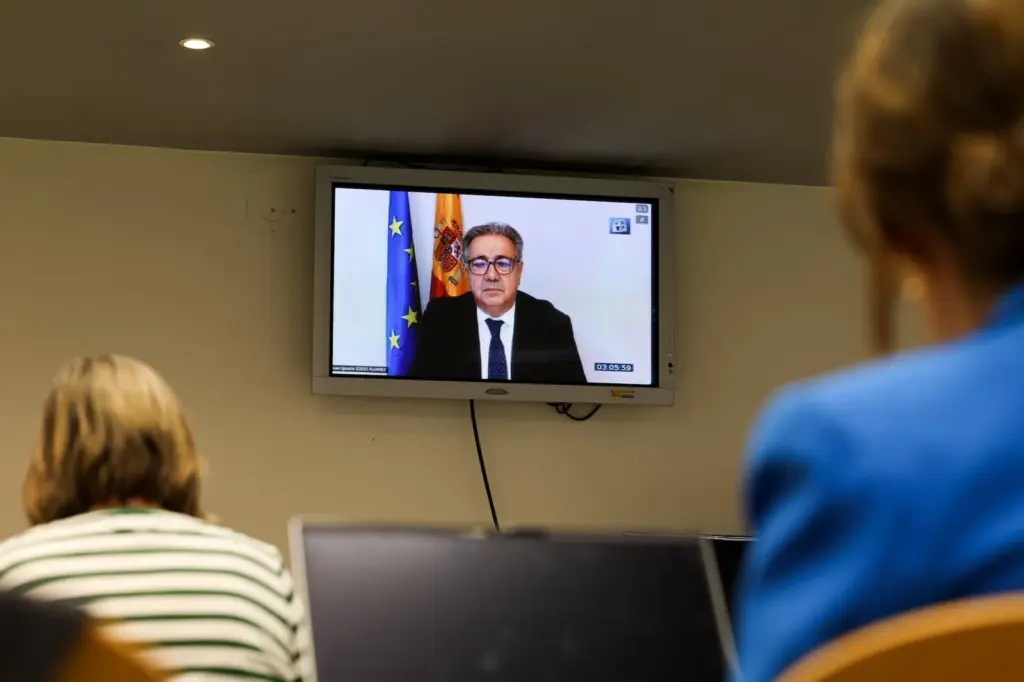
The block of prominent figures was closed by former Interior Minister Ignacio Zoido. He, via video conference. White background and double flag, on the left, the European Union, and next to his head, that of Spain. Lawyer De Pascual puts effort into it again. When he replaced the previous team in Mariano Rajoy’s Executive, why did he change the entire team? Palacios glances sideways at Francisca Ramis, the other magistrate on the court with whom she continuously shares details. Ramis acts as an arbiter. A frown at her colleague at the table means a red card. “Madam lawyer, the big changes in the ministry… Can you tell us what relevance they have for the accusation?” Palacios says. And the lawyer explains: “Because many of those dismissed are accused here today.” Then, she modifies the question and tries again.
But Zoido, now an MEP, doesn’t allow himself to get entangled. If he dismissed Secretary of State Francisco Martínez and the entire previous police leadership, it wasn’t due to distrust, but because he wanted his own team. “After many years in politics, I understood that it’s good to have a cohesive team,” he notes. And little else, because he also knew nothing about Kitchen. At that stage, he wasn’t even in Madrid. “I was the mayor of Seville, I had enough on my plate.” Recess and coffee, before starting with the second-tier politicians. The first-tier ones left little news. A lawyer comments before re-entering with a machine coffee. “The coffee at the Audiencia Nacional is good, that’s a headline.”