


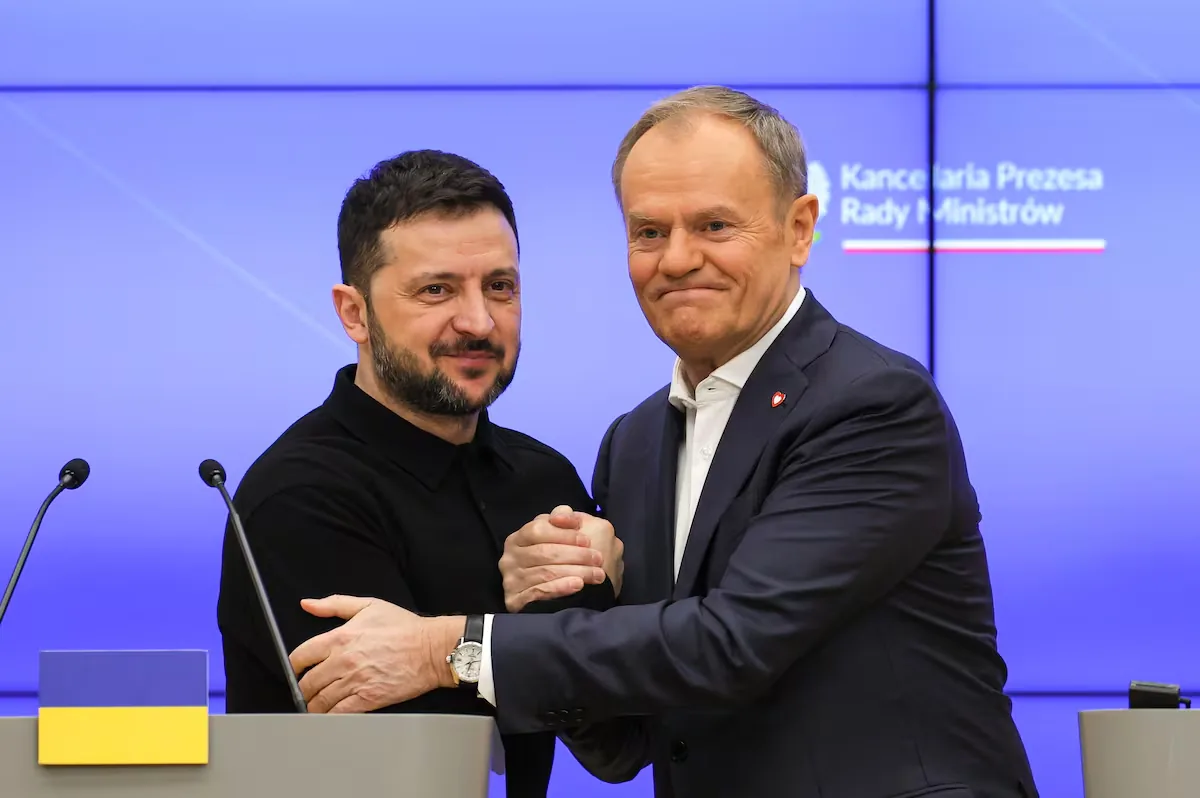
The Volhynia massacre is the most problematic issue between Poland and Ukraine. According to Warsaw, Kyiv murdered between 50,000 and 100,000 Poles between 1943 and 1945. It is an unclosed wound that frequently opens between the neighbors. The last time was last week, when Ukrainian President Volodymyr Zelenskyy decided to honor a military unit by naming it “Heroes of the UPA,” the name of a nationalist militia that fought for the country’s independence but also executed tens of thousands of Polish civilians. The move deeply offended Warsaw, one of its main allies in the war against the Russian invasion.
Read more Dalgliesh
Karol Nawrocki, the Polish president, wants to withdraw the Order of the White Eagle, Poland’s highest decoration, from Zelenskyy. Prime Minister Donald Tusk is trying to calm tempers, but the crisis has deepened with each passing day. It also occurs in an atmosphere of growing animosity towards Ukrainian refugees in the country that opened its doors to them at the start of the invasion in February 2022.
On May 26, Zelenskyy granted the Northern Independent Special Operations Center the honorary name “Heroes of the UPA,” the acronym for the Ukrainian Insurgent Army. Ukraine reveres the leader of that nationalist militia, Stepan Bandera, an antisemitic fascist who collaborated with the Nazis. The national hero in Ukraine is, for Poland, the murderer who led ethnic cleansing in Galicia and Volhynia, in western Ukraine, during World War II.
The cult of Bandera’s figure has caused other crises between the allies and Kyiv. Poland’s historical demand is that Ukraine apologize for the UPA’s crimes, recognize them as genocide, and facilitate the exhumation of the victims. It even conditions support for Ukraine’s entry into the EU on Kyiv responding to these demands. It is an extremely delicate matter, and some progress had been made, which the decree signed by Zelenskyy has now undone.
Decision by the military
Ukrainian Foreign Minister Andrii Sybiha explained this Wednesday that it was the military who chose the unit’s name. “Our defenders deserve unconditional respect. Today, it is they who, at the cost of their health and often their lives, hold the front line and defend all of Europe against the Russian threat,” justified the head of Ukrainian diplomacy in a statement published on social media. “I know for sure that our military had absolutely no anti-Polish intentions. For them, it was about honoring those who, many years ago in a similar way, fought against imperial Moscow, Bolshevik-communist occupation, and repression,” he added.
Sybiha also thanked Poland for “its leadership in supporting Ukraine during this terrible time of war.” This gratitude also sought to appease a sentiment that often resurfaces among the Polish political class and society. Last week, Przemyslaw Czarnek, one of the leaders of the ultraconservative Law and Justice (PiS) party, exemplified this. The former minister called the Ukrainian decision a “shameful signal for Polish society” and “a demonstration of extreme ingratitude” towards a country that has dedicated itself to military and humanitarian aid for its neighbor.
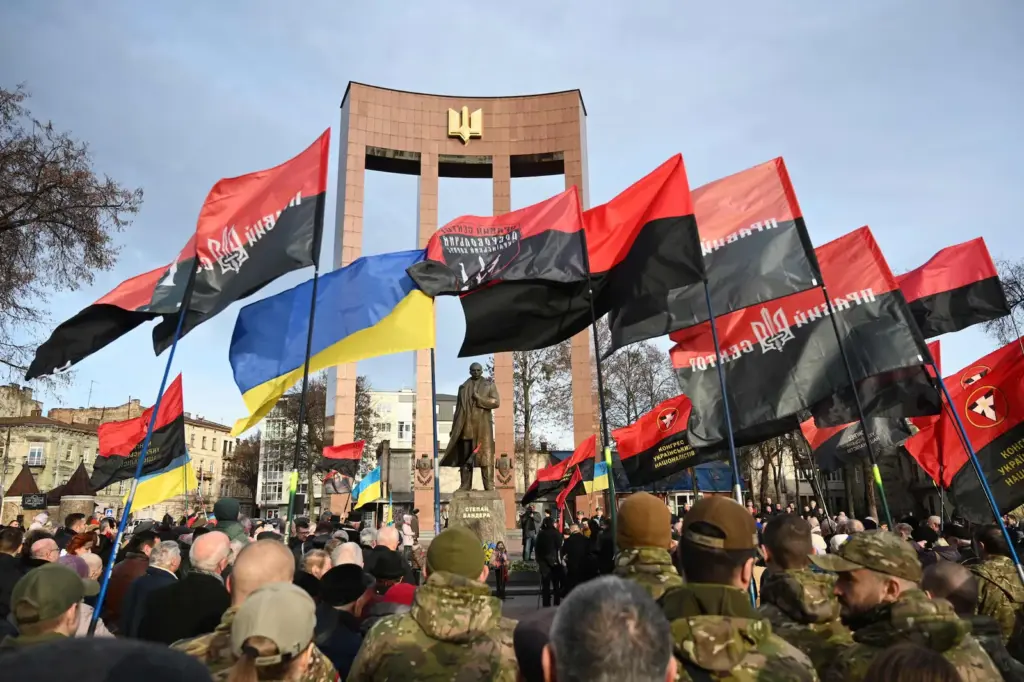
President Nawrocki, also an ultraconservative, announced last week that, following the suggestion of the far-right Confederation party, he will propose the withdrawal of the Order of the White Eagle that his predecessor, Andrzej Duda, awarded to Zelenskyy in 2023. He will do so next Monday, when the body responsible for overseeing that distinction meets. The head of state, a historian not very sympathetic to Ukraine for reasons including the Volhynia issue, declared last week that the incident demonstrates that the EU candidate country should not be admitted to the community club due to its “mentality and glorification of UPA bandits and murderers.”
In parallel, Tusk’s liberal government has tried to calm the tension. “If we argue about the past, others will win the future. The President of Ukraine should understand this. Poles too. Before it’s too late!” the prime minister wrote on X last Friday. These days, the Polish press speculates whether Tusk will support the withdrawal of the decoration or block it, refusing to sign it, to prevent the diplomatic crisis from escalating.
Read more No trace
Bilateral contacts have taken place between Kyiv and Warsaw these days, but so far without the result Poland is asking for: a rectification. Polish Defense Minister Wladyslaw Kosiniak-Kamysz reiterated on Wednesday his “call to the Ukrainian authorities to reconsider this decision and find a way to honor contemporary Ukrainian soldiers that does not harm the memory of Polish victims.” In a video published on YouTube, Kosiniak-Kamysz stressed that it would be “a gesture of maturity, responsibility, and respect towards the nation that stood by Ukraine in its most difficult moment.”
Despite difficult historical relations, Poland dedicated itself to military aid to Ukraine, out of solidarity, but also as part of its own defense strategy against Russia. Poles also opened their homes to hundreds of thousands of refugees who fled the war when the invasion began. No shelters were needed to house the displaced because the citizenry rallied. That warm welcome is transforming into an increasingly bitter coexistence almost four and a half years later.
The Polish far-right exploits historical issues and offenses like those of these days to deepen rejection of refugees. Russia has also taken advantage of the rift opened by social fatigue and injects disinformation campaigns. In March 2022, 94% of Poles supported hosting Ukrainian refugees; by January 2026, the figure had already fallen to 48%, according to CBOS.
More and more messages of rejection are heard in society, such as that Ukrainians take advantage of social services, have priority in medical care, are ungrateful, or that men of fighting age should return to their country. Lately, there have also been notable cases of physical assaults on Ukrainians.
Tusk’s government withdrew special protection for Ukrainian refugees on March 5 to equate them with other foreigners. Malgorzata Chmielewska, a 75-year-old nun who runs several shelters for the most vulnerable, told this newspaper last week: “The government is afraid of almost fascist nationalist voters —sometimes without the ‘almost’— and makes itself liked among them, at the expense of the weakest.”
The nun recounted, in one of the homes she manages in Warsaw, that the government’s measure has left people in critical situations —with physical and mental disabilities, or with dependent children and no resources— more helpless, to whom her foundation provides shelter. Chmielewska offered a brochure and pointed to a figure: in 2025, they assisted 452 adults and 46 children. “Of them, 46 were refugees, but we can no longer state the number of Ukrainians assisted,” she lamented. The rejection they provoke is such that it can even turn against those who help them.
Read more The most sought-after summer sandals for feet with bunions (and cost less than 17 euros)