









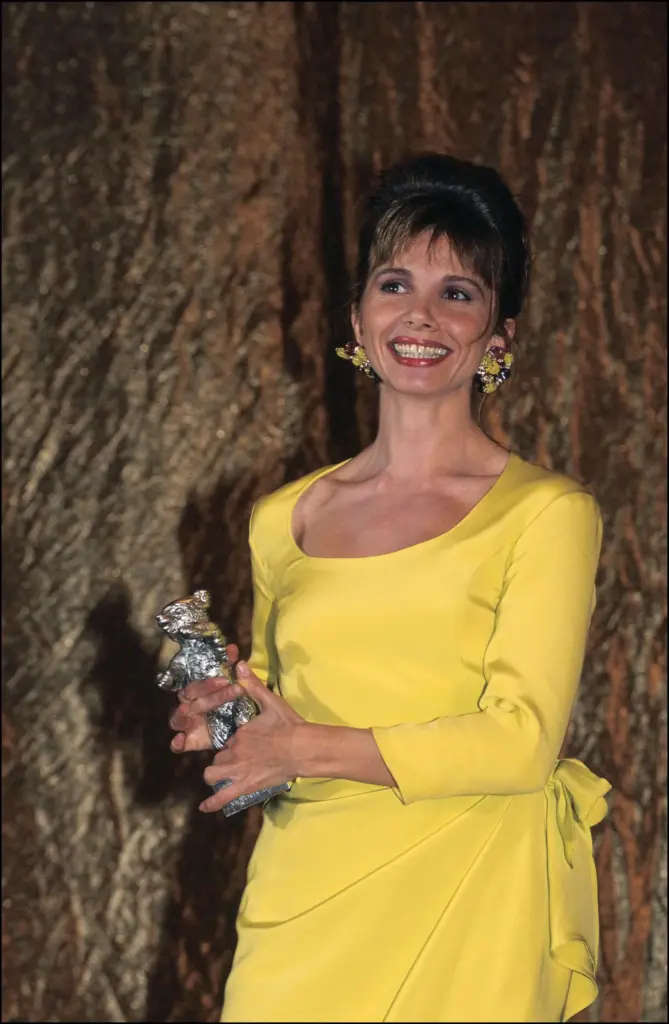
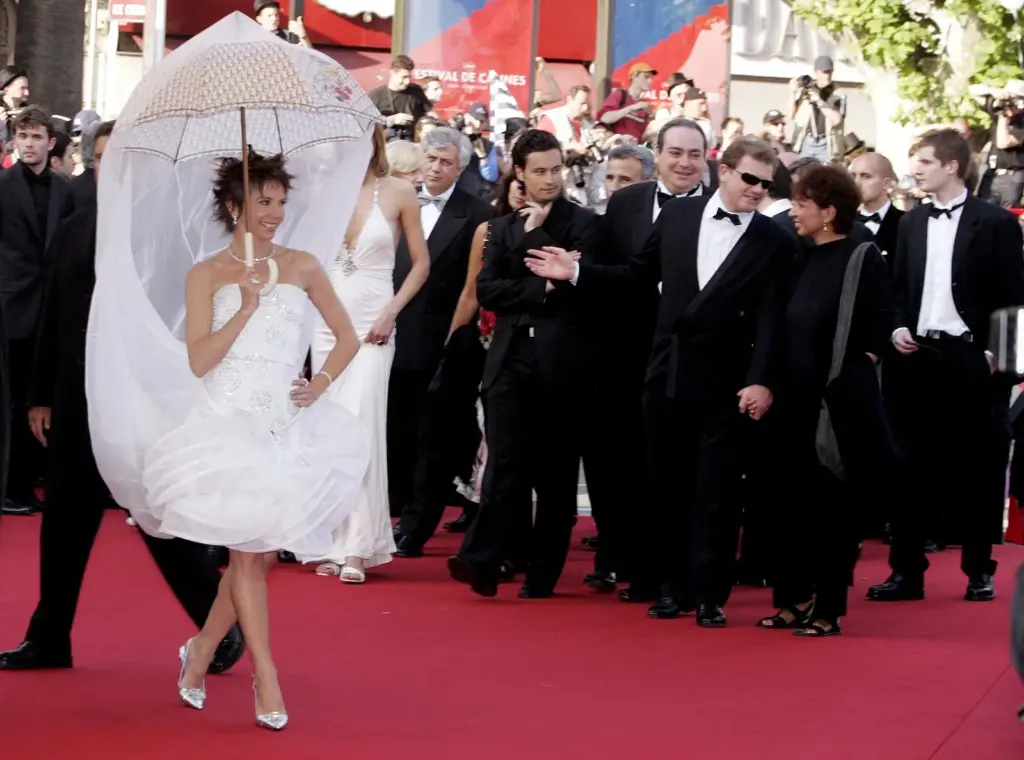
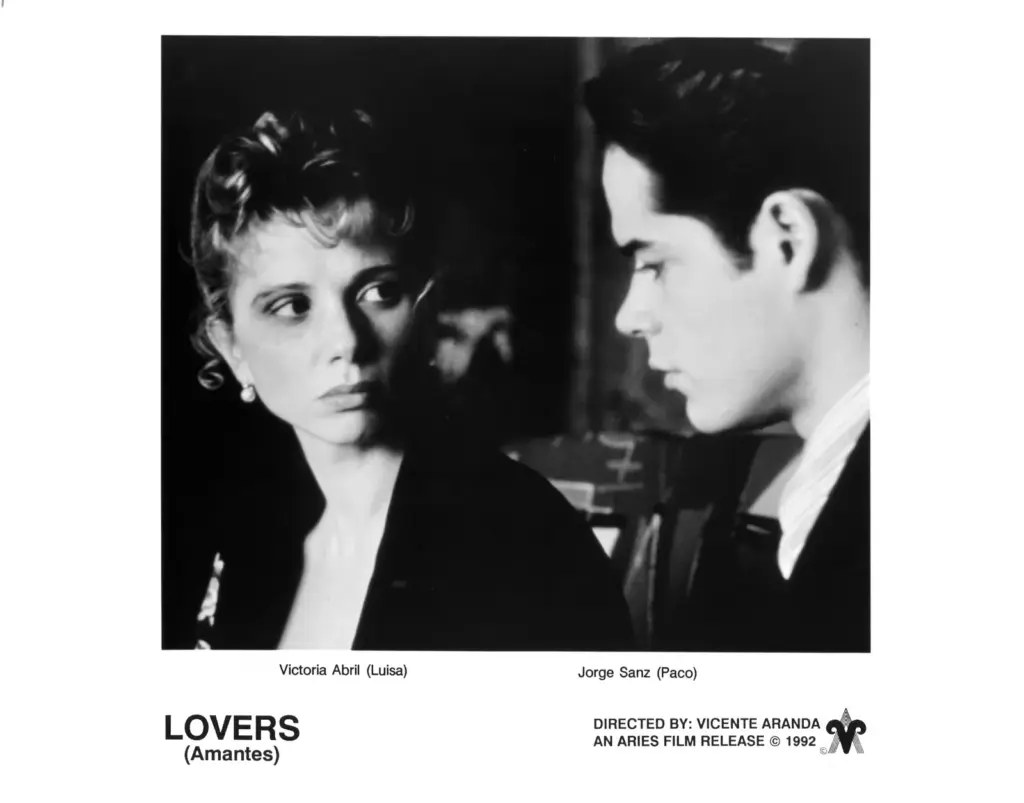
In the official photo of the 1991 Berlinale, Victoria Abril (Madrid, 67 years old) holds her Silver Bear with one hand and raises the other as if performing a bullfighter’s salute, or about to fix her Italian bun (you choose). She had just won, for her work in Amantes, in the best actress category over Vanessa Redgrave and Jodie Foster from The Silence of the Lambs. She was 31 years old and was possibly the best Spanish actress of her generation. Additionally, she had recently finished shooting her imminent French success Une époque formidable and was about to start Tacones lejanos, which would become Almodóvar’s first box office hit in the neighboring country. There she was already moving among the great figures, as evidenced by her two César award nominations. And Hollywood offers would not be long in coming either. For all these reasons, it is hard to imagine a more promising position for a European actress.
However, seen from today, that image contains a paradox because, while marking the exact point at which expectations about her career reached their highest, it also identifies the beginning of a mismatch between her abilities and her place in global cinema. If any fan or industry analyst had been asked then where Victoria Abril would be three and a half decades later, they would have envisioned shelves full of awards and a filmography built alongside the great auteurs. But today that is not the case, and one wonders why. (At ICON we tried to include her for this article, but the actress’s agency informed us that Abril only grants interviews when promoting a project).
“She makes Sharon Stone look like Shirley Temple”
In a profile published then in the Los Angeles Times, her work in Amantes was described as: “She makes Sharon Stone look like Shirley Temple.” The praise had a sexual intention, but it could be applied to her artistic abilities. To be straightforward, the Victoria Abril of 1991 could be said to be perceived as the most talented Spanish actress – as indicated by her six consecutive Goya nominations – and as the great national star of the time. There was – there is, despite everything – something unique about her. From the very beginning. When she appeared in the small national star system in the late seventies, it seemed her arrival was awaited, even though that advent came through roles in films as unmemorable as Caperucita y Roja (Goiricelaya and Revenga, 1977) or Obsesión (Lara Polop, 1977), which preceded her work as hostess-accountant on the TV show Un, dos, tres. The contest did not boost her prestige either, but it made her enormously popular at a time when, very young, she was debating the different professional options opening up to her (her training was not as an actress, but as a dancer).
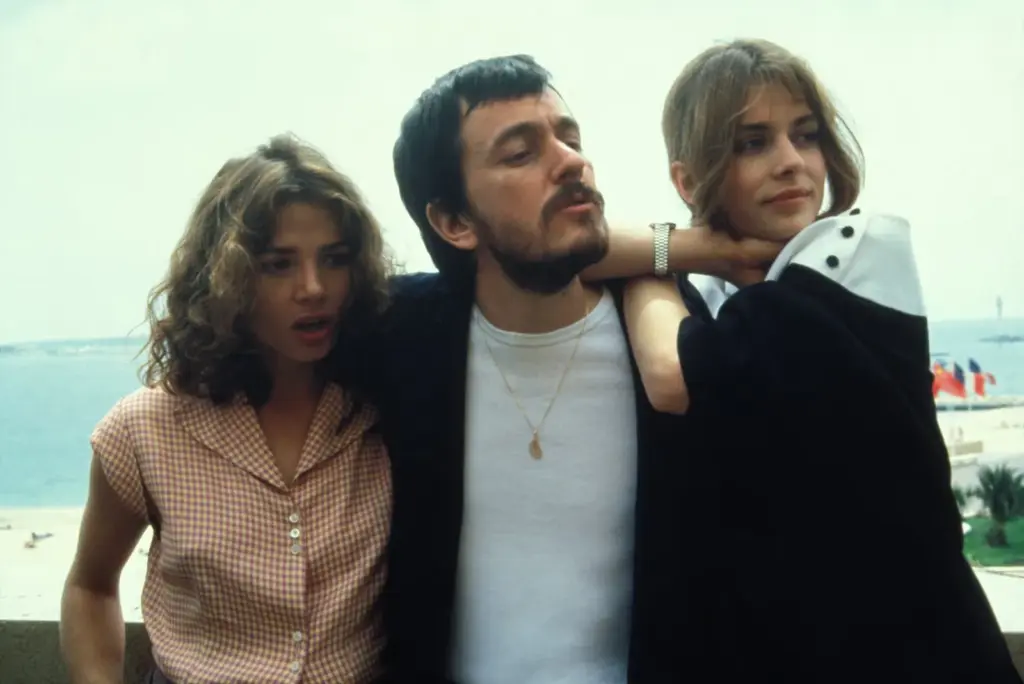
The television adaptation of La barraca, Blasco Ibáñez’s bestseller, increased that popularity while making evident interpretive abilities that could not be wasted. But it was her encounter with Vicente Aranda in Cambio de sexo (1977), and her role in the difficult character of José María / María José, that confirmed that this petite girl being sold as another cathodic sex symbol of Transition Spain was something very different. Different and infinitely more interesting. Instead of becoming a product of her time, she seemed to be shaping the times in her own image and likeness.
For transition and change, those she undertook with Aranda, whom we resist assigning the conventional role of Pygmalion in this work, but who did offer Abril the opportunity to develop her qualities: La muchacha de las bragas de oro (1979), Asesinato en el Comité Central (1982), Tiempo de silencio (1985), Si te dicen que caí (1989), El Lute (1987) and Los jinetes del alba (1990) form a complete showcase of her talent, marking an upward trajectory that was dizzying because no peak was in sight. In Mater amatísima (Salgot, 1980) she played the mother of a 10-year-old autistic boy (when she was only 20!) with a verisimilitude that few method-trained actresses would have achieved.
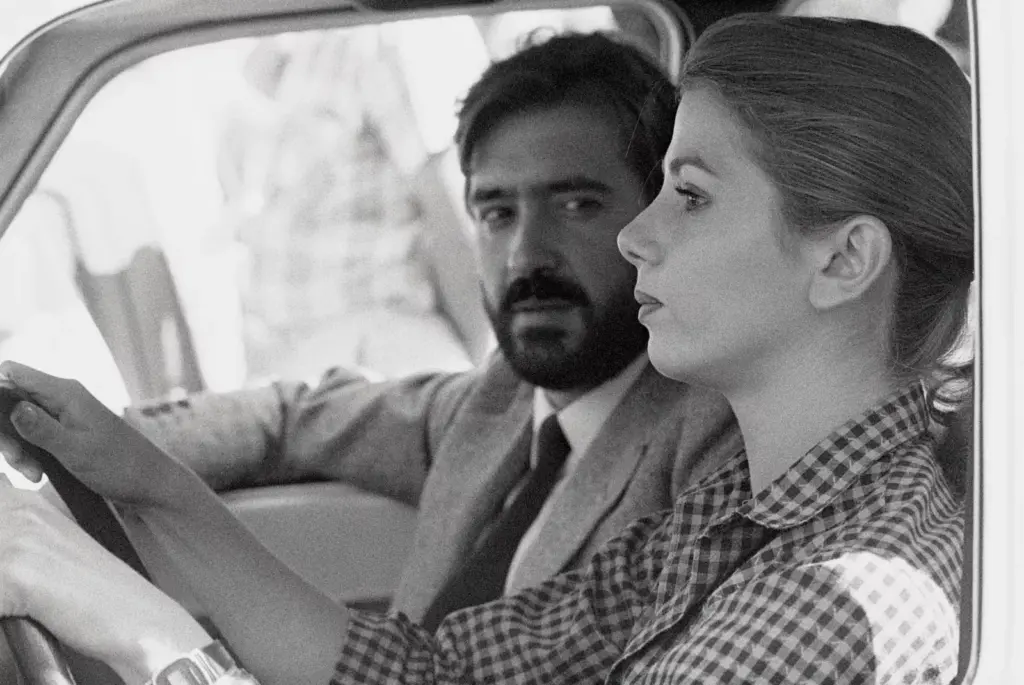
It is normal that during the eighties national directors competed for her, because in her generation there was no one else who, like her, combined naturalness and expressive intensity. There were Camus (La colmena, 1982), Chávarri (Las bicicletas son para el verano, 1984), Borau (Río abajo, 1984), Regueiro (Padre nuestro, 1985), Gutiérrez Aragón (La noche más hermosa, 1984) or de Armiñan (La hora bruja, 1985): almost the entire establishment of national cinema. Witty and talkative, poised without the tendency to overact of the Movida stars, her TV interviews were memorable. In Viaje con nosotros, Javier Gurruchaga suggested that Abril was “eclipsing” all her competitors. And it is true that, by the mid-decade, she was an absolute vedette, solitary in her status: the also stellar Ana Belén and Ángela Molina alongside her almost seemed from another era, Verónica Forqué limited her range to comedy, and Assumpta Serna never quite fit the archetype despite her interesting international journey.
Victoria, France; France, Victoria
Meanwhile, in France, where she moved “for love” – she began a relationship with cinematographer Gérard de Battista, with whom she had her two children – she brought all the flesh and life she had to supporting roles like the maid in Nagisa Oshima’s Max, mon amour (1986). La luna en el arroyo (Beneix, 1983) was massacred at Cannes for its empty aestheticism, and the leads, Gérard Depardieu and Nastassja Kinski, also did not fare well; but she, in a role intended for an African American actress, received her first César nomination (also the first for a Spanish actress) and a lasting memory for a scene where she made sparks fly from a swing. Later she would jump to lead roles in France, mostly in short-lived comedies, sometimes with good box office.
And then Almodóvar arrived. After some previous failed attempts (the Cristal Scott in Qué he hecho yo… which went to Verónica Forqué), in ¡Átame! she formed, alongside Antonio Banderas, a couple capable of breaking the charisma meter. The film did not match the international success of Women on the Verge of a Nervous Breakdown, but it marked the replacement of a Carmen Maura fallen out of favor with the director, as well as one of the actress’s interpretive peaks. She had already entered her best moment: with the Silver Bear from the Berlin festival in hand (thanks to a role in Amantes that should have been played by Maura or Concha Velasco, since she was originally assigned Maribel Verdú’s role), she embarked on Tacones lejanos (1991), her next collaboration with Almodóvar. A Sirkian melodrama that was not fully understood in Spain but swept France, propelled by co-production mechanisms: since then, both the public and the most demanding critics (including the cahier faction) have been unconditional fans of the Spanish filmmaker.
However, surprisingly, it did not lead to Victoria Abril being offered juicier roles or working with more renowned directors in her adopted country: she continued her long streak of forgettable comedies, among which Felpudo maldito (Balasko, 1994) stood out, a huge commercial success about fluid sexual identities that now seems somewhat outdated. In return, the Berlin festival validated her status by awarding her another prize: in 1993 she shared the Berlinale Camera with Juliette Binoche, Gong Li, Corinna Harfouch, and Johanna ter Steege; the five formed a kind of crème de la crème of international actresses.
Meanwhile, in Spain, she once again nailed her borderline caricature role of Andrea Caracortada, queen of trash TV in Kika, her third and last collaboration with Almodóvar. The reasons for this early and abrupt interruption of the professional romance have not been explored as much as those in Carmen Maura’s case. But Abril herself expressed her disappointment at not being chosen for other Almodóvar roles like Julieta (2016): “[…] when I found out Pedro was preparing a new film and there was a role for a 55-year-old woman, I said to myself […] I’m perfect: I have the age and have suffered a lot. I saw myself as a possible comeback. But no, it seems he wanted that other actress [Emma Suárez]. He doesn’t want a comeback,” she resignedly told Vanity Fair.
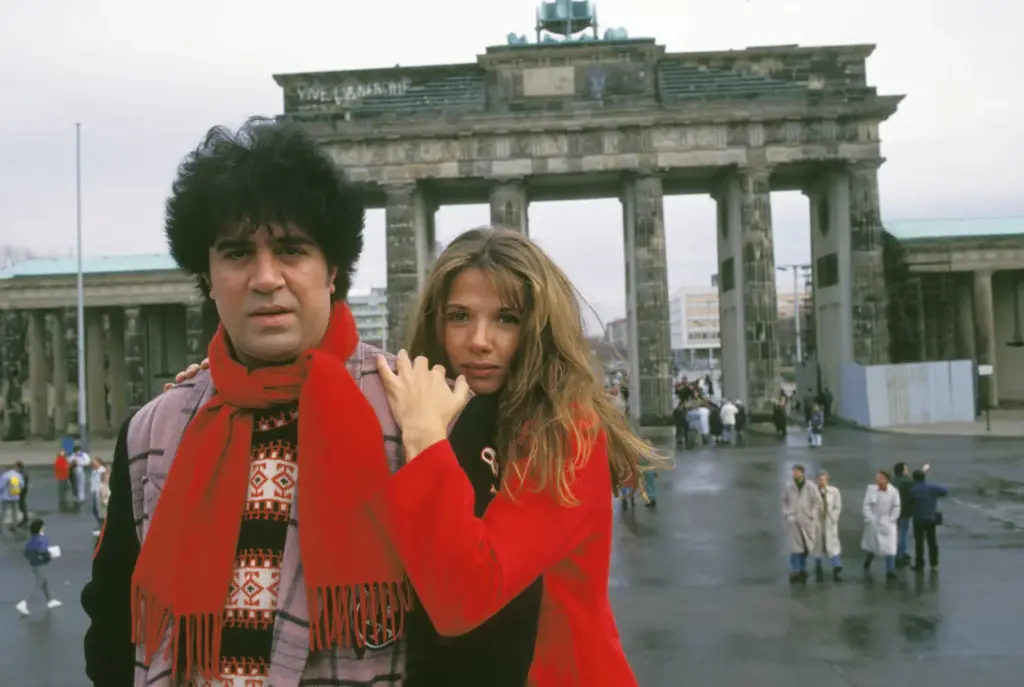
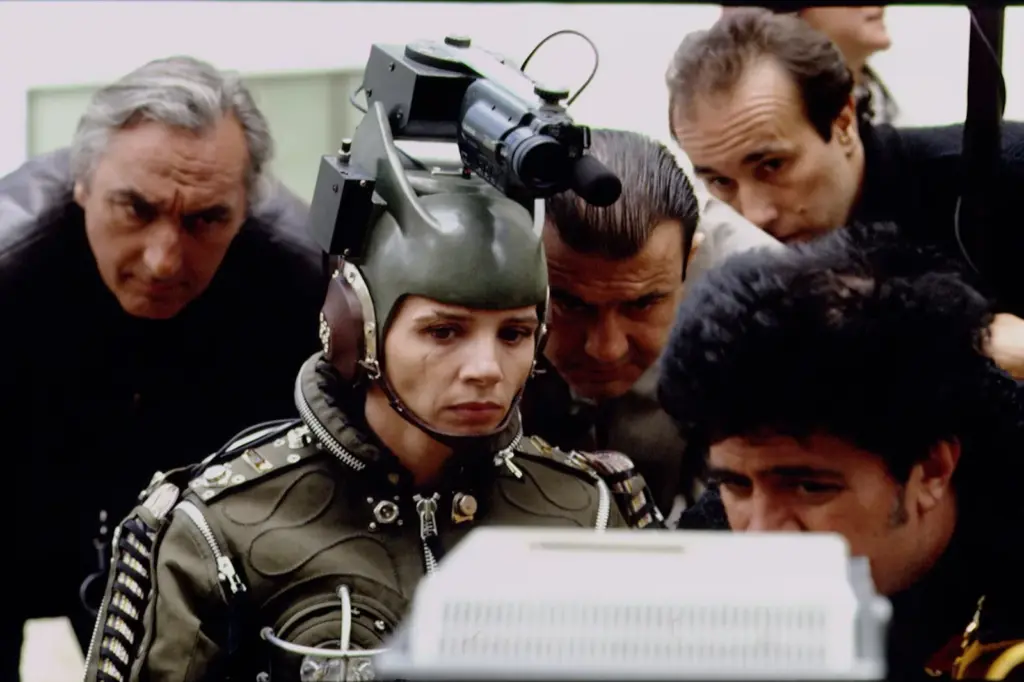
In return, she returned to Vicente Aranda’s filmography (Intruso, Libertarias, Tirante el Blanco) and also shot three films by Agustín Díaz Yanes: with one of them, Nadie hablará de nosotras cuando hayamos muerto, she finally won a Goya that had eluded her in the previous six nominations (the robbery was blatant in the case of Amantes in 1991, that year Silvia Munt won for Alas de mariposa), as well as her second Silver Shell from San Sebastián, after El Lute: camina o revienta (1988). The role of the battered Gloria Duque in this film possibly marked, in 1995, the closing parenthesis of her glorious era. Since then, she has not played many memorable roles in Spanish cinema, except for her supporting role in El séptimo día (Saura, 2004), based on one of the sisters who instigated the Puerto Hurraco crime. Artistically, Entre las piernas (1998) or Sin noticias de Dios (2001) worked at half throttle. And Nacida para ganar (2016) wasted the interesting metanarrative and self-parodic possibilities implied by her character, a con artist, being named Victoria Abril.
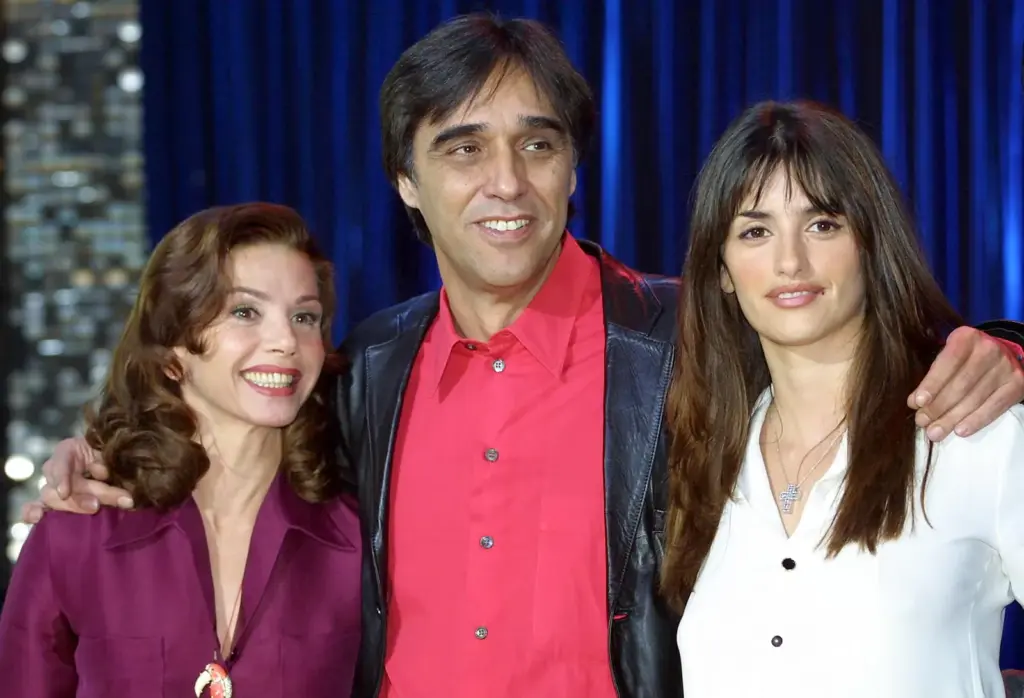
There was also a Hollywood approach aborted almost before it began. Barry Levinson had hired her to co-star in Jimmy Hollywood (1994), a theoretical showcase vehicle for Joe Pesci in antihero mode where she came off much better than him. “[The film] fails because it is hard to imagine someone is a loser if his girlfriend is played by Victoria Abril,” sharply concluded critic Kim Newman in Empire. She was talked about for a role in the blockbuster Disclosure, by the same director, with Demi Moore and Michael Douglas. But, according to the press at the time, her “poor command of English” prevented it. Anyway, it seemed that was not her medium – her participation in David Letterman’s 1996 Late Show includes several awkward moments caused by her naturalness and lack of complexes – and she herself, with sarcasm, attributed her little interest in the American dream to stomach acidity: “As soon as I get there, my stomach starts hurting. The coffee is terrible, the food is unbearable, and people have no sense of humor. Three months of shooting in Texas, and I swear you end up cutting your veins.”
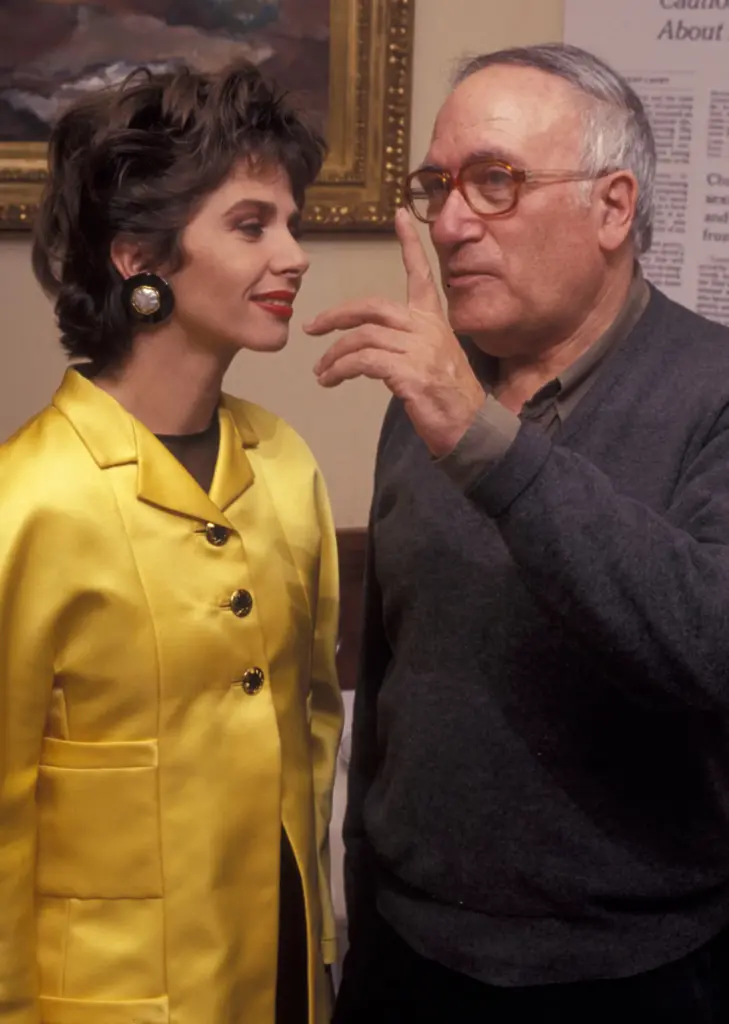
In recent years, she has continued working regularly, more in France than in Spain, where, according to her, cinema “doesn’t care about me at all.” In France, she has achieved new popular successes with the series Clem (2010-2018) and with theatrical comedies Paprika, Drôle de genre, and Marinella, but in cinema she still hasn’t found a role comparable to those of her best days. She has also appeared in reality shows on both sides of the Pyrenees: Masterchef in Spain and, more recently, Traîtres (“Traitors”) in France, where she stirred controversy due to her tortuous relationships with other contestants. “I feel like slapping her,” one of her companions said to the cameras.
One wonders why an actress with such prodigious talent, proven on so many occasions, has not developed a career worthy of her and appears as a reality TV character. It is true that some of her public interventions (such as defending Gérard Depardieu against sexual harassment accusations and her subsequent confrontation with Lucie Lucas, her “daughter” in Clem, or some strange anti-vaccine statements in Spain) have not helped. But these are not decisive factors in times when public image is strategically managed. On the other hand, after 45 years old, actresses enter a critical period where offers may be scarce, but older actresses than her (Carmen Maura, Ángela Molina) or somewhat younger (Emma Suárez, Maribel Verdú) continue to chain good roles in Spanish and international cinema. A strange fate for someone who is the best in her genre. The only one, perhaps.
Read more Oil operators point to Petroprix as the recipient of diesel suspected due to its Russian origin