









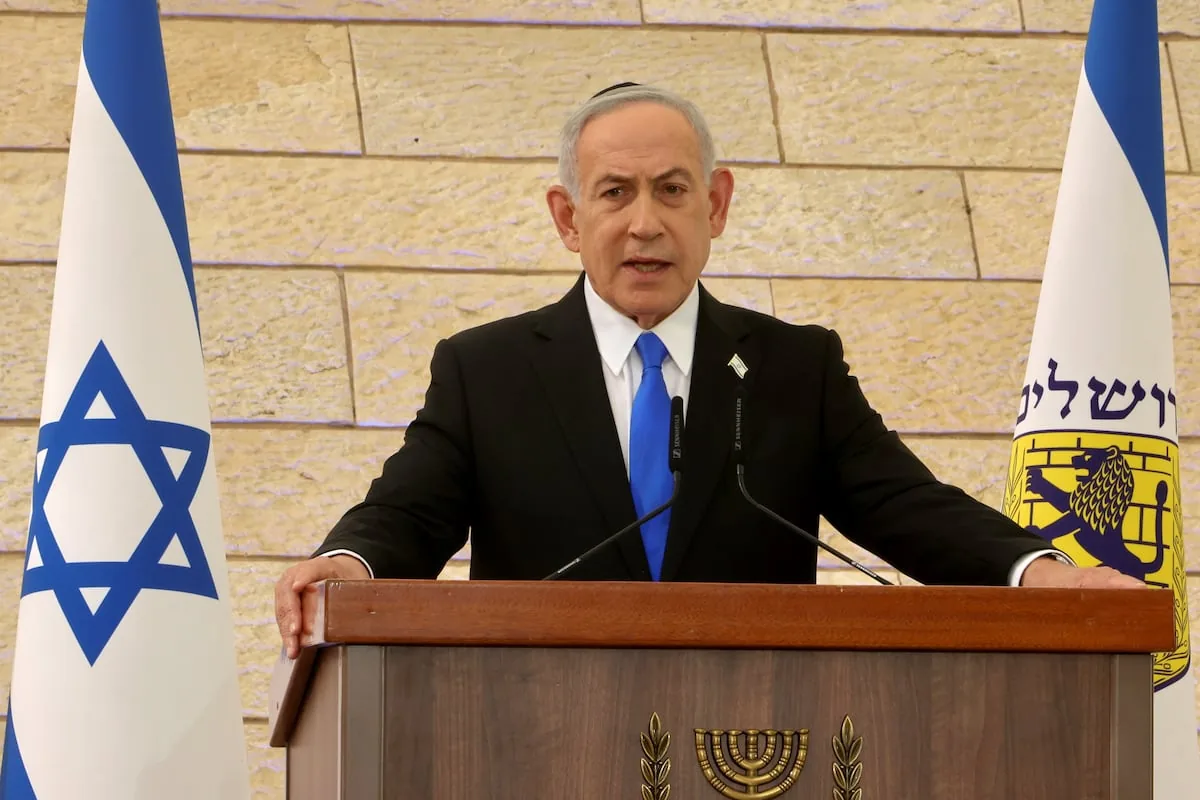
The governments of Spain, Ireland, and Slovenia will today, Tuesday, ask at the meeting of European Union foreign ministers that the Twenty-Seven re-examine the suspension of the European association agreement with Israel. The formal request was made by letter on Friday. This is the second time these countries have demanded that community diplomacy put on the table the adoption of some kind of effective pressure measure against a government, that of Benjamin Netanyahu, which behaves with open contempt for international legality in its military expansion against its enemies in the Middle East. The lack of consensus makes it unlikely that the request will succeed.
The EU’s association agreement with Israel is the main instrument of relations between the two, has been in force since 2000, and grants Israel, which has the Union as its primary trading partner, preferential status. The agreement is subject, like everything the EU signs, to respect for human rights. Spain and other countries requested last year that the agreement be suspended due to Israel’s violation of this principle in Gaza. A report by the European External Action Service, led by the head of European diplomacy, Kaja Kallas, already established last summer that Israel was not complying with its human rights obligations.
The President of the Commission, Ursula Von der Leyen, recognized in 2024 the need to review these relations, but no concrete measures have ever been taken. Spain, Ireland, and Slovenia believe that the invasion of Lebanon or the approval of the death penalty for Palestinians deserve a re-examination of the proposal. It is not a minor gesture. While the bombs have ceased in Gaza, which remains uninhabitable, Israel’s military expansionism has intensified. Today, Netanyahu’s government is out of control and, protected by the US, is carrying out the fantasies of the most extreme nationalism in Lebanon or the West Bank. Therefore, it is necessary to look beyond the melancholy over the EU’s inaction and point out the inconsistency of a preferential agreement with a country like present-day Israel. It is a necessary discussion. Europeans deserve to know if the EU is willing to use its powerful pressure measures to make the Israeli government perceive some kind of consequences for its actions.
Read more Workers in seven-thousand-dollar shirts: when luxury dresses the “normal people” of fiction
The problem for the Spanish Government is that in Europe its position is currently in the minority, and in a dispersed and incoherent EU regarding the relationship with Israel, there are partners who will perceive its position, expressed at a Pedro Sánchez rally in Huelva, as an electoral political gesture and for its international projection. The place for this discussion is Brussels. The president’s announcement requires concrete and consistent diplomatic work to achieve the majorities that will allow the EU to emerge from its intolerable passivity in the face of Netanyahu’s abuses.
Read more The Church has much to do