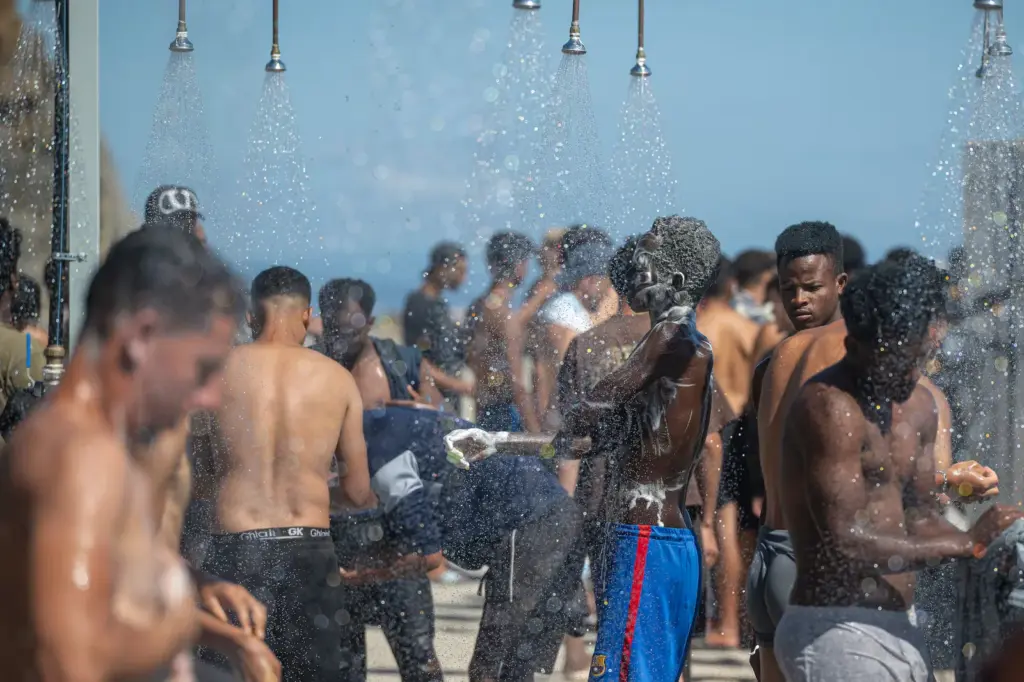
For a city like Ceuta, surrounded by coast, the beach is a good thermometer for a Sunday in August. And that thermometer still showed a very hot social temperature. There are areas with air conditioning and others with fans. In one part, scenes of refugee camps unfold, and in another, locals begin to take out the portable cooler, play music, and open the umbrella with their family on the sand. The crisis that overnight brought in 80,000 people keeps a good stretch of coast unusable, but Calamocarro beach this Sunday finally looked relaxed. “It’s the only beach they have left us. Enough of staying at home. We have to reclaim the space because they stole the city from us overnight. Here, whoever arrives at this beach, we send them over there,” says a father spending the afternoon with two other couples, pointing to the border fence.
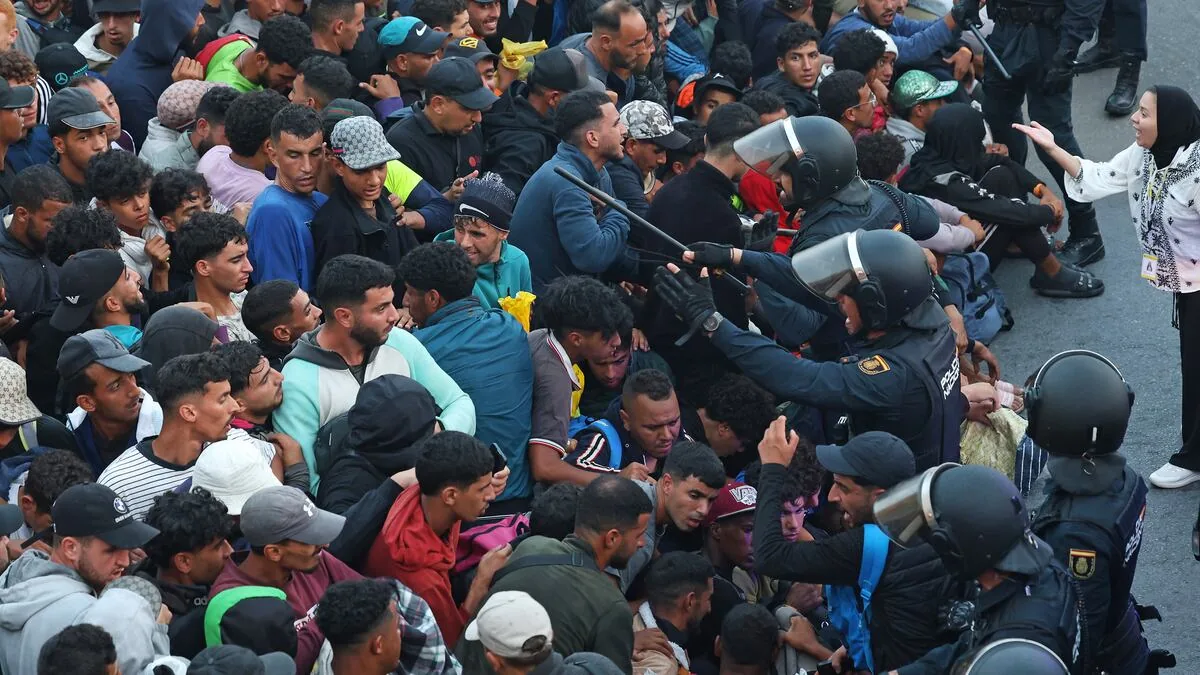
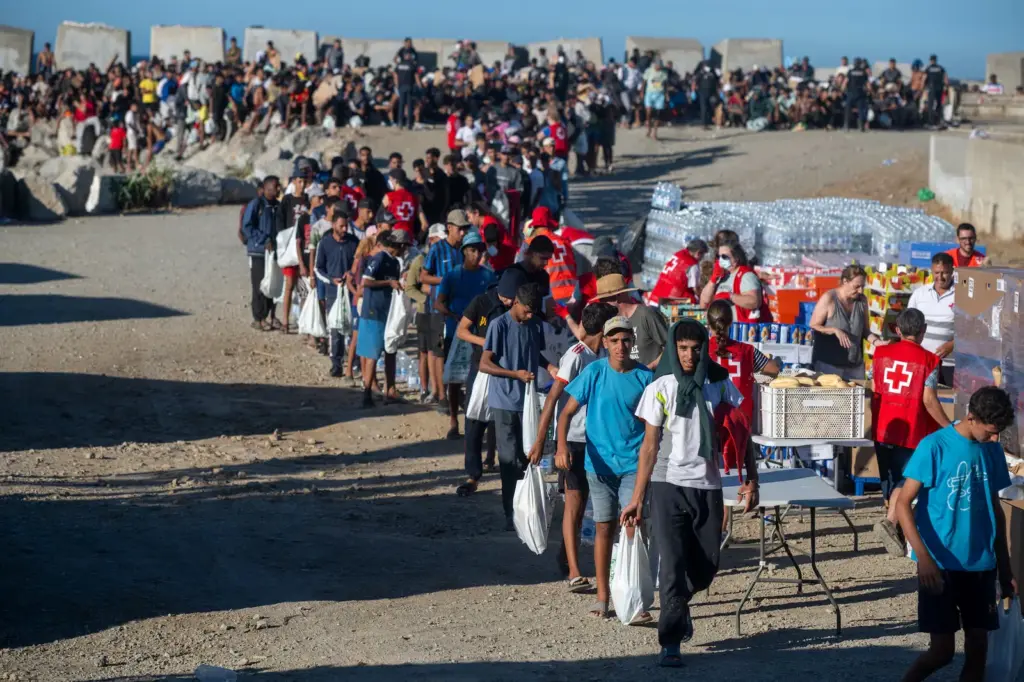
At the other end of the city, the police deployed again at El Trampolín next to the Red Cross tables, where food distribution takes place daily. The officers first grouped the young people into squads of 30 sitting on the sand. A little further on, hundreds of starving boys line up to collect a bag of food. Although there are two hours left before the distribution begins, hundreds and hundreds of people wait. There is nothing else to do. As the sun begins to set, teenagers start coming out in groups from the most unexpected places: from shelters, from crowded rooms where they have been hiding for 23 days, from the Temporary Stay Center for Immigrants (CETI), from the hill, from the beach, from among the trees, from an abandoned building… Those who are not yet lining up to eat wander along Africa Avenue, near the mosque, or around the football field with nothing to do.
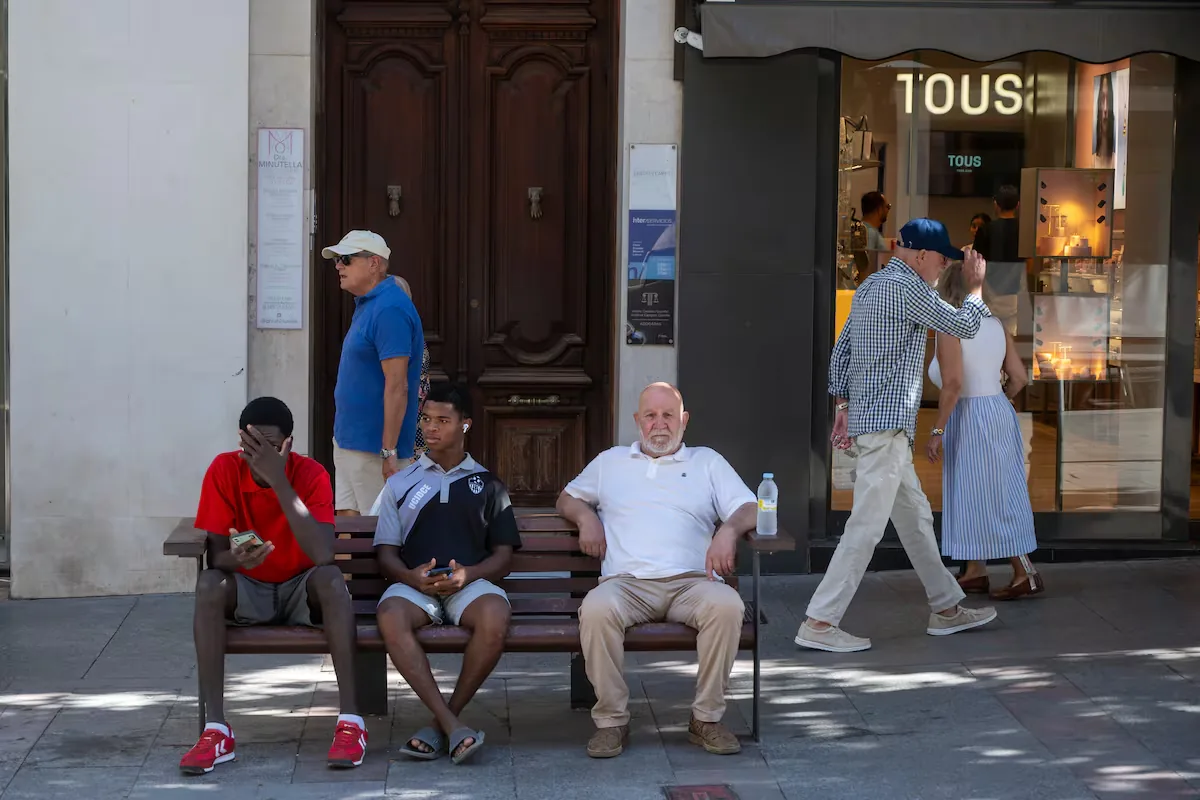
At another end of the city, the isthmus revolves around Africa Square, Gran Vía, and Revellín promenade where modernist buildings, shops, cafes with terraces, the cathedral, and the City Hall follow one after another. It is the administrative and affluent area where Gran Vía is the institutional and commercial showcase of Ceuta: a short, pedestrianized, and well-kept avenue. Buildings with light facades, charming gardened squares, terraces, and small shops. The Assembly Palace, the sanctuary, and the General Command. Mid-morning, church bells, families strolling, and grandmothers who for the first time after three paralyzed Sundays return to have vermouth, like in any other Spanish provincial city on a mid-morning August day.
The initial shock gave way to astonishment, indignation, and now settled anger. There is no other topic at home, on the sand, at the bar, at the café, or at the military casino. Just listening is enough. Between marinade and whitebait, the conversation. “It’s not true that there is normality. See that business? Closed; see that ice cream shop? Closed; see that restaurant? Half empty,” points out Rafael, simply, a civil servant walking hand in hand with his two daughters who prefers not to give his last name. “And the schools? Let’s see who dares to start the school year with this outlook,” he says looking at the two girls. In Ceuta’s golden mile, the feeling is that “all this is very serious and a complete disaster,” but the situation “is a little better than a few days ago,” sums up an overwhelmed waiter.
The word ‘normality,’ however, is the taboo term in a context of collective anger, ‘ninety-eight’ sadness, and end of cycle. The only happy one is the owner of the oriental bazaar who sold all the phones, chargers, flip-flops, and plastic tarps from the store.
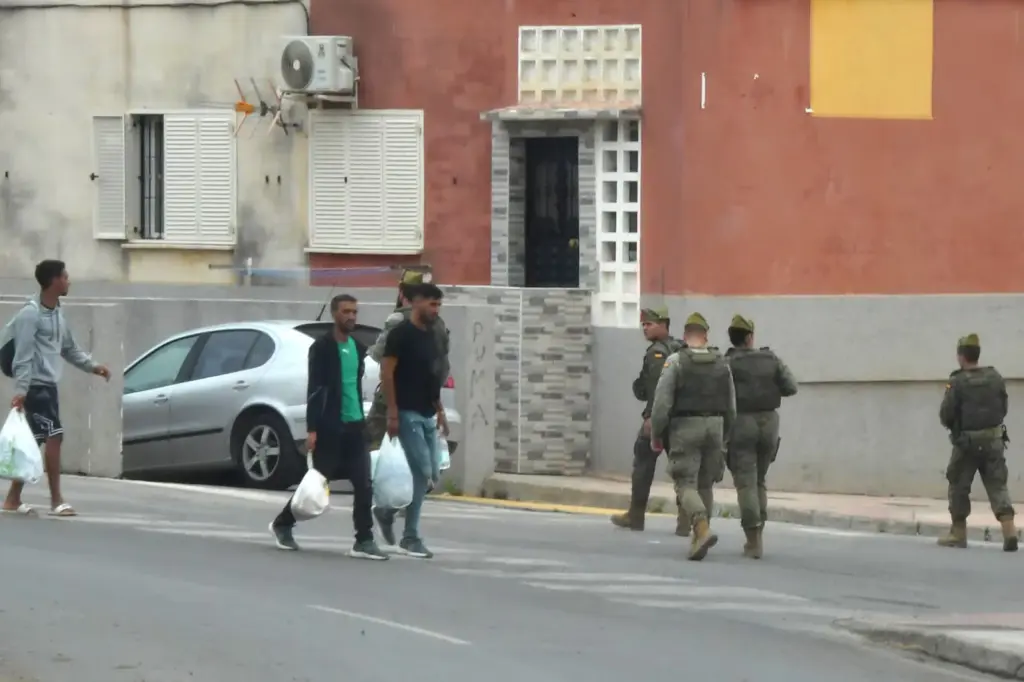
In the center of Ceuta, the ground is clean, shop windows are clear, and hotels work tirelessly attending to the brutal demand of these days: journalists, civil servants, police, and military have left the city without a single free bed. Pairs of soldiers stroll among families in linen clothes and groups of Moroccans in flip-flops who spend hours in front of a six-person tea glass. The flip-flop should be the symbol of this crisis. “Flip-flops are the way to distinguish them,” photographers acknowledge. The three major religions coexisting in Ceuta — Muslims, Catholics, and Jews — have given rise to a new coexistence: soldiers, Ceutans, and newly arrived migrants.
Read more The Flick brand prevails at Barça, who crush Elche in their League debut
The Royal Walls, a spectacular defensive bulwark, pride and symbol of the city, are the border between the isthmus and the periphery, two antagonistic worlds and the same problem. At their foot, Tarek has a kiosk. “There aren’t two Ceutas, only one that wants to solve this as soon as possible,” he says in front of the business. “I don’t let them occupy this square I have in front because they start sleeping, then a tent, fights…” and they take over everything,” he says.
Ceuta has the highest population density in Spain, after Melilla. 84,000 people in 20 km2 or, in other words, fitting all the inhabitants of the city of Pontevedra into a space six times smaller. However, beyond Tarek’s kiosk, most of the 5,000 new inhabitants of Ceuta have settled. In neighborhoods like Los Rosales, La Pantera, El Príncipe, Loma Colmenar, Hadú, or Juan Carlos I, more tension is added to places of difficult balance.
The Sidi Embarek neighborhood has an abandoned air, faded facades since its construction in the 90s, half-finished houses, vacant lots, and street life. Here Sunday is less Sunday and hundreds of boys wander dragging their feet with their hands in their pockets. With the appearance of footballs, every corner has become a pickup game at the foot of the buildings. When night falls, sirens don’t sound there, but here they don’t stop sounding.
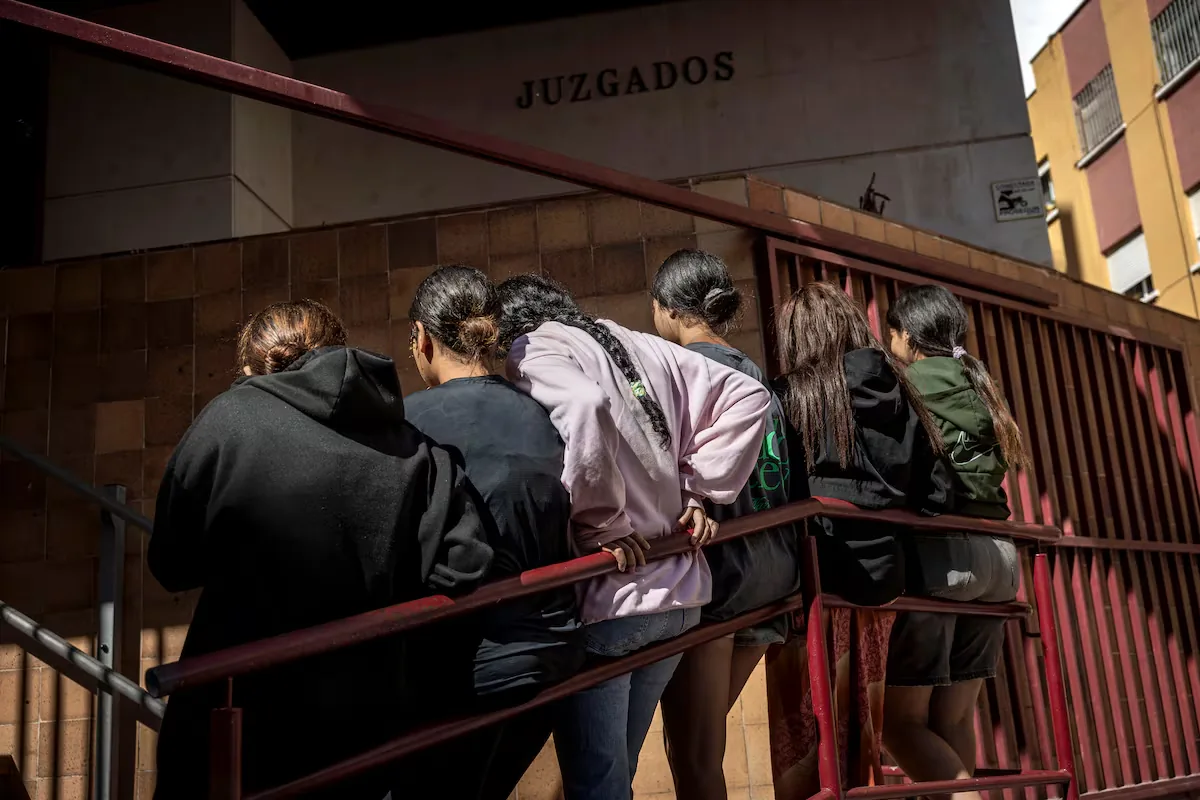
The residents of Sidi Embarek are as tired as the whole city, but they have organized to put order and take care of the girls. “Suddenly, girls started arriving in the neighborhood asking if they could sleep in the doorway,” recalls Abdellah Mustafa, president of the neighborhood association, about that day. “We thought about setting up a tent on the community football field but the next day 25 girls arrived, the next 68, the third day 140, and the next 195 girls,” he says under a sea of plastics where 400 women and girls sleep peacefully.
“The neighbors still play an important role while the administrations continue not to act. Much of the weight of this crisis is falling on half of the population. When the massive arrival occurred on July 30, the first order given by Vivas (Juan Jesús Vivas, President of the Autonomous City) was to protect the isthmus and focus all efforts there,” he says. “What’s going on, do only they have vacations?” protests Abdellah. Here the thermometer is a little hotter.
Read more Colo Colo beats Universidad de Chile and is one step away from the 35th title